
 Guards + Retainers
 Custom Night Guard
 Retainer
 Emergency Order

 Whitening
 Whitening Kit
 Teeth Whitening Gel
 Dual-Action Foam
 Cleaning + Care
 Ultrasonic Cleaner Pro
 Water Flosser
 UV Toothbrush Sanitizer
 Deep Clean + Freshening Tablets
 Accessories
 Guard Removal Tool
 Replacement Nozzles
 Bundles

You wake up with a sore jaw, a dull headache, and maybe some tooth sensitivity. Something's clearly going on, but is it TMJ vs teeth grinding, or could it be both? These two conditions overlap so often that many people use the terms interchangeably, which makes it harder to figure out what's actually causing the pain and how to treat it.
Here's what matters: TMJ disorders and teeth grinding (bruxism) are distinct conditions, but one frequently triggers or worsens the other. Understanding where they differ, and where they connect, is the first step toward getting real relief and protecting your teeth from long-term damage.
At Remi, we work with dental professionals to create custom night guards designed specifically for people dealing with bruxism and jaw tension. We've helped over 350,000 customers protect their teeth, and we know firsthand how confusing these overlapping symptoms can be. This guide breaks down the symptoms, causes, and treatment options for both conditions so you can identify what you're dealing with and take the right next step.
TMJ disorder and teeth grinding: what each means
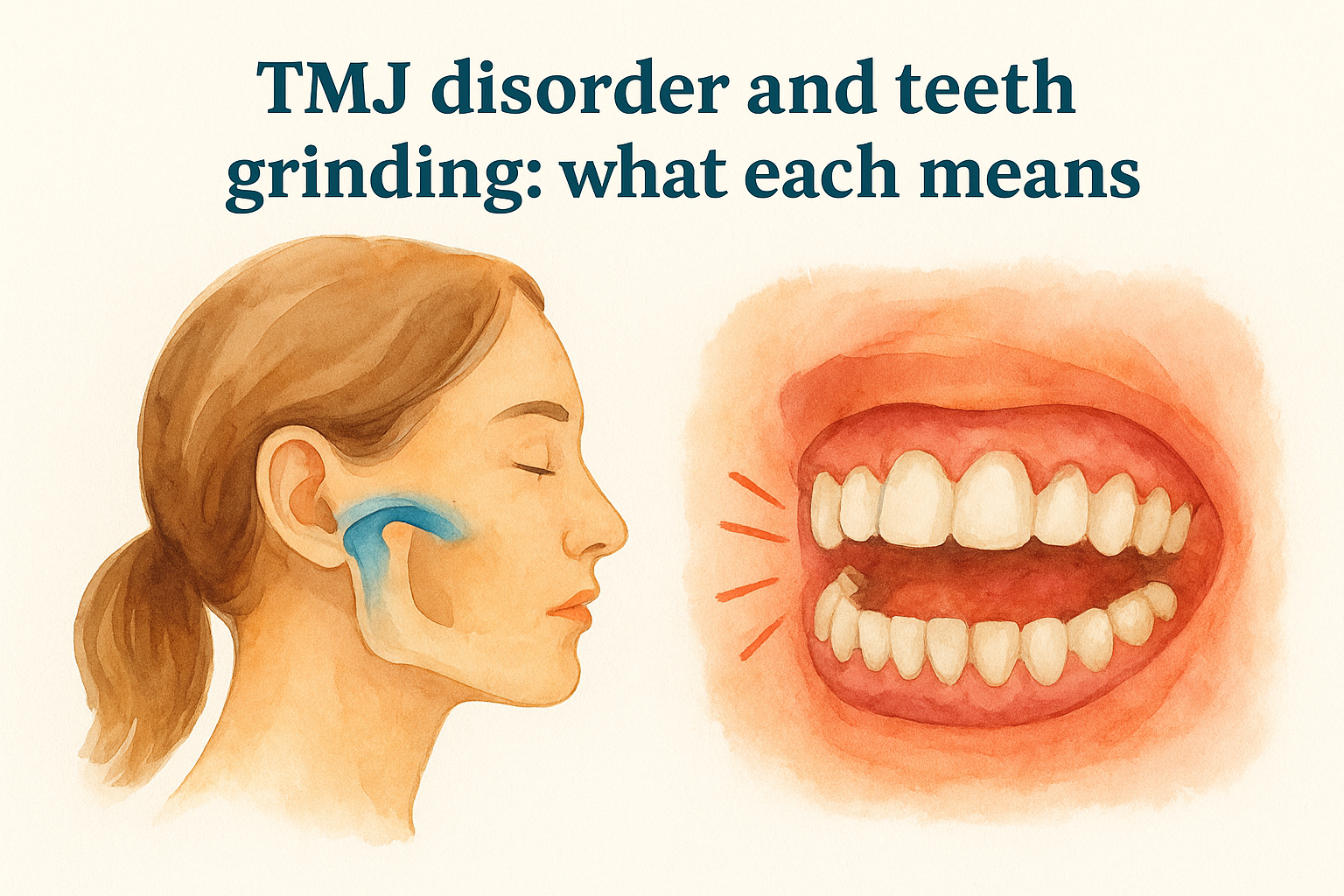
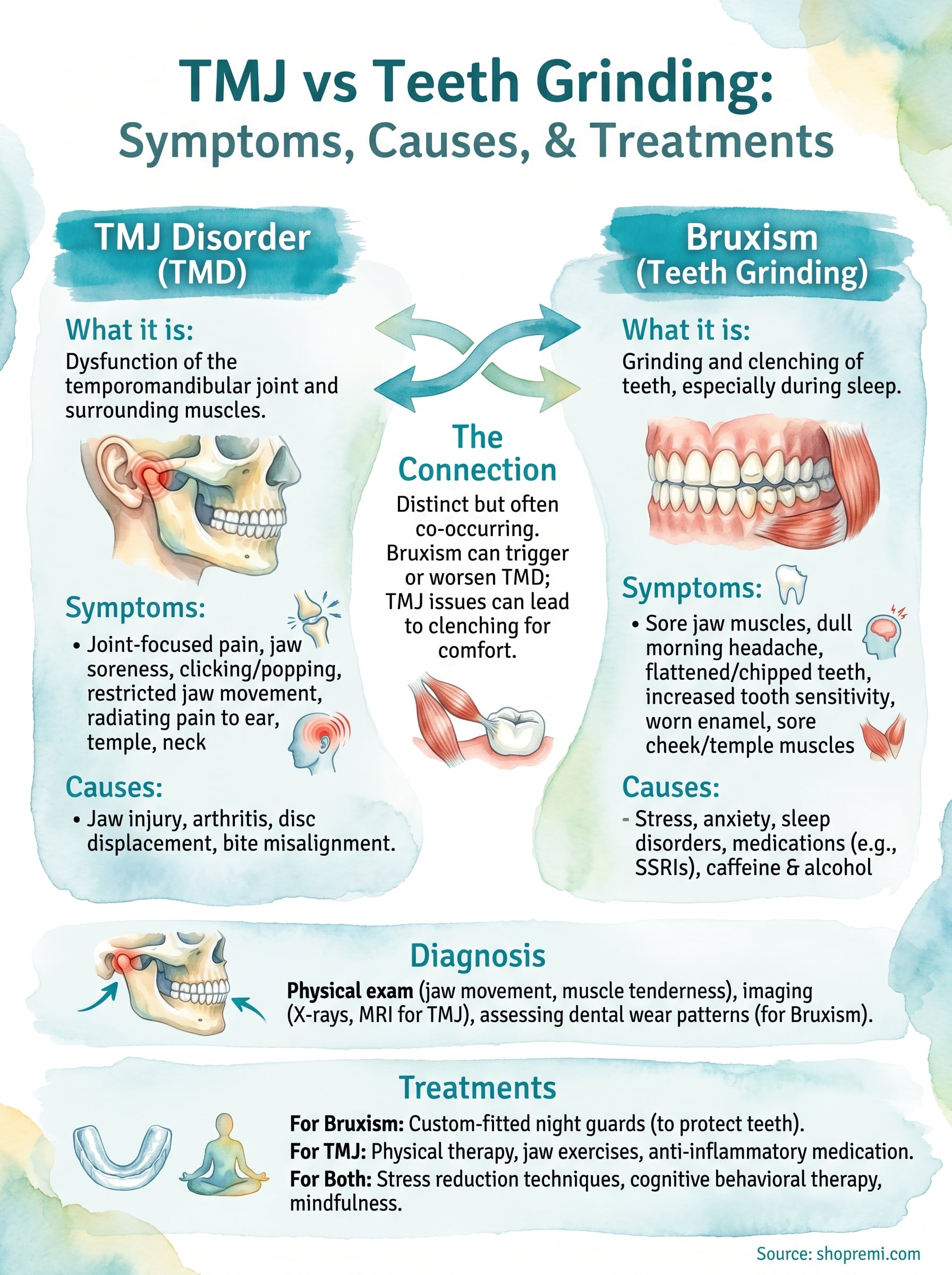
The temporomandibular joint (TMJ) connects your lower jaw to your skull, with one joint on each side of your face just in front of your ears. When that joint or the muscles controlling it become inflamed, strained, or misaligned, the result is a TMJ disorder (TMD). TMD is a broad umbrella term that covers joint dysfunction, muscle pain, disc problems, and bite irregularities. You might feel it as jaw stiffness, a clicking or popping sensation when you open your mouth, or a dull ache that spreads toward your ears and temples.
What is bruxism?
Bruxism is the clinical term for teeth grinding and jaw clenching. Most people who grind do it during sleep without any awareness, and this is called sleep bruxism. Daytime clenching also happens, usually tied to stress or periods of intense focus, and is classified separately as awake bruxism.
The problem with bruxism is that it places enormous force on your teeth and jaw, far beyond what regular chewing produces. Over time, that repeated pressure wears down enamel, causes cracks, and strains the jaw joint and surrounding muscles directly.
Research suggests bruxism can generate bite forces up to 250 pounds per square inch during sleep, compared to roughly 20 to 40 pounds during normal chewing.
How the two conditions connect
When you look at the tmj vs teeth grinding question, the key insight is that these are separate diagnoses that frequently co-occur. Bruxism does not automatically cause a TMJ disorder, but it is one of the most well-documented contributing factors. Chronic grinding and clenching overload the jaw muscles and the joint itself, which drives inflammation and potential structural damage over time.
That relationship can also run the other way. An existing TMJ disorder may cause you to clench as your body searches for a more comfortable jaw position. This bidirectional connection is why so many people find themselves managing both conditions at once, and why treating only one while ignoring the other often leads to incomplete relief.
Key differences in symptoms and pain patterns
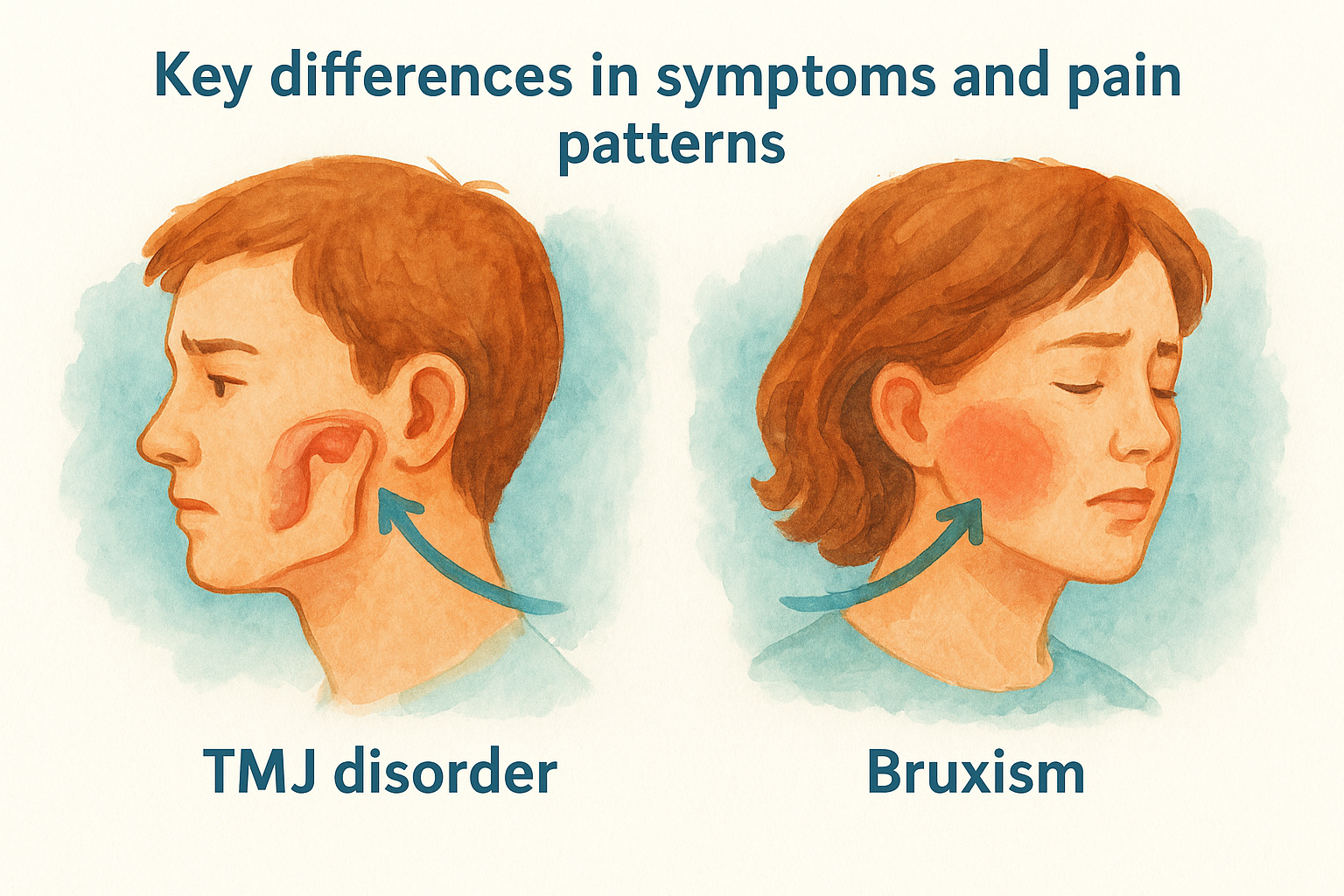
When you compare tmj vs teeth grinding side by side, the symptoms point in different directions even though some overlap. TMJ disorders tend to produce joint-focused pain, while bruxism causes damage that shows up more clearly on your teeth and surrounding muscles. Knowing which pattern fits your experience helps you describe your symptoms accurately to your dentist.
TMJ disorder symptoms
TMJ disorders produce pain centered around the jaw joint itself, which sits just in front of your ear. You might hear clicking or popping when you open and close your mouth, feel your jaw lock up temporarily, or notice that chewing becomes genuinely painful. The discomfort often radiates into your ear, temple, or neck, which is why TMD is frequently mistaken for an ear infection or a tension headache.
If your jaw clicks or locks regularly, that points to joint involvement, not just muscle soreness from grinding.
Bruxism symptoms
Bruxism tends to show up differently. You wake up with sore jaw muscles and a dull morning headache, and over time you notice physical changes to your teeth that grinding produces.
Common signs of bruxism include:
- Flattened, chipped, or cracked tooth enamel
- Increased sensitivity to hot and cold
- Visible wear on biting surfaces
- Sore cheek or temple muscles in the morning
- A sleep partner reporting audible grinding sounds
Causes and risk factors
When you look at tmj vs teeth grinding, the causes behind each condition are partly distinct and partly shared. Understanding what drives each one helps you pinpoint what's contributing to your symptoms and what lifestyle or treatment changes might actually make a difference.
What causes TMJ disorders
TMJ disorders develop from several sources, including jaw injuries, disc displacement inside the joint, arthritis, and bite misalignment. A direct blow to the jaw or even a dental procedure that keeps your mouth open for an extended period can trigger symptoms. Structural issues with the joint itself, such as a displaced disc or cartilage deterioration, can develop gradually without any obvious single cause.
What causes bruxism
Bruxism is driven primarily by stress and sleep disruptions. Research consistently links teeth grinding to anxiety, high-pressure work environments, and poor sleep quality. Certain medications, particularly selective serotonin reuptake inhibitors (SSRIs) used to treat depression and anxiety, are also associated with increased grinding as a side effect.
Caffeine and alcohol consumption in the evening have both been linked to more frequent and intense sleep bruxism episodes.
Shared risk factors
Both conditions share a cluster of common risk factors that amplify each other. Chronic stress sits at the top of that list. Beyond stress, anxiety disorders, poor posture (especially forward head position), and sleep apnea increase your likelihood of developing one or both conditions simultaneously. Identifying these overlapping triggers gives you a clearer target for treatment.
How dentists diagnose TMJ and bruxism
When you visit a dentist with jaw pain or tooth wear, the diagnostic process for TMJ vs teeth grinding involves a combination of physical examination, symptom history, and imaging. Your dentist will not rely on a single test because both conditions require different types of evidence to confirm accurately.
Physical examination and symptom review
Your dentist will start by pressing on the jaw joint and surrounding muscles to locate tenderness or swelling. They will ask you to open and close your mouth while they listen and feel for clicking, popping, or restricted movement. Your symptom history matters significantly here: how long the pain has been present, what time of day it peaks, and whether stress or sleep patterns connect to your flare-ups all guide the diagnosis.
If you wake up with sore muscles but your joint feels fine during the day, that pattern strongly points toward bruxism rather than a structural TMJ disorder.
Imaging and dental wear assessment
For TMJ disorders, dental X-rays or an MRI give your dentist a clearer picture of the joint structure, disc position, and any bone changes. Bruxism is often confirmed differently, by examining your teeth for visible wear patterns including flattening, chipping, or enamel thinning on the biting surfaces.
Your dentist may also look for ridging on the inside of your cheeks, which repeated clenching produces over time. Combining these findings with your reported symptoms allows your dentist to distinguish between the two conditions or confirm that both are present.
Treatment options that actually help
When comparing tmj vs teeth grinding, the treatment paths share some overlap but target different problems. For bruxism, the priority is protecting your teeth from ongoing mechanical damage. For TMJ disorders, treatment focuses on reducing joint inflammation and restoring normal muscle function. In many cases, your dentist will recommend approaches that address both at once.
Protecting your teeth with a night guard
A custom-fitted night guard is the most effective tool for managing sleep bruxism. It creates a physical barrier between your upper and lower teeth, absorbing the force of grinding and preventing enamel wear. Over-the-counter options exist, but they tend to fit poorly and can actually worsen jaw tension. A professionally made night guard fits your bite precisely, which means less stress on the jaw joint overnight.
A well-fitted night guard reduces the pressure bruxism places on both your teeth and the temporomandibular joint, making it useful for people managing both conditions simultaneously.
Relieving TMJ pain
Physical therapy and targeted jaw exercises can reduce muscle tension and improve joint mobility for TMJ disorders. Your dentist may also recommend anti-inflammatory medications or short-term muscle relaxants to ease acute flare-ups, targeting the structural side of the problem directly.
Stress reduction techniques such as cognitive behavioral therapy or mindfulness practice address the anxiety that drives both clenching and joint strain. Cutting back on caffeine and alcohol in the evening can also reduce nighttime grinding episodes, making this a practical first step you can take right away.
Next steps if your jaw hurts
Understanding the difference between tmj vs teeth grinding gives you a concrete starting point. Pay attention to when and where your pain occurs: morning jaw soreness and worn enamel point toward bruxism, while joint clicking and ear-area pain suggest a TMJ disorder. Both conditions respond better to early action than to waiting through the discomfort.
Your next step is to schedule an appointment with your dentist and bring specific notes about your symptoms, including when the pain peaks, how long it lasts, and whether stress or poor sleep seems to trigger it. If bruxism is confirmed or suspected, protecting your teeth overnight is the most immediate thing you can do. Get started with a custom night guard from Remi, professionally fitted to your bite and available at a fraction of what a dental office charges.

