
 Guards + Retainers
 Custom Night Guard
 Retainer
 Emergency Order

 Whitening
 Whitening Kit
 Teeth Whitening Gel
 Dual-Action Foam
 Cleaning + Care
 Ultrasonic Cleaner Pro
 Water Flosser
 UV Toothbrush Sanitizer
 Deep Clean + Freshening Tablets
 Accessories
 Guard Removal Tool
 Replacement Nozzles
 Bundles

You wake up with a dull, throbbing pain wrapping around your temples or pressing behind your eyes, and you can't figure out why. If this sounds familiar, there's a good chance you're dealing with a jaw clenching headache, a type of head pain directly linked to excessive tension in your jaw muscles. Millions of people clench their jaws during sleep or throughout the day without even realizing it, and the resulting headaches can range from mildly annoying to completely debilitating.
The connection between your jaw and your head pain isn't always obvious. Many people cycle through painkillers and stress-relief tactics for months before discovering that bruxism, the habitual grinding or clenching of teeth, is the actual culprit. Understanding this link is the first step toward real, lasting relief instead of just masking symptoms.
At Remi, we work with people who deal with jaw clenching every single day. Our custom-fitted night guards are specifically designed to reduce the muscle strain and tooth damage caused by bruxism, and we've helped over 350,000 customers find relief. This article breaks down exactly why jaw clenching triggers headaches, how to recognize the signs, and what treatments actually work, so you can stop guessing and start feeling better.
What causes jaw clenching headaches
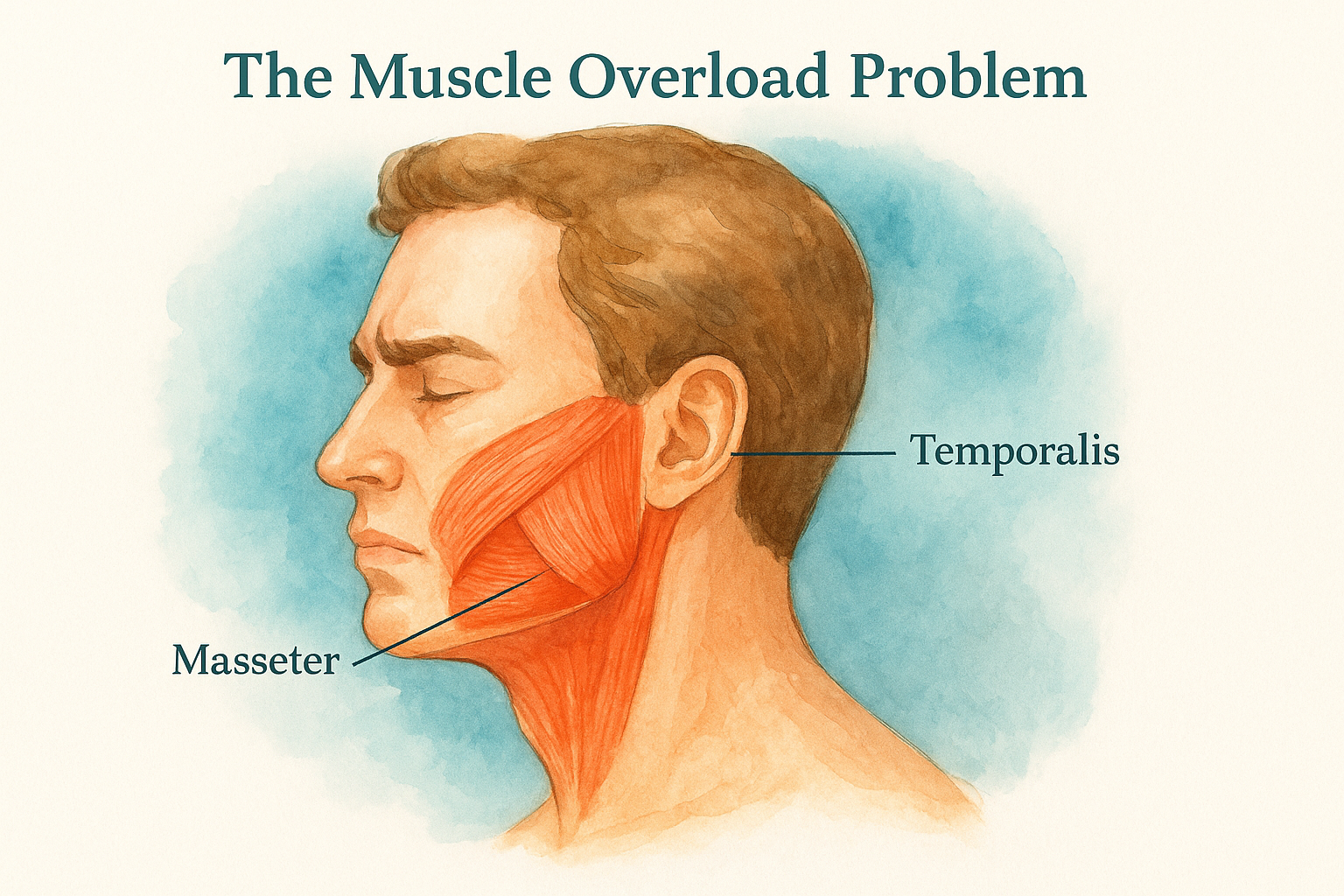
Your jaw is powered by the masseter and temporalis muscles, two of the strongest muscles in your body relative to their size. When you clench, these muscles can generate over 200 pounds of pressure per square inch. That sustained tension doesn't stay isolated to your jaw. It radiates upward into your skull, creating the classic jaw clenching headache that can feel like a tight band wrapped around your head or a dull throb pressing behind your eyes.
The Muscle Overload Problem
The masseter runs along the side of your jaw, and the temporalis fans across your temple directly above your ear. Both muscles attach to areas of your skull that are closely tied to headache pain pathways. When you clench repeatedly or for extended periods, these muscles accumulate lactic acid and begin to fatigue, just like any overworked muscle after a hard workout. Muscle fatigue in the jaw triggers referred pain, meaning the discomfort travels to nearby structures including your temples, the base of your skull, and the area directly behind your eyes.
Referred pain from overworked jaw muscles is one of the most commonly missed causes of chronic daily headaches.
Stress and Your Nervous System
Stress is the leading driver of jaw clenching for most people. When your body perceives a threat or high pressure, your nervous system activates a fight-or-flight response that increases muscle tension across your entire body. Your jaw tends to bear a disproportionate share of that tension. Many people clench through difficult conversations, intense focus at work, or anxious moments without any awareness they're doing it. This low-level, repeated clenching slowly accumulates strain in the masseter and temporalis until the pressure finally surfaces as a headache by late morning or the end of the day.
Sleep and Nighttime Clenching
Nighttime clenching is harder to identify because it happens while you're unconscious. Sleep bruxism is recognized as a sleep-related movement disorder by the American Academy of Sleep Medicine, and it affects roughly 8 to 10 percent of adults. During certain sleep stages, your jaw muscles can fire involuntarily and contract in repeated cycles for hours at a time. The total load placed on your jaw muscles during a single night of heavy clenching can easily exceed what accumulates across an entire waking day, which is why so many people with bruxism wake up already in pain before their morning has even started.
Signs it might be jaw clenching, not a migraine
Migraines and jaw clenching headaches share enough surface-level overlap that many people misdiagnose themselves for months. Knowing the specific patterns in timing, location, and physical symptoms tied to jaw tension can help you identify the real source of your pain before you invest time and money in the wrong treatment.
Pain Location and Timing
A jaw clenching headache typically shows up in the temples, along the sides of the face, or at the base of the skull, and it tends to peak in the morning or build gradually through the workday. Migraines, by contrast, often escalate quickly, frequently affecting one side of the head with intense, pulsing pain accompanied by light or sound sensitivity. If your headaches feel more like a dull, steady ache that worsens when you chew or yawn, jaw tension is almost certainly the driver.
If pressing your fingers into your temple muscles or along your jaw reproduces your headache pain, that's a strong indicator the source is muscular, not neurological.
Physical Signs Beyond the Pain
Jaw clenching leaves behind evidence that migraines simply don't produce. Morning jaw soreness or stiffness is one of the clearest signals that you were clenching heavily during sleep. You might also notice worn enamel, tooth sensitivity, or small indentations along the sides of your tongue from pressing it against your teeth under tension.
Earaches without any infection, a clicking or popping jaw joint, and neck tightness that radiates toward the base of your skull are additional clues pointing at overloaded jaw muscles. TMJ-related symptoms like limited jaw movement or facial tightness rarely accompany a true migraine, so these physical signs help narrow down what you're actually dealing with.
How clinicians diagnose the source of your headache
When you visit a clinician with recurring head pain, the goal is to rule out neurological causes first and then trace the pain to its actual origin. Diagnosing a jaw clenching headache requires a combination of physical examination, patient history, and sometimes imaging, because the overlap between tension-type headaches, TMJ disorders, and bruxism means a single test rarely gives you the full picture.
The Clinical Examination
Your clinician will typically start by palpating the masseter and temporalis muscles to check for tenderness, tightness, or trigger points. If pressing on these areas reproduces or intensifies your headache, that confirms the pain has a muscular origin. They will also assess your jaw's range of motion and listen for clicking or grinding sounds in the temporomandibular joint when you open and close your mouth. This hands-on step alone can differentiate a jaw-driven headache from one rooted in the vascular or neurological systems.
A dentist or orofacial pain specialist is often better positioned than a general practitioner to identify bruxism-related headaches, because they can evaluate both jaw mechanics and dental wear simultaneously.
Dental and Sleep Assessments
Your dentist will examine the surfaces of your teeth for flattening, chipping, or unusual wear patterns that signal repeated grinding or clenching over time. These changes in enamel are physical evidence that your jaw has been generating excess force, often during sleep. In cases where nighttime bruxism is suspected but difficult to confirm, a clinician may recommend a sleep study or a take-home sleep monitor to track jaw muscle activity and movement during different sleep stages. Combining dental findings with sleep data gives clinicians a reliable, evidence-based picture of what is actually driving your pain.
Treatments that actually help
Treating a jaw clenching headache means targeting the source of the problem, not just quieting the pain temporarily. Over-the-counter pain relievers can offer short-term relief, but they won't stop the clenching that keeps triggering your symptoms. Combining physical intervention with behavioral strategies gives you the most durable results.
Night Guards and Oral Appliances
A custom-fitted night guard is one of the most effective front-line treatments for bruxism-related head pain. It absorbs the force your jaw generates during clenching and repositions your bite into a more relaxed posture overnight. This directly reduces the sustained muscle load on your masseter and temporalis, so you wake up with less accumulated tension and fewer morning headaches.
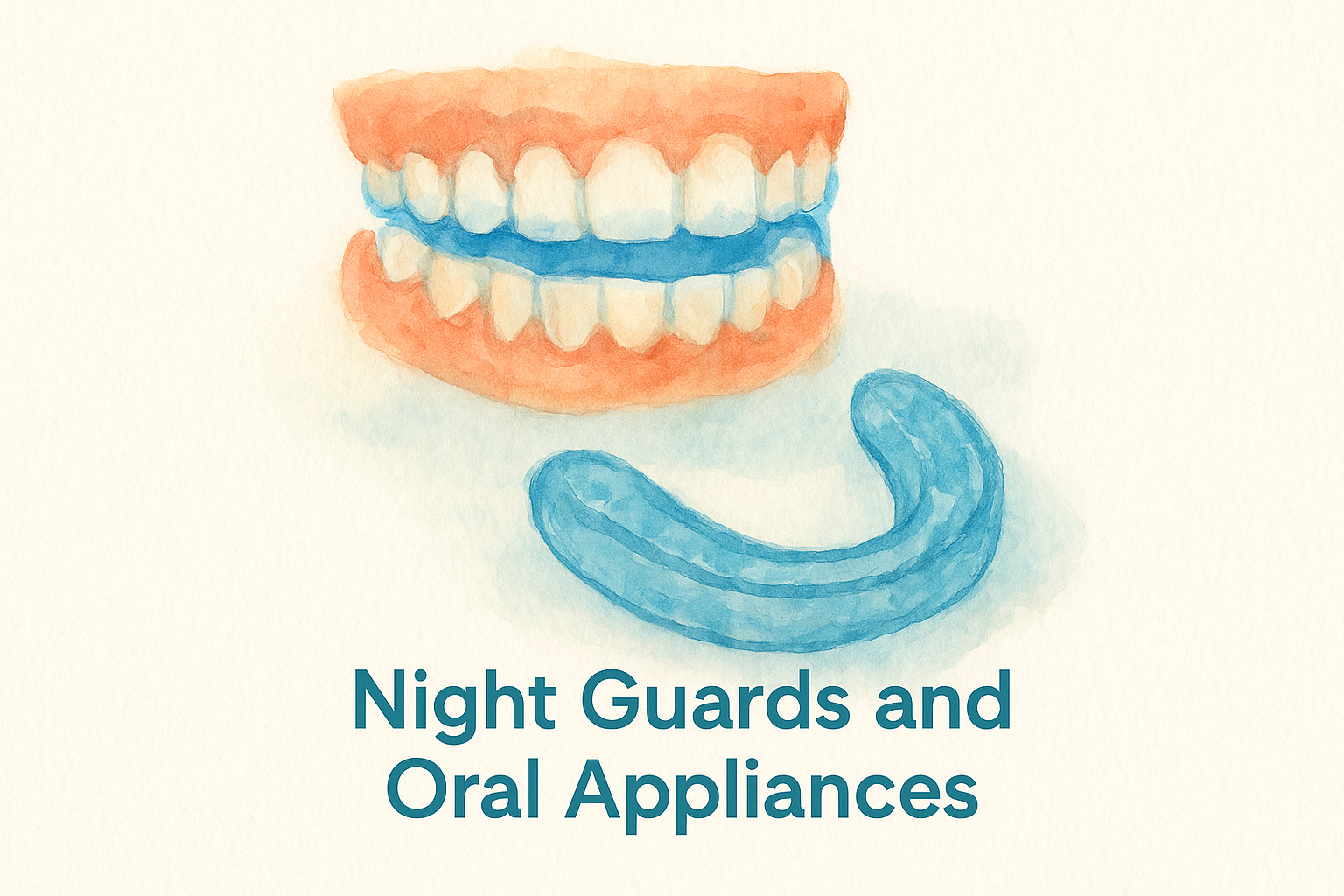
A guard matched precisely to your bite performs significantly better than a generic boil-and-bite option from a pharmacy, which can introduce an ill-fitting surface that actually increases clenching in some people.
Custom night guards sit between your upper and lower teeth to distribute pressure evenly. Your jaw muscles can't fully engage at maximum force when that barrier is in place, which lets them recover rather than stay locked in prolonged contraction throughout the night.
Physical and Behavioral Approaches
Physical therapy targeting the jaw, neck, and shoulders can release the trigger points that feed into recurring headaches. A trained therapist uses manual techniques, and sometimes dry needling, to work through the tight bands in your masseter and temporalis. These sessions interrupt the pain cycle at the muscular level rather than masking it.
Biofeedback and cognitive behavioral therapy (CBT) are also well-supported options for reducing bruxism frequency. Both approaches build your awareness of clenching behaviors during waking hours, helping you catch and release jaw tension before it compounds into pain by the end of the day.
How to prevent jaw clenching at night
Preventing a jaw clenching headache before it starts is more effective than treating one after you wake up in pain. Your jaw muscles follow the same patterns your nervous system does before sleep, which means the habits you build in the hour before bed directly influence how much tension you carry into the night.
Build a Pre-Sleep Routine
Jaw stretching exercises done before bed can release residual tension from the day and reduce the likelihood of nighttime clenching. Try placing the tip of your tongue against the roof of your mouth and allowing your jaw to drop open slightly, holding for 10 seconds and repeating 5 to 10 times. This posture cues your jaw muscles into a resting position rather than a braced one.
Magnesium glycinate supplementation has some research support for reducing nighttime muscle activity, but check with your doctor before adding any supplement to your routine.
Limiting caffeine and alcohol within four to six hours of sleep also makes a measurable difference. Caffeine keeps your nervous system alert and primed for tension, while alcohol disrupts your sleep architecture in ways that increase muscle movement during the night. Avoiding hard or chewy foods in the evening reduces how much load your masseter takes on right before sleep, giving those muscles a head start on recovery.
Adjust Your Sleep Setup
Sleeping on your back reduces the external pressure on your jaw compared to side sleeping, where your pillow can push your jaw into a misaligned position and trigger clenching through the night. Your sleep posture directly affects your jaw mechanics, so even a small adjustment here can reduce morning stiffness.
Pairing a consistent sleep schedule with a pre-sleep wind-down lowers overall stress hormone levels, which directly reduces the involuntary muscle tension that drives nighttime bruxism in the first place.
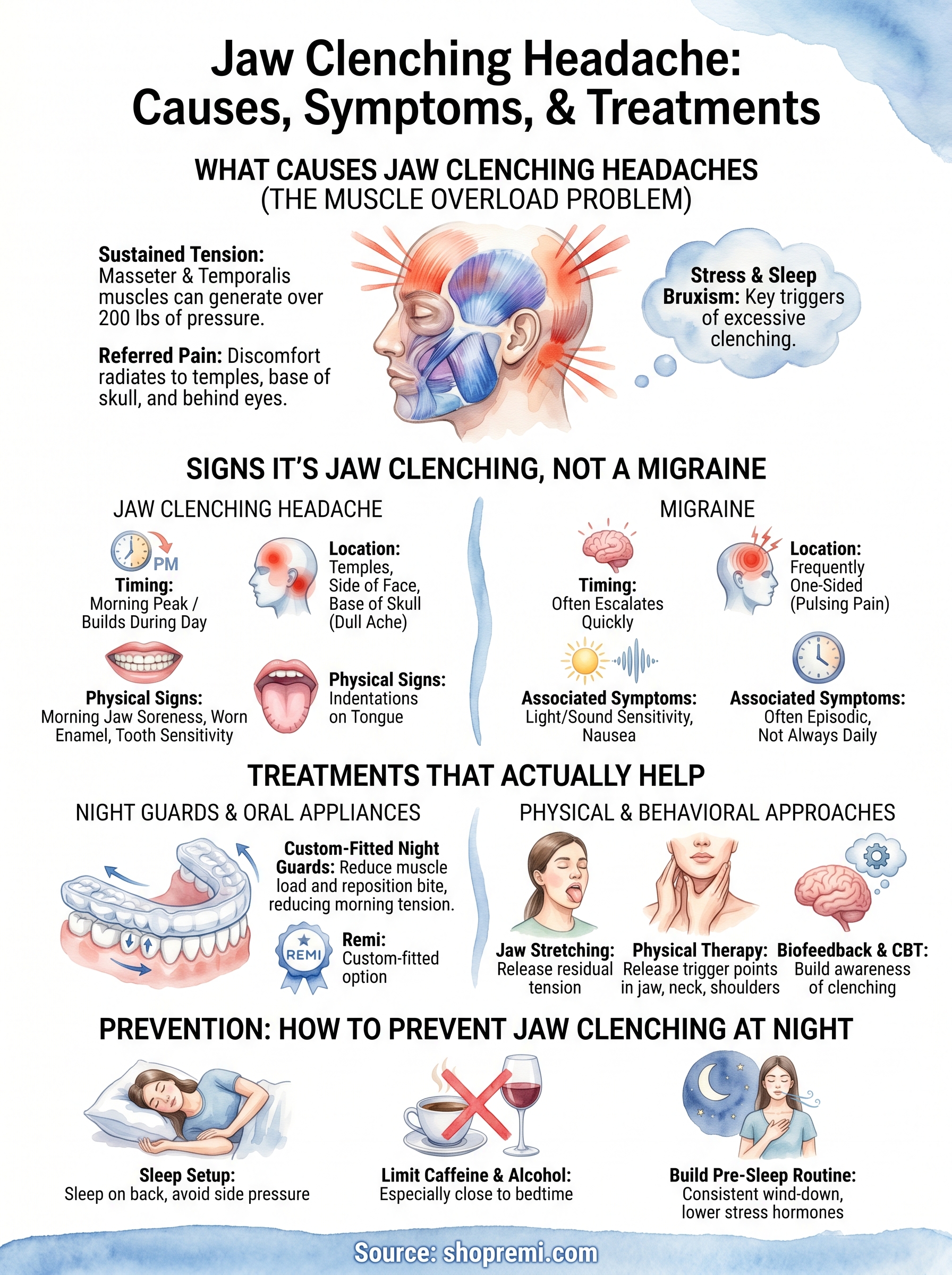
Next steps if you want relief
A jaw clenching headache doesn't have to be a permanent fixture in your mornings. You now understand the muscular mechanics behind the pain, how to distinguish jaw tension from other headache types, and which treatments deliver real results. The most important move you can make right now is to stop treating the headache and start addressing the clenching that causes it. Start with the pre-sleep habits and jaw stretching exercises outlined above, and pay attention to whether your pain follows the timing and location patterns described in this article.
If the evidence points toward nighttime bruxism, protecting your jaw while you sleep is the single most effective step you can take. A custom-fitted night guard reduces the muscle overload that builds through the night and accumulates into morning pain. You can get a dentist-quality, custom-fit option delivered directly to your door with a Remi custom night guard, at a fraction of the cost you'd pay at a dental office.

