
 Guards + Retainers
 Custom Night Guard
 Retainer
 Emergency Order

 Whitening
 Whitening Kit
 Teeth Whitening Gel
 Dual-Action Foam
 Cleaning + Care
 Ultrasonic Cleaner Pro
 Water Flosser
 UV Toothbrush Sanitizer
 Deep Clean + Freshening Tablets
 Accessories
 Guard Removal Tool
 Replacement Nozzles
 Bundles

You wake up with a dull ache radiating through your jaw, and your teeth feel sore before you've even had breakfast. If this sounds familiar, teeth grinding tooth pain might be the culprit, and you're far from alone. Millions of Americans grind or clench their teeth during sleep without realizing it, and the dental damage can build up quietly over weeks and months.
The tricky part is connecting the dots. Tooth pain has dozens of possible causes, and grinding-related discomfort often mimics cavities, cracked teeth, or gum disease. Understanding what's actually behind the pain matters because the treatment path looks very different. A filling won't fix a problem that starts with repeated pressure on your teeth every night.
This article breaks down exactly how bruxism leads to tooth pain, the signs that point to grinding as the source, and practical relief options, including how a custom-fitted night guard from Remi can protect your teeth and help stop the damage at its root. Whether you're dealing with sharp sensitivity or a constant ache, you'll walk away with a clear plan to address it.
Why grinding can make your teeth hurt
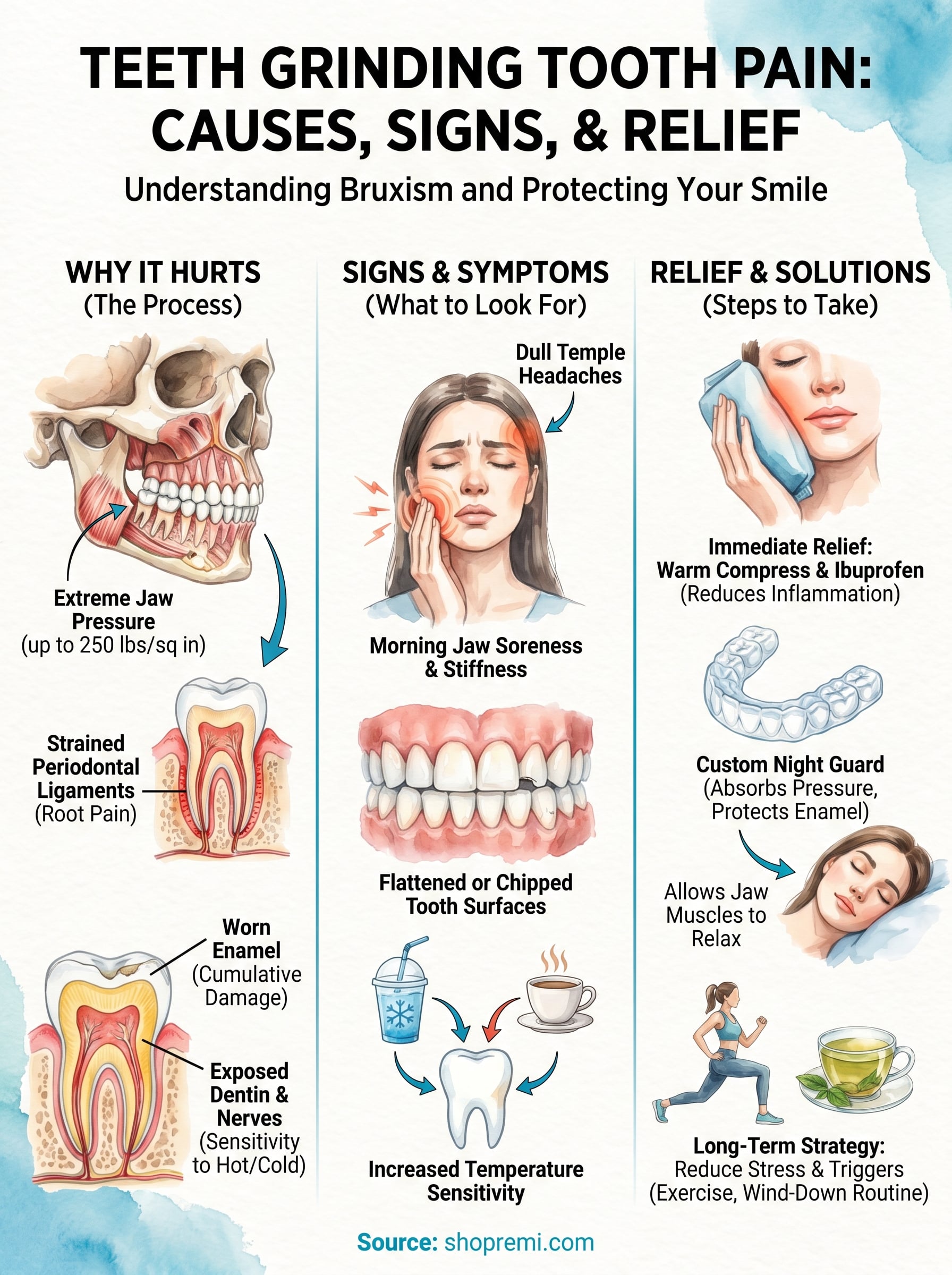
Teeth grinding tooth pain doesn't show up by accident. When you grind, your jaw muscles generate far more force than normal chewing ever produces, sometimes up to 250 pounds of pressure per square inch. Your teeth simply aren't built to absorb that kind of stress night after night, and the tissue and structure surrounding them starts to break down as a result.
The pressure behind the pain
Your jaw contains some of the strongest muscles in your entire body, and during a grinding episode, those muscles can stay contracted for hours. This sustained pressure doesn't just strain the teeth themselves; it also compresses the periodontal ligaments, the tiny connective fibers that anchor each tooth in its socket. When those ligaments become inflamed, even light biting pressure can feel sharp and uncomfortable the next morning.
Bruxism-related jaw force can be several times greater than the pressure generated during normal eating, making it one of the most mechanically damaging habits for your teeth.
How damage compounds over time
Each grinding session wears away a thin layer of tooth enamel, the hardest substance in your body. Enamel doesn't grow back once it's gone. As the enamel thins, the softer dentin layer underneath becomes exposed. Dentin contains microscopic channels that lead directly to the nerve of the tooth, which explains why sensitivity to hot, cold, or sweet foods often develops alongside the aching you feel each morning.
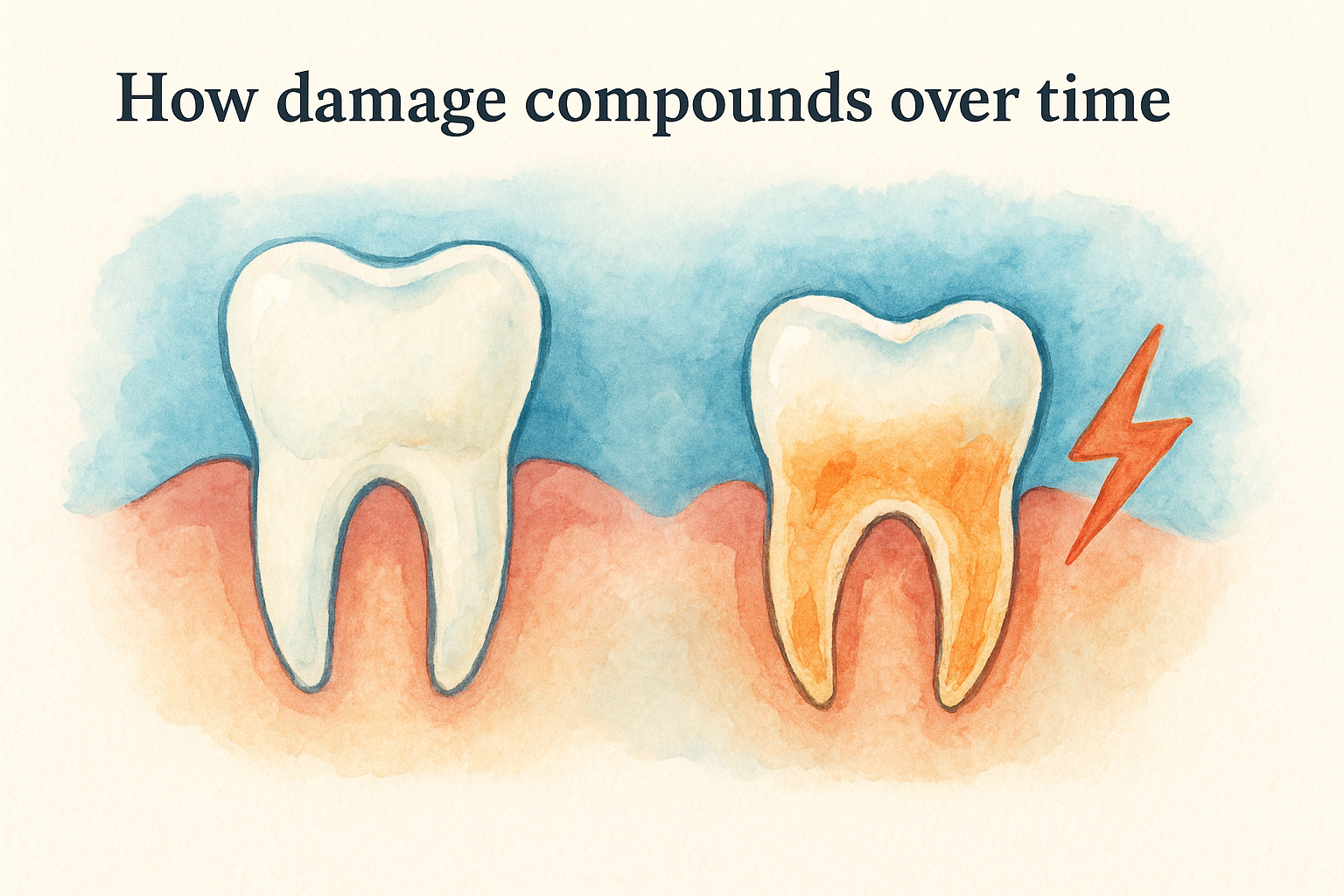
The cumulative nature of this damage is what catches most people off guard. You might feel fine for months, then suddenly notice persistent soreness or sharp sensitivity that seems to appear out of nowhere. In reality, the problem has been building quietly every night. The longer grinding goes unaddressed, the closer those nerve channels get to direct exposure, and the more intense your tooth pain becomes with each passing week.
Signs your tooth pain comes from grinding
Tooth pain has many possible causes, so pinning teeth grinding tooth pain as the source requires looking at the full picture. Grinding tends to leave a specific pattern of symptoms that differs from what you'd experience with a cavity or gum infection, and knowing what to look for helps you make a faster, more accurate decision about treatment.
Morning symptoms that point to grinding
The timing of your discomfort is one of the strongest clues. If your jaw feels sore, stiff, or tender when you first wake up, that points directly to nighttime grinding rather than a cavity, which typically causes pain throughout the day with no strong morning pattern. You might also notice dull headaches that start near your temples and fade as the day goes on, a result of prolonged jaw muscle contraction during sleep.
Waking up with jaw soreness and temple headaches together is a strong indicator that bruxism is behind your tooth pain, not decay or infection.
Physical clues in your teeth and jaw
Your teeth themselves often show the wear. Flat or chipped edges on your back teeth signal repeated grinding contact, and your dentist can spot this quickly during a routine exam. You may also develop increased sensitivity to temperature or pressure, which appears as enamel wears thin and exposes the dentin layer beneath.
Watch for these physical warning signs:
- Worn, flattened, or chipped tooth surfaces
- Sensitivity to hot, cold, or sweet foods
- Tight or sore jaw muscles that persist through the day
- Visible indentations along the sides of your tongue
What to do now to relieve pain
When teeth grinding tooth pain flares up, your first priority is reducing inflammation and giving your jaw muscles a chance to recover. You don't need to wait for a dental appointment to start feeling better, and several straightforward steps can bring real relief within hours.
Ease the soreness right away
Over-the-counter ibuprofen reduces both pain and inflammation in your periodontal ligaments after a rough grinding night. Applying a warm compress to your jaw for 10 to 15 minutes loosens the muscle tension that built up during sleep, which directly lowers the pressure your teeth feel throughout the day.
Here are additional immediate steps that help:
- Stick to soft foods like yogurt, eggs, or cooked vegetables to avoid stressing sore teeth
- Avoid chewing gum, which keeps jaw muscles contracted and extends the soreness
- Stay well hydrated, since dry mouth can amplify tooth sensitivity
Combining ibuprofen with heat therapy and a soft diet gives your jaw the recovery window it needs after a heavy grinding night.
Protect your teeth tonight
Your most effective immediate action is placing a physical barrier between your upper and lower teeth before you sleep again. A custom-fitted night guard from Remi absorbs grinding pressure directly, shielding your enamel from further wear while you sleep.
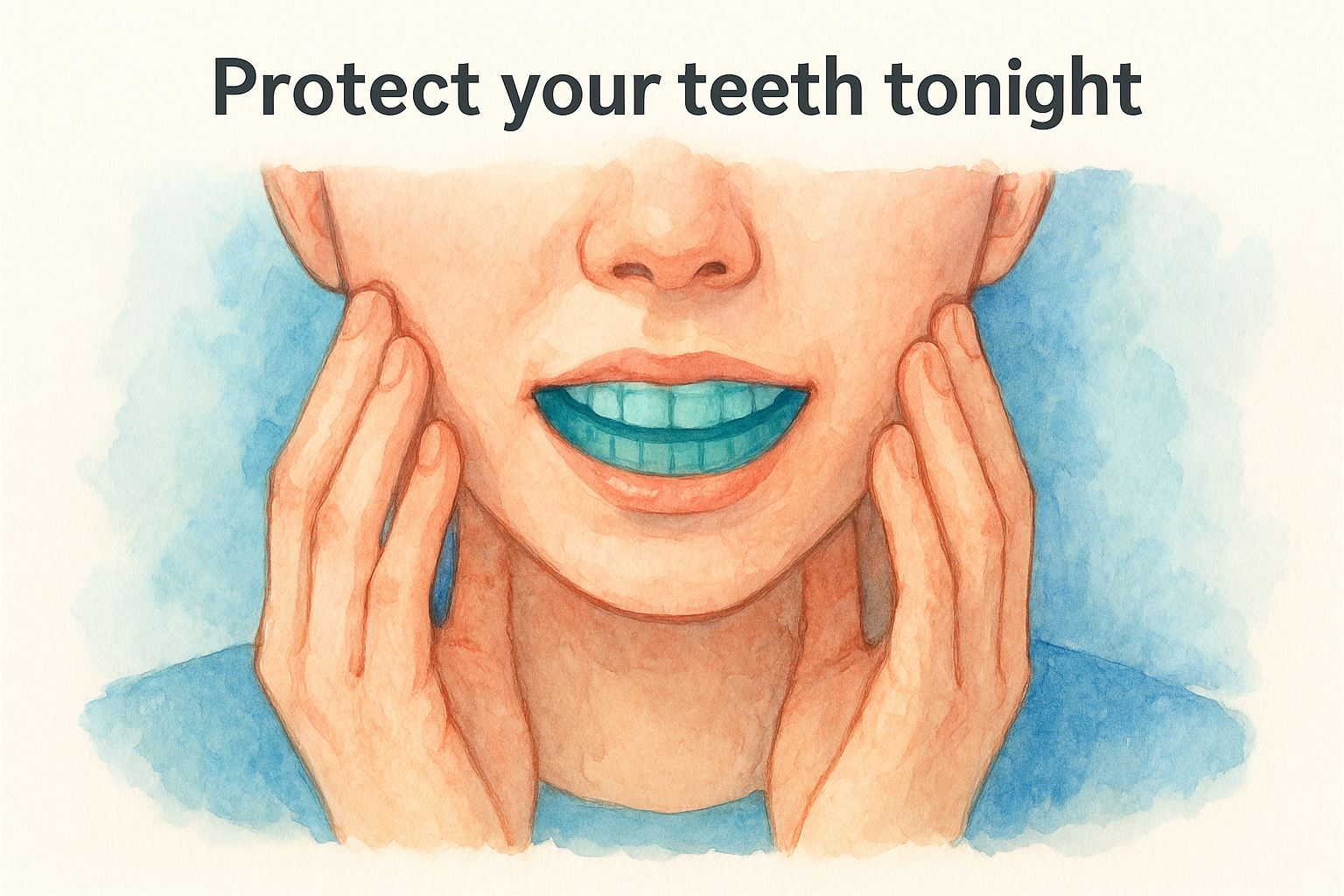
Wearing a night guard also helps your jaw muscles settle into a more relaxed resting position, which reduces morning soreness over time. Even a single night with proper protection can make a noticeable difference in how your teeth and jaw feel the next morning.
Long-term fixes to stop grinding
Short-term relief helps you get through the day, but stopping teeth grinding tooth pain for good requires targeting the habits and conditions that trigger grinding in the first place. A consistent long-term strategy works far better than patching symptoms one morning at a time, and the approaches below address both the mechanical damage and the underlying causes simultaneously.
Use a custom night guard consistently
The single most effective long-term tool is a custom-fitted night guard worn every night without exception. Over-the-counter guards from a pharmacy often fit poorly, which can worsen jaw tension rather than ease it. A professionally crafted guard like Remi's distributes grinding pressure evenly across your teeth and gives your jaw muscles a stable resting position, which gradually reduces grinding intensity over months of consistent use.
Consistent nightly use of a well-fitted guard is the foundation of any long-term bruxism management plan.
Reduce the triggers that drive grinding
Stress and anxiety rank as the most common drivers of bruxism, and addressing them directly produces measurable results. Regular physical exercise reduces baseline muscle tension throughout your body, while a dedicated wind-down routine before bed lowers the elevated state that often triggers nighttime clenching. Cutting back on caffeine and alcohol in the hours before sleep also reduces grinding frequency, since both substances disrupt the sleep stages where grinding typically peaks.
When to see a dentist or doctor
Self-care and a custom night guard handle most teeth grinding tooth pain cases effectively, but some situations call for professional input. If your pain has persisted for more than two weeks despite using a night guard and managing stress, a dentist needs to evaluate whether grinding has already caused structural damage that requires repair.
Warning signs that need professional attention
Some symptoms signal damage that goes beyond what at-home management can address. Cracked or fractured teeth, a jaw that locks or pops loudly, and sensitivity that lingers for 30 seconds or more after exposure to hot or cold food all indicate that grinding has caused serious harm.
Watch for these specific red flags:
- Tooth pain that wakes you up at night
- Jaw pain that spreads toward your ear or neck
- Visible cracks or chips on your tooth surfaces
- Pain that sharpens when you bite down on food
If jaw pain radiates toward your ear or neck consistently, see a doctor to rule out temporomandibular joint disorder, which often develops alongside chronic bruxism.
What to expect from a professional evaluation
Your dentist will examine your tooth surfaces for wear patterns and check for cracks, fractures, or bite misalignment during the appointment. They may also take X-rays to assess the bone and root structure if the pain has been severe or long-lasting.
In more complex cases, your dentist may refer you to a specialist or recommend physical therapy, stress counseling, or a professionally fitted oral appliance. Getting a clear diagnosis early keeps treatment straightforward and prevents more costly procedures down the road.
Key takeaways and next steps
Teeth grinding tooth pain builds gradually, and the longer you ignore it, the more enamel you lose and the worse your symptoms become. The good news is that most cases respond well to a clear, consistent approach: reduce your stress triggers, protect your teeth every night, and get a professional evaluation if pain persists beyond two weeks.
Your most important next step is putting a physical barrier between your teeth before you sleep tonight. A poorly fitted pharmacy guard can actually increase jaw tension, while a custom-fitted option distributes pressure evenly and lets your muscles relax over time. If you're ready to protect your teeth and stop the damage before it compounds further, a custom-fitted night guard from Remi gives you dental-grade protection at a fraction of the dentist's price, delivered directly to your door with an easy at-home impression process.

