
 Guards + Retainers
 Custom Night Guard
 Retainer
 Emergency Order

 Whitening
 Whitening Kit
 Teeth Whitening Gel
 Dual-Action Foam
 Cleaning + Care
 Ultrasonic Cleaner Pro
 Water Flosser
 UV Toothbrush Sanitizer
 Deep Clean + Freshening Tablets
 Accessories
 Guard Removal Tool
 Replacement Nozzles
 Bundles

If you've ever noticed wavy, rippled edges along the sides of your tongue, you're looking at what's known as a scalloped tongue. It's more common than most people realize, and while it's usually not dangerous on its own, those indentations are your body's way of telling you something else is going on, from vitamin deficiencies and sleep apnea to chronic teeth clenching and grinding.
That last cause is one we know well at Remi. Many of our customers first discover they grind or clench their teeth after spotting these telltale tongue marks. Bruxism puts constant pressure on the tongue against the teeth, and over time, the edges take on that scalloped shape. It's one reason we design custom-fitted night guards, to reduce that pressure and protect both your teeth and surrounding tissues while you sleep.
This article breaks down exactly what causes a scalloped tongue, how to recognize the symptoms, and what treatment options can actually help, so you can stop wondering and start addressing it.
Understand why scalloped tongue happens
The mechanism behind a scalloped tongue is straightforward once you understand it: your tongue sits inside a fixed space surrounded by teeth, and any change that increases tongue size or reduces available space leaves visible marks along its edges. Those wavy impressions form when soft tongue tissue presses repeatedly against the hard surfaces of your lower teeth. The underlying trigger varies from person to person, but it almost always comes down to either swelling that expands the tongue or force that pushes it outward against the teeth.
A scalloped tongue doesn't cause itself. It's a physical sign that something else is affecting your tongue's size, position, or the pressure it carries.
When inflammation causes the tongue to enlarge
Inflammation is one of the most common reasons tongue tissue expands beyond its normal size. Conditions like hypothyroidism slow down your metabolism and cause fluid to accumulate in soft tissue throughout your body, including your tongue. Celiac disease, lupus, and other autoimmune conditions trigger systemic inflammation that can have the same effect. Vitamin and mineral deficiencies, particularly low levels of B12, iron, and niacin, are also known to cause tongue swelling, a condition sometimes called glossitis.
When your tongue swells even slightly, it fills more of the oral cavity and presses against the teeth on all sides. Your teeth don't move, so the soft tissue conforms to the shape of the tooth surfaces instead, which creates that scalloped, indented pattern you can see and feel along the edges.
How teeth grinding and clenching drive tongue pressure
Bruxism, the habit of grinding or clenching your teeth while you sleep, creates a very different but equally damaging mechanism. When you clench hard, your tongue tends to brace itself laterally against the lower teeth and the floor of your mouth. Over time, the repetitive force drives the tongue edges into sustained contact with the teeth, leaving the same wavy impressions that swelling produces.
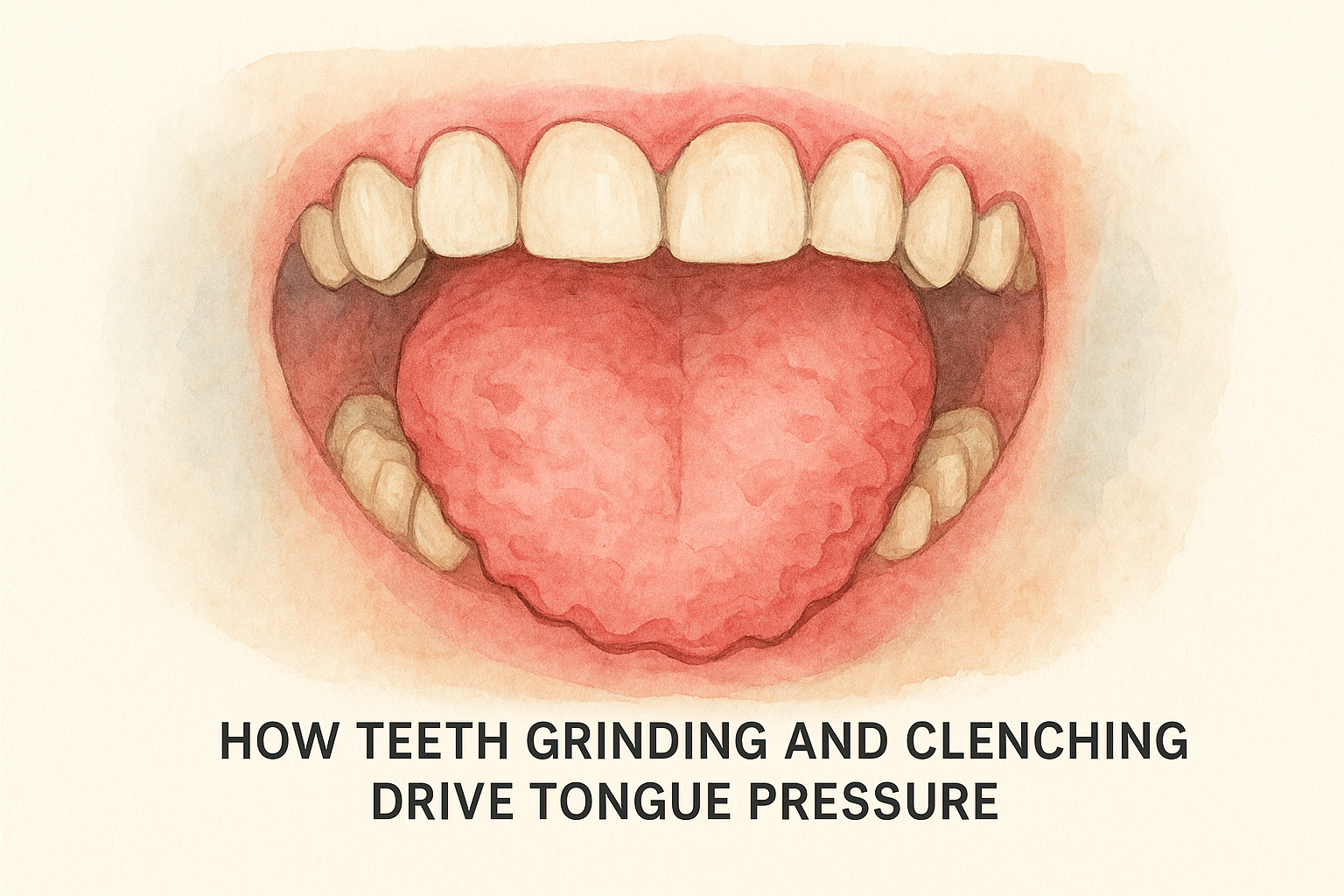
Many people with bruxism don't realize they do it until a dentist points out tooth wear or until they notice physical signs like jaw soreness, headaches, or a scalloped tongue. The problem worsens because sleep-related clenching can continue for hours each night without you feeling any of it.
Why sleep apnea plays a role
Sleep apnea adds another layer to this picture. When your airway narrows or collapses during sleep, your tongue often shifts forward or flattens in an attempt to keep the airway open. This repositioning pushes the tongue more firmly against the teeth for extended periods each night. Chronic obstructive sleep apnea can therefore produce or worsen a scalloped tongue even in people who don't grind their teeth at all.
The connection also runs the other way: a larger or swollen tongue is a known risk factor for obstructive sleep apnea, which means swelling and airway problems can reinforce each other over time, making both conditions harder to resolve without addressing the root cause.
Spot the symptoms and know when to worry
A scalloped tongue is usually painless, which is part of why so many people miss it for months or even years. The most reliable way to check is to extend your tongue in front of a mirror and examine the lateral edges. If you see a wavy, tooth-shaped pattern running along both sides, that's the scalloping. The indentations conform almost exactly to the shape of your lower teeth, like a soft impression left in clay.
What a scalloped tongue looks and feels like
Most people with this condition notice a uniform series of notches or crenations that mirror their lower tooth line. The edges feel softer and slightly spongy compared to the center of the tongue. Some people report mild puffiness or sensitivity along the edges, but actual pain is uncommon unless a secondary issue like a mouth sore or infection is present at the same time.
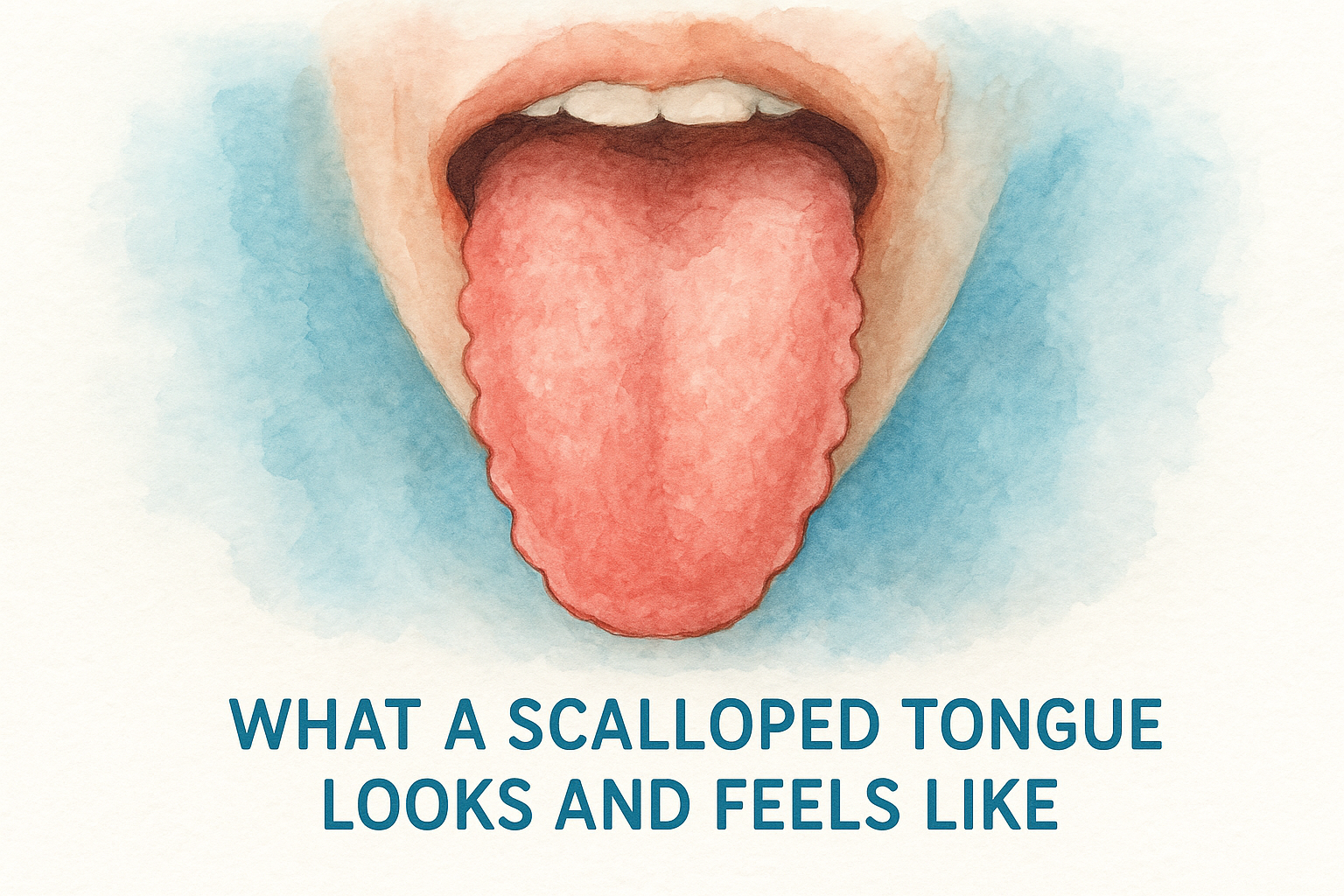
Your tongue may also appear pale, swollen, or coated with a white or yellowish film, especially if the root cause involves a vitamin deficiency or thyroid dysfunction. These additional visual signs can give your doctor useful context when narrowing down what's driving the indentations, so pay attention to them and mention them during your visit.
If your tongue looks both scalloped and unusually pale or swollen, bloodwork to rule out nutritional deficiencies or thyroid issues is a practical next step.
Warning signs that need a doctor's attention
Not every case requires urgent care, but certain accompanying symptoms should prompt you to book an appointment sooner rather than waiting to see if things resolve on their own. Watch for any of the following:
- Persistent swelling that doesn't reduce within a few days
- Difficulty swallowing or breathing, which can signal airway involvement
- Unexplained fatigue combined with tongue changes
- Visible sores, lesions, or unusual color changes on the tongue
- Worsening jaw pain or morning headaches alongside the scalloping
These symptoms suggest the underlying cause likely needs direct medical or dental treatment, not just a wait-and-see approach.
Identify common dental and lifestyle causes
Before looking at systemic conditions, it's worth checking the most straightforward explanations first. Dental habits and daily lifestyle factors account for a significant portion of scalloped tongue cases, and addressing these is often the most direct path to improvement. Understanding which behaviors are driving the problem gives you something concrete to act on right away.
How bruxism leaves its mark
Teeth grinding and clenching, collectively called bruxism, rank among the most common dental causes of a scalloped tongue. When you grind during sleep, your jaw generates substantial force, and your tongue naturally braces against the lower teeth to stabilize itself. Repeated nightly pressure on the same areas gradually shapes the tongue edges to mirror the tooth line.
The problem compounds because most people with bruxism have no idea it's happening. You might wake up with jaw soreness or a dull headache without connecting it to nighttime grinding. A custom-fitted night guard reduces the clenching force and repositions the jaw, which takes consistent pressure off the tongue and gives the tissue a chance to recover.
If you wake up with jaw tension and notice wavy tongue edges, nighttime bruxism is the most likely culprit.
Lifestyle habits that increase your risk
Several daily habits raise your risk of developing or worsening a scalloped tongue, even without an underlying medical condition. Consider whether any of these apply to your routine:
- Chronic mouth breathing, which dries oral tissue and alters tongue position throughout the day and night
- High sodium intake, which promotes fluid retention and mild soft-tissue swelling throughout the mouth
- Alcohol and tobacco use, both of which cause localized inflammation in oral tissue
- Sleeping on your back, which shifts the tongue rearward and increases contact pressure against the lower teeth
- Dehydration, which affects tissue tension and can make existing swelling more pronounced
Adjusting these habits alongside any dental treatment gives your tongue better conditions to recover and reduces the likelihood of the indentations returning.
Recognize medical causes and medication red flags
When dental and lifestyle factors don't explain your symptoms, the cause likely sits deeper inside the body. Several systemic conditions and prescription medications are known to produce a scalloped tongue by either expanding tongue tissue or altering fluid distribution throughout your oral cavity. Knowing which conditions to look for helps you have a more focused conversation with your doctor.
Systemic conditions that enlarge or inflame the tongue
Hypothyroidism is one of the most frequently linked systemic causes. An underactive thyroid slows your metabolism and causes fluid to build up in soft tissues across your body, including your tongue. The resulting swelling pushes tongue tissue against the teeth consistently enough to leave persistent indentations along both edges. Celiac disease and other autoimmune conditions like lupus produce similar effects through systemic inflammation rather than fluid accumulation.
Vitamin and mineral deficiencies are another major driver. Low levels of B12, iron, or niacin can cause glossitis, a condition where the tongue becomes swollen, sore, and sometimes pale or unusually smooth. These deficiencies are common enough that a basic blood panel will often identify them quickly, and correcting them through diet or supplementation can reduce tongue swelling and improve the scalloping noticeably within weeks.
If your scalloped tongue comes with fatigue, unexplained weight changes, or digestive issues, ask your doctor for a thyroid panel and nutritional bloodwork before assuming it's purely dental.
Medications that contribute to the problem
Certain medications cause fluid retention or dry mouth as a side effect, both of which can worsen tongue indentations. Corticosteroids, some antidepressants, antihypertensives, and antihistamines are among the most commonly reported offenders. Dry mouth reduces saliva's buffering effect on oral tissue, which increases friction and pressure between the tongue and teeth throughout the day.
You shouldn't stop any prescribed medication without talking to your prescribing physician first, but flagging this symptom during your next appointment gives your doctor a chance to adjust your dosage or suggest an alternative that produces fewer oral side effects.
Treat scalloped tongue and prevent it from returning
Treating a scalloped tongue starts with identifying what's actually driving it. There's no universal fix because the indentations are a symptom, not a standalone condition. Your treatment plan needs to target the specific cause identified through dental examination or medical testing, whether that turns out to be a nutritional deficiency, a thyroid condition, or nighttime clenching.
Once you address the root cause, the scalloping typically fades on its own as swelling reduces or pressure on the tongue decreases.
Address the root cause first
If bloodwork reveals a vitamin B12 or iron deficiency, supplementation or dietary changes can reduce tongue swelling within a few weeks. Thyroid conditions require medication prescribed by your doctor, but once your thyroid levels stabilize, tongue tissue swelling usually decreases alongside your other symptoms. Autoimmune or inflammatory conditions follow a similar pattern: managing systemic inflammation with appropriate treatment reduces the tissue expansion pushing your tongue against your teeth.
Protect your teeth and tongue at night
If bruxism is contributing to your symptoms, a custom-fitted night guard is one of the most effective tools you can use. Unlike store-bought options, a custom guard distributes bite force evenly and reduces the lateral pressure your tongue endures during clenching. For sleep apnea, a CPAP device or positional therapy addresses airway collapse directly, which in turn reduces the compensatory tongue positioning that drives the indentations deeper over time.
Build habits that reduce your risk long term
Preventing the problem from returning means staying consistent with the habits that contributed in the first place. Focus on these practical changes:
- Staying well hydrated to reduce oral tissue tension
- Lowering sodium intake to limit fluid retention in soft tissue
- Switching to nasal breathing during the day where possible
- Reducing alcohol and tobacco use, both of which inflame oral tissue
These adjustments won't resolve an underlying medical condition on their own, but they create better conditions for recovery and lower the chances of the scalloping returning once treatment is underway.
A quick recap and what to do next
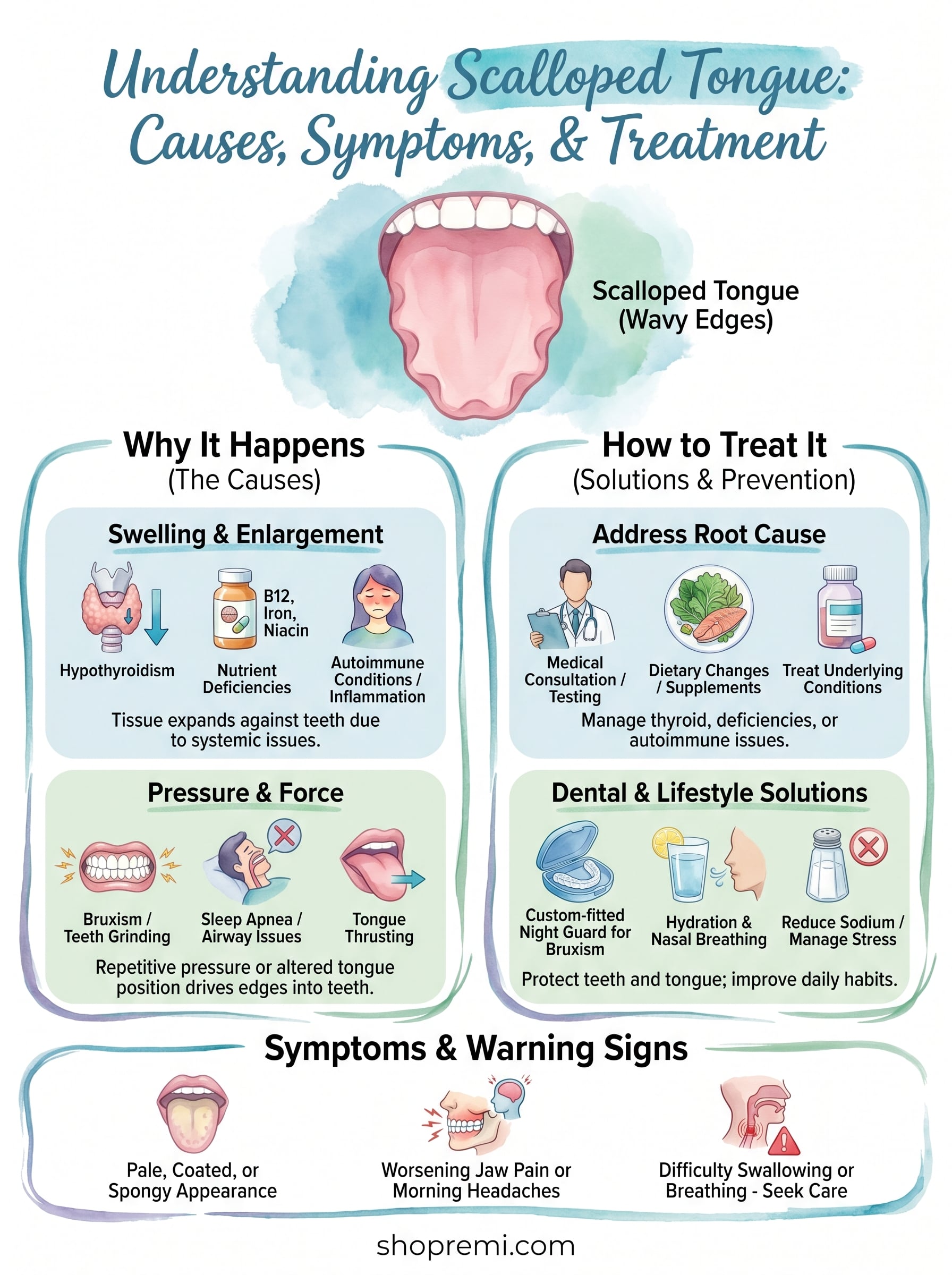
A scalloped tongue forms when your tongue presses repeatedly against your teeth due to swelling, bruxism, or airway issues during sleep. The indentations are a symptom, not a condition in their own right, so the fix depends entirely on what's driving them. Nutritional deficiencies, thyroid problems, autoimmune conditions, and sleep apnea all require medical attention, while dental and lifestyle factors often respond well to targeted habit changes and protective gear.
Your most immediate step is to look closely at your symptoms and trace them back to a likely cause. If jaw tension, morning headaches, or tooth wear accompany the tongue changes, nighttime clenching is the most probable culprit. A custom-fitted night guard reduces the force your jaw generates while you sleep, takes consistent pressure off your tongue, and gives tissue the space it needs to recover over time.

