
 Guards + Retainers
 Custom Night Guard
 Retainer
 Emergency Order

 Whitening
 Whitening Kit
 Teeth Whitening Gel
 Dual-Action Foam
 Cleaning + Care
 Ultrasonic Cleaner Pro
 Water Flosser
 UV Toothbrush Sanitizer
 Deep Clean + Freshening Tablets
 Accessories
 Guard Removal Tool
 Replacement Nozzles
 Bundles

A jaw cramp can hit without warning, while you're eating, yawning, or even just talking, and the sudden, sharp tightness under your chin or along the side of your face can stop you mid-sentence. It's uncomfortable, sometimes alarming, and if it keeps happening, it's your body telling you something needs attention.
Jaw cramps have several possible causes, from dehydration and stress to more persistent issues like teeth grinding (bruxism) and TMJ disorders. The symptoms can range from a brief muscle spasm that resolves on its own to recurring tightness and soreness that disrupts sleep, meals, and daily comfort. Understanding what's behind the cramping is the first step toward actual relief.
This article breaks down the most common causes of jaw cramps, how to recognize the symptoms, and practical ways to ease the pain quickly. We'll also cover when jaw cramps may point to bruxism, a condition where you unconsciously clench or grind your teeth, especially at night. If that turns out to be a factor, a custom-fitted night guard from Remi can help protect your teeth and reduce the jaw tension that triggers cramping, all at a fraction of typical dental office costs.
Why jaw cramps happen
The jaw contains some of the most active muscles in your body, working constantly through chewing, speaking, and swallowing. Like any muscle, the jaw can cramp when it's overworked, poorly nourished, or under ongoing stress. A jaw cramp often signals that one or more underlying factors has built up to a tipping point, and understanding those factors helps you address the root cause rather than just the symptom.
Muscle overuse and stress
Your jaw muscles, primarily the masseter and temporalis, are designed for repeated movement, but they have limits. Prolonged chewing of tough foods, extended dental procedures that keep your mouth open for a long time, or habitually holding your jaw in a tense position can all push those muscles past their capacity. When muscle fibers fatigue and can't relax properly, a cramp follows.
Psychological stress plays a significant role as well. When you're anxious or under pressure, you may unconsciously tighten your jaw, clench your back teeth, or hold tension in your face and neck without realizing it. Over hours or days, that low-level contraction accumulates, and the result is a sore, cramping jaw that often feels worst at the end of a stressful workday or after a restless night of sleep.
Chronic stress is one of the most overlooked contributors to persistent jaw cramping, because the tension builds gradually and feels normal until pain sets in.
Dehydration and electrolyte imbalance
Muscles need adequate hydration and the right balance of electrolytes to contract and release correctly. When you're dehydrated, or when your sodium, potassium, magnesium, or calcium levels drop, the signals between your nerves and muscles get disrupted. The muscle can fire and contract but struggles to fully release, producing the painful, locked sensation you feel during a cramp.
This is why jaw cramps sometimes hit after intense exercise, in hot weather, or after heavy alcohol consumption, all situations that deplete fluids and minerals quickly. Increasing your daily water intake and eating foods rich in electrolytes, like bananas, leafy greens, and nuts, is a direct and practical way to reduce cramp frequency linked to this cause.
Teeth grinding and TMJ disorders
Bruxism, the habit of grinding or clenching your teeth, often happens during sleep when you have no conscious control over it. The masseter muscle can generate enormous force during nighttime grinding, and that repeated, excessive load causes the muscle to tighten, fatigue, and cramp. You'll often notice jaw soreness or stiffness first thing in the morning as a result.
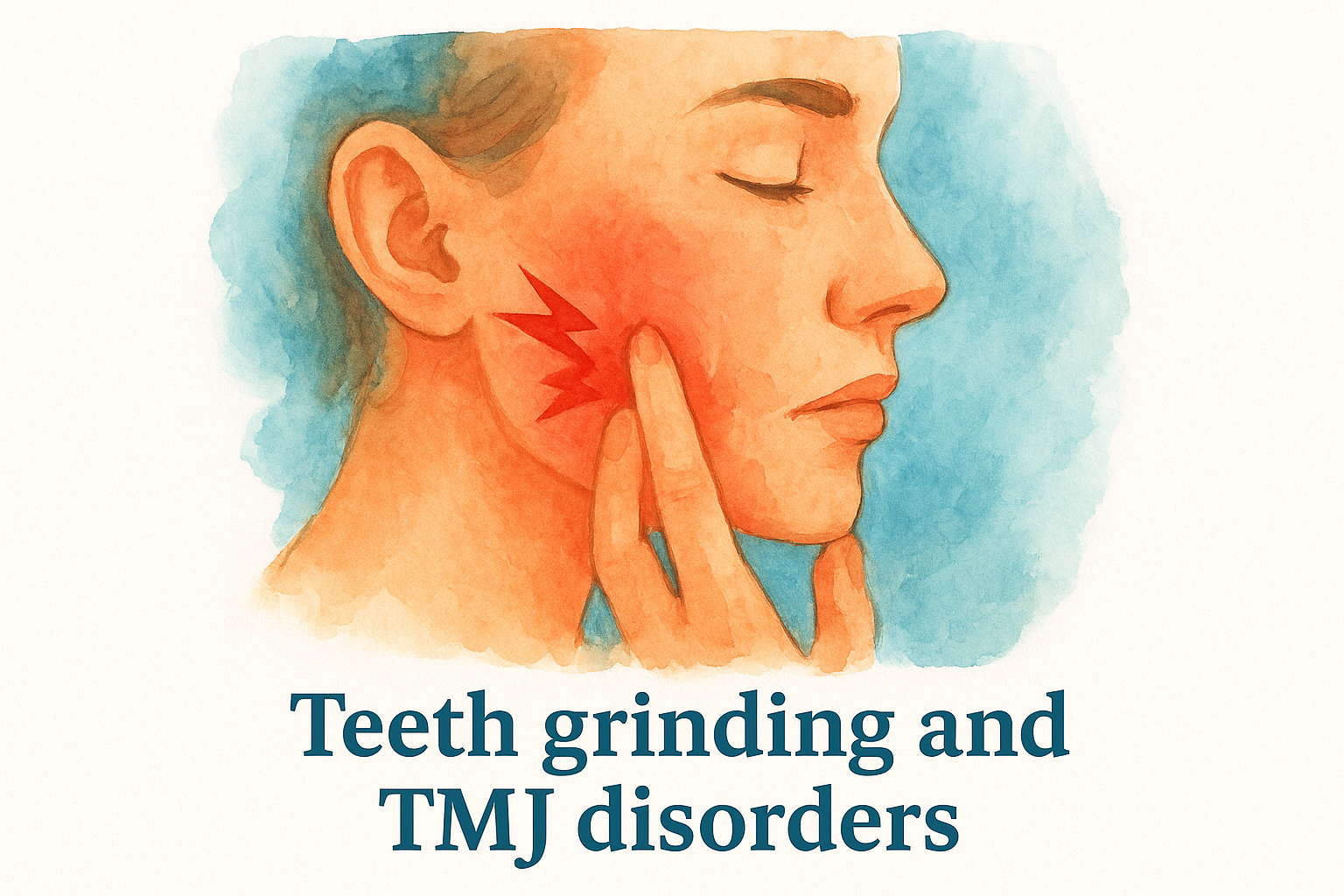
Temporomandibular joint (TMJ) disorders are closely related. The TMJ connects your lower jaw to your skull, and when the joint or its surrounding structures become inflamed or misaligned, the muscles around it compensate by working harder than they should. That extra load leads directly to cramping. Bruxism frequently aggravates existing TMJ problems, and TMJ dysfunction can make grinding worse, creating a cycle that's difficult to break without addressing both issues at the same time.
Jaw cramp symptoms and red flags
A jaw cramp doesn't always announce itself the same way. Some people feel a sudden, sharp tightening that forces them to stop chewing mid-bite. Others notice a dull ache that builds gradually through the day, accompanied by stiffness that makes it hard to open their mouth fully. Knowing the full range of symptoms helps you identify what's happening and decide how urgently you need to act.
Common symptoms to recognize
The most immediate sign is muscle tightness or spasm in the jaw, typically felt along the lower jaw, under the chin, or at the temples. You may notice a clicking or popping sensation when you open and close your mouth, which points to tension affecting the temporomandibular joint as well. Pain that radiates into the ear, neck, or upper back is also common, since the jaw muscles connect to a broad network of surrounding tissue.
Other symptoms that often accompany jaw cramping include:
- Morning soreness or stiffness that eases as the day progresses
- Headaches that start at the temples or base of the skull
- Sensitivity in the teeth without an obvious dental cause
- Difficulty chewing tough or chewy foods comfortably
- A feeling of facial fatigue after speaking for extended periods
If you wake up with jaw soreness most mornings, nighttime teeth grinding is a likely culprit and worth addressing directly.
Red flags that need serious attention
Most jaw cramps are uncomfortable but not dangerous. However, certain symptoms indicate that something more serious may be going on, and those warrant prompt medical attention. Sudden, severe jaw pain combined with chest pain, shortness of breath, or pain radiating down the left arm can signal a cardiac event, and you should call emergency services immediately. Jaw tension can be an early indicator in some cardiac situations, so never dismiss that combination of symptoms.
You should also see a provider if you experience limited jaw movement that doesn't improve within a few days, unexplained swelling or warmth around the jaw or neck, difficulty swallowing, fever alongside jaw pain, or a locked jaw that won't open or close properly. These signs can point to infection, nerve involvement, or a structural joint problem that requires professional diagnosis rather than home care.
How to relieve a jaw cramp fast
When a jaw cramp strikes, your first instinct might be to clench down or wait it out. A better approach is to act immediately with targeted techniques that relax the muscle and restore blood flow to the area. Most cramps respond well within a few minutes when you apply the right methods in the right order.
Apply heat or cold to the area
Heat is usually the more effective option for muscle cramps because it increases blood flow and helps tight muscle fibers release. Press a warm towel or a heating pad set to a low setting against the side of your jaw or under your chin for 10 to 15 minutes. If the area feels inflamed or swollen rather than just tight, switch to a cold pack wrapped in a thin cloth for 10-minute intervals to reduce any inflammation before applying heat.
Switching between heat and cold is a practical option when you're unsure whether inflammation or pure muscle tension is driving the pain.
Gently stretch and massage the muscle
Slow, controlled movement is more effective than forcing your jaw open wide. Open your mouth gradually until you feel mild resistance, hold for five seconds, then close slowly. Repeat this five to ten times to coax the muscle out of its contracted state without straining the joint further.
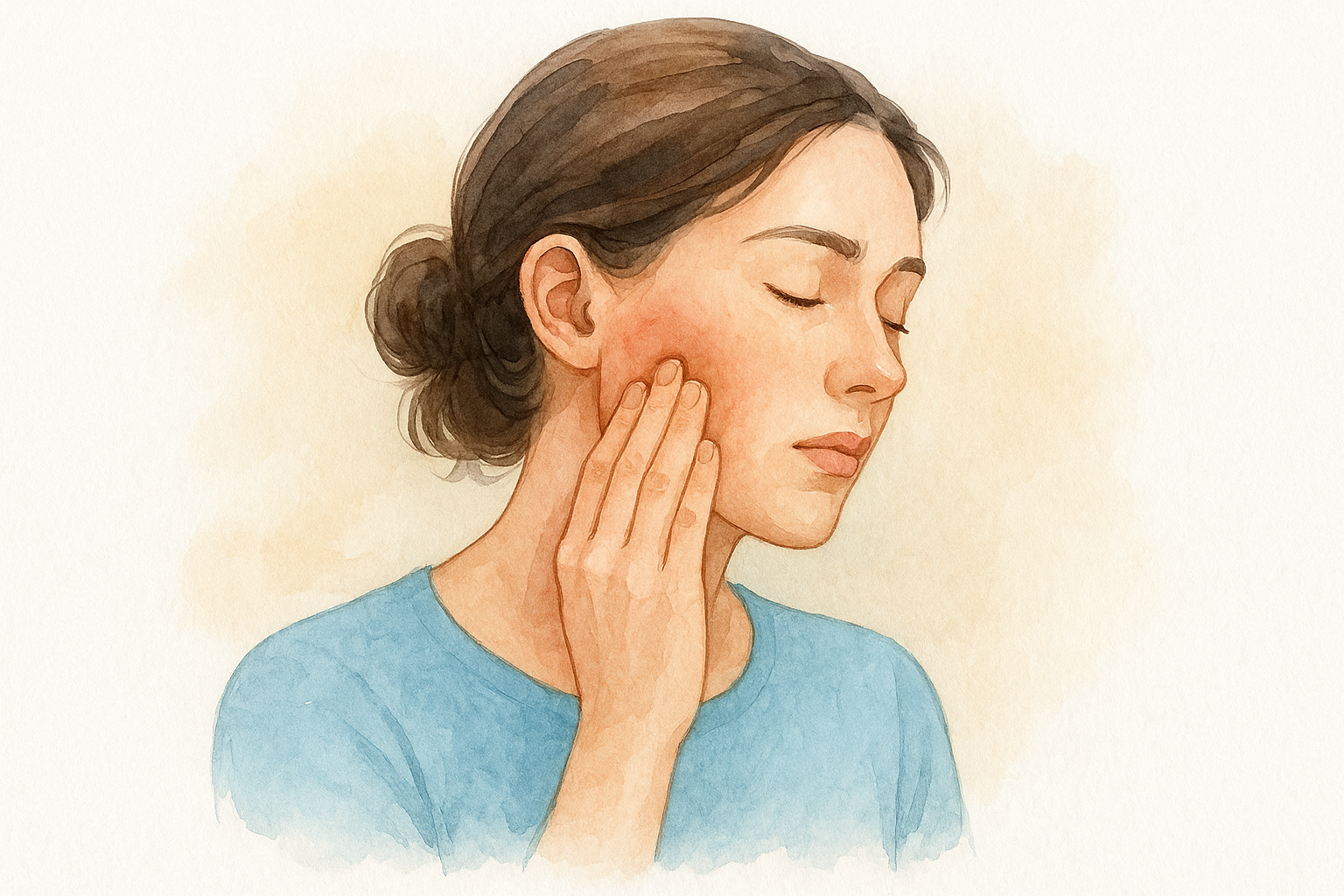
Pair that movement with direct manual pressure on the masseter, the large muscle along your lower jaw. Use two or three fingertips to apply firm, circular pressure along the muscle for 30 to 60 seconds on each side. Working the muscle with your fingers breaks up tension that stretching alone may not fully address, and most people feel a noticeable difference within a couple of minutes.
Hydrate and reduce the load on your jaw
If dehydration or low electrolytes contributed to the cramp, drinking water immediately gives your muscles the fluid they need to relax. A small snack containing potassium or magnesium, such as a banana or a handful of almonds, can help restore the mineral balance that supports proper muscle function.
While recovering, stop chewing anything tough or chewy, avoid opening your mouth wide, and let your jaw rest in a neutral position with your teeth slightly apart and your lips gently closed. Removing the mechanical load while the muscle recovers is a straightforward way to speed up relief.
How to prevent jaw cramps long term
Preventing a jaw cramp before it starts requires more than drinking extra water on hot days. Long-term prevention means identifying which factors consistently trigger your cramps and building habits that remove or reduce those triggers over time. Most of the key changes are practical and don't require major lifestyle overhauls.
Address teeth grinding directly
If you wake up with jaw soreness or stiffness on a regular basis, nighttime bruxism is likely the main driver of your recurring cramps. Grinding places enormous repeated load on your jaw muscles overnight, and that load accumulates into the kind of chronic tension that spills over into daytime cramping. Wearing a custom-fitted night guard protects your teeth from damage and reduces the intensity of clenching by repositioning your jaw so the muscles can work with less strain.
A well-fitted night guard is one of the most direct tools you can use to break the cycle of nighttime grinding and morning jaw pain.
Remi offers custom night guards made from your own dental impressions, delivered directly to your door at a fraction of typical dental office pricing. The at-home impression process is simple, and the result is a guard that fits your bite precisely, which matters because an ill-fitting guard can actually worsen jaw tension rather than reduce it.
Build better daily habits
Small changes to how you eat, hydrate, and position your jaw throughout the day add up significantly over weeks and months. Staying consistently hydrated keeps your muscles functioning correctly, and eating a diet that includes magnesium and potassium-rich foods like leafy greens, bananas, and nuts supports proper muscle contraction and release.
- Avoid chewing gum habitually, as it keeps jaw muscles in a near-constant state of low-level contraction
- Cut tough foods into smaller pieces to reduce the mechanical load on each bite
- Check your jaw position during the day and keep your teeth slightly apart rather than pressed together
Manage stress and reduce muscle tension
Stress management directly influences jaw health because psychological tension defaults into physical muscle tension, particularly in the face and jaw. Regular exercise, breathing techniques, and short breaks during mentally demanding work all lower the baseline tension your jaw muscles carry through the day. Neck and shoulder stretches that release surrounding muscle groups also reduce the load that feeds into jaw cramping over time, since the jaw doesn't work in isolation from the rest of your upper body.
When to see a dentist or doctor
Most jaw cramp episodes resolve with rest, heat, and the simple techniques covered earlier in this article. However, some symptoms signal that home care isn't enough and that a professional evaluation will actually save you time, money, and discomfort down the road. Recognizing which category your symptoms fall into helps you act at the right time rather than waiting too long or rushing in unnecessarily.
Signs that point to a dentist visit
A dentist is your first contact when jaw cramping is tied to your bite, your teeth, or your jaw joint. If you notice consistent morning soreness, worn or chipped teeth, or visible grooves on your tooth surfaces, those are strong indicators of nighttime bruxism. Bruxism-related cramping won't stop on its own because the grinding continues every night until something interrupts the pattern, typically a custom night guard or a bite adjustment.
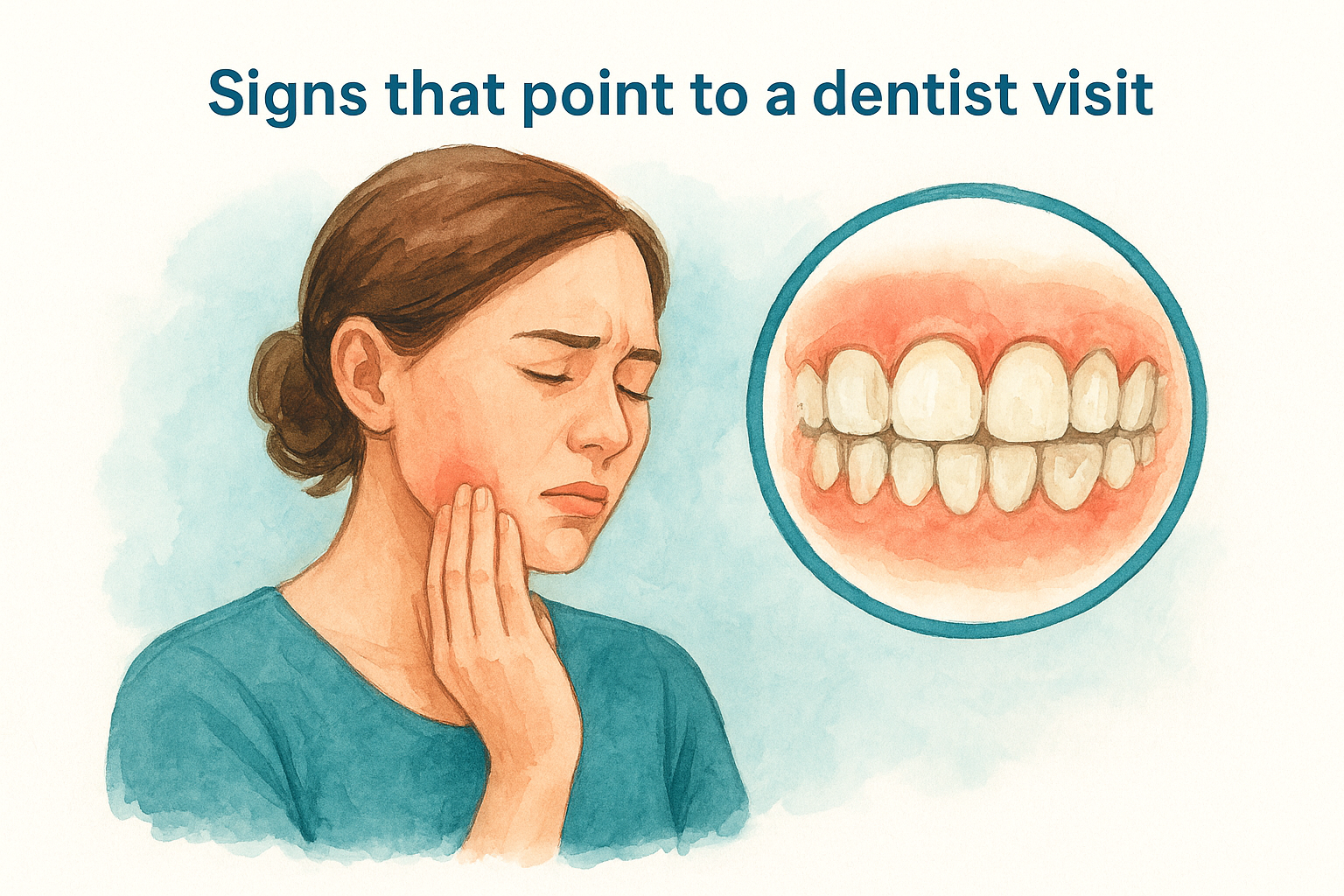
You should also schedule a dental appointment if your jaw clicks, pops, or catches when you open and close your mouth alongside the cramping. These signs suggest the temporomandibular joint itself is involved, and a dentist can assess whether the joint is structurally sound or whether it needs targeted treatment. Waiting months on a suspected TMJ problem typically allows the condition to worsen and the surrounding muscles to develop deeper, harder-to-treat tension patterns.
If your jaw symptoms cluster around morning soreness, tooth wear, and joint noise, start with your dentist rather than a general practitioner.
Signs that require a medical doctor
Some jaw symptoms fall outside what a dentist can diagnose or treat. Sudden jaw pain accompanied by chest tightness, pain down the left arm, or shortness of breath requires an emergency call, not a scheduled appointment. Jaw tension can present as an early sign in certain cardiac events, and that combination of symptoms should never be self-treated.
Beyond cardiac concerns, fever alongside jaw pain, progressive difficulty swallowing, visible swelling or warmth in the neck or jaw area, or a jaw that locks completely open or closed all warrant same-day medical attention. These signs can indicate infection, nerve compression, or a systemic condition that a dentist is not equipped to manage. Your primary care physician or an urgent care provider can order imaging, bloodwork, and specialist referrals that move the diagnosis process forward quickly.
A general rule worth following: if jaw symptoms disrupt eating, sleeping, or speaking for more than a week without improvement, book an appointment rather than continuing to wait.
Diagnosis and treatment options you may be offered
When you visit a dentist or doctor about a jaw cramp or recurring jaw pain, the process moves in two phases: first confirming what's causing the problem, then deciding on the most effective treatment. Understanding what to expect helps you prepare for the appointment and ask better questions when the provider presents your options.
How a diagnosis is made
Your provider will start with a detailed history of your symptoms, asking when the pain started, how often it occurs, whether it's worse in the morning, and whether anything reliably triggers it. That information narrows the list of likely causes before any physical exam begins. The dentist or doctor will then examine your jaw range of motion, press on key muscle groups to identify tenderness, and listen for clicking or popping in the temporomandibular joint.
A thorough symptom history is often more useful to a provider than any single diagnostic test, so come prepared with specific details about when and how your jaw pain occurs.
Imaging is ordered when the physical exam points to structural problems. A dental X-ray shows the teeth and bone clearly, while a cone beam CT scan gives a three-dimensional view of the jaw joint. In cases where soft tissue damage or disc displacement is suspected, your provider may refer you for an MRI, which captures the cartilage and surrounding structures in detail.
Common treatment options
Occlusal splints and custom night guards are among the most frequently recommended treatments when bruxism or TMJ dysfunction is involved. These devices reposition your jaw during sleep, reduce the clenching load on your muscles, and give the joint a chance to recover. Physical therapy focused on the jaw and neck is another common recommendation, particularly when the surrounding muscles have developed chronic tension patterns from months of overuse.
For short-term pain management, providers often suggest anti-inflammatory medications, muscle relaxants, or trigger point injections into the masseter muscle when conservative methods haven't produced enough relief. In more persistent TMJ cases, a specialist may discuss intra-articular corticosteroid injections or, in rare situations, surgical evaluation. Most people with bruxism and muscle-related jaw cramping improve significantly with a combination of a well-fitted oral appliance, stress management, and targeted physical therapy before more invasive options become necessary.
Jaw cramp FAQ
These are the questions that come up most often when people are dealing with recurring jaw cramping or trying to figure out whether their symptoms are something to act on. The answers below cut straight to what you need to know.
Can dehydration actually cause a jaw cramp?
Yes, and it's more common than most people expect. Muscles rely on a steady supply of fluids and electrolytes to contract and release correctly, and when your hydration drops, the release phase of that cycle becomes unreliable. Your jaw muscles can fire without fully relaxing, which is exactly what a cramp is. Sodium, magnesium, potassium, and calcium are the four electrolytes most directly involved in muscle function, and losing any of them through sweating, alcohol consumption, or simply not drinking enough water raises your cramp risk noticeably.
How long does a jaw cramp typically last?
Most acute jaw cramps resolve within a few seconds to a few minutes, especially when you apply heat, gently stretch, and stop loading the muscle. If the cramping is tied to a one-off trigger like a long dental appointment or an intense workout, the soreness that follows can linger for one to two days but should improve steadily. Cramping that recurs daily or that leaves your jaw consistently stiff and sore for longer than a week suggests an underlying issue like bruxism or TMJ dysfunction rather than a simple muscle event.
Cramps that keep coming back in the same location are worth tracking by time of day and activity, since that pattern often points directly to the cause.
Is a jaw cramp the same as a TMJ disorder?
No, though the two are closely connected. A jaw cramp is a muscle event, a sudden involuntary contraction in one of the muscles that controls your jaw movement. A TMJ disorder is a structural or functional problem with the temporomandibular joint itself or the disc and tissue surrounding it. Bruxism can produce both: the grinding fatigues the muscles into cramping while simultaneously stressing the joint. Treating only the cramping without addressing a TMJ problem typically delivers short-term relief at best.
Will a night guard stop jaw cramps from happening?
A custom-fitted night guard reduces the clenching load on your jaw muscles during sleep, which directly lowers the muscle fatigue that leads to morning cramping. It won't eliminate cramps caused by dehydration or daytime stress posture, but if nighttime grinding is the main driver, a properly fitted guard makes a significant and measurable difference in how your jaw feels when you wake up.
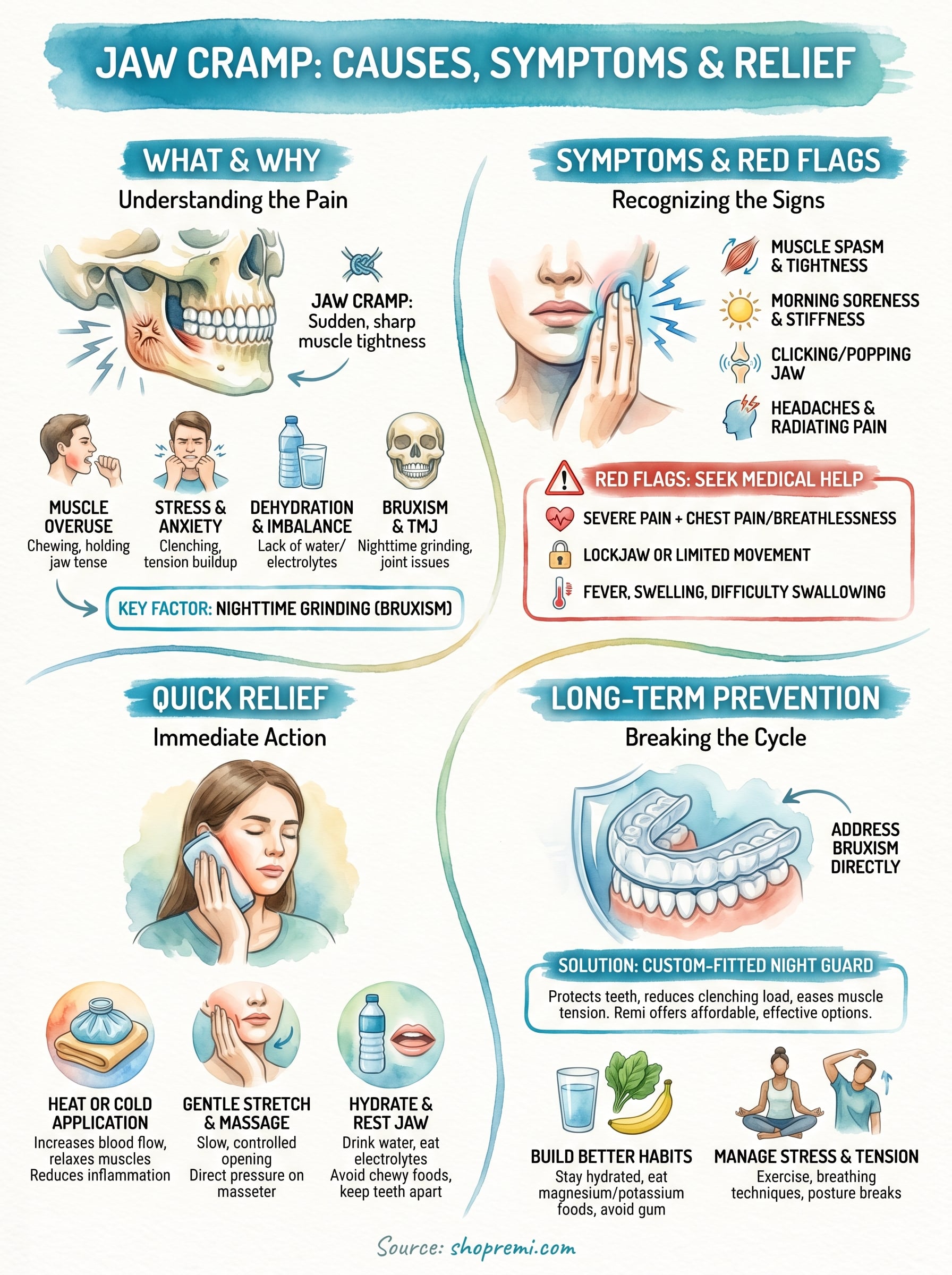
A simple plan for a calmer jaw
A jaw cramp rarely has one single cause, but it almost always has a solution once you understand what's driving it. Start with the basics: stay hydrated, reduce habitual jaw tension during the day, and give your muscles a chance to recover after they've been overworked. Those steps alone will reduce how often cramps occur for most people.
If your jaw feels sore when you wake up or your teeth show signs of wear, nighttime grinding is likely the piece you're missing. The good news is that it's straightforward to address. A custom-fitted night guard repositions your jaw during sleep, reduces the clenching load on your muscles, and breaks the cycle of nightly tension that feeds into daily discomfort. Remi makes that process simple and affordable without a dental office visit. Try a custom night guard and start waking up with a jaw that actually feels rested.

