
 Guards + Retainers
 Custom Night Guard
 Retainer
 Emergency Order

 Whitening
 Whitening Kit
 Teeth Whitening Gel
 Dual-Action Foam
 Cleaning + Care
 Ultrasonic Cleaner Pro
 Water Flosser
 UV Toothbrush Sanitizer
 Deep Clean + Freshening Tablets
 Accessories
 Guard Removal Tool
 Replacement Nozzles
 Bundles

You spent months (maybe years) in braces, and the day they finally come off feels incredible. But here's what catches many people off guard: without a retainer for teeth after braces, your teeth can start shifting back toward their original positions within weeks. All that time, money, and discomfort? It can slowly unravel if there's nothing holding your teeth in place.
A retainer is the final, and arguably most important, step in orthodontic treatment. Choosing the right type, knowing how long to wear it, and understanding how to care for it properly all make a real difference in whether your results last. At Remi, we make custom-fitted removable retainers that ship directly to your door, so keeping your smile straight doesn't have to mean repeated trips to the dentist's office.
This guide breaks down the types of retainers available, how to wear them correctly, and how to keep them clean so they last.
Why you need a retainer after braces
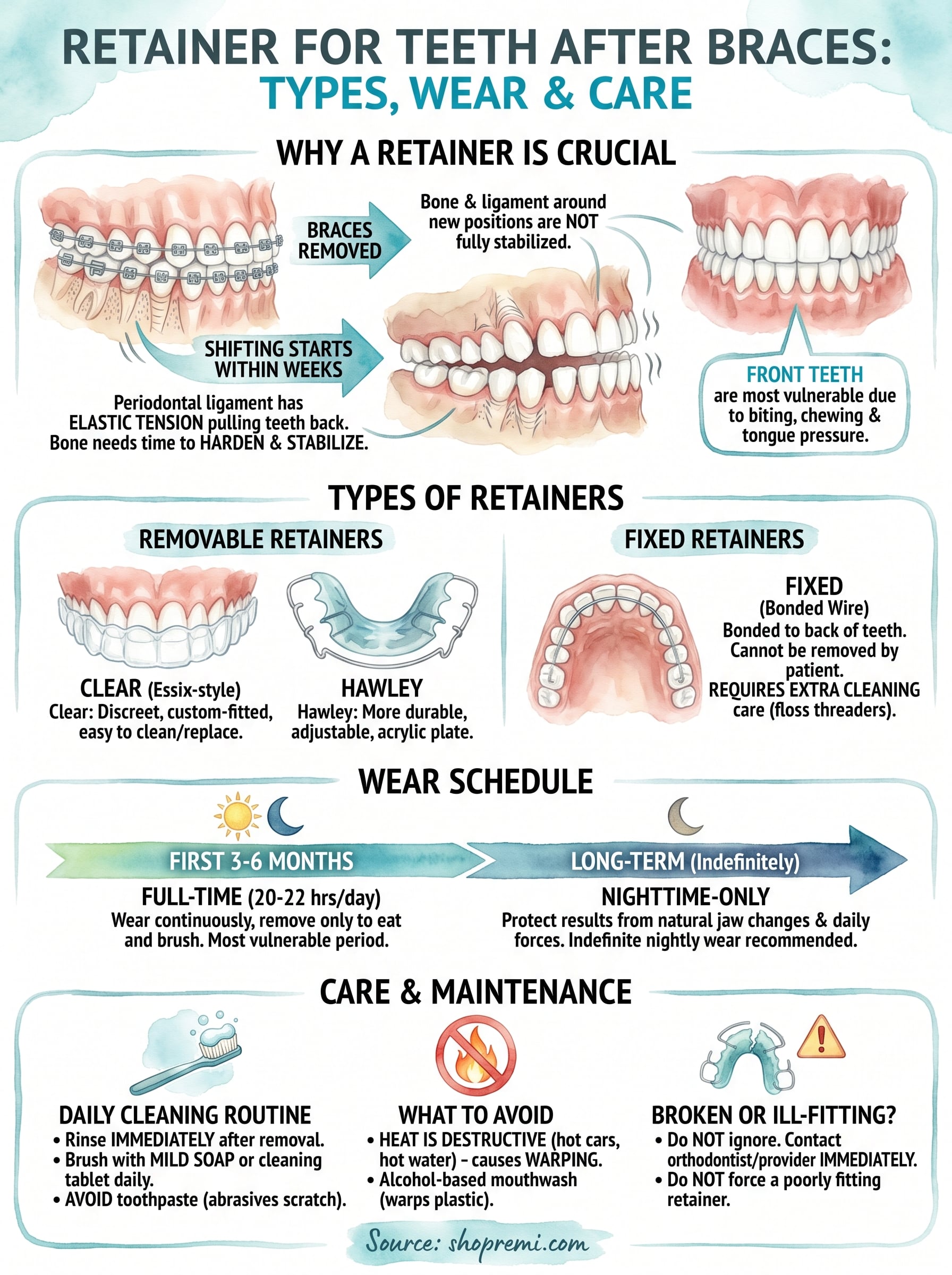
When your orthodontist removes your braces, your teeth are in their new positions, but the bone and tissue surrounding them haven't fully stabilized yet. Your teeth are held in place by the periodontal ligament, a flexible tissue that stretches and compresses as teeth move. After braces come off, that ligament still carries elastic tension that pulls your teeth back toward where they started.
The biology behind the shift
Bone remodeling is the real reason a retainer for teeth after braces is non-negotiable. During orthodontic treatment, your jawbone breaks down and rebuilds around your teeth as they move into corrected positions. Once braces come off, that process is not finished. The bone around your teeth needs additional time to fully harden and stabilize, and without something holding them in place, movement happens fast.
Research consistently shows that teeth can begin shifting within just a few weeks of braces removal if nothing is holding them in place.
Your front teeth are especially vulnerable because the daily forces of biting, chewing, and tongue pressure act on them constantly. Younger patients tend to see faster relapse because their bone is still developing, but adults experience shifting too, particularly as their jaw structure continues to change over time.
What skipping a retainer actually costs you
Most people who skip their retainer don't notice anything dramatic at first. The shifting is gradual, and by the time you spot a visible gap or overlapping teeth, significant movement has already occurred. Returning to braces or aligners to fix relapse is far more expensive and time-consuming than simply wearing a retainer as directed.
Staying consistent is genuinely straightforward once you build the habit. A retainer asks very little of you beyond wearing it on schedule and keeping it clean. The effort involved is minimal compared to going through months of orthodontic treatment all over again.
Types of retainers after braces
Not every retainer for teeth after braces looks or works the same way. Your orthodontist will recommend a type based on your specific case, but knowing the differences helps you understand what to expect and how to care for whichever option you end up with.
Removable retainers
Removable retainers come in two main forms: clear plastic (Essix-style) and Hawley retainers. Clear retainers are thin, custom-molded trays that fit snugly over your teeth. They are barely visible when worn and easy to take out for eating and brushing. Hawley retainers use a metal wire across the front teeth attached to an acrylic plate that sits against the roof of your mouth or along the lower gum line. They are more durable than clear plastic and easier to adjust if minor corrections are needed.
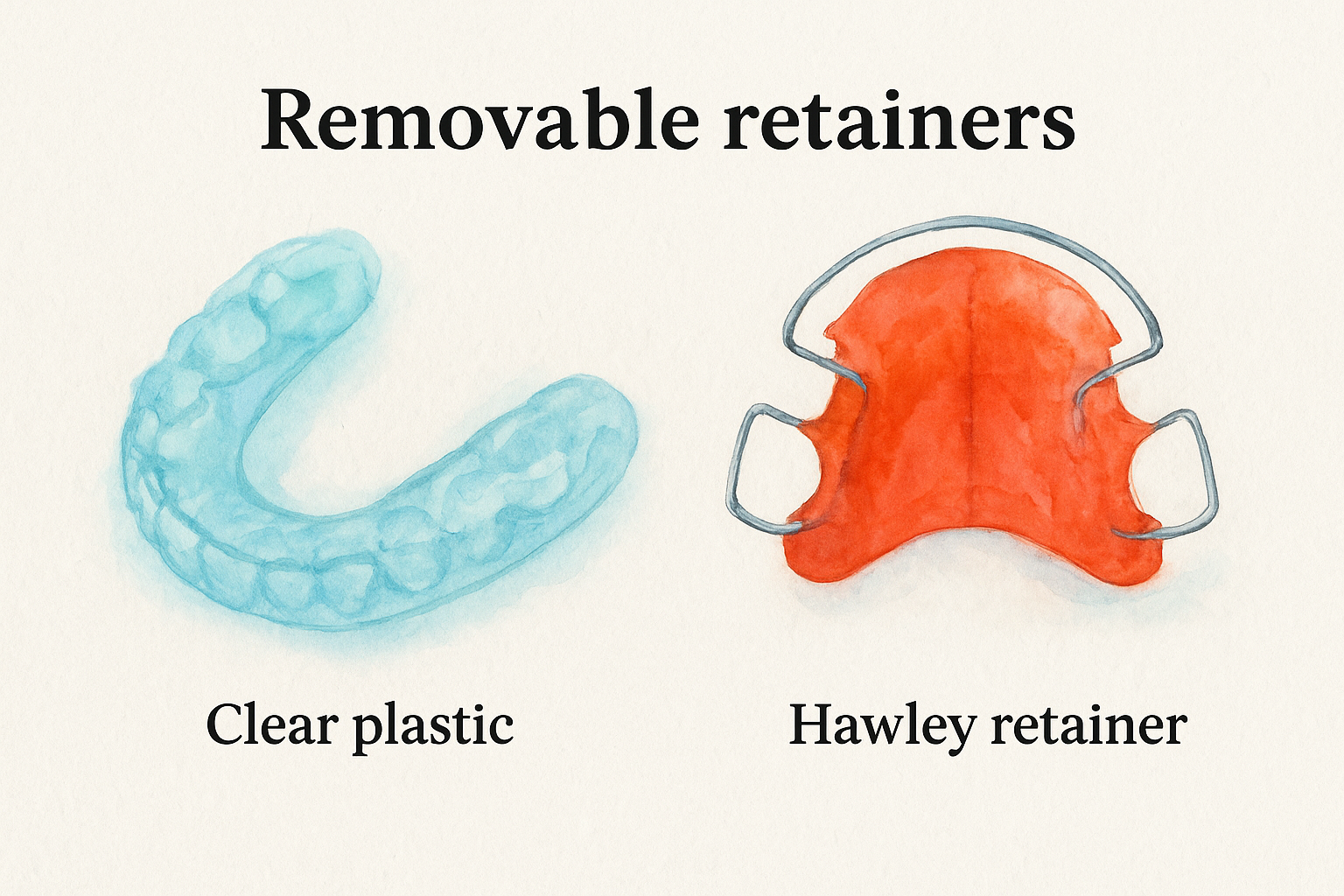
Clear removable retainers are the most commonly prescribed option today because they are discreet, comfortable, and easy to replace if lost or worn out.
Fixed retainers
Fixed retainers are thin wires bonded directly to the back surface of your teeth, usually the lower front six. You cannot remove them yourself, which makes compliance effortless. However, cleaning around the wire requires extra care, including floss threaders or an interdental brush to prevent plaque buildup. Some people have both a fixed retainer on the bottom and a removable one on top, giving them the benefits of both approaches.
How long to wear your retainer
How long you wear your retainer depends on where you are in your post-treatment timeline. Most orthodontists recommend full-time wear for the first three to six months, meaning you keep it in for 20 to 22 hours a day and only remove it to eat and brush. This window is when your teeth are most vulnerable to shifting, so consistent wear during this phase matters most.
The first few months: full-time wear
Your retainer for teeth after braces is doing the heavy lifting during this early stage. Your bone and ligament are still settling, so even a few skipped nights can result in noticeable tightness when you put it back in. Common signs that your teeth have already started moving include:
- The retainer feels tight or uncomfortable after a short break
- Visible crowding or gaps are beginning to reappear
- You have to press harder than usual to seat the tray fully
If your retainer no longer fits after missing a few nights, contact your orthodontist before the gap becomes too large to correct with the same appliance.
Long-term: nighttime-only wear
After the initial full-time phase, your orthodontist will typically clear you to wear your retainer only at night. Most dental professionals recommend keeping up this habit indefinitely, since teeth continue to shift throughout adulthood due to natural jaw changes and daily bite forces. Building nightly retainer wear into your routine is the most straightforward way to protect your results without any significant effort.
How to care for and clean retainers
A retainer for teeth after braces only works as well as the care you put into it. Bacteria, plaque, and mineral deposits build up on retainers just as they do on teeth, and a dirty retainer can lead to bad breath, discoloration, and gum irritation if you let buildup go unchecked for too long.
Daily cleaning routine
Rinse your retainer every time you remove it before saliva dries and hardens into deposits. Use a soft-bristled toothbrush and mild dish soap or a retainer cleaning tablet to gently scrub all surfaces once a day. Skip toothpaste for this job because most formulas contain abrasives that scratch clear plastic, creating small grooves where bacteria collect and multiply.
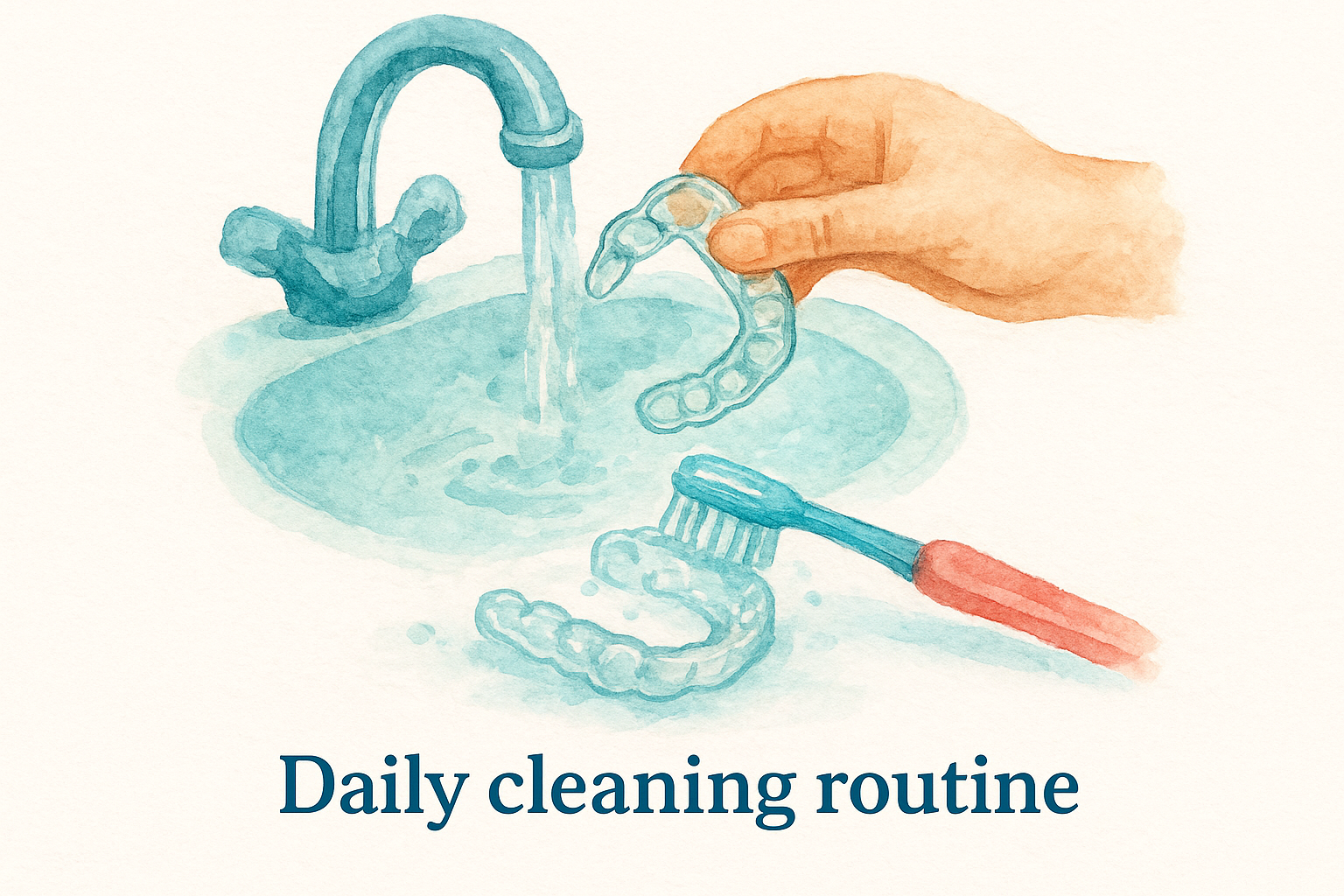
A consistent cleaning schedule looks something like this:
- Rinse immediately after removal every time
- Brush with mild soap once daily
- Soak in a cleaning tablet solution two to three times per week for deeper cleaning
Never soak a clear plastic retainer in alcohol-based mouthwash, as it can warp the shape and shorten the appliance's lifespan.
What to avoid
Heat is the most destructive force for clear retainers. Leaving yours in a hot car, rinsing it under hot water, or placing it near any heat source can permanently distort its shape.
A warped retainer no longer fits correctly and stops holding your teeth where they belong. Store it in its protective case whenever it is out of your mouth to avoid damage, warping, or loss.
What to do if it breaks or doesn't fit
A broken or ill-fitting retainer for teeth after braces is not something to ignore. Waiting too long to address the problem gives your teeth time to shift, which can make a replacement harder to seat correctly when it finally arrives.
When your retainer breaks
If your retainer cracks or snaps, stop wearing the damaged piece right away. A broken edge can cut or irritate your gums and cheek tissue, and a distorted tray can no longer hold your teeth in their corrected positions. Contact your orthodontist or order a replacement quickly, and tell them how long you went without wearing it so they can check whether any movement has occurred.
Signs your retainer needs replacing:
- Visible cracks or chips in the plastic
- A wire that has bent out of shape
- A tray that no longer sits flush against your teeth
When your retainer no longer fits
Tightness after a few missed nights is a warning sign, not something to push through. Forcing a poorly fitting retainer onto teeth that have shifted can place uneven pressure on individual teeth and cause real pain. Treat any significant resistance as a signal to get a professional evaluation before wearing it again.
If your retainer no longer seats fully or causes significant pain, contact your orthodontist before attempting to wear it again.
Some shifting may be correctable with a replacement retainer or a short aligner course, but acting quickly expands your options. The longer you wait, the more movement occurs and the more involved the fix becomes.
Keeping your smile straight for the long haul
Getting through orthodontic treatment is a real achievement, and wearing your retainer consistently is what protects that result permanently. Your teeth face daily pressure from biting, chewing, and tongue movement, and those forces continue working on your alignment throughout your entire life. Nightly retainer wear is the most reliable and least disruptive way to stay ahead of natural shifting.
Small habits add up over time. Replacing worn retainers promptly and cleaning them daily are steps that take only minutes but preserve years of orthodontic work. Many people underestimate how quickly teeth can move once retainer wear becomes inconsistent.
A retainer for teeth after braces should be easy to stick with, not a burden. If you need a professionally made replacement without the dental office visit, Remi custom clear retainers deliver a custom fit straight to your door so protecting your smile stays simple and affordable.
