
 Guards + Retainers
 Custom Night Guard
 Retainer
 Emergency Order

 Whitening
 Whitening Kit
 Teeth Whitening Gel
 Dual-Action Foam
 Cleaning + Care
 Ultrasonic Cleaner Pro
 Water Flosser
 UV Toothbrush Sanitizer
 Deep Clean + Freshening Tablets
 Accessories
 Guard Removal Tool
 Replacement Nozzles
 Bundles

You're eating lunch, talking on the phone, or just going about your day, and then you bite the inside of your cheek. That sharp, stinging pain is hard to ignore, and the swollen spot it leaves behind makes it even easier to bite the same area again. For some people, it's a one-off accident. For others, it keeps happening, especially during sleep when teeth grinding and jaw clenching take over.
Knowing the right inner cheek bite treatment can mean the difference between a wound that heals in days and one that lingers for weeks. Most bites respond well to simple home care, but recurring cheek biting often points to a deeper issue like bruxism, which is exactly why we built Remi's custom night guards. A properly fitted guard creates a barrier between your teeth and the soft tissue inside your mouth, giving your cheeks a break while you sleep.
This guide covers everything from immediate relief steps to over-the-counter options, when to see a dentist, and long-term strategies to stop cheek biting for good.
What an inner cheek bite is and why it happens
When you bite the inside of your cheek, you tear the buccal mucosa, which is the thin, moist lining of soft tissue along the inner walls of your mouth. The wound is usually small, but because that tissue stays wet and in constant motion, it heals more slowly than a cut on your skin. The area often swells slightly after the initial injury, which raises the tissue just enough to put it directly in the path of your teeth again. That is the frustrating loop most people get stuck in: the bite causes swelling, the swelling causes another bite, and the whole thing drags on for days.
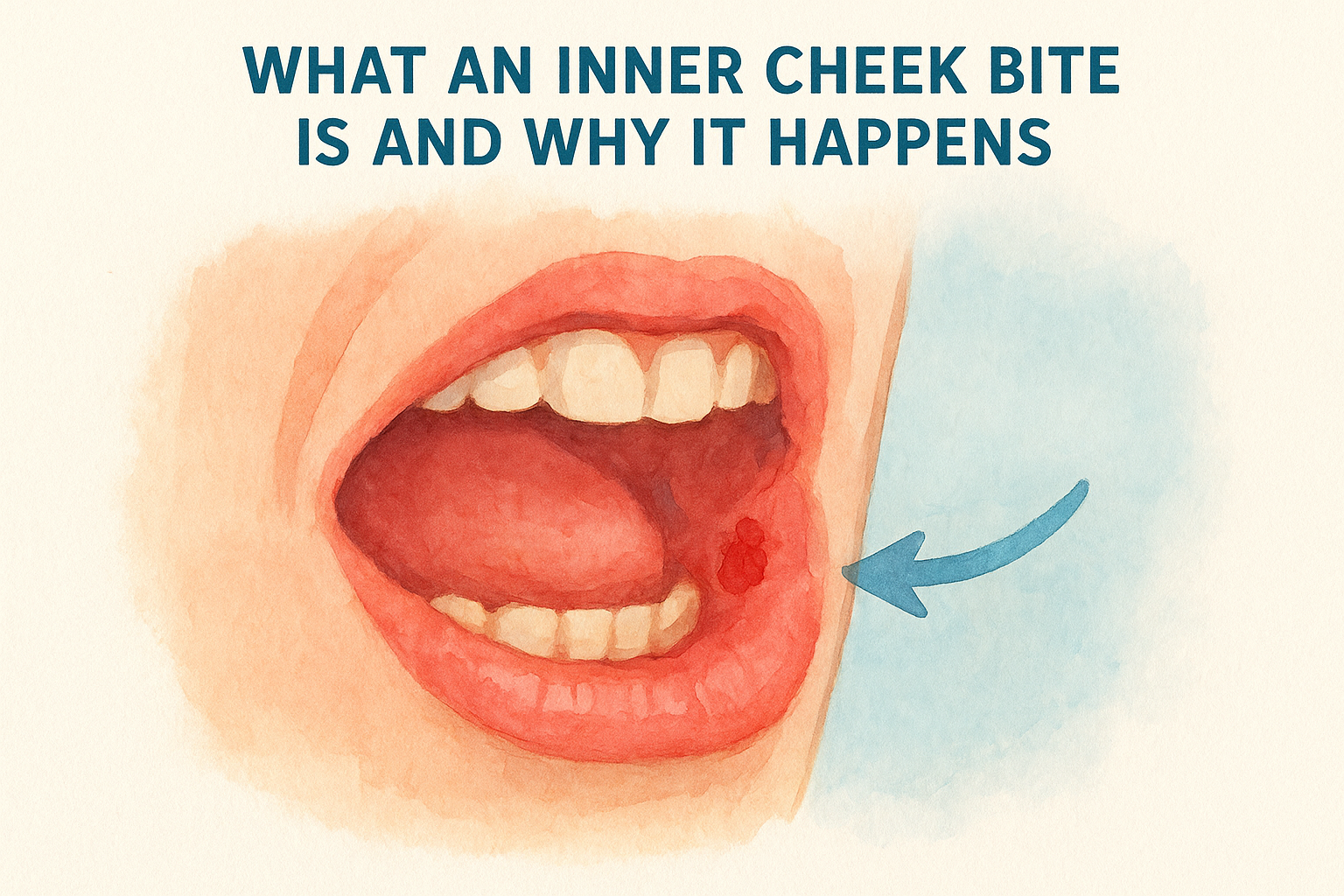
Even a minor cheek bite can turn into a stubborn sore if you skip treatment and leave the area exposed to repeated trauma.
Why the inner cheek is so easy to bite
The inside of your cheek sits in a narrow gap between your upper and lower teeth. Normal daily movements like chewing, talking, and yawning shift that tissue around constantly, and when your bite alignment is even slightly off, the tissue drifts into the chewing zone. Stress and fatigue reduce your muscle coordination, which means you are more likely to catch your cheek mid-bite during a meal or even mid-sentence. Most people are surprised to learn just how little misalignment it takes to turn a previously safe space into a problem area.
The most common causes of repeat cheek biting
A single accidental bite is rarely worth worrying about. If you find yourself needing an inner cheek bite treatment multiple times a month, one of these causes is almost certainly involved:
- Bruxism (teeth grinding or clenching): Your jaw generates significant force during sleep, and without a physical barrier, your cheeks and lips can get caught between your molars.
- Misaligned teeth or an uneven bite: Irregular tooth contact pushes soft tissue into spaces it should not reach.
- Stress and anxiety: Cheek biting can become a repetitive, unconscious nervous habit similar to nail biting.
- New dental work: A recent crown, filling, or set of aligners can shift how your teeth meet and temporarily increase your bite risk.
- Eating too quickly: Rushing through meals reduces your chewing awareness, making accidental bites far more common.
- Sleep position: Sleeping on your side can press cheek tissue against your teeth, particularly if you also grind at night.
Identifying your specific trigger is the most direct path toward stopping repeat injuries before they become a recurring problem.
Step 1. Clean and protect the wound right away
The first thing you should do after a cheek bite is clean the wound before anything else. Your mouth is full of bacteria, and an open sore is an easy entry point for infection. Acting within the first few minutes significantly reduces that risk and gives the tissue a better shot at healing cleanly.
Skipping this step and waiting to see if the wound just heals on its own is the most common reason a simple cheek bite turns into a longer, more painful problem.
Rinse with salt water
A warm salt water rinse is the fastest, most effective first step for any inner cheek bite treatment. Salt is a natural antiseptic that lowers the bacteria count in your mouth without the sting of alcohol-based mouthwashes, which can actually irritate the wound further.
Mix 1/2 teaspoon of table salt into 8 ounces of warm water, swish gently for 30 seconds, and spit. Repeat this three to four times a day, especially after meals, for the first two days.
Apply a protective barrier
Once the area is clean, applying a protective oral gel keeps the wound from drying out and creates a physical layer between the sore and your teeth. Look for products containing benzocaine or carboxymethylcellulose at your local pharmacy; over-the-counter gels like Orajel coat the tissue and provide mild numbing relief at the same time.
Apply a small amount with a clean fingertip directly to the bite area after each rinse. Avoid eating or drinking for at least 15 minutes afterward so the gel has time to adhere properly.
Step 2. Reduce pain and swelling safely
Once the wound is clean and protected, your next goal is to bring down discomfort and inflammation so the area can start healing without constant irritation. Pain makes you more likely to probe the wound with your tongue, which slows recovery. Addressing swelling early also reduces the raised tissue that keeps inviting repeat bites.
Treating pain and swelling as a separate, deliberate step rather than ignoring it is one of the most overlooked parts of effective inner cheek bite treatment.
Use over-the-counter pain relief
Oral analgesics are your fastest option for managing pain after a cheek bite. Over-the-counter products containing ibuprofen or acetaminophen reduce both pain and inflammation when taken as directed on the packaging. Ibuprofen is generally the better choice because it targets inflammation directly, while acetaminophen handles pain without affecting swelling.
Here is a quick reference for your options:
| Product type | Active ingredient | Best for |
|---|---|---|
| Ibuprofen (Advil, Motrin) | Ibuprofen 200mg | Pain + swelling |
| Acetaminophen (Tylenol) | Acetaminophen 500mg | Pain only |
| Topical oral gel (Orajel) | Benzocaine 20% | Localized numbing |
Apply cold to calm the area
Cold therapy is a straightforward way to reduce swelling from the outside in. Hold an ice pack or a bag of frozen peas wrapped in a thin cloth against your cheek for 10 to 15 minutes at a time. Repeat this two or three times during the first 24 hours after the bite to keep inflammation from building up.
Avoid placing ice directly against the skin or holding cold against your cheek for longer than 15 minutes at a stretch, as prolonged cold exposure can irritate the tissue further rather than helping it settle down.
Step 3. Help it heal faster and avoid re-biting
Once pain and swelling are under control, your focus shifts to creating the right conditions for healing while actively reducing the chances of catching the same spot again. Most inner cheek bite treatment plans stall here because people treat the pain but ignore the environment inside their mouth that keeps the wound irritated.
Adjust what you eat and drink
What you put in your mouth directly affects how fast the tissue repairs itself. Hard, crunchy, or sharp-edged foods like chips, raw carrots, and crusty bread press against the wound and reopen the surface layer each time you chew. Acidic foods and drinks like citrus, tomatoes, coffee, and soda slow healing by irritating the mucosa and breaking down the tissue's protective barrier.
Switching to soft foods for just 48 to 72 hours can cut your total healing time nearly in half.
For the first two to three days, stick to foods that require minimal chewing:
- Yogurt, smoothies, and oatmeal
- Scrambled eggs, mashed potatoes, and soft-cooked vegetables
- Soup broth, applesauce, and bananas
- Plain water as your primary drink
Protect the wound from your tongue and teeth
Your tongue is a major obstacle during healing. Most people prod the sore repeatedly without realizing it, which strips away the thin fibrin layer the body builds over the wound. Each time that layer breaks, the healing clock resets.
Applying a fresh coat of oral protective gel after meals and before bed gives the tissue a physical buffer that your tongue cannot easily disturb. If you wear a night guard, put it in every night during this phase to keep your teeth away from the healing tissue while you sleep.
Step 4. Stop repeat cheek bites for good
Healing a single wound is only half the battle. If your inner cheek bite treatment keeps starting from scratch every few weeks, you need to fix the conditions that cause the bites in the first place, not just manage the aftermath. Two specific changes make the biggest difference for most people.
Protect your teeth and cheeks at night
Bruxism is the single most common driver of repeat cheek biting, and most people who grind or clench at night have no idea it is happening. A custom-fitted night guard positions a firm but comfortable layer of material between your upper and lower teeth, which physically blocks your cheeks from getting caught in your bite zone while you sleep.
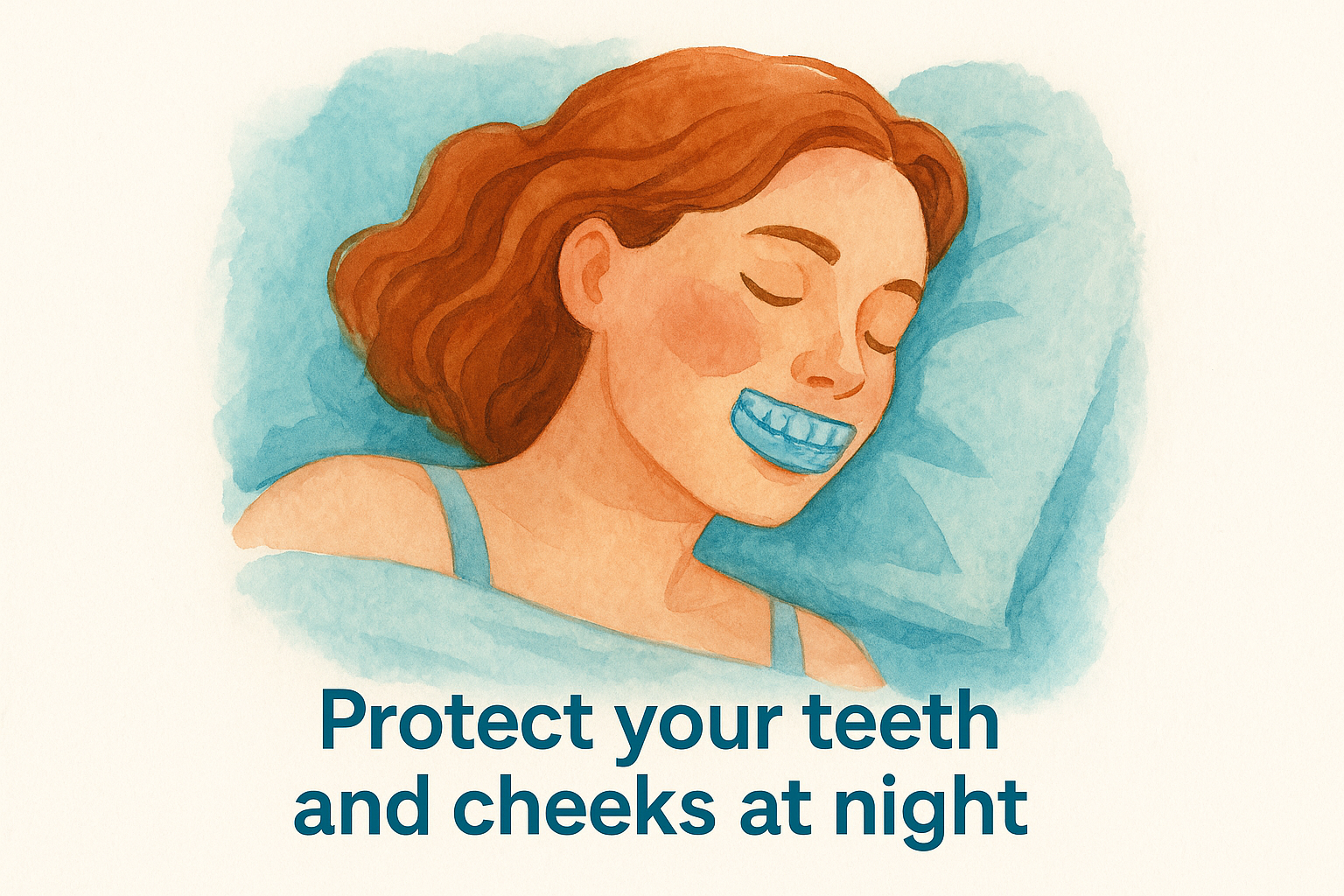
A custom night guard is one of the most direct, long-term solutions if nighttime grinding is behind your repeat bites.
If you have been relying on a generic pharmacy guard, the fit matters more than you might expect. A poorly fitting guard can shift during sleep and actually increase cheek contact rather than reduce it. Custom-fitted options, like those from Remi, are molded to your exact bite and stay in place throughout the night.
Reduce the habits that set up accidental bites during the day
Stress and rushed eating are the two most controllable daytime triggers. When stress is high, your jaw tightens and your cheek tissue tends to sit higher and tenser in your mouth. Slowing your chewing pace by putting your fork down between bites gives your jaw time to close fully before moving again. If you catch yourself clenching during the day, pressing your tongue lightly against the roof of your mouth is a quick physical cue to release jaw tension without drawing attention.
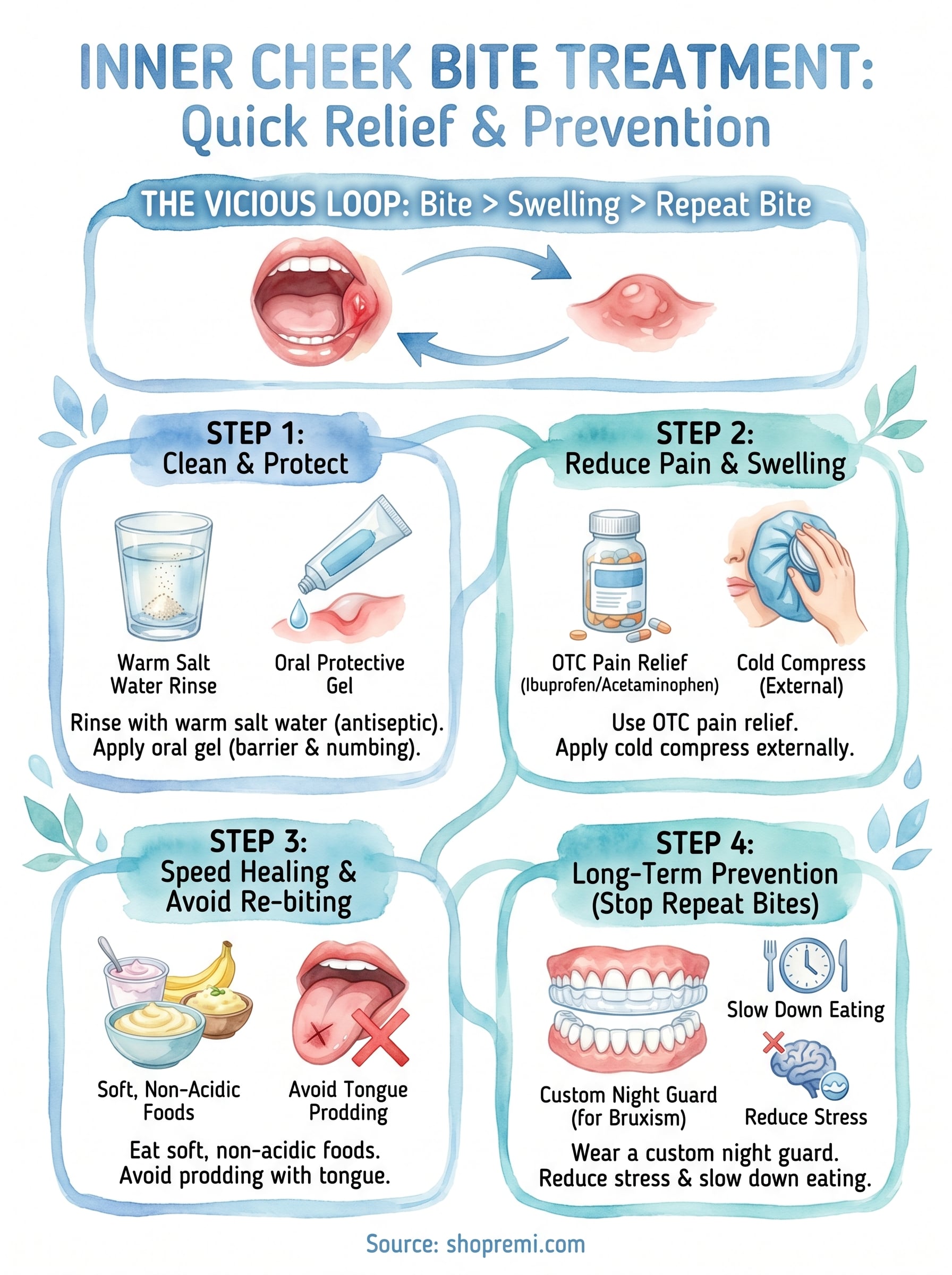
A simple plan if it keeps happening
If your inner cheek bite treatment keeps restarting from square one, the pattern is telling you something. Clean the wound, reduce the pain, protect the area while it heals, and then fix the root cause. That four-step sequence works for most people, but it only holds if you follow through on the last step consistently.
The biggest lever you can pull for nighttime biting is a properly fitted guard. Generic pharmacy options shift during sleep, which often makes cheek contact worse rather than better. A guard molded to your exact teeth stays in place and keeps your cheeks out of harm's way every night without any extra effort on your part.
Starting is straightforward: order a custom night guard from Remi, complete the at-home impression at your own pace, and receive a dental-grade guard for roughly 80% less than a dentist would charge. Your cheeks get the barrier they need, and the repeat bite cycle stops.

