


Yellow or stained teeth can chip away at your confidence, even when the rest of your oral care routine is solid. So it makes sense that how to whiten teeth at home safely is one of the most common questions people bring to their dentists, and to Google. The good news? You don't need expensive in-office treatments to see real, noticeable results.
But not every method you'll find online is worth trying. Some popular DIY hacks, like scrubbing with straight baking soda or rinsing with undiluted hydrogen peroxide, can actually wear down your enamel and leave your teeth more sensitive than before. The key is knowing which approaches dentists actually stand behind, and which ones belong in the "sounded good on TikTok" category.
At Remi, we work alongside dental professionals to make oral care more accessible and affordable, from our custom night guards to our dual-purpose Night Guard Cleaning + Teeth Whitening Foam. Helping you protect and brighten your smile at home is literally what we do. So we put together this list of five dentist-approved whitening methods that are effective, safe for your enamel, and easy to start today.
1. Use Remi teeth whitening foam with a custom tray
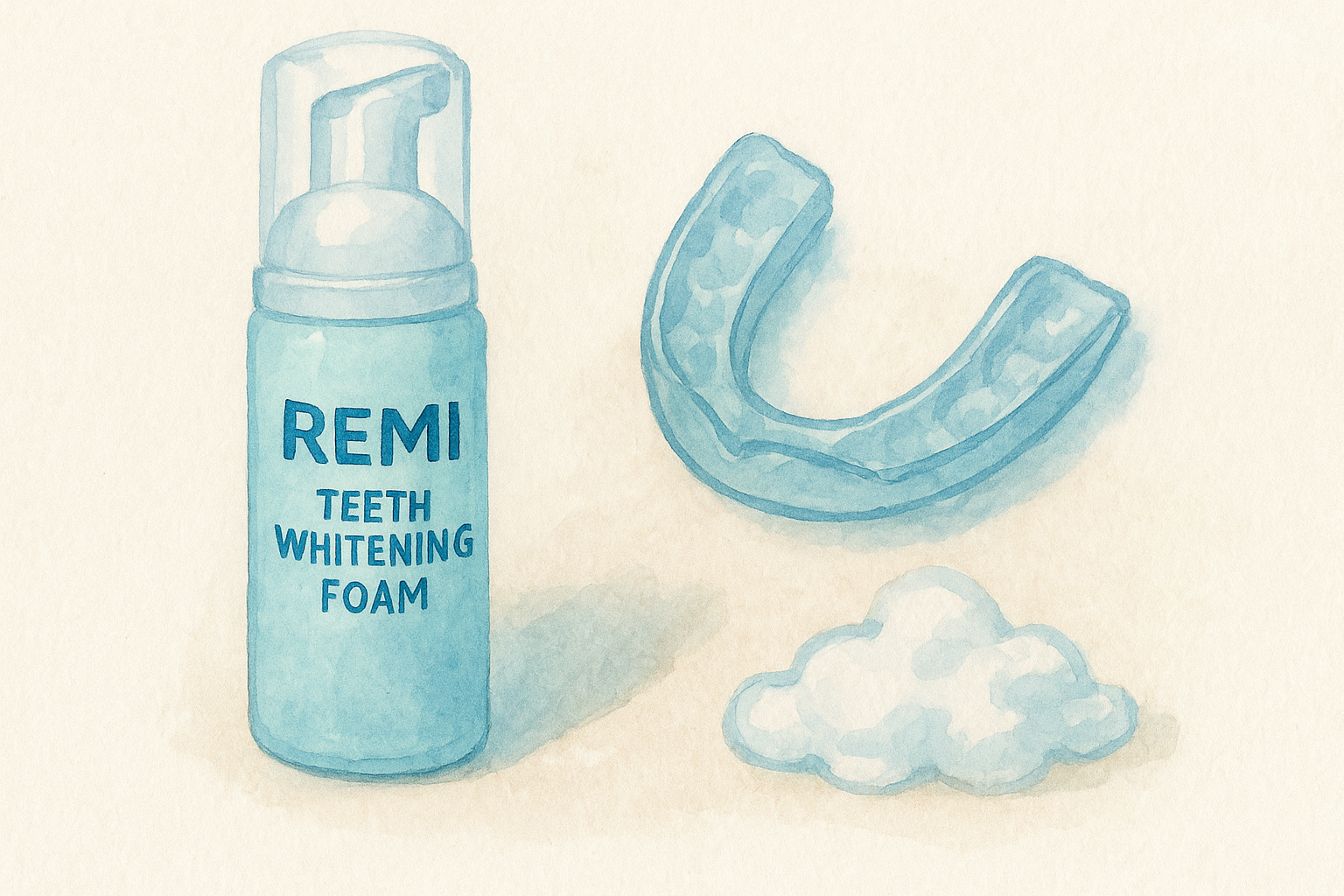
Remi's Night Guard Cleaning + Teeth Whitening Foam is a dual-purpose product that cleans your dental appliance while brightening your teeth at the same time. It pairs naturally with a custom-fitted tray, which means the formula reaches every surface evenly instead of pooling in random spots the way loose strips or bulky trays often do.
What it is and how it works
The foam contains whitening agents that lift surface stains from tooth enamel when applied through a custom-fitted tray. Unlike strips or one-size trays, the custom fit holds the formula against each tooth consistently, which improves contact time and overall effectiveness.
Who it helps most
This method works best if you already wear a night guard or retainer and want to fold whitening into a routine you already have. It's also a strong fit for anyone looking for a low-effort, affordable option to brighten their smile without a dentist appointment.
How to use it safely at home
Apply a small amount of foam to your clean custom tray, seat it over your teeth, and leave it for the time listed on the label. Rinse thoroughly afterward. Learning how to whiten teeth at home safely really does start with one simple rule: follow the product instructions exactly.
Never exceed the recommended wear time even if you want faster results. Overuse can lead to increased sensitivity.
Results timeline and cost range
Most people notice visibly brighter teeth within two to four weeks of consistent use. At around $20 to $30 per bottle, it's one of the most affordable whitening options compared to in-office treatments that routinely cost several hundred dollars.
When to skip it and talk to a dentist
Skip this product if you have active cavities, cracked teeth, or significant sensitivity. These conditions need professional attention before you introduce any whitening agent, even a gentle foam formula.
2. Switch to an ADA-accepted whitening toothpaste
Whitening toothpaste is the easiest entry point for anyone learning how to whiten teeth at home safely. Look for the ADA Seal of Acceptance on the label, which confirms the formula has been independently tested for both safety and effectiveness.
What it is and how it works
ADA-accepted whitening toothpastes use mild abrasives and low-level bleaching agents like hydrogen peroxide or blue covarine to lift surface stains during your regular brushing routine. No extra steps or equipment are needed.
Who it helps most
This option works best for people with mild surface staining from coffee, tea, or wine. It also suits anyone with sensitive teeth who wants a gentler starting point before trying stronger treatments.
How to use it safely at home
Brush twice daily for two minutes with a soft-bristled brush. Avoid pressing hard, since scrubbing does not speed up results and can irritate your gums.
Only use ADA-accepted formulas. Products without that seal may include abrasives harsh enough to scratch enamel with repeated use.
Results timeline and cost range
Expect subtle brightening within two to six weeks. Most tubes cost $5 to $15, making this one of the most affordable options on the list.
When to skip it and talk to a dentist
If your discoloration is intrinsic (originating inside the tooth rather than on the surface), whitening toothpaste will not fix it. See a dentist to identify the underlying cause before spending money on surface-level products.
3. Use whitening strips or gel with peroxide
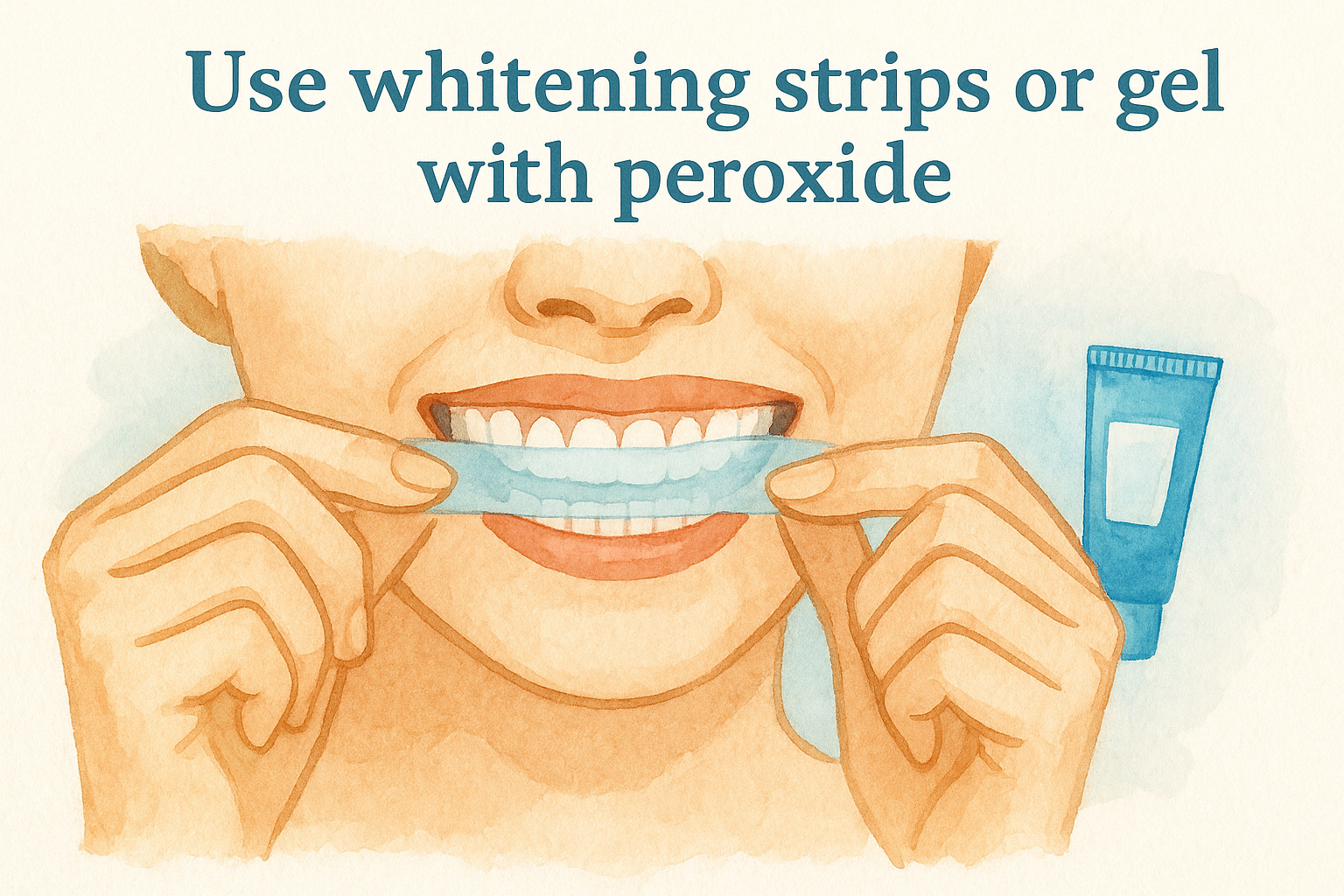
Peroxide-based whitening strips and gels are widely studied and among the most accessible over-the-counter whitening treatments available. Both rely on hydrogen peroxide or carbamide peroxide to break apart stain molecules on and just below the enamel surface.
What it is and how it works
Strips are thin, flexible pieces coated with a peroxide gel that you press directly onto your teeth. Whitening gels work similarly but get applied with a small brush or tray. Both options penetrate enamel slightly to lift discoloration that toothpaste alone cannot reach.
Who it helps most
This method suits people with moderate surface staining who want faster results than whitening toothpaste delivers. It works particularly well for:
- Adults with coffee, tea, or wine stains that have built up over months
- People who want visible improvement without scheduling a dental appointment
How to use it safely at home
Apply strips or gel once daily for the duration listed on the packaging, typically 10 to 14 days. Learning how to whiten teeth at home safely includes resisting the urge to extend sessions beyond the label instructions.
Do not use peroxide products on broken or decayed teeth, as the gel can penetrate damaged enamel and cause significant pain.
Results timeline and cost range
Most users notice clear brightening within one to two weeks. Products typically cost $20 to $60 depending on the brand and peroxide concentration.
When to skip it and talk to a dentist
If you notice persistent gum irritation or sharp sensitivity within the first few days, stop use and speak with your dentist before continuing any peroxide-based treatment.
4. Get dentist-supervised take-home whitening trays
Dentist-supervised take-home trays sit between over-the-counter kits and full in-office treatments on the whitening spectrum. Your dentist creates custom-fitted trays and prescribes a higher-concentration peroxide gel than anything available in stores.
What it is and how it works
Your dentist takes impressions of your teeth and fabricates trays that fit precisely. You then fill them with a prescription-strength gel and wear them at home for a set number of hours each day.
Who it helps most
This method works best for people with moderate to severe staining or those who want predictable, professional results while still treating at home on their own schedule.
How to use it safely at home
Wear the trays for the exact duration your dentist prescribes. Learning how to whiten teeth at home safely means never stretching that wear time to chase faster results.
Prescription gels use stronger peroxide concentrations than store-bought options, so following the schedule your dentist sets protects both your enamel and gum tissue.
Results timeline and cost range
Most people see significant brightening within one to two weeks. Expect to pay $200 to $400, which is still far less than in-office laser whitening sessions.
When to skip it and talk to a dentist
Your dentist will need to resolve active decay or gum disease before fitting you for trays. Starting any whitening treatment on compromised teeth can cause sharp pain and worsen existing damage.
5. Build stain-proof habits that keep teeth white
Whitening treatments work best when daily habits support them. Without a few simple lifestyle adjustments, stains come back quickly and undo the progress you worked for.
What it is and how it works
Stain-proof habits are preventive behaviors that reduce how much pigment contacts your enamel each day. They work by limiting staining compounds from food and drinks before they bond to tooth surfaces.
Who it helps most
Anyone who has completed a whitening treatment and wants to extend the results benefits from this approach. It also helps people who are prone to heavy staining from coffee, tea, or red wine.
How to use it safely at home
Rinse with water after consuming staining beverages like coffee or tea. Brush twice daily and use a straw when drinking dark liquids to limit direct contact with your enamel.
Waiting 30 minutes after eating acidic foods before brushing protects your enamel from abrasion.
Results timeline and cost range
These habits produce no immediate brightening, but they preserve your whitening results for months longer. The cost is essentially zero beyond your normal oral care routine.
When to skip it and talk to a dentist
If your teeth stain unusually fast even with good habits, that could signal enamel erosion or decay. A dentist can identify the cause and advise you on how to whiten teeth at home safely without making the underlying issue worse.
Keep your smile bright without the damage
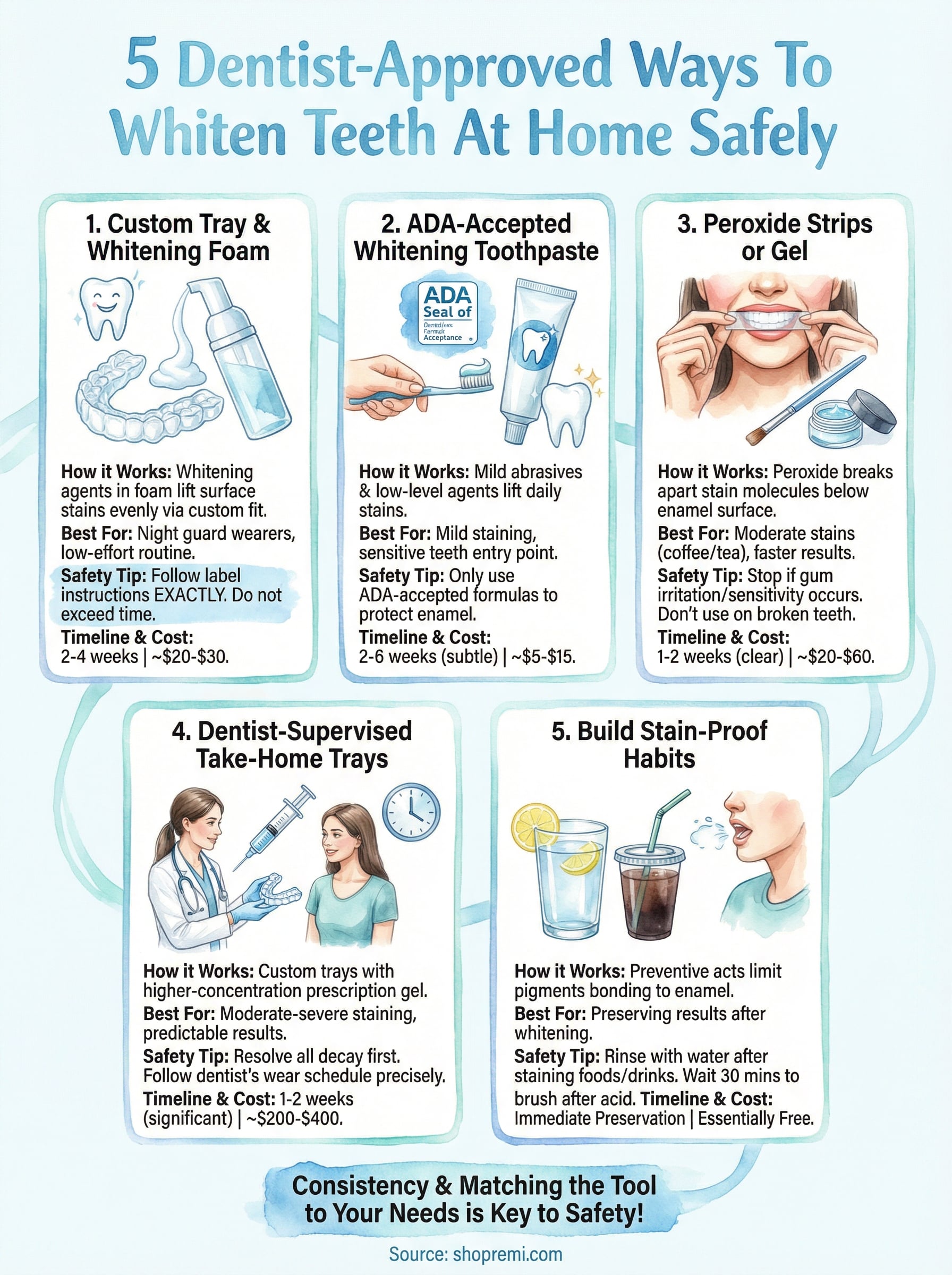
Every method on this list works better when you pick one that fits your situation and stick with it consistently. Jumping between products or piling on multiple treatments at once does not accelerate results, it increases your risk of sensitivity and enamel damage. Start simple, follow the instructions, and give each method enough time to work.
Learning how to whiten teeth at home safely comes down to matching the right tool to your actual needs. Mild surface stains respond well to whitening toothpaste or foam. Deeper discoloration calls for peroxide-based strips or dentist-supervised trays. Daily habits then lock in your results so your progress lasts longer than a few weeks.
If you want a low-effort way to brighten your smile while keeping your teeth protected, the Remi Night Guard Cleaning + Teeth Whitening Foam pairs whitening with the custom-fitted protection your teeth need every night.

