


You just walked out of a whitening session (or finished an at-home treatment) with noticeably brighter teeth. Now what? Knowing how to care for teeth after whitening makes the difference between results that last for months and a smile that fades within weeks. The first 48 hours are especially critical, since your enamel is temporarily more porous and prone to picking up stains.
The good news is that aftercare doesn't require anything complicated. A few smart habits around eating, drinking, and daily oral hygiene can protect your investment and keep your teeth looking their best. At Remi, we help thousands of customers maintain healthier smiles with products like our Night Guard Cleaning + Teeth Whitening Foam, so post-whitening care is something we think about a lot.
Below, you'll find five straightforward aftercare tips covering everything from foods and drinks to avoid to the oral care routine that'll help you hold onto those results as long as possible.
1. Use Remi whitening foam for gentle maintenance
The right maintenance product can protect your results without creating new problems. Remi's Night Guard Cleaning + Teeth Whitening Foam is a strong choice right after whitening because it's designed to whiten gently while keeping your enamel and dental appliances clean at the same time.
What to use and what to skip right after whitening
Right after whitening, your teeth are more vulnerable than usual. Stick to products that are low-abrasion and sensitivity-friendly. Here's a quick breakdown:
- Use: Whitening foam, fluoride toothpaste for sensitive teeth, soft-bristle toothbrush
- Skip: Whitening strips, hydrogen peroxide rinses, abrasive charcoal toothpaste
Layering strong whitening agents on freshly treated enamel can cause significant discomfort and temporary enamel irritation, so give your teeth a few days before introducing anything aggressive.
How to use whitening foam without increasing sensitivity
Apply a small amount of whitening foam to your teeth or tray and let it sit for the recommended time. Don't use it more often than directed, and rinse thoroughly afterward. If your teeth already feel sensitive, reduce the frequency until that feeling settles. The goal is steady maintenance, not pushing results faster than your enamel can handle.
Gentle, consistent use of whitening foam after treatment gives you better long-term results than aggressive, frequent applications.
If you wear a night guard or retainer after whitening
Many people learning how to care for teeth after whitening also wear a night guard or retainer. If that's you, clean your appliance with whitening foam before putting it back in. This prevents bacteria and surface stains from building up on the device and transferring back onto your freshly whitened teeth overnight.
Signs you should stop and ask a dentist
If you notice sharp pain or sensitivity lasting more than a week, stop using whitening products immediately. Other red flags include visible white spots or increased gum irritation, which can signal that your enamel needs a break or that an underlying issue requires professional attention.
2. Follow the 48-hour white diet
What you eat and drink right after whitening has a direct impact on how long your results last. Your enamel's pores are temporarily open after treatment, which means pigments from food and drinks absorb faster than usual during this window.
Why the first 24 to 48 hours matter for staining
During this period, your enamel is at its most vulnerable to picking up color. Staining agents you might normally handle fine can cause noticeable discoloration right now. Treating these two days seriously is one of the simplest ways to protect your results.
Safe foods and drinks that won't re-stain enamel
Stick to light-colored, low-acid options that won't introduce pigment back onto your teeth:
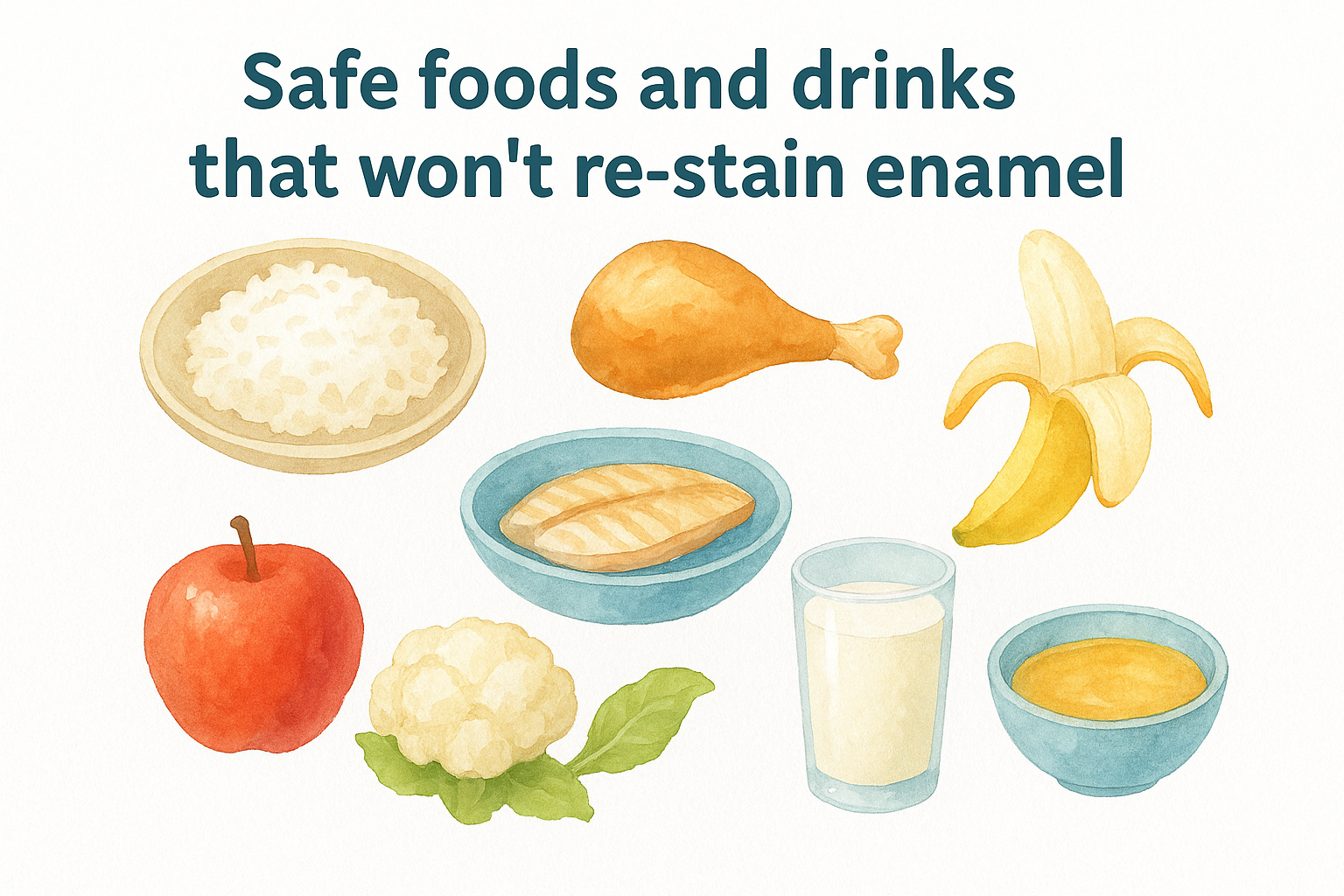
- White rice, chicken, and fish
- Bananas, peeled apples, and cauliflower
- Milk, water, and clear broths
Foods and drinks to avoid, including coffee and red wine
Skip anything with strong pigment or high acidity during the first 48 hours. Coffee, red wine, tea, tomato-based sauces, berries, and dark sodas are all off the table for now.
The 48-hour window after whitening is when your enamel is most susceptible to re-staining, so what you skip now protects your results for months.
When you can eat and drink normally again
After 48 hours, your enamel's pores close back up and you can return to your regular diet. Even then, limiting heavy staining foods and drinks helps you stay on top of how to care for teeth after whitening over the long run.
3. Brush and floss the right way after whitening
Your brushing and flossing routine needs a few adjustments as part of how to care for teeth after whitening to avoid scrubbing away results or triggering unnecessary sensitivity.
When to brush and floss after in-office vs at-home whitening
After in-office treatment, wait at least 30 minutes before brushing to let your enamel stabilize. With at-home kits, follow the product's specific timing instructions, but that same 30-minute buffer still applies before you pick up your toothbrush.
Toothpaste and toothbrush choices that protect enamel
Choose a soft-bristle toothbrush and a sensitivity-formulated toothpaste with fluoride. Abrasive pastes and medium or hard bristles wear down enamel that's already been treated, which speeds up re-staining and worsens discomfort.
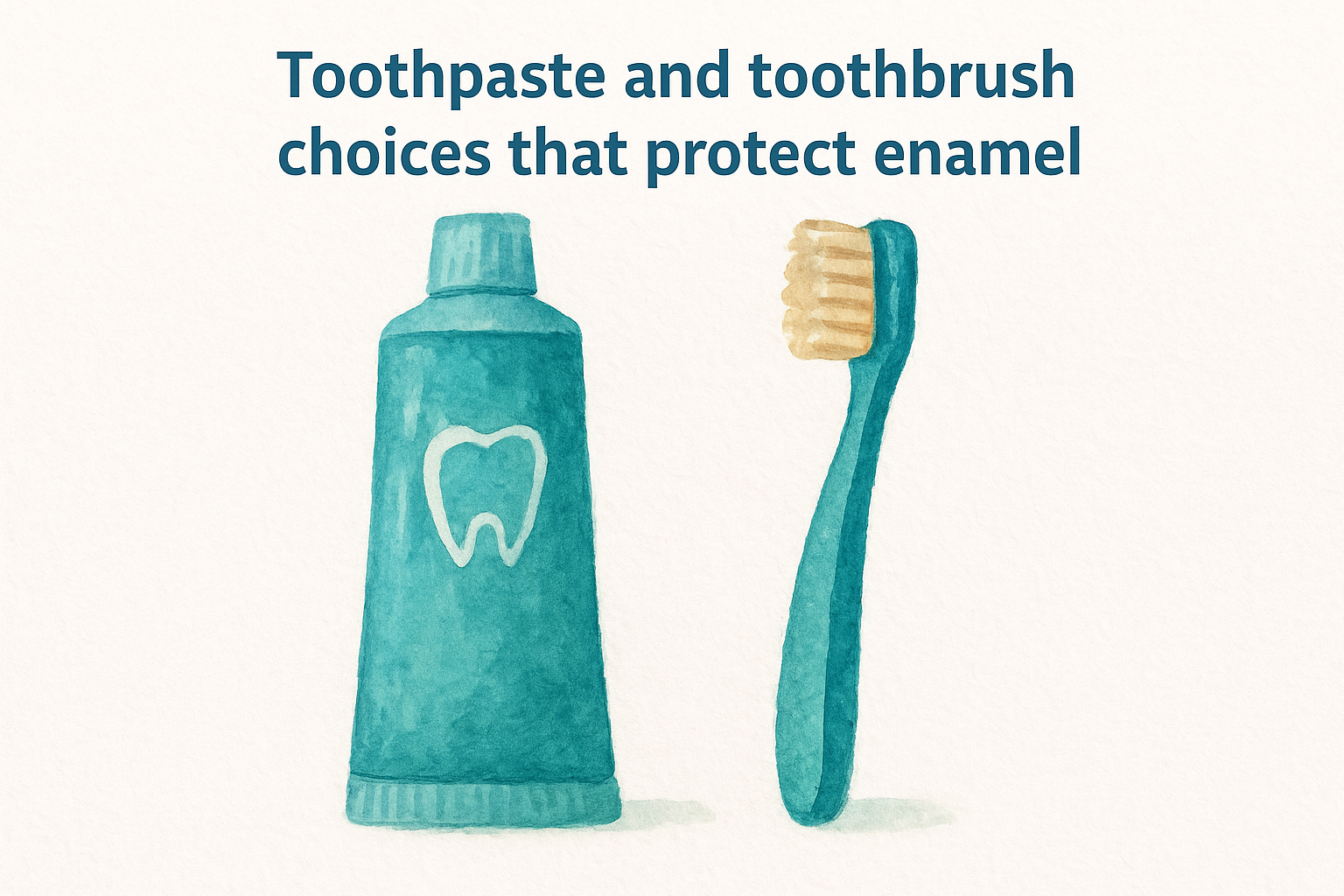
Switching to a soft-bristle brush and a gentle fluoride toothpaste right after whitening protects your results without sacrificing your daily cleaning routine.
Mouthwash, fluoride, and remineralizing options
Use a fluoride or remineralizing rinse after brushing to help rebuild enamel strength and calm sensitivity. Avoid alcohol-based mouthwashes in the first 48 hours since they dry out and irritate already-sensitive gum tissue.
What to do after you eat or drink something dark
Rinse immediately with plain water after consuming anything pigmented. This cuts down surface contact time and lowers re-staining risk without requiring you to brush too aggressively on freshly treated enamel.
4. Manage tooth sensitivity without losing results
Sensitivity is one of the most common side effects of whitening, and knowing how to handle it is a key part of how to care for teeth after whitening without giving up your results. The good news is that most sensitivity is short-lived and manageable with the right approach.
What sensitivity feels like and how long it usually lasts
You'll typically notice sharp, brief zingers when your teeth contact hot, cold, or sweet stimuli. This usually peaks within the first 24 hours and fades within two to three days for most people.
Fast, safe relief options you can use at home
Apply a sensitivity-formulated toothpaste with potassium nitrate directly to your teeth and leave it on for a few minutes before rinsing. Using a remineralizing rinse with fluoride also helps calm nerve irritation and rebuild enamel strength between whitening sessions.
Potassium nitrate toothpaste applied directly to sensitive teeth gives faster relief than brushing with it alone.
What to avoid that can make sensitivity worse
Skip extremely hot or cold beverages during the first 48 hours since temperature extremes aggravate already-irritated nerves. Acidic foods and drinks, including citrus and soda, strip enamel further and extend sensitivity longer than necessary.
When sensitivity means you should call a dentist
Contact a dentist if sensitivity lasts beyond one week or if you experience throbbing pain that isn't triggered by specific foods or temperatures. These symptoms can signal deeper enamel damage or nerve involvement that requires professional evaluation.
5. Keep teeth whiter for longer with smart habits
Keeping your results fresh is the final piece of how to care for teeth after whitening. The habits you build after treatment determine whether your results last three months or closer to a year.
Daily habits that slow down new stains
Drinking staining beverages like coffee or tea through a straw reduces direct contact with your enamel. Rinsing with water after meals also cuts down on pigment buildup between brushing sessions.
How often to whiten again and how to avoid over-whitening
Most people benefit from a touch-up session every three to six months rather than whitening continuously. Over-whitening thins enamel and increases long-term sensitivity, so give your teeth time to recover between treatments.
Spacing out whitening sessions protects your enamel while keeping your results consistent over time.
Cleaning and storing whitening trays, retainers, and guards
Rinse your trays, retainers, or night guards after every use and store them in a clean, ventilated case. Buildup on dental appliances transfers bacteria and stain-causing residue directly back onto your teeth overnight.
When professional cleanings matter most
Schedule a professional cleaning every six months to remove surface tartar that at-home products can't reach. Cleanings give whitening treatments a cleaner surface to work on and extend the life of your results significantly.
Next steps to keep your teeth bright
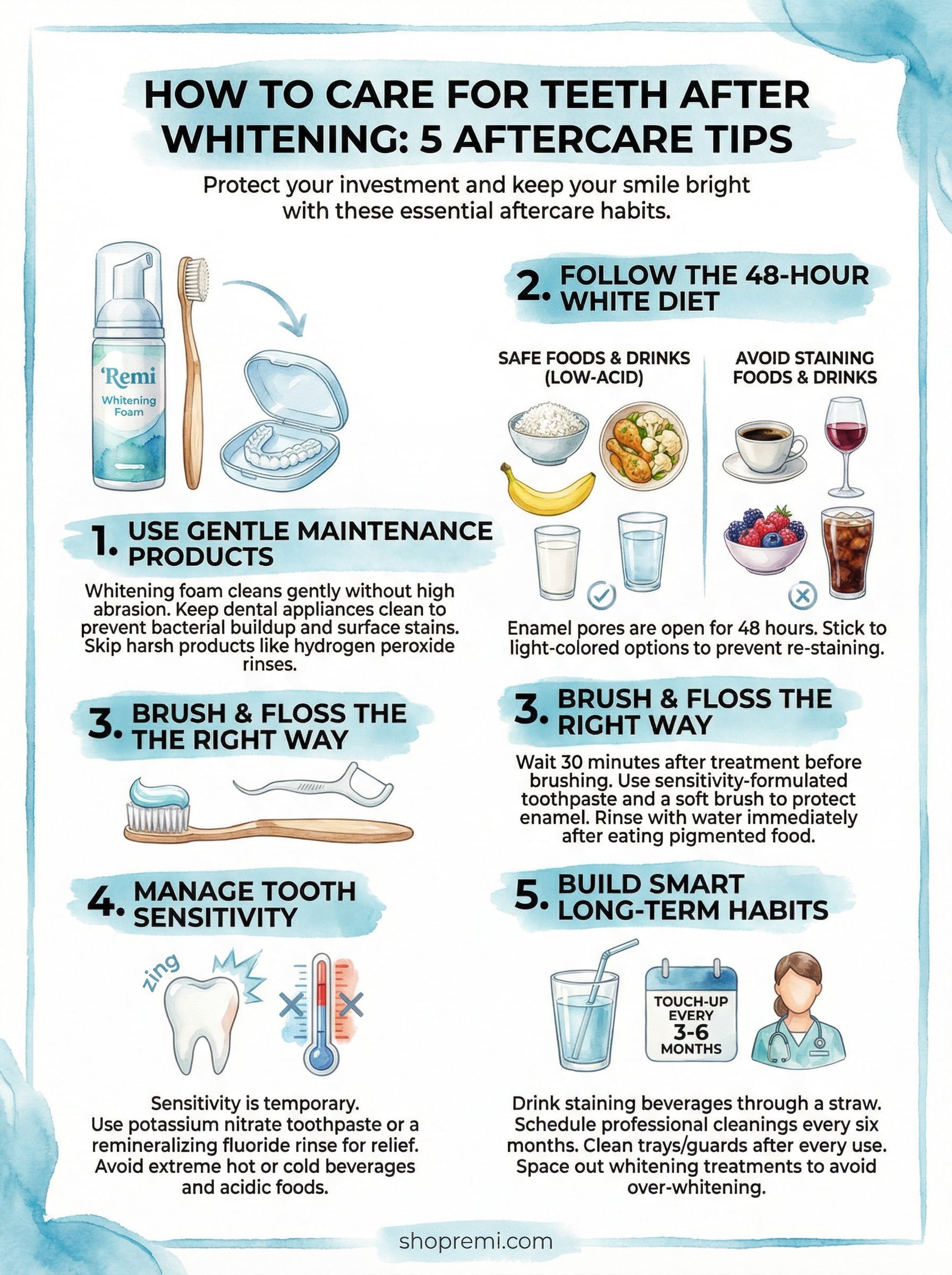
Knowing how to care for teeth after whitening comes down to a handful of consistent habits: follow the 48-hour white diet, use a gentle whitening foam, brush with the right tools, manage sensitivity early, and build routines that slow down new stains. Each of these steps compounds over time, and skipping even one can cut your results short faster than you'd expect.
Your dental appliances play a bigger role in this than most people realize. A clean night guard or retainer stops bacteria and stain-causing residue from undoing your whitening progress overnight while you sleep. If you wear one and want to protect your investment, a custom-fit night guard from Remi is designed to keep your smile protected and comfortable every night. Pair that with the daily oral hygiene habits from this guide, and your results can last significantly longer than the average three months.

