
 Guards + Retainers
 Custom Night Guard
 Retainer
 Emergency Order

 Whitening
 Whitening Kit
 Teeth Whitening Gel
 Dual-Action Foam
 Cleaning + Care
 Ultrasonic Cleaner Pro
 Water Flosser
 UV Toothbrush Sanitizer
 Deep Clean + Freshening Tablets
 Accessories
 Guard Removal Tool
 Replacement Nozzles
 Bundles

If you grind your teeth at night, you've probably already started weighing a custom night guard vs store-bought options at your local pharmacy. It's a fair debate, one costs significantly more upfront, while the other is sitting right there on the shelf for under $30. But the real question isn't just about price on the receipt. It's about what actually works night after night without falling out, feeling bulky, or wearing down in a few weeks.
The differences between these two options go deeper than most people expect. Fit, material quality, how long they last, and how well they protect your teeth and jaw all vary widely depending on which route you choose. And those differences have a direct impact on your sleep, comfort, and long-term dental health.
This article breaks down the comparison across every factor that matters, fit, cost, durability, comfort, and effectiveness. At Remi, we make custom-fitted night guards through an at-home impression process at a fraction of what dental offices charge, so we know this space well. We'll give you an honest look at both options so you can decide what makes sense for your situation.
Why the choice affects your teeth and jaw
When you grind your teeth at night, the force you generate is far greater than normal chewing pressure. Research shows that bruxism can produce up to 250 pounds of force per square inch, and that sustained pressure chips enamel, flattens cusps, and wears down your teeth faster than most people realize until the damage is already done. The night guard sitting between your teeth and that force is your only barrier, so the quality of fit and material determines how much actual protection you get night after night.
What grinding does without proper protection
Without the right barrier in place, grinding wears down your enamel steadily over months and years. Enamel does not grow back, which means every night you sleep without protection, or with a guard that doesn't fit properly, you're losing tooth structure that cannot be recovered. Beyond enamel loss, unmanaged grinding leads to increased tooth sensitivity, visible flattening, cracking, and in severe cases, fractures that require crowns or costly dental intervention to repair. The long-term financial cost of skipping or using inadequate protection far outweighs the upfront price difference between options.
The night guard you choose is not just a comfort decision. It is a long-term investment in keeping your natural teeth intact.
How fit directly affects your jaw
A poorly fitted guard creates uneven bite pressure, and that imbalance puts real stress on your temporomandibular joint (TMJ). When you bite down on a surface that doesn't match your natural tooth contours, your jaw muscles work harder to compensate, which worsens jaw pain, triggers morning headaches, and contributes to TMJ disorder over time. This is exactly where the debate of custom night guard vs store bought becomes more than just a cost question.
Store-bought guards are built to generic molds, not to your mouth. Your jaw and surrounding muscles have to adapt to the guard rather than the other way around. For people with mild grinding, that compromise might work short-term. For anyone with moderate to severe bruxism or existing jaw symptoms, a poor fit can make things noticeably worse, not better.
Store-bought night guards: types, fit, and limits
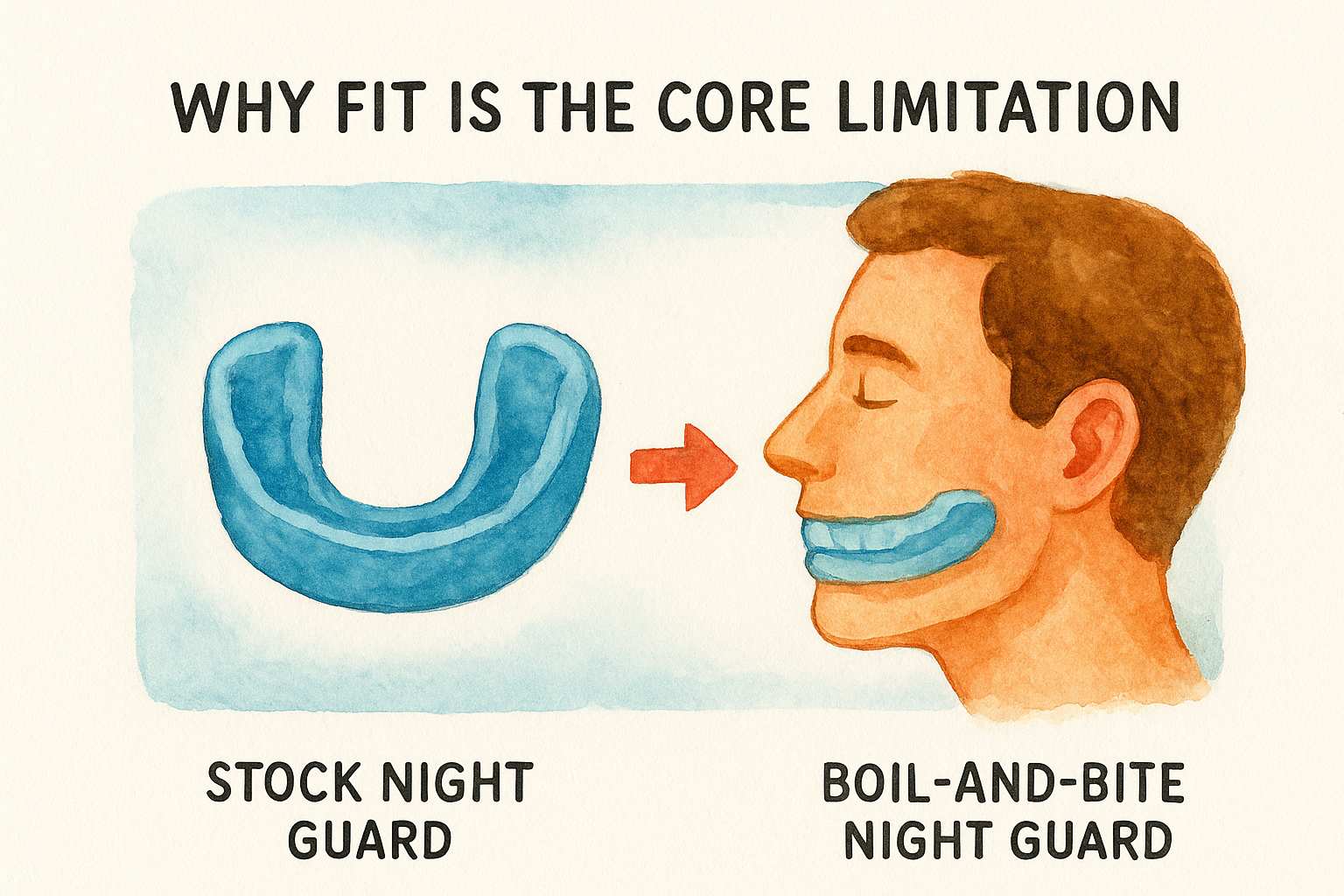
Walk into any pharmacy and you'll find two main categories of over-the-counter night guards: stock guards and boil-and-bite guards. Stock guards come pre-formed in a fixed shape with zero customization. Boil-and-bite guards let you soften the material in hot water and bite down to create a rough impression of your teeth, which is marketed as a more personalized fit.
What you get with each type
Stock guards offer no personalization whatsoever. You put them in and hope they stay in place, which they often don't. Boil-and-bite options are a step up because the material partially conforms to your bite, but the fit stays approximate since the material stiffens quickly and fails to capture the precise contours of your individual teeth. Neither option was built around your specific jaw structure.
The difference between a boil-and-bite guard and a true custom night guard is the difference between a rough approximation and an exact mold of your mouth.
Why fit is the core limitation
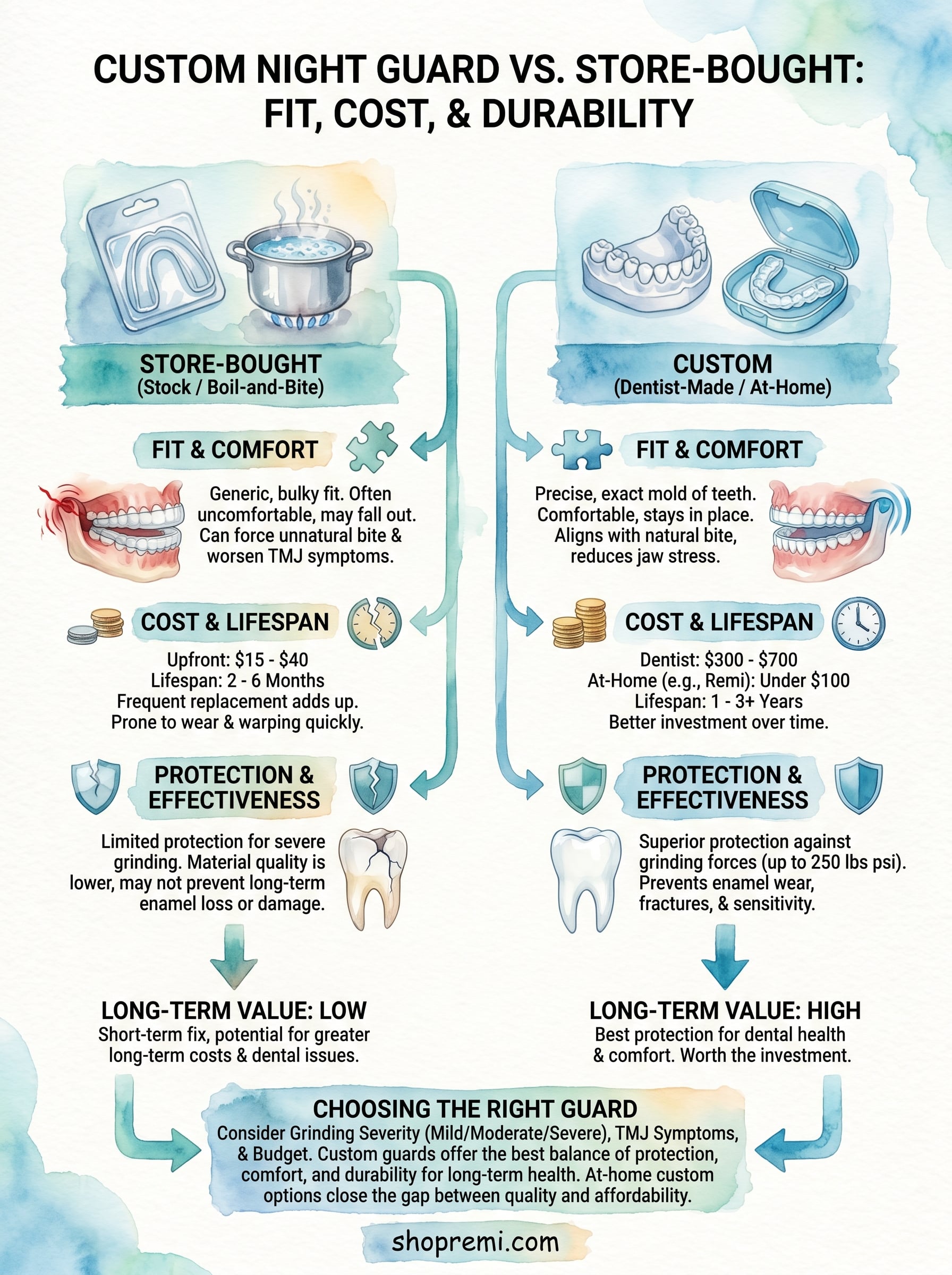
This is where store-bought options consistently fall short, especially when you compare a custom night guard vs store bought in real-world use. Over-the-counter guards are made thick and bulky so they stay in place despite the poor fit, and that bulk forces your jaw into an unnatural resting position throughout the night. Many people find them uncomfortable enough to pull out during sleep without waking up, leaving them grinding completely unprotected for hours. Material quality is also lower across the board, making store-bought guards prone to wearing down or warping within weeks of regular use rather than months.
Custom night guards: dentist-made vs at-home
Custom night guards are made from a precise mold of your actual teeth, which is what separates them from every over-the-counter option. Whether you go through a dentist or an at-home service, the result is a guard built specifically to your bite and tooth contours. That level of precision is what makes the custom night guard vs store bought debate so one-sided when it comes to real protection and long-term comfort.
Getting a guard through your dentist
Dental offices create custom guards by taking a professional impression in the chair and sending it to a dental lab. The process is accurate, but the total cost reflects every step in that chain, including office visit fees, lab costs, and markup. Most dentist-made guards run between $300 and $700, and insurance coverage is inconsistent, which puts this option out of reach for many people who need it most.
At-home custom guards
At-home services like Remi send you an impression kit to complete at home, then manufacture your guard in a professional dental lab, the same type used by dental offices. You get a precisely fitted guard at a fraction of the dentist price, typically under $100, without scheduling a single appointment.
The material and fit quality of a lab-made at-home guard is comparable to what a dental office provides, at a dramatically lower cost.
Your guard arrives directly at your door, and the entire process takes roughly two to three weeks from ordering to receiving.
How to choose based on grinding, TMJ, and budget
Picking the right night guard comes down to three factors: how severely you grind, whether you have jaw or TMJ symptoms, and what you can realistically spend. When you weigh custom night guard vs store bought options honestly, the right answer for most people becomes clear quickly once you look at each factor on its own.
Match the guard to your grinding severity
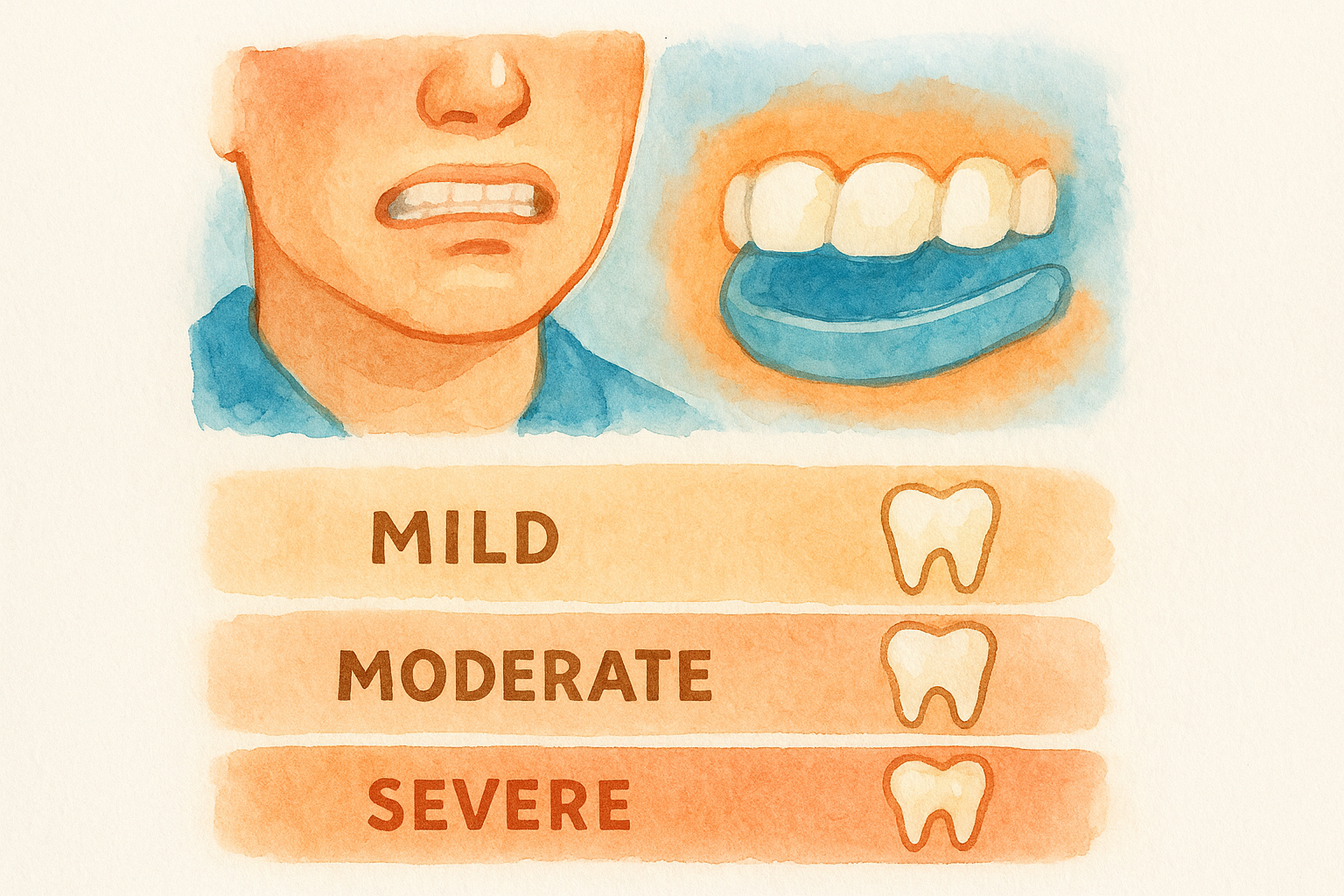
If your grinding is mild and occasional, a boil-and-bite guard can provide basic short-term protection. But if you wake up with sore jaw muscles, headaches, or visible tooth wear, that signals moderate to severe grinding, and a custom guard is the right call. More force requires a guard built to absorb it precisely, and generic molds don't hold up under sustained nightly pressure.
Use these signs to gauge where your grinding falls:
- Mild: occasional soreness, no visible wear, no partner complaints
- Moderate: frequent morning headaches, audible grinding sounds at night
- Severe: visible tooth flattening, jaw pain, cracked or chipped teeth
Consider your TMJ symptoms before settling on a budget
Jaw pain, clicking, or locking are clear signals that a store-bought guard can actively make things worse by forcing your bite into an unnatural overnight position. A custom-fitted guard aligns with your natural bite, reducing stress on your TMJ rather than compounding it.
If jaw symptoms are already part of your situation, a properly fitted guard is not optional. It is the baseline.
At-home custom options like Remi cost under $100, which closes the gap between professional quality and affordability without requiring a single dental office visit.
Costs, lifespan, and how to use one safely
Understanding the real cost of a night guard means looking beyond the purchase price. How long a guard lasts and how much protection it actually delivers per dollar spent tells the full story.
What you'll pay and how long it lasts
When you compare custom night guard vs store bought on cost and longevity together, the value gap shifts significantly. Store-bought guards run between $15 and $40, but they typically last two to six months before the material wears down or warps. Custom guards cost more upfront, but a well-made lab-fabricated guard lasts one to three years with proper care.
| Guard Type | Upfront Cost | Average Lifespan |
|---|---|---|
| Stock/boil-and-bite | $15 to $40 | 2 to 6 months |
| Dentist custom | $300 to $700 | 2 to 5 years |
| At-home custom (Remi) | Under $100 | 1 to 3 years |
Over a two-year period, repeatedly replacing store-bought guards often costs as much as a single custom option.
Cleaning and care habits that extend guard life
Rinse your guard with cool water immediately after removing it each morning, then brush it gently with a soft toothbrush and mild soap. Avoid hot water, which warps the material and shortens its lifespan. Store your guard in the ventilated case it came with so it dries completely between uses and stays free of bacteria buildup.
Inspect your guard monthly for visible wear, thinning spots, or cracks. A damaged guard delivers uneven bite distribution and reduced protection, so replacing it promptly keeps your teeth properly shielded each night.
Quick recap and next steps
The custom night guard vs store bought comparison comes down to one thing: how much protection you actually need. Store-bought guards can offer short-term relief for mild grinding, but the bulk, poor fit, and short lifespan make them a weak long-term solution. Custom guards, whether through a dentist or an at-home service, give you a precise fit that works with your jaw, not against it.
Your grinding severity, TMJ symptoms, and budget all point toward the same answer for most people. A lab-fabricated custom guard at an affordable price closes the gap between professional quality and what you can realistically spend each year. You no longer have to choose between protecting your teeth properly and paying dental office prices to do it.
Ready to stop settling for a guard that barely fits? Get a custom-fitted night guard from Remi and protect your teeth the right way from night one.

