
 Guards + Retainers
 Custom Night Guard
 Retainer
 Emergency Order

 Whitening
 Whitening Kit
 Teeth Whitening Gel
 Dual-Action Foam
 Cleaning + Care
 Ultrasonic Cleaner Pro
 Water Flosser
 UV Toothbrush Sanitizer
 Deep Clean + Freshening Tablets
 Accessories
 Guard Removal Tool
 Replacement Nozzles
 Bundles

You just finished orthodontic treatment, your teeth look great, and now your dentist or orthodontist asks you to choose: permanent vs removable retainer? It's a decision that affects your daily routine, your wallet, and how well your teeth stay in place for years to come. Both options work, but they do so in very different ways, and neither is universally "better."
The right retainer depends on your lifestyle, your bite, and how much maintenance you're willing to commit to. Permanent retainers stay bonded behind your teeth 24/7, while removable retainers come out for eating, brushing, and cleaning. Each has real trade-offs in comfort, cost, durability, and oral hygiene that are worth understanding before you commit.
This guide breaks down the pros, cons, cost, and care for both types so you can make a confident choice. And if you land on the removable side, Remi offers custom-fitted clear retainers made from at-home impressions, a convenient, affordable alternative to repeat trips to the orthodontist.
Why retainers matter after braces or aligners
After braces or aligners come off, your teeth are not locked in place. The bone and soft tissue surrounding your teeth need time to stabilize around their new positions, and during that window, your teeth are highly prone to shifting. A retainer holds everything where it belongs while that stabilization happens. In most cases, you will need some form of retention for the rest of your life if you want to protect the results you worked hard to achieve.
Your teeth have a memory
Orthodontists call it "relapse," and it happens faster than most people expect. Within days of removing braces or finishing aligner treatment, the fibers in your gums (called periodontal ligaments) begin pulling your teeth back toward their original positions. This does not stop after a few months. Teeth can drift for years without consistent retainer use, sometimes even decades after treatment ends.
Skipping your retainer for even a few weeks can create noticeable shifting, especially in the front teeth where any cosmetic change is most visible.
Research consistently shows that patients who stop wearing retainers see measurable tooth movement within the first year after treatment. The degree of relapse varies based on the severity of your original misalignment, your age, and your bone density, but nobody is immune to it. Whether you are comparing a permanent vs removable retainer, the core fact remains the same: you need to wear something consistently to keep your results.
How long you actually need to wear one
Your orthodontist may tell you to wear your retainer full time for the first six to twelve months, then switch to nights only. That second phase is common, but it typically does not have a firm end date. Most orthodontic guidelines recommend lifelong nighttime retention to prevent gradual drift over time.
This does not mean constant inconvenience. Most people adapt quickly to wearing a retainer at night and stop noticing it within a couple of weeks. The bigger risk is quitting altogether. Gaps in wear, even short ones, allow teeth to move into slightly new positions, which makes the retainer harder to fit the next time you try to use it. The longer the gap, the more shifting occurs, and in some cases you may need a new retainer made entirely.
What permanent and removable retainers are
Retainers come in two fundamentally different forms, and understanding what each one actually is makes every other comparison easier to follow. The core difference comes down to one thing: whether the retainer stays in your mouth at all times or whether you take it in and out yourself.
Permanent retainers
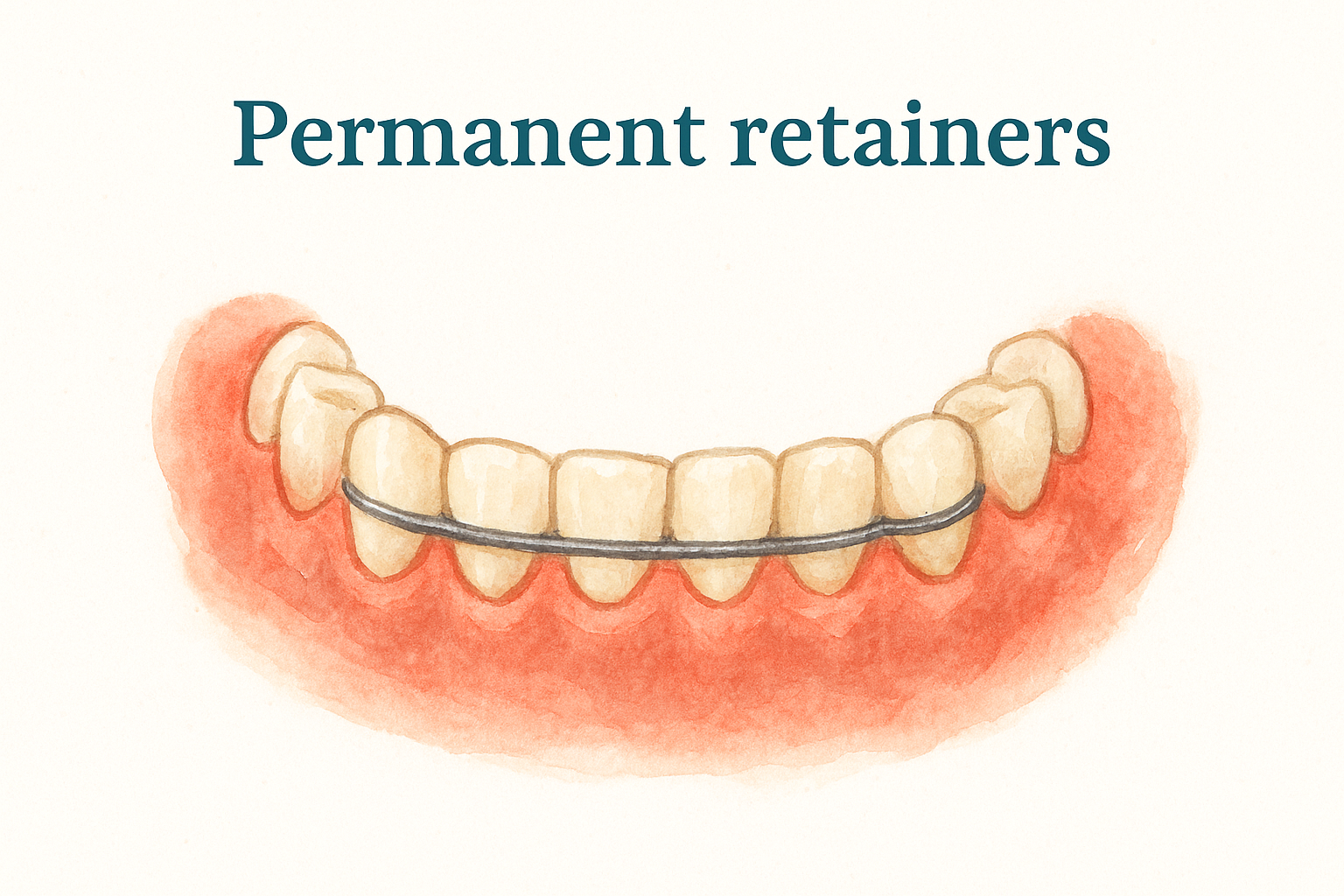
A permanent retainer (also called a fixed or bonded retainer) is a thin wire, typically made from stainless steel or a braided metal, that your orthodontist bonds directly to the back surface of your front teeth using dental adhesive. You cannot remove it at home. It sits out of sight, works continuously, and requires no daily decisions from you about whether to wear it. Most permanent retainers run along the lower front teeth, though some people get them on the upper arch as well.
Removable retainers
A removable retainer is a custom-made appliance you take out for eating, cleaning, and any activity where you prefer not to wear it. The two most common types are Hawley retainers, which use a wire across the front teeth attached to an acrylic base, and clear plastic retainers, which fit over the entire arch like a thin mouthguard. When comparing a permanent vs removable retainer, this category is the more flexible option since you control when it is in and when it is not.
Clear removable retainers are currently the most popular choice among adults finishing orthodontic treatment because they are discreet and comfortable.
Pros and cons for each option
No option is perfect for everyone. When you weigh permanent vs removable retainer choices, the right fit depends heavily on your daily habits and how much you trust yourself to stay consistent. Understanding each option's strengths and weaknesses helps you have a more productive conversation with your orthodontist.
Permanent retainer pros and cons
A fixed retainer removes all guesswork from your retention routine. You never forget to put it in, and it works around the clock without any effort on your part. The main downside is that cleaning around the wire takes extra time and the right tools. Flossing requires a floss threader or water flosser to get beneath the wire, and skipping that step leads to plaque buildup in spots your toothbrush cannot reach.
Bonded wires can also break or come loose without warning, and when that happens, you need a same-day orthodontist visit to avoid rapid shifting.
Removable retainer pros and cons
Removable retainers give you full access to your teeth for brushing and flossing, which makes maintaining good oral hygiene far simpler. The trade-off is discipline. You have to actually wear the retainer consistently, and it is easy to lose or forget it, especially while traveling. Clear retainers can also crack or warp if exposed to heat, so they need careful handling and regular replacement to stay effective.
On the positive side, clear retainers are also far less noticeable than wire-based options, which matters if you wear yours during daytime hours or in social settings. Replacing them is more straightforward and less expensive than repairing a bonded wire, especially when you use an at-home impression service.
Cost, lifespan, and replacement timing
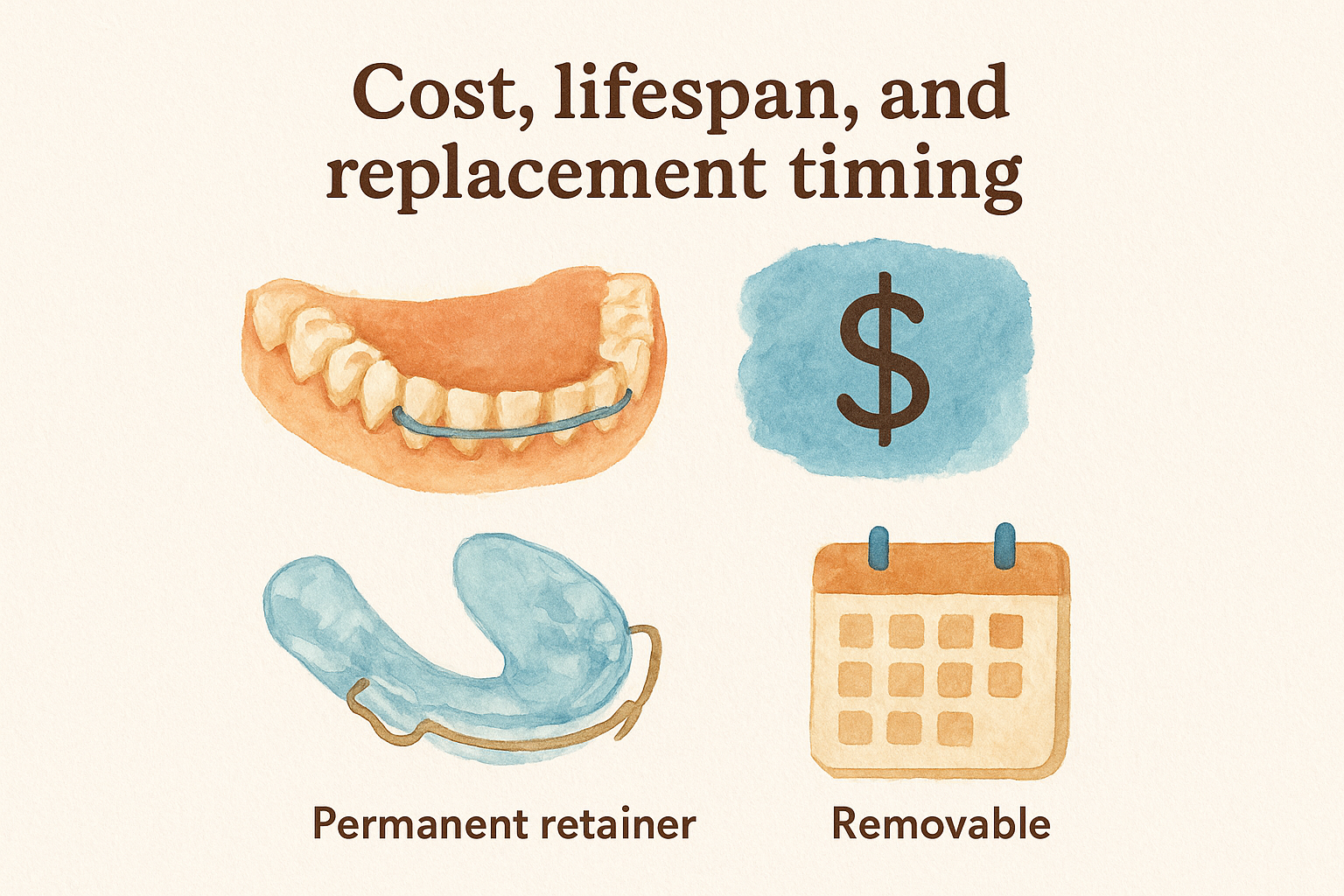
Cost is one of the biggest factors when weighing a permanent vs removable retainer, and the two options carry very different financial profiles over time. Understanding upfront costs alongside long-term replacement needs gives you a clearer picture of what you are actually committing to.
Permanent retainer costs and lifespan
Getting a bonded retainer placed typically costs between $250 and $500 per arch, depending on your orthodontist and location. That price covers the wire and the bonding appointment, and a well-placed permanent retainer can last 10 years or longer without requiring full replacement.
Repairs are where costs add up. A broken or detached wire requires a same-day orthodontist visit, and those repairs can run $100 to $300 per incident. Because you cannot predict when a wire will fail, budgeting for occasional repair visits is a practical step.
If your bonded wire breaks undetected, your teeth can shift noticeably within just a few days before you even realize anything is wrong.
Removable retainer costs and replacement timing
Clear removable retainers from an orthodontist typically cost $100 to $300 per arch for an initial set. Most people need replacements every one to three years because thin plastic wears down, warps, or cracks with regular use. At-home impression services like Remi bring that replacement cost down significantly, without requiring a repeat office visit.
Hawley retainers generally last five years or more because the wire and acrylic construction holds up better under daily wear than thin plastic does. The trade-off is that they are bulkier, which leads some people to wear them less consistently over time.
How to care for each retainer type
The biggest difference in the permanent vs removable retainer maintenance routine comes down to access. A fixed wire blocks direct contact with parts of your teeth that you normally clean without thinking. A removable retainer splits your daily routine into two parts: keeping your teeth clean and keeping the retainer itself clean.
Caring for a permanent retainer
Brushing around a bonded wire takes more deliberate technique than standard brushing. Run your brush along the gum line behind your front teeth using small, careful strokes, and give extra attention to the bonding points where plaque collects fastest. Flossing requires a floss threader or a water flosser to route the floss beneath the wire and between each tooth, which adds a few minutes to your nightly routine but prevents the buildup that leads to cavities and gum inflammation.
Skipping thorough flossing around a bonded wire for even a few days can allow significant plaque deposits to form in spots your toothbrush simply cannot reach.
Visit your dentist every six months for professional cleaning around the wire, since no at-home routine removes everything that accumulates beneath it over time. Also check the wire periodically for any loosening near the bonding points, because a partially detached wire stops working and can shift teeth quickly.
Caring for a removable retainer
Rinse your clear retainer with cool water every time you remove it, and clean it thoroughly at least once a day with a soft-bristled toothbrush and mild soap. Never use hot water or abrasive toothpaste, since both warp and scratch the plastic in ways that affect fit and trap bacteria.
Storing it properly matters just as much as cleaning it. Keep your retainer in its protective case whenever it is out of your mouth, and avoid leaving it exposed on a countertop or wrapped in a napkin. Consistent handling habits extend its lifespan and keep it fitting accurately against your teeth for longer.
Final takeaway
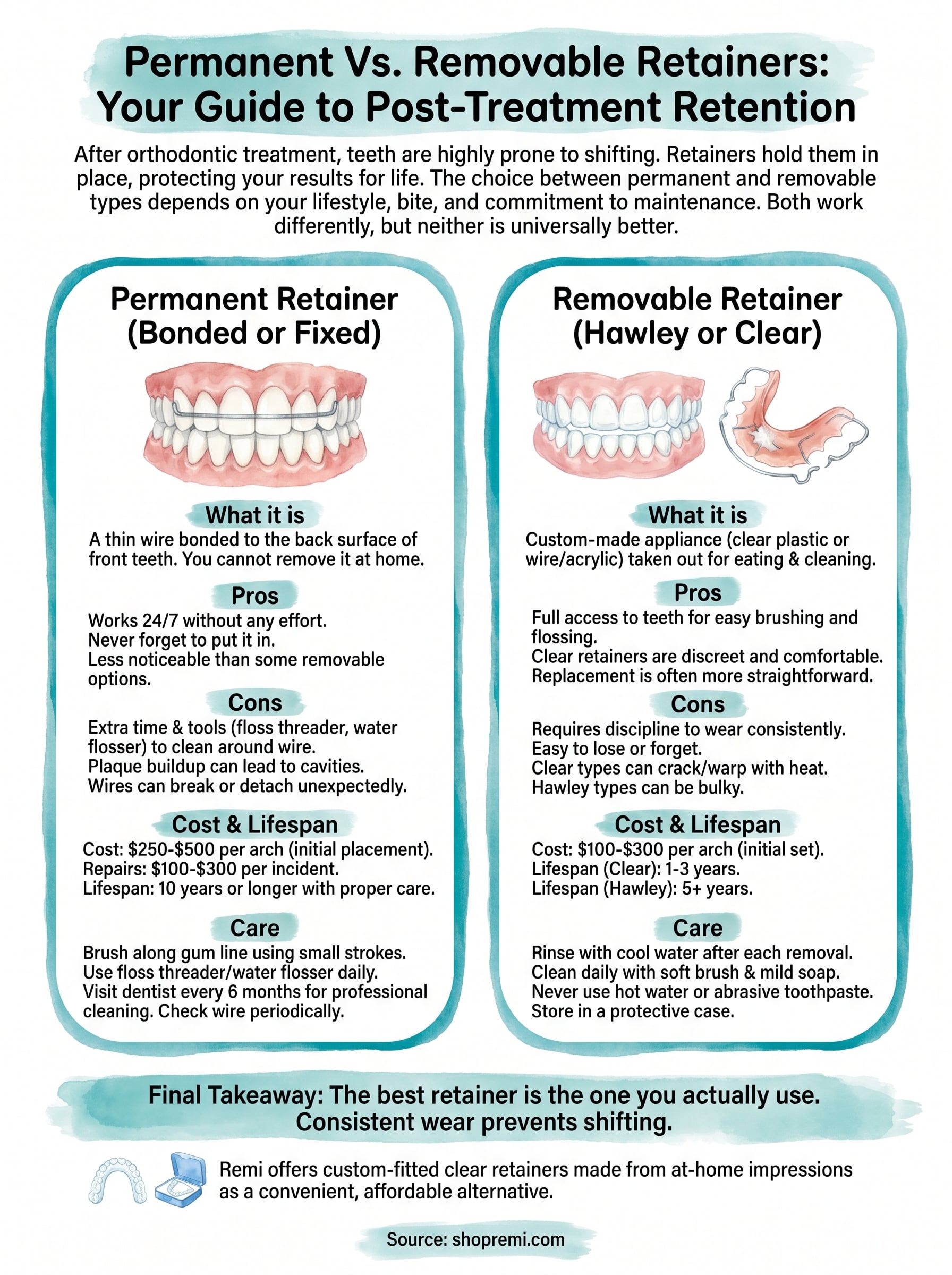
The permanent vs removable retainer decision comes down to two things: your willingness to handle daily maintenance around a bonded wire, and your ability to wear a removable appliance consistently without skipping nights. Neither option works if you ignore it, and both protect your results when you use them correctly. Permanent retainers suit people who want a hands-off solution and do not mind the extra flossing routine. Removable retainers suit people who prefer easier cleaning and do not mind the personal responsibility of putting the retainer in every night.
Your teeth will shift without retention, regardless of how long you wore braces or aligners. The best retainer is the one you actually use. If you go the removable route and want a well-fitting, affordable option without repeated office visits, order a custom clear retainer from Remi and get started from home with an at-home impression kit.

