
 Guards + Retainers
 Custom Night Guard
 Retainer
 Emergency Order

 Whitening
 Whitening Kit
 Teeth Whitening Gel
 Dual-Action Foam
 Cleaning + Care
 Ultrasonic Cleaner Pro
 Water Flosser
 UV Toothbrush Sanitizer
 Deep Clean + Freshening Tablets
 Accessories
 Guard Removal Tool
 Replacement Nozzles
 Bundles

You spent months (or years) in braces or aligners, and now you need to find the best retainer for teeth that actually stay put. The problem? There are multiple types, each with different pros, cons, and price tags, and picking the wrong one can mean wasted money or, worse, teeth that shift right back.
At Remi, we make custom-fitted clear retainers delivered straight to your door, no dental office visits, no inflated prices. Our retainers are crafted alongside in-house dentists using an easy at-home impression kit, so we know a thing or two about what makes a retainer worth wearing every night.
In this guide, we break down all three retainer types, clear (Essix), wire (Hawley), and permanent (fixed), covering durability, comfort, cost, and effectiveness. By the end, you'll know exactly which option fits your teeth, your lifestyle, and your budget.
1. Remi Custom Clear Removable Retainer
The Remi custom clear retainer is what most people picture when they think about the best retainer for teeth after orthodontic treatment. It fits snugly over your entire arch, holds your teeth in the exact position your orthodontist worked to achieve, and stays out of sight while you wear it. Remi ships everything you need directly to your door, so you skip the dental office entirely.
How it works and what it feels like
You start by ordering an at-home impression kit, which walks you through taking a mold of your teeth. You mail that mold back to Remi, and a licensed lab technician uses it to fabricate a retainer that matches your unique bite. The finished product is a thin, BPA-free plastic tray that covers all your teeth and holds them firmly without any visible wires or metal clasps.
Most people describe the fit as tight on the first night, which is completely normal. Within a few days, wearing it feels routine. Because the plastic is clear and sits close to your teeth, it is nearly invisible during wear, which most adults find appealing.
Best for and not ideal for
Remi clear retainers work best for adults and teens who completed orthodontic treatment and need a reliable, low-maintenance way to keep their results. They are also a strong choice if you want an affordable replacement for a lost or damaged retainer without scheduling a dental appointment.
They are not the best fit for people with significant bite issues that still need correction, or for anyone with dental work like bridges or large crowns that make standard impressions difficult. If you have complex dental anatomy, check with your dentist before ordering an at-home kit.
Effectiveness for preventing shifting
Clear retainers are highly effective at preventing shifting when you wear them consistently. Because the tray covers every tooth surface, it distributes retention force evenly, which reduces the chance of any single tooth drifting out of alignment.
Wearing your retainer every night is the single biggest factor in whether your teeth stay straight long-term, regardless of which type you choose.
Studies have shown that teeth naturally want to move back toward their pre-treatment position, especially in the first year after braces or aligner treatment. Nightly wear during that first year, followed by a maintenance schedule your dentist recommends, gives you the best long-term outcome.
Care, cleaning, and lifespan
You should rinse your Remi retainer every morning and clean it thoroughly several times a week. Remi sells a Night Guard Cleaning + Teeth Whitening Foam designed specifically for this purpose, and their Ultrasonic Cleaner Pro offers a deeper clean without the scrubbing. Avoid using toothpaste on the tray since abrasive particles scratch the plastic and create spots where bacteria can collect.
With proper care, a clear retainer typically lasts one to two years before the plastic shows wear or loses its tight fit. Grinding your teeth at night will shorten that lifespan, so if you also deal with bruxism, mention that when ordering.
Typical cost and replacement notes
Remi retainers are priced significantly below what most dental offices charge for a comparable custom retainer. Dental office retainers often run $300 to $600 per arch, while Remi keeps the cost accessible by cutting out the middleman. Replacement retainers use the same impression on file, making reorders fast and straightforward when your retainer eventually wears out.
2. Hawley Wire Retainer
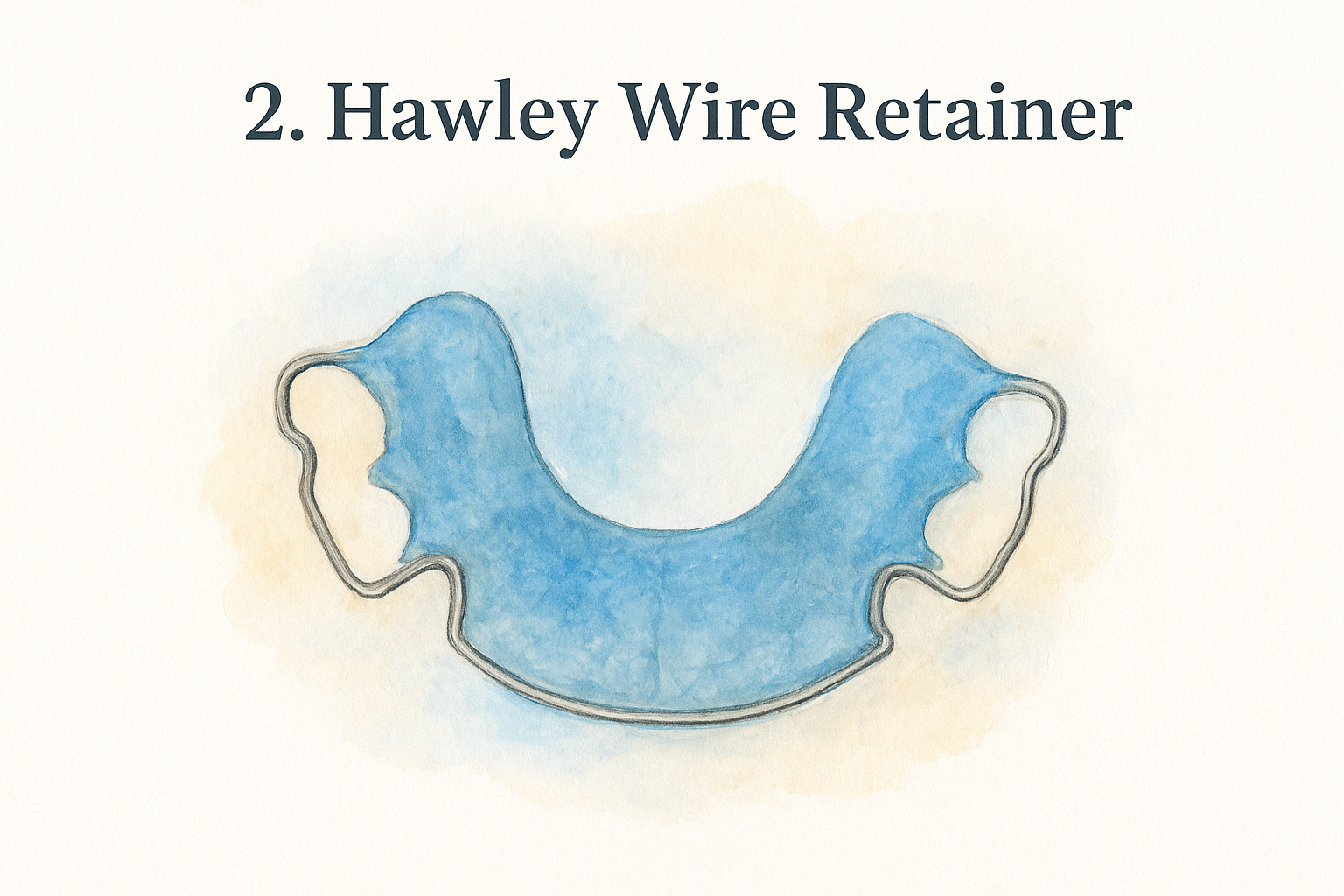
The Hawley retainer is one of the most established designs in orthodontics, used by dentists for decades. It pairs a thin stainless steel wire that runs along the front of your teeth with a custom acrylic plate that sits against the roof of your mouth or along the inner surface of your lower arch. Your orthodontist can bend and adjust the wire after treatment, which is something no clear tray can match.
How it works and what it feels like
The acrylic base is molded specifically to your palate, while the wire applies gentle, steady pressure across your front six teeth to hold them in position. Most people feel the bulk of the acrylic on their tongue during the first week, and speech can sound slightly different until you adjust. A temporary lisp is common early on, but it typically fades within a few days of consistent wear.
Unlike a smooth clear tray, the Hawley has visible hardware. The wire crosses your front teeth and is noticeable when you smile, which matters to many adults choosing the best retainer for teeth maintenance after years of orthodontic work.
Best for and not ideal for
Hawley retainers suit patients whose orthodontists want ongoing adjustability after treatment, since the wire can be tightened or reshaped at follow-up visits. They also work well for younger patients still going through minor jaw changes. For adults who want a discreet option or full surface coverage across every tooth, a clear retainer is a better fit.
Effectiveness for preventing shifting
The wire reliably holds your front teeth in place, but it provides less coverage for the back teeth compared to a full-arch tray. Teeth toward the back of your mouth can still shift gradually if the retainer design does not contact them directly.
Consistent nightly wear matters more than which retainer type you choose, but coverage across all teeth gives you the most protection against post-treatment shifting.
Care, cleaning, and lifespan
You should brush your Hawley retainer gently with a soft toothbrush and mild liquid soap after removing it each morning. Keep it away from hot water, which warps the acrylic and changes the fit. With regular cleaning and careful handling, a Hawley retainer can last five to ten years, making it one of the more durable removable options.
Store it in its case whenever it is out of your mouth. Leaving it on a table or wrapped in a napkin is the fastest way to lose or damage it.
Typical cost and replacement notes
Hawley retainers typically cost $150 to $300 per arch through a dental office, not including the cost of any adjustment visits. If you lose or break one, you need a new impression and a fitting appointment, which adds both time and out-of-pocket expense to the replacement process.
3. Fixed Bonded Retainer
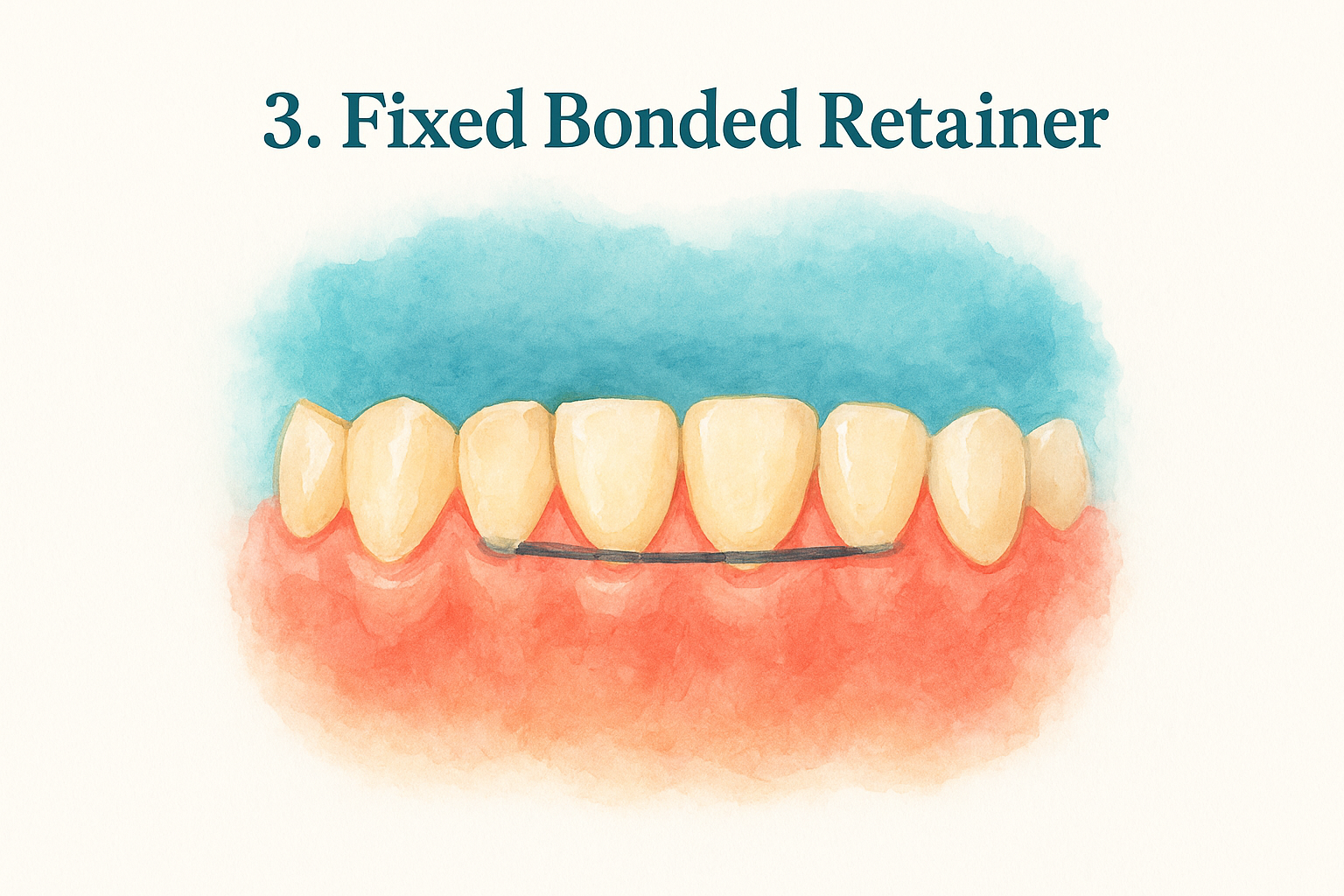
A fixed bonded retainer takes a completely different approach from the other two types. Instead of something you remove and reinsert, your orthodontist or dentist bonds a thin wire directly to the back surface of your teeth using dental cement. Once it is in, it stays there continuously, making it the only option on this list that requires zero effort to wear each night.
How it works and what it feels like
The wire runs horizontally across the inner surface of your lower front teeth and sometimes the upper front teeth as well. Because it sits behind your teeth rather than in front, most people cannot see it at all when you smile. You will feel the wire with your tongue at first, and it takes a week or two before it starts to feel normal. Most patients adjust quickly and stop noticing it entirely.
Your dentist bonds the wire tooth by tooth using a dental adhesive, so it stays fixed until a professional removes or replaces it. There is no daily insertion, no case to carry, and no risk of leaving it on a restaurant table.
Best for and not ideal for
Fixed retainers work best for people who struggled with wearing removable retainers consistently, particularly younger patients or anyone whose orthodontist has concerns about compliance. They also suit patients who had significant lower front tooth crowding before treatment and need reliable, around-the-clock retention in that area.
They are not ideal if you want the flexibility to remove your retainer for special occasions, or if your dental hygiene routine is already difficult to maintain. Cleaning around a bonded wire takes more time and technique than cleaning a removable tray.
Effectiveness for preventing shifting
A bonded retainer is highly effective at preventing shifting in the teeth it directly contacts. Because the wire holds those specific teeth at all times, there is no opportunity for movement during the hours you might forget to wear a removable option.
The limitation is coverage: a fixed retainer only holds the teeth it is bonded to, so back teeth can still drift without an additional removable retainer used alongside it.
Care, cleaning, and lifespan
Cleaning around a bonded wire requires a floss threader or interdental brush to reach underneath the wire along your gumline. Skipping this step regularly leads to plaque buildup, which can cause decay or gum problems directly around the retainer.
With proper hygiene and no physical damage, a bonded retainer can last ten years or longer. A knocked wire or a broken bond requires a prompt dental visit to reattach it before teeth start shifting.
Typical cost and replacement notes
Bonded retainers typically cost $250 to $500 per arch placed by an orthodontist or general dentist, and that does not include repair visits if the wire debonds from a tooth. When a bond breaks, you need an appointment quickly because even a day or two without retention can allow movement in recently straightened teeth. If you are evaluating the best retainer for teeth maintenance over the long term, factor in those potential repair costs alongside the upfront price.
Keep Your Teeth Straight for the Long Run
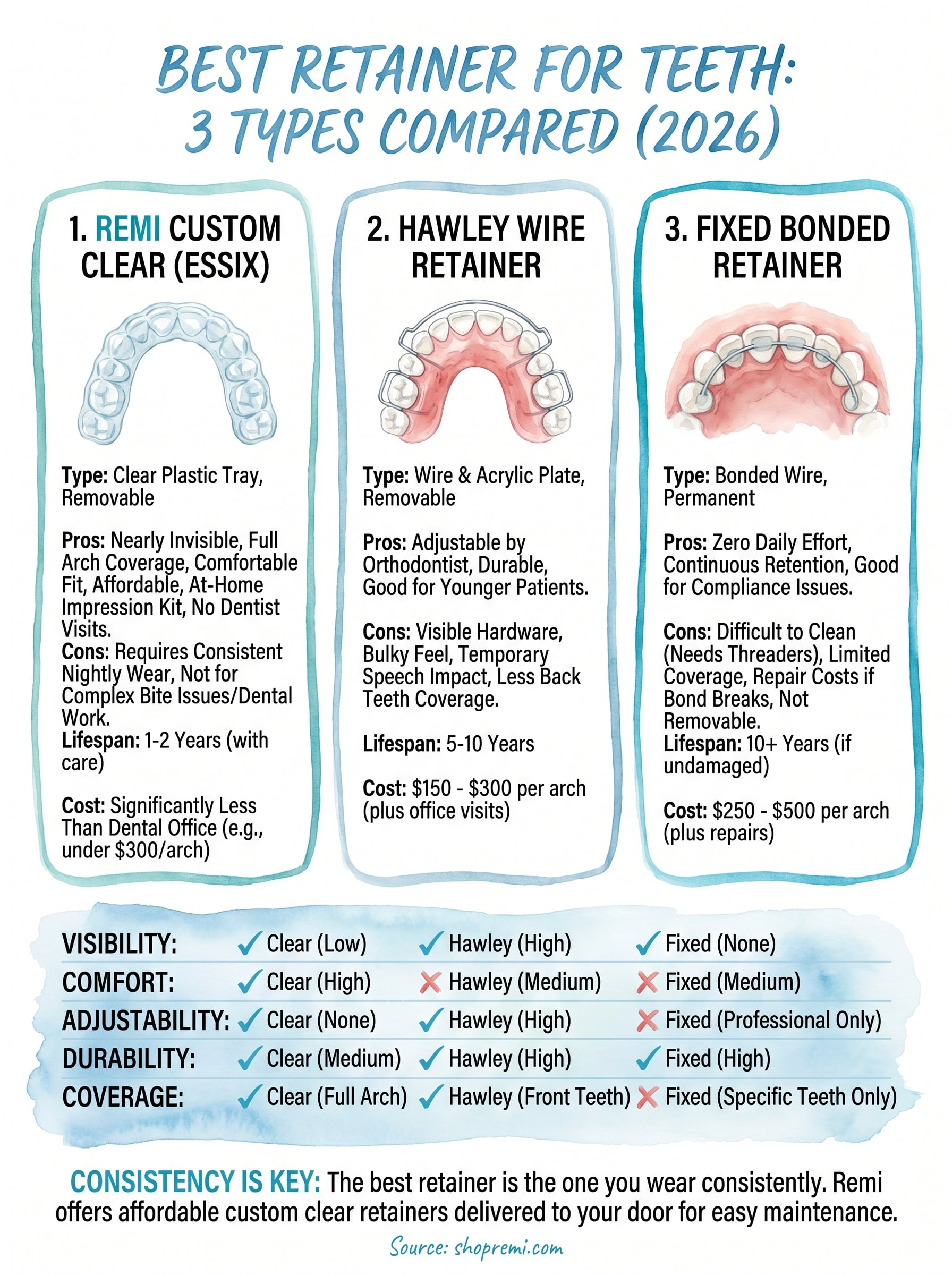
All three retainer types can keep your teeth in place, but they only work if you actually wear them. Consistency matters more than which type you pick. Clear retainers give you the best combination of comfort, discretion, and full-arch coverage, while Hawley retainers offer adjustability and longer physical durability. Fixed bonded retainers remove the compliance question entirely but require extra effort to clean and carry repair costs when wires break.
Your best retainer for teeth is ultimately the one you will use without skipping nights. If you want a custom-fit clear retainer without the dental office price tag or the scheduling hassle, Remi makes that straightforward. You take your impressions at home, mail them in, and your retainer ships directly to your door. Order your custom clear retainer from Remi today and keep the results you worked hard to achieve.

