


What Is Sleep Bruxism? Symptoms, Causes, Risks & Treatment
Sleep bruxism is when you grind, clench, or gnash your teeth during sleep without realizing it. Unlike occasional jaw tension while awake, this happens subconsciously throughout the night and can involve significant force. Your jaw muscles contract repeatedly, causing your teeth to rub together or press firmly. Most people who grind their teeth at night have no idea they do it until a dentist spots the damage or a partner complains about the grinding sounds. Over time, this repetitive motion can wear down your tooth enamel, trigger morning headaches, cause jaw pain, and even lead to cracked teeth.
This article walks you through everything you need to understand about sleep bruxism. You'll learn why it matters for your long term dental and overall health, how to recognize the warning signs, what typically causes it, and which risk factors make it more likely. We'll cover both professional treatment options and practical self care steps you can take at home to reduce damage and discomfort. Whether you suspect you might grind your teeth or you've already been diagnosed, you'll find clear guidance to help you protect your smile and get better rest.
Why sleep bruxism matters for your health
Understanding what is sleep bruxism goes beyond just knowing the definition. This condition creates real consequences for your dental health and overall wellbeing. The force you apply when grinding your teeth during sleep can reach up to 250 pounds of pressure, which is significantly stronger than normal chewing force. Your teeth weren't designed to handle this kind of sustained, repetitive stress night after night. When you grind regularly without treatment or protection, you set yourself up for progressive damage that often worsens over time and requires expensive dental work to fix.
Dental damage from repeated grinding
Your tooth enamel bears the brunt of sleep bruxism first. This protective outer layer gradually wears away, exposing the softer inner layers of your teeth and increasing your risk of cavities and sensitivity. You might notice your teeth becoming flattened, chipped, or even cracked. Dental fillings, crowns, and implants can also sustain damage from grinding forces. In severe cases, teeth become loose or fracture completely, requiring extraction and replacement.
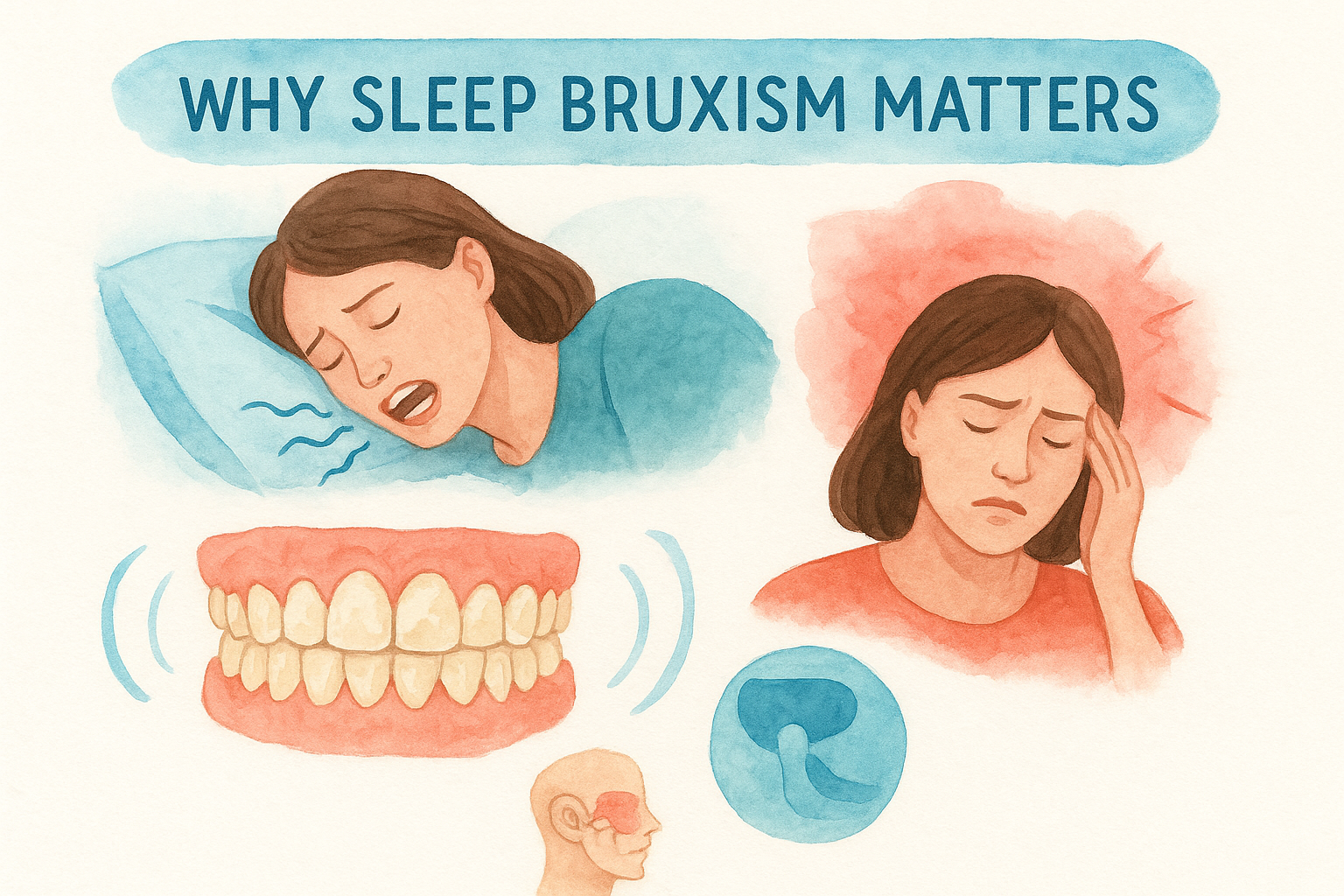
Regular grinding weakens your teeth the same way rubbing sandpaper on wood eventually wears it down.
Effects beyond your teeth
Sleep bruxism affects more than just your smile. The constant muscle activity strains your jaw joints and muscles, often leading to temporomandibular joint (TMJ) disorder. You might wake up with tension headaches that start at your temples, experience facial pain throughout the day, or notice your jaw clicking, popping, or locking. Some people develop earaches that aren't actually ear problems but referred pain from their jaw muscles. The disrupted sleep quality can leave you feeling tired and irritable, while your bed partner might lose sleep from the grinding sounds.
How to recognize and confirm sleep bruxism
Recognizing sleep bruxism presents a unique challenge because it happens when you're unconscious. You can't feel yourself grinding or monitor the force you're applying to your teeth. Many people only discover they have this condition when their dentist points out tooth damage during a routine checkup or when a bed partner mentions hearing grinding sounds at night. The symptoms often show up hours after the actual grinding occurs, making it difficult to connect the dots between your nighttime behavior and your daytime discomfort.
Warning signs you might be grinding
Your body gives you several clues that suggest you're grinding your teeth during sleep. The most common indicator is waking up with jaw pain, soreness, or tightness in your facial muscles. You might experience frequent morning headaches that start at your temples and feel similar to tension headaches. Your teeth may become more sensitive to hot or cold temperatures, or you might notice they look worn down, flattened, or have tiny chips. Some people hear a clicking or popping sound when they open and close their mouth, while others struggle with jaw stiffness that makes it difficult to open their mouth fully after waking.
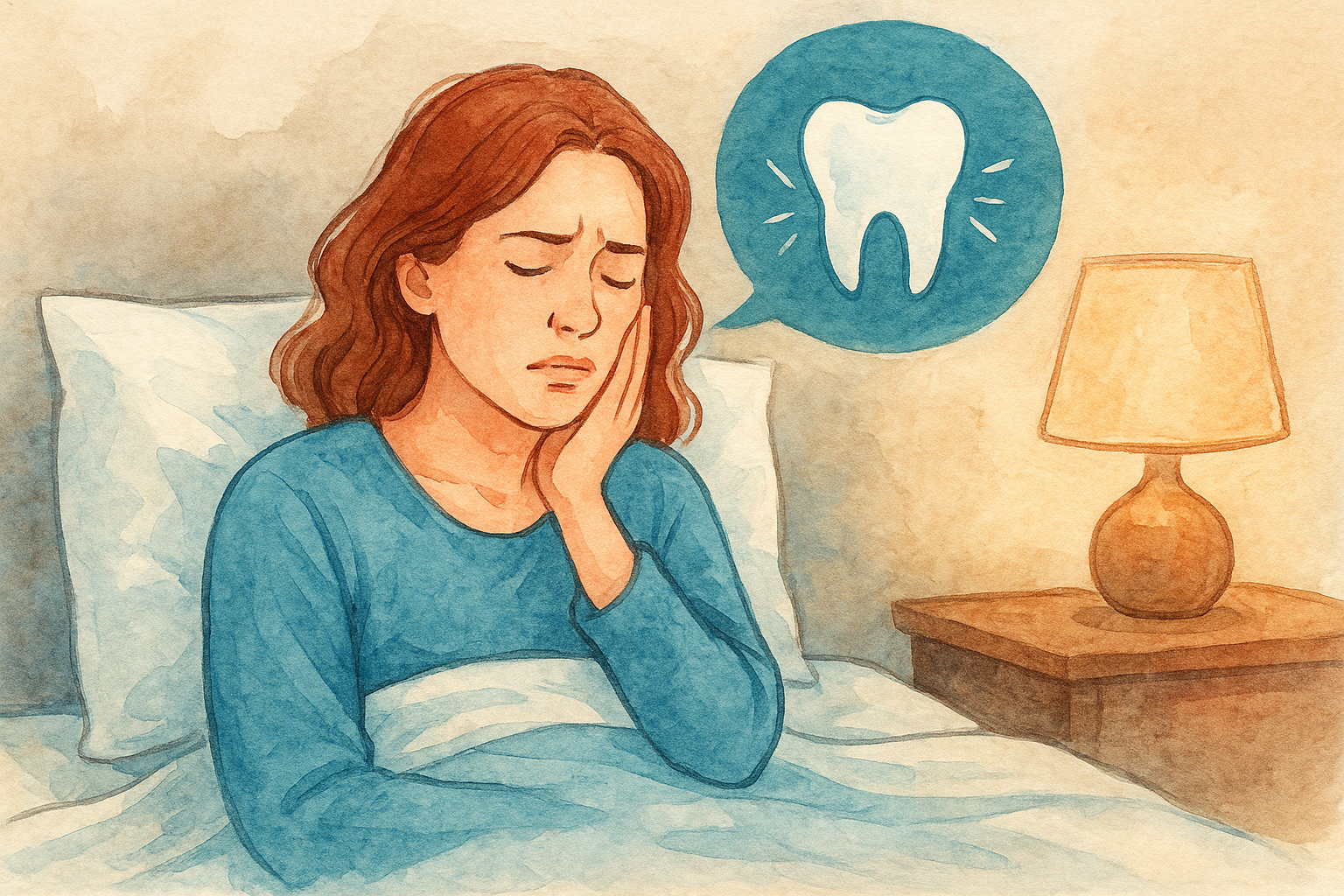
Your partner hearing grinding sounds at night is often the first concrete evidence that you have sleep bruxism.
Other symptoms include unexplained earaches (when there's no actual ear problem), disrupted sleep quality, and cheek tissue damage from biting the inside of your mouth. Your dentist might also spot telltale signs like fractures in your dental work or indentations on your tongue.
How healthcare providers diagnose the condition
Your dentist typically makes the initial diagnosis during a regular dental examination by checking for signs of tooth wear, enamel damage, and jaw muscle tenderness. They'll ask about your symptoms, sleep habits, and any factors that might contribute to grinding. In straightforward cases, this physical exam and your reported symptoms provide enough information for diagnosis. For complex or severe cases, your healthcare provider might recommend an overnight sleep study called polysomnography. This test takes place in a sleep center where specialists monitor your brain activity, muscle movements, and jaw contractions throughout the night, giving a definitive answer about whether you grind your teeth and how severely.
Common causes and risk factors
Sleep bruxism rarely has a single clear cause. Instead, multiple factors combine to trigger teeth grinding during sleep. Researchers haven't pinpointed one specific mechanism that explains why some people develop this condition while others don't. Your individual risk depends on a complex mix of physical, psychological, and genetic elements that work together. Understanding what increases your likelihood of grinding helps you identify potential triggers you can modify and factors that require professional management.
Stress and emotional triggers
Emotional factors play a significant role in what is sleep bruxism and why it occurs. High stress levels consistently rank as one of the strongest risk factors for teeth grinding. When you feel overwhelmed, anxious, or frustrated during your waking hours, your body may continue processing these emotions through jaw clenching while you sleep. People with diagnosed anxiety disorders or depression face a higher risk of developing sleep bruxism compared to those without these conditions. Your personality type also matters. Aggressive, competitive, or hyperactive personalities correlate with increased grinding frequency.
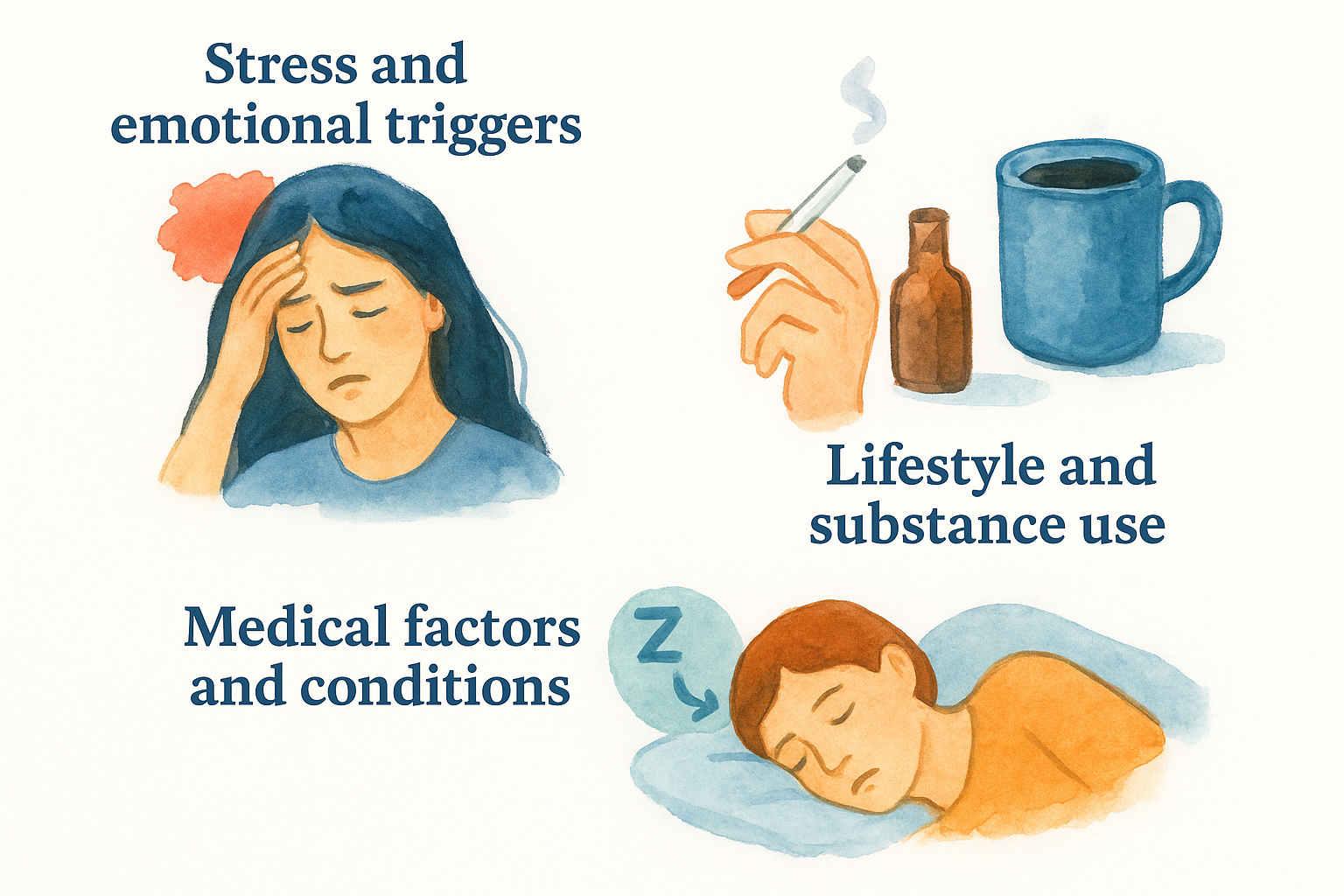
Stress doesn't stop affecting your body just because you fall asleep.
Lifestyle and substance use
Your daily habits directly influence your grinding risk. Smoking tobacco, drinking alcohol, and consuming excessive caffeine (more than six cups of coffee daily) can double your chances of developing sleep bruxism. These substances affect your nervous system and sleep quality, making grinding episodes more likely. Recreational drug use also increases risk significantly.
Medical factors and conditions
Certain medications trigger or worsen teeth grinding as a side effect. Selective serotonin reuptake inhibitors (SSRIs), commonly prescribed for anxiety and depression, can cause bruxism in some patients. Medications for ADHD and some antipsychotics carry similar risks. Sleep disorders create another connection, with obstructive sleep apnea frequently occurring alongside sleep bruxism. Family history matters too, as grinding tends to run in families. Other conditions like Parkinson's disease, GERD, epilepsy, and dementia show associations with increased bruxism risk.
Treatment options for sleep bruxism
No single treatment completely cures what is sleep bruxism, but several proven approaches reduce grinding episodes and prevent dental damage. Your treatment plan depends on how severe your grinding is, what's causing it, and how much damage has already occurred. Most healthcare providers recommend starting with conservative approaches like mouth guards before moving to medications or invasive procedures. You might need to combine multiple treatments to get the best results, and what works for someone else may not work for you. Your dentist or doctor can help you determine which options make the most sense for your specific situation.
Mouth guards and dental appliances
Your dentist can create a custom-fitted mouth guard (also called a night guard or dental splint) that protects your teeth from grinding damage. These devices create a barrier between your upper and lower teeth, absorbing the force when you clench or grind. Custom guards made by your dentist fit more comfortably and last longer than over-the-counter options you buy at pharmacies. Some splints also reposition your jaw to reduce strain on your temporomandibular joint muscles, which helps with both grinding and jaw pain. You wear your mouth guard whenever you're most likely to grind, typically during sleep. While guards don't stop the grinding behavior itself, they prevent your teeth from wearing down and often reduce morning headaches and jaw soreness.
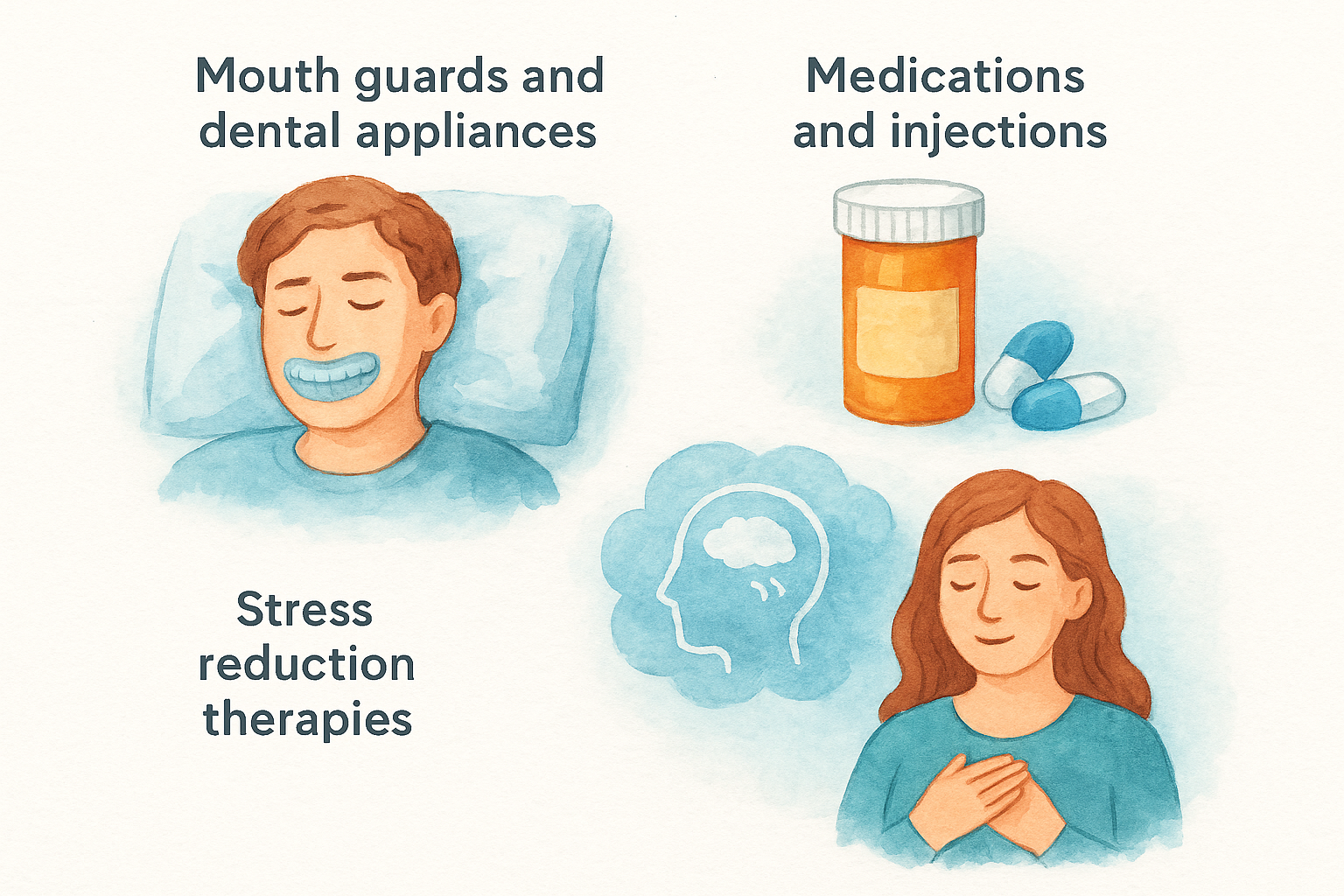
A properly fitted mouth guard acts like a shock absorber, protecting your teeth from the force you can't control while sleeping.
Medications and injections
Healthcare providers sometimes prescribe muscle relaxers to reduce jaw muscle activity and grinding episodes. These medications work best when taken before bedtime and are typically recommended as a short-term solution rather than long-term management. You'll need to discuss potential side effects with your doctor before starting any medication. For severe cases that don't respond to other treatments, Botox injections into your jaw muscles can temporarily reduce grinding by limiting muscle contractions. These injections provide relief for about three to four months, then require repeat treatments to maintain results.
Stress reduction therapies
Addressing the psychological triggers behind your grinding often provides lasting relief. Cognitive behavioral therapy helps you identify and modify thought patterns that contribute to stress and anxiety. Your therapist might teach you relaxation techniques, stress management strategies, and better sleep habits. Regular exercise, meditation, and mindfulness practices can lower your overall stress levels and reduce grinding frequency. Some people benefit from biofeedback therapy, which trains you to recognize and control jaw muscle tension patterns even during sleep.
Self-care tips to protect your teeth
Beyond professional treatment, you can take several practical steps at home to reduce grinding damage and lower the frequency of bruxism episodes. These self-care strategies work best when you combine them with other treatments like mouth guards or stress management therapy. While you can't consciously control what is sleep bruxism since it happens while you're unconscious, you can modify the factors that trigger it and create better conditions for restful, grinding-free sleep. Your daily choices around stress management, substance use, and bedtime routines directly influence how often and how severely you grind your teeth each night.
Lifestyle changes that reduce grinding
Start by examining your consumption habits. Cut back on caffeine intake, especially in the afternoon and evening, as it stimulates your nervous system and can trigger grinding episodes. Limit alcohol consumption since it disrupts sleep quality and increases bruxism risk. If you smoke, quitting provides multiple benefits for both your grinding and overall health. Create a consistent sleep schedule by going to bed and waking up at the same time every day, which helps regulate your sleep patterns and reduces grinding triggers. Regular physical exercise lowers stress levels naturally, but schedule workouts earlier in the day rather than close to bedtime.
Small daily changes in what you consume and when you sleep can significantly reduce your teeth grinding over time.
Daily habits for dental protection
Apply a warm compress to your jaw before bed to relax tense muscles and reduce clenching during sleep. Practice jaw exercises recommended by your dentist or physical therapist to improve muscle flexibility and reduce pain. Avoid chewing gum and eating hard foods like nuts or ice, which overwork your jaw muscles and make grinding worse. Stay hydrated throughout the day, as dehydration can contribute to muscle tension. Before sleep, spend 10 to 15 minutes doing relaxation techniques like deep breathing, gentle stretching, or meditation to calm your nervous system and prepare for restful sleep.
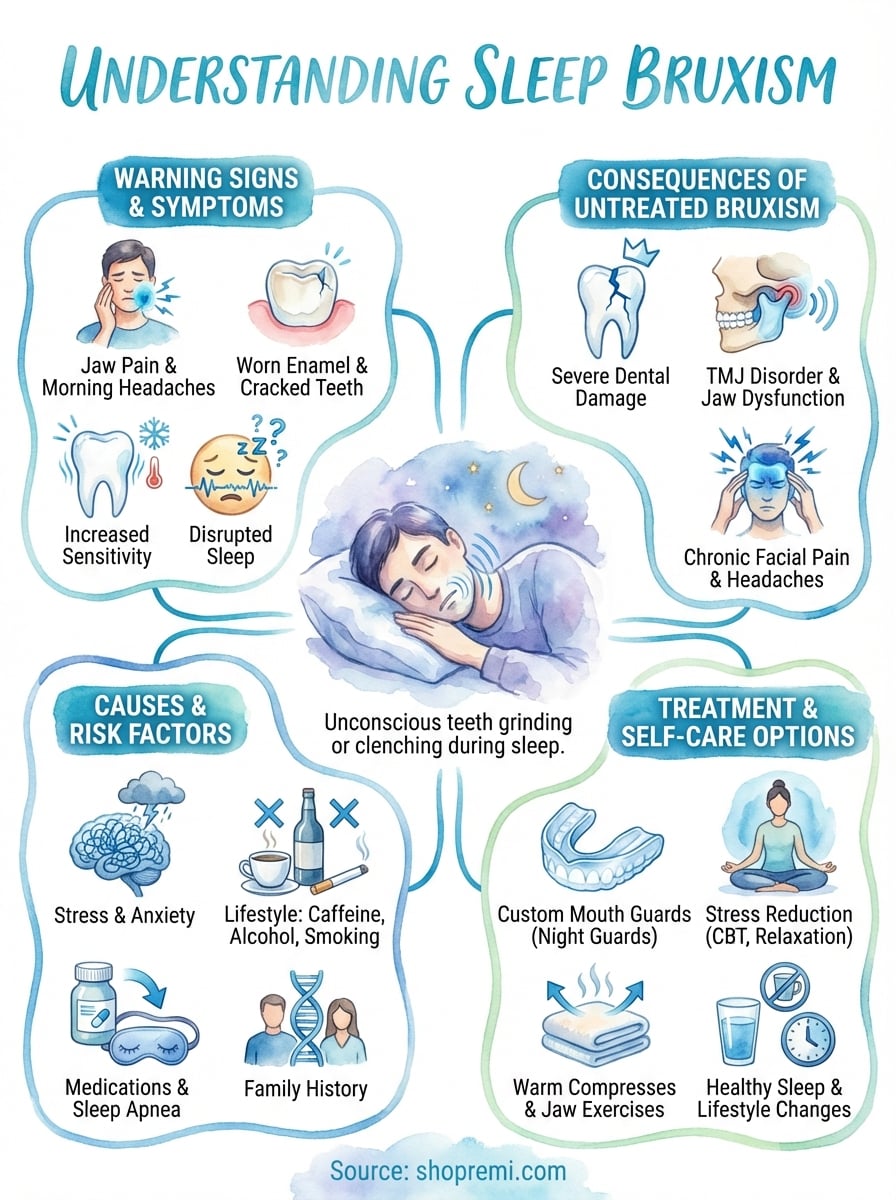
Key takeaways
Understanding what is sleep bruxism helps you recognize the warning signs and take action before significant damage occurs. This condition involves unconscious teeth grinding during sleep that can wear down your enamel, cause jaw pain, trigger morning headaches, and lead to expensive dental repairs. Your risk increases with stress, anxiety, certain medications, and lifestyle factors like smoking or excessive caffeine consumption. While you can't completely prevent grinding, you can protect your teeth with custom mouth guards, reduce stress through relaxation techniques, and modify daily habits that trigger episodes. Most people see improvement by combining professional treatment with self-care strategies rather than relying on just one approach. If you suspect you grind your teeth at night, schedule a dental exam to assess any existing damage and discuss your treatment options. Protecting your teeth now prevents more serious problems and costly repairs later. Consider a custom night guard designed specifically for your mouth to shield your teeth from grinding damage while you sleep.

