


If you've been diagnosed with bruxism, or you suspect you're grinding your teeth at night, a custom night guard is one of the most effective ways to protect your enamel and reduce jaw pain. But once you start shopping, you'll quickly run into the thick vs thin night guard debate. The right thickness depends on factors most people overlook, like how aggressively you grind and whether comfort or durability matters more to you.
At Remi, we design custom-fitted night guards with input from our in-house dental team, so we've seen firsthand how choosing the wrong thickness can mean the difference between relief and a night guard that ends up in a drawer. A guard that's too bulky feels uncomfortable; one that's too thin won't hold up to heavy grinding and clenching.
This guide breaks down exactly how thick and thin night guards compare, covering durability, comfort, cost, and which type matches your specific level of bruxism, so you can make a confident choice and actually start getting better sleep without jaw pain.
Why night guard thickness matters for bruxism
Night guard thickness isn't a minor detail; it's one of the most important factors that determines whether your guard protects your teeth, fits comfortably, and lasts long enough to be worth the cost. When you're deciding between a thick vs thin night guard, you're really making a decision about how much protection your teeth need and how much bulk you can tolerate while sleeping.
How grinding severity affects the thickness you need
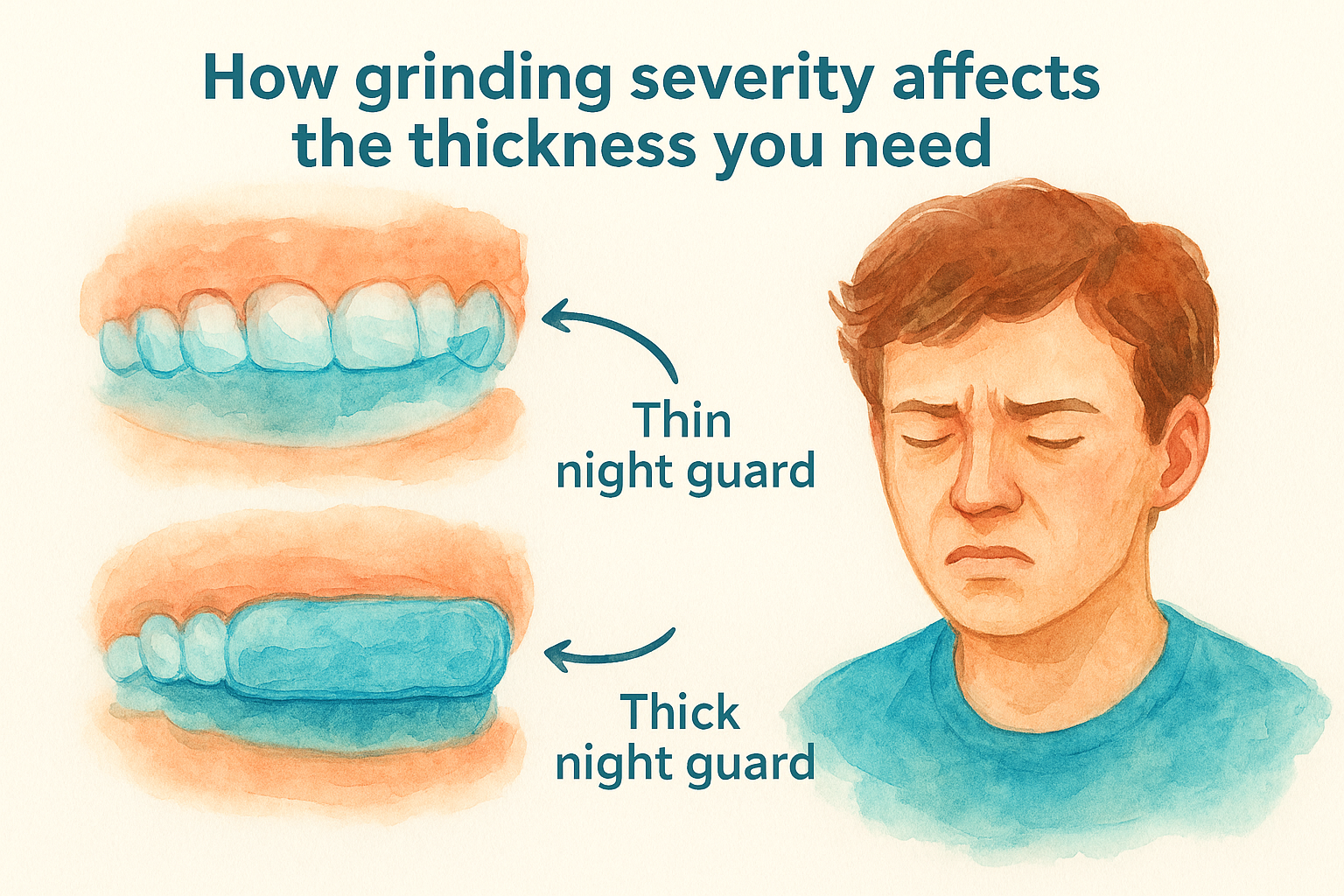
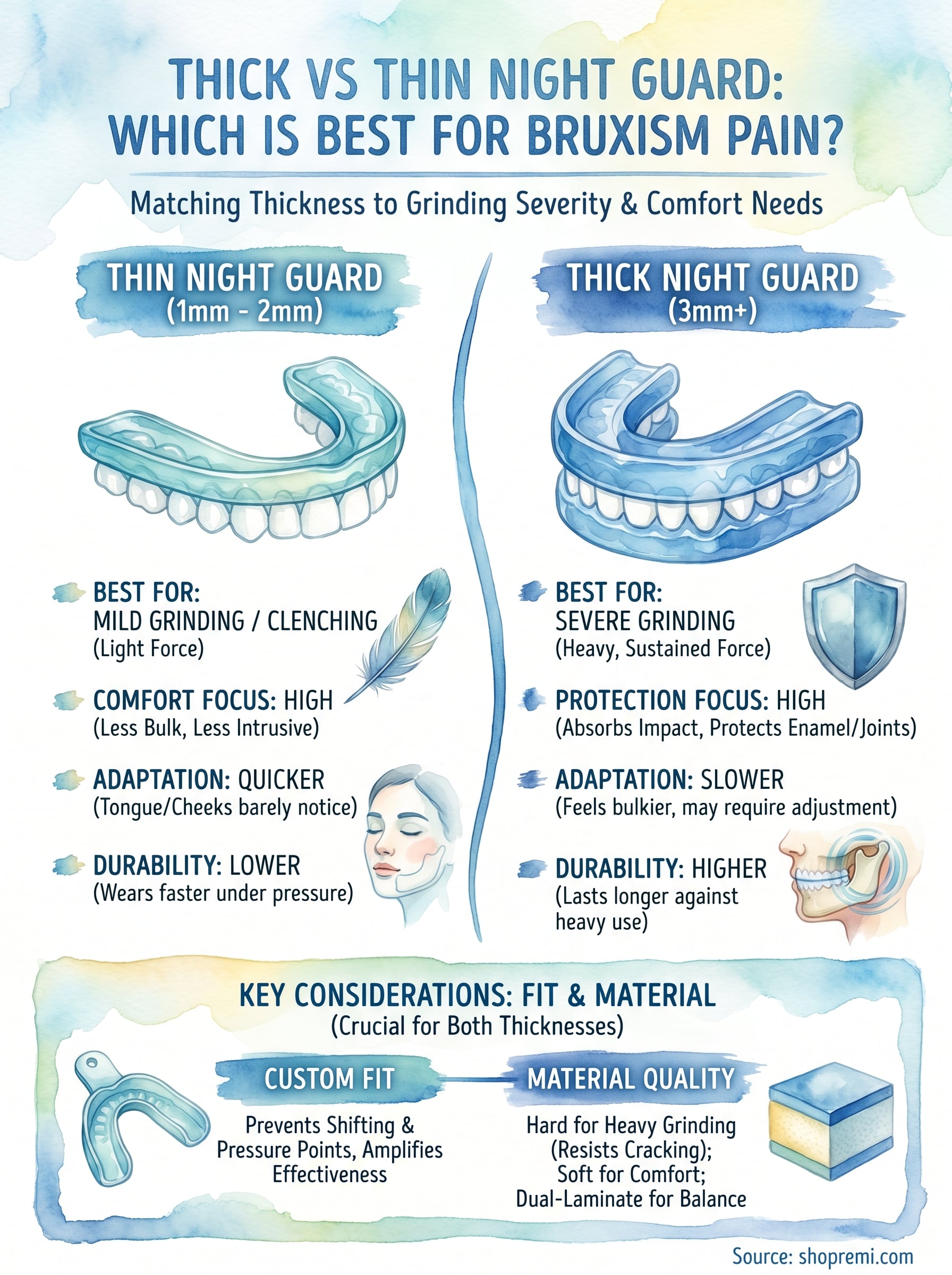
Bruxism ranges from mild to severe, and the force you generate while grinding directly impacts how fast a night guard wears down. If you grind lightly or mainly clench without much movement, a thin guard in the 1mm to 2mm range gives you enough cushioning without adding unnecessary bulk. But if you grind heavily, a thin guard can wear through in weeks, leaving your enamel just as exposed as before.
A night guard that wears through before providing real protection isn't saving you money; it's just delaying the problem.
Heavy grinders need a thicker guard, usually 3mm or more, because the added material absorbs sustained pressure over a full night of grinding. This extra thickness acts as a buffer between your upper and lower teeth, reducing the mechanical wear and jaw joint stress that builds up over time with severe bruxism.
The relationship between thickness and comfort
Comfort and protection pull in opposite directions when it comes to thickness. A thinner guard sits closer to your teeth, feels less intrusive, and is generally easier to adjust to, especially if you've never worn a night guard before. Many people who try a thick guard first find it triggers a gag reflex or simply feels too unnatural to sleep through the night.
Your jaw muscles also respond differently depending on thickness. A thicker guard holds your jaw in a slightly more open position throughout the night, which can reduce muscle tension for some people but feel fatiguing for others. Getting that balance right is why matching the correct thickness to your actual grinding pattern matters far more than picking based on price or guesswork alone.
Thin vs thick night guards explained
Before you can decide which option suits you, it helps to understand exactly what separates a thin night guard from a thick one in terms of design, purpose, and expected performance. The thick vs thin night guard comparison comes down to three core differences: how much material sits between your teeth, how long that material lasts under pressure, and how your mouth adapts to it over time.
What thin night guards offer
Thin guards typically range from 1mm to 2mm in thickness and are designed for mild grinders or people who primarily clench without heavy lateral movement. Their main advantage is comfort. Because they sit so close to your teeth, your tongue and cheeks barely notice them, which means most people adapt within a few nights. Thin guards also work well for daytime clenching, since the low profile makes them discreet and easy to wear for short periods.
Thin guards are not a shortcut; they are the right tool for the right severity level.
What thick night guards offer
Thick guards usually measure 3mm or more and are built to absorb sustained, heavy grinding force over many hours. The added bulk creates a more substantial buffer between your upper and lower teeth, which protects both enamel and the jaw joint from the repetitive stress that severe bruxism produces. Durability is the main reason dentists recommend thicker guards for heavy grinders, since a properly constructed thick guard can last two to three years with consistent use and care.
How to choose the right thickness for you
Picking the right night guard starts with an honest assessment of how severe your bruxism is and how sensitive you are to wearing something in your mouth while you sleep. The thick vs thin night guard decision is not about personal preference alone; it's about matching the guard's protective capacity to the actual demands your grinding places on it every night.
Start with your grinding severity
Your grinding severity is the most reliable indicator of which thickness you need. Use these criteria to place yourself in the right category before purchasing:
- Mild grinding or clenching only: a 1mm to 2mm thin guard provides adequate protection
- Moderate grinding with occasional jaw soreness: a 2mm to 3mm medium guard balances durability and comfort
- Severe grinding with visible enamel wear or cracked teeth: a 3mm or thicker guard is necessary
If your dentist has already flagged significant jaw joint stress or enamel damage, go straight to a thick guard rather than testing a thin one first and replacing it within weeks.
Consider your comfort tolerance
Some people adapt quickly to any thickness; others find even a slight increase in bulk disrupts their sleep significantly. If you've worn a guard before and struggled to keep it in overnight, start with a thinner option and move up only if you see visible wear within the first few months. First-time wearers who grind heavily should choose a medium-thick option from the start, because replacing a worn-out thin guard every few weeks ends up costing more than simply buying the right thickness upfront.
Fit and materials matter as much as thickness
Thickness alone won't protect your teeth if your night guard doesn't fit correctly or is made from the wrong material for your grinding pattern. In the thick vs thin night guard debate, people often overlook that a custom-fitted guard at any thickness outperforms a generic one simply because it stays in place and distributes grinding force evenly across your teeth.
Why custom fit makes the difference
A poorly fitting guard shifts during the night, creating uneven pressure points that can actually aggravate jaw soreness rather than relieve it. When your guard fits precisely over your teeth, every millimeter of thickness works as intended, absorbing force where it matters most. Custom guards made from dental-grade impressions seat flush against your teeth without relying on extra bulk to compensate for poor fit.
A well-fitted thin guard will outperform a thick guard that moves around in your mouth every night.
How material quality affects durability and comfort
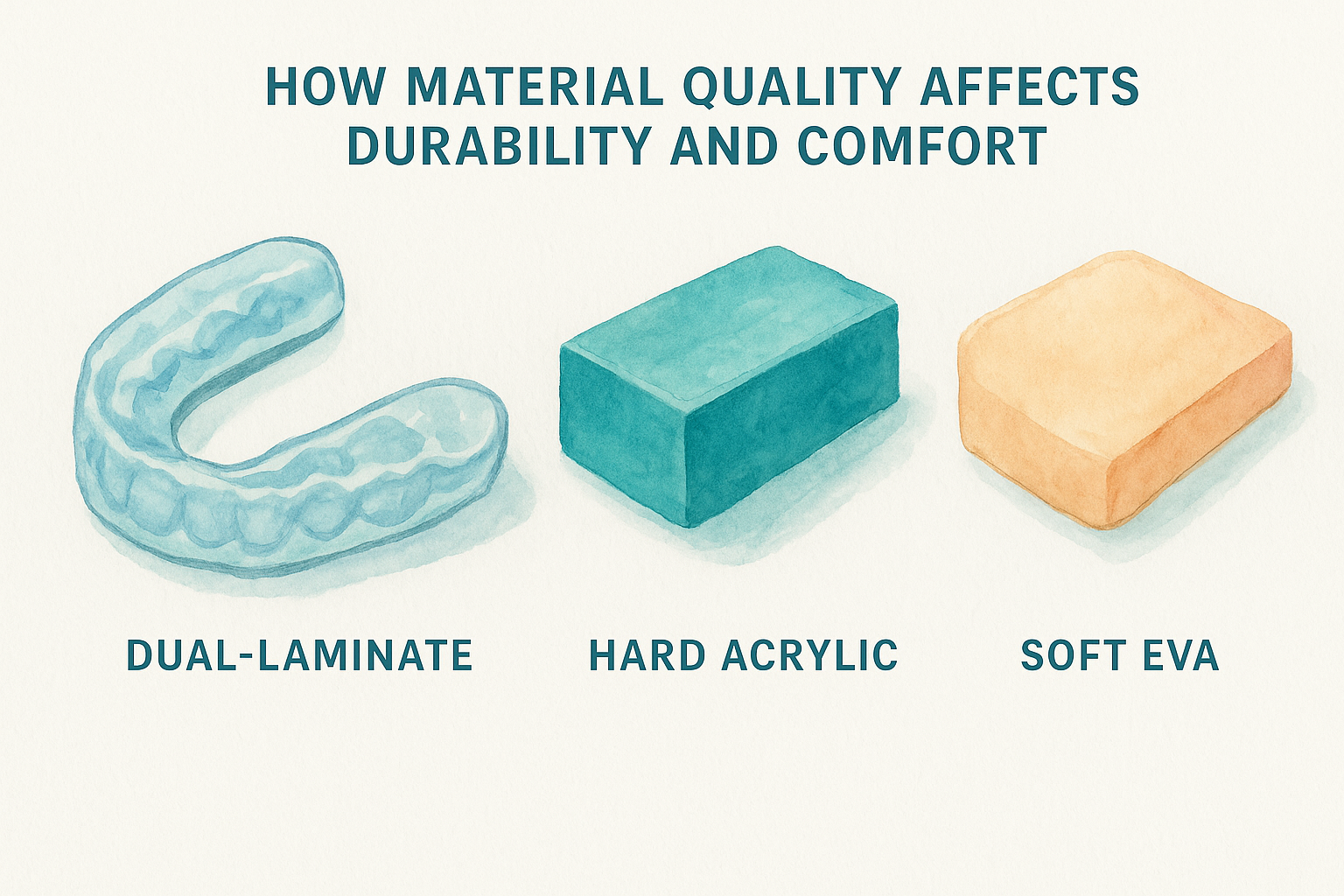
Hard acrylic materials handle heavy grinding better because they resist compression without cracking under sustained pressure. Softer materials, like EVA (ethylene-vinyl acetate), feel more comfortable for mild grinders but can absorb and retain bacteria more easily over time. Dual-laminate guards combine a soft inner layer for comfort with a hard outer layer for durability, making them a strong choice if you fall somewhere between mild and heavy grinding severity. Matching your material to your grinding pattern prevents premature wear and keeps your guard functional for longer.
Common issues and when to talk to a dentist
Even with the right thickness and material, night guards can develop problems over time. Knowing the difference between a minor adjustment issue and a sign that something more serious is happening helps you act quickly instead of grinding through weeks of discomfort with a guard that's no longer doing its job.
Signs your current guard isn't working
If you wake up with persistent jaw soreness or headaches despite wearing your guard consistently, that's a clear signal the current thickness isn't absorbing enough force. A thin guard that shows deep grooves or visible thinning after just a few months confirms your grinding severity calls for something thicker. In the thick vs thin night guard decision, ignoring early wear signs means your enamel absorbs the force your guard should be handling.
Jaw pain that worsens over time while wearing a guard is not normal; it warrants a closer look.
You might also notice your guard fitting loosely after a period of consistent use. This often happens when underlying tooth movement or significant enamel loss has changed your bite profile enough that your existing guard no longer seats properly.
When to see a dentist
Schedule an appointment if you notice cracked or broken teeth, waking up with tooth sensitivity, or TMJ clicking and locking that gets worse over time. These symptoms suggest your bruxism has progressed beyond what an over-the-counter or incorrectly sized guard can manage. A dentist can also identify whether jaw joint dysfunction is contributing to your pain, which sometimes requires treatment beyond a night guard alone.
Quick recap and next steps
The thick vs thin night guard decision comes down to one core question: how severely do you grind? Thin guards in the 1mm to 2mm range work well for mild grinders who prioritize comfort, while thick guards at 3mm or more give heavy grinders the durability and protection their enamel actually needs. Material quality and a precise custom fit amplify the benefits of whichever thickness you choose.
Ignoring early warning signs, like a guard that wears down quickly or persistent morning jaw soreness, only delays the damage bruxism causes. The guard that fits your specific grinding severity, made from the right material, will protect your teeth far longer than one chosen by guesswork alone.
If you're ready to stop guessing and get a guard that fits your grinding pattern, try a custom night guard from Remi, built from dental-grade materials and developed with professional dental input to handle whatever your bruxism demands.

