
 Guards + Retainers
 Custom Night Guard
 Retainer
 Emergency Order

 Whitening
 Whitening Kit
 Teeth Whitening Gel
 Dual-Action Foam
 Cleaning + Care
 Ultrasonic Cleaner Pro
 Water Flosser
 UV Toothbrush Sanitizer
 Deep Clean + Freshening Tablets
 Accessories
 Guard Removal Tool
 Replacement Nozzles
 Bundles

That sharp zing when you sip cold water or bite into something sweet might not be a cavity. If you clench or grind your teeth at night, teeth grinding tooth sensitivity could be the real culprit, and it's more common than most people realize. Bruxism wears down enamel over time, exposing the softer dentin layer underneath and leaving your teeth vulnerable to pain triggers throughout the day.
The frustrating part is that many grinders don't even know they're doing it. You wake up with a sore jaw or a dull headache, and months later, sensitivity starts creeping in with no obvious explanation. By the time your teeth react to hot, cold, or pressure, real structural damage may already be underway.
This article breaks down exactly how grinding leads to sensitivity, what signs to watch for, and practical steps to stop the cycle. At Remi, we make custom night guards designed to protect your enamel from the forces of nighttime grinding, so we'll also cover how a proper-fitting guard plays a key role in both relief and prevention.
Why teeth grinding can make teeth sensitive
Teeth grinding generates far more force than normal chewing. When you grind at night, your jaw muscles work without food to buffer the contact, so tooth surfaces absorb the full mechanical impact directly. That repeated stress is the starting point for understanding why teeth grinding tooth sensitivity develops in grinders and not in people with normal bite habits.
The force involved in grinding
Most people bite with around 150 to 200 pounds of force during a meal. Bruxism can push that number past 250 pounds, and because grinding happens in repetitive, sideways movements rather than straight up-and-down chewing, it targets enamel from multiple angles simultaneously. Your teeth are not designed to handle that kind of lateral load night after night.
Over time, even small amounts of enamel loss add up to a significant change in how your teeth feel and respond to everyday sensations.
The outer enamel layer is the hardest tissue in your body, but it does not regenerate once it wears away. Each grinding session removes a thin layer, and once that layer is gone, the softer dentin underneath takes the hit. Dentin contains tiny tubules that connect directly to the nerve, which is why exposed dentin turns ordinary sensations like cold air or sweet food into sharp pain.
How sensitivity develops over time
Sensitivity rarely shows up overnight. Early-stage grinding may cause no noticeable symptoms for months, which gives the damage time to accumulate before you connect it to jaw clenching. You might first notice a mild twinge when drinking something cold, and gradually that twinge becomes a consistent, predictable sting.
Recurring pressure on weakened enamel also leads to small cracks called craze lines, which open pathways to the nerve even without major enamel loss. Once those cracks and worn surfaces expose the dentin layer, everyday eating and drinking trigger pain that feels disproportionate to the stimulus. That mismatch between a small trigger and a strong reaction is a hallmark of nerve sensitivity linked directly to grinding.
How grinding wears enamel and exposes dentin
Enamel wears through a process called mechanical abrasion, where repeated friction gradually strips away the outermost surface of your teeth. Unlike wear from acidic foods, grinding produces a physical grinding action that scrapes enamel flat, thinning it layer by layer each night. Because enamel cannot repair itself, every session of bruxism creates a permanent reduction in your tooth's protective coating.
What happens at the tooth surface
When enamel thins enough, the dentin beneath it becomes exposed to the outside environment. Dentin is a porous material filled with microscopic channels called dentinal tubules, and these tubules run directly to the pulp where your nerves live. Once grinding removes the enamel barrier, temperature changes, pressure, and sweet or acidic foods send signals straight through those tubules to the nerve, producing sharp or lingering pain.
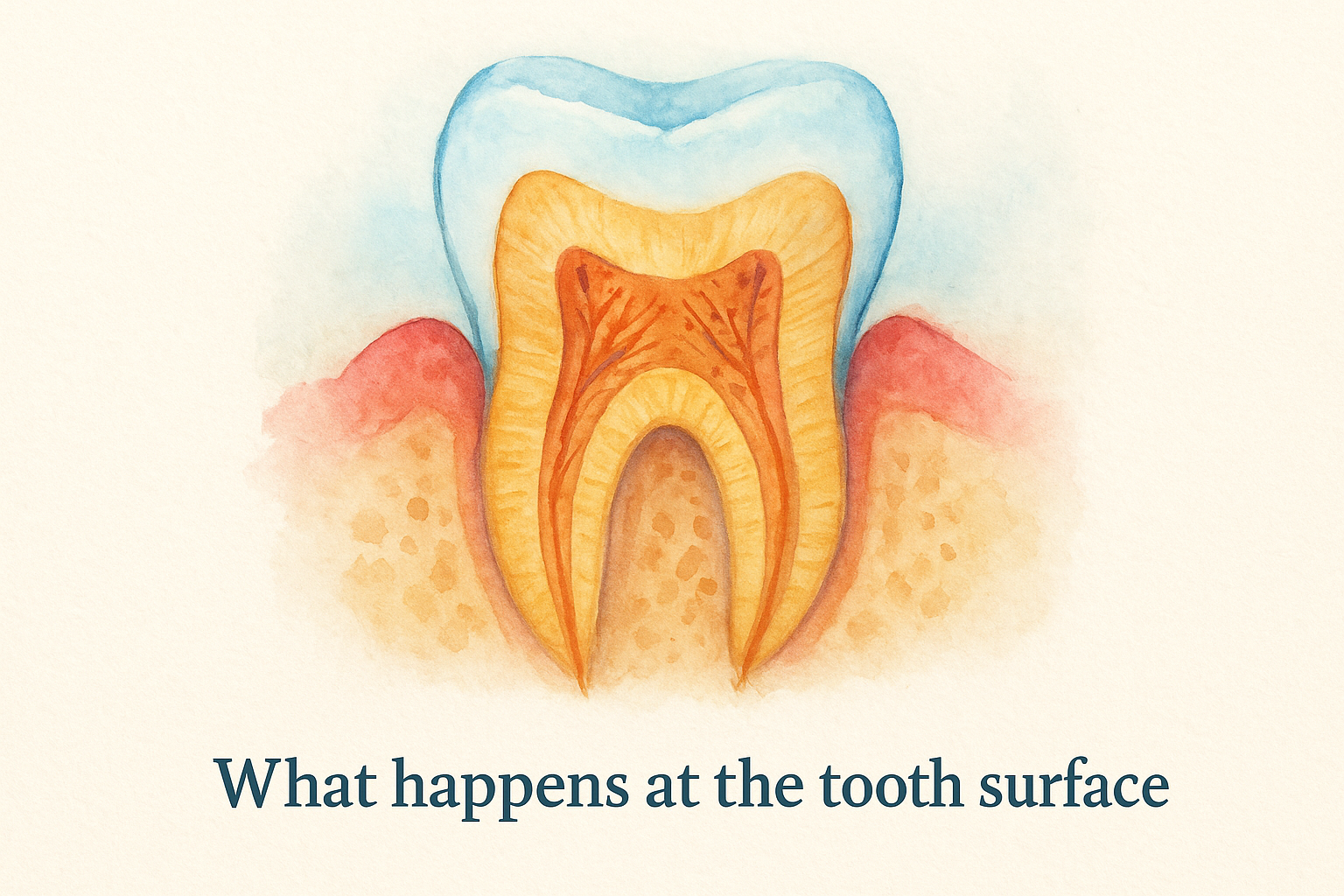
The thinner your enamel gets, the faster sensitivity progresses, because less material stands between external stimuli and the nerve.
Where the wear shows up first
Grinding tends to flatten the biting edges of your front teeth and wear down the cusps on your back molars first. You might notice your teeth look shorter or flatter than they used to. This pattern of wear is a strong physical signal that teeth grinding tooth sensitivity is likely to follow, since those same worn surfaces expose fresh dentin with every bite or sip.
How to tell if grinding causes your sensitivity
Sensitivity has multiple causes, so it helps to look for patterns that specifically point to grinding. If your pain appears in the morning and eases throughout the day, that timing lines up with nighttime bruxism rather than a cavity or gum issue. Cavities tend to produce localized pain in one tooth, while grinding-related sensitivity often affects multiple teeth at once, especially along the biting edges.
Physical clues to look for
Check your teeth in a mirror for flattened or shortened biting surfaces on your front teeth or worn-down cusps on your back molars. A partner may also have told you they hear grinding sounds while you sleep. Morning jaw soreness, frequent headaches near the temples, or tension in your face are physical signs that your jaw worked hard overnight, which directly ties to teeth grinding tooth sensitivity developing over time.
If you wake up with tight jaw muscles and also notice temperature sensitivity during breakfast, those two symptoms together strongly suggest grinding is the underlying cause.
Questions to ask yourself
Run through a quick self-check: Do you notice sensitivity across multiple teeth rather than one isolated spot? Does the pain spike right after waking up? Have your teeth looked flatter or shorter recently? Answering yes to any of these questions means grinding deserves serious consideration as the primary driver behind your tooth sensitivity.
Relief tips that reduce pain and protect teeth
Managing teeth grinding tooth sensitivity requires two things working together: reducing the pain you feel now and stopping the damage that causes it. Neither approach works well without the other, so the most effective relief plans tackle both at the same time.
Use a night guard to stop enamel loss
A custom-fitted night guard is the most direct way to protect your enamel from ongoing grinding. It creates a physical barrier between your upper and lower teeth, absorbing the pressure that would otherwise scrape away enamel while you sleep. Over-the-counter guards from the pharmacy often fit poorly and can actually shift your bite, so a custom guard molded to your exact teeth provides meaningfully better protection and comfort.
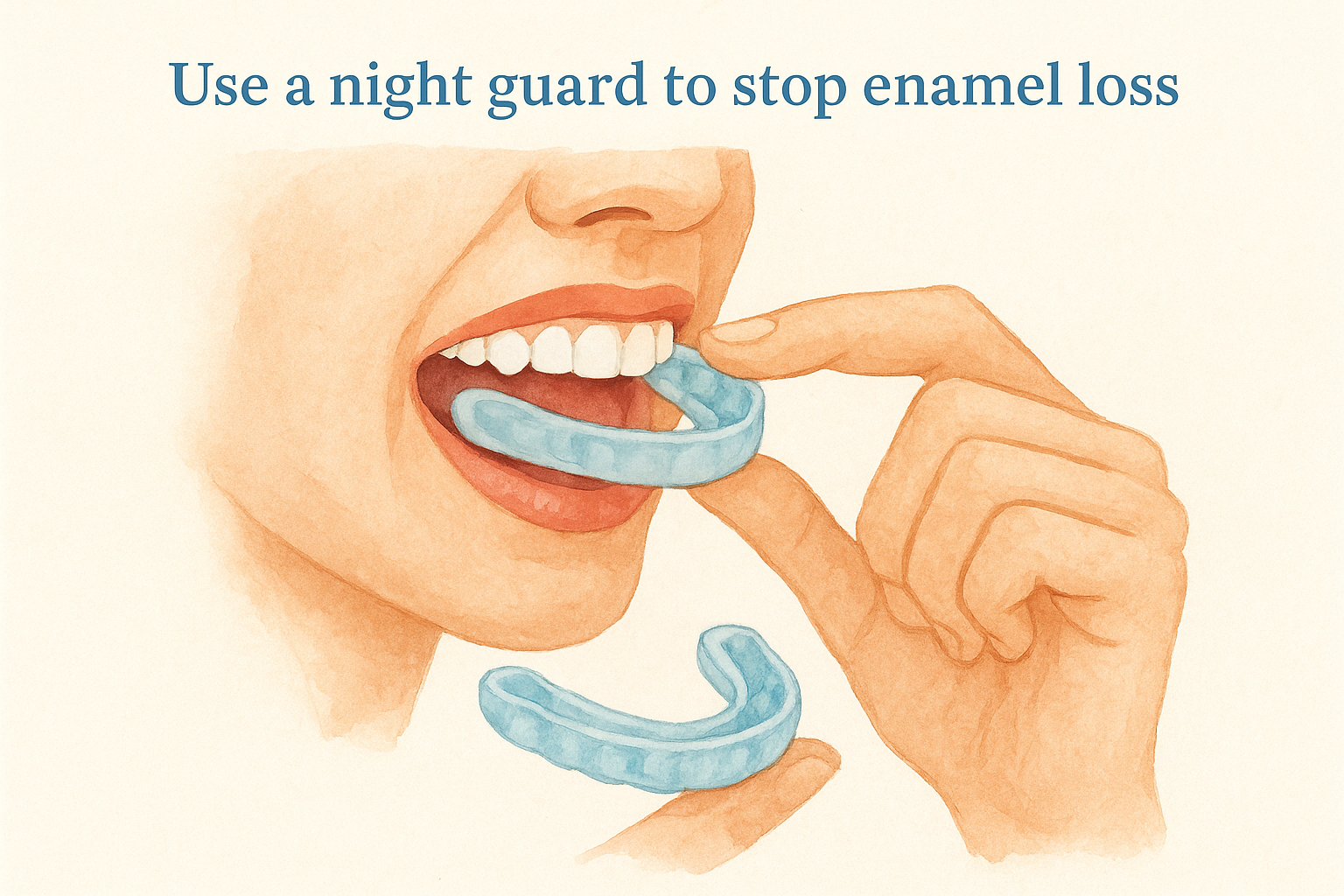
Stopping enamel loss at night gives your remaining enamel a chance to stay intact rather than thinning further with each grinding session.
Soothe sensitivity with the right products
Switching to a desensitizing toothpaste with ingredients like potassium nitrate or stannous fluoride helps block the dentinal tubules that transmit pain signals to your nerve. Use it consistently twice a day, and avoid brushing immediately after acidic food or drinks since softened enamel is more vulnerable to abrasion right after acid exposure.
Rinsing with a fluoride mouthwash adds another layer of protection by reinforcing the enamel surface. Avoiding extremely hot, cold, or sweet foods while your sensitivity is acute also gives your teeth a chance to recover between grinding episodes.
When to see a dentist and what treatments help
Home remedies and night guards handle a lot, but certain symptoms signal it's time to bring in a professional. If your sensitivity has lasted more than two weeks despite using desensitizing toothpaste, or if you notice visible cracks, chips, or significant flattening on your teeth, schedule an appointment. A dentist can assess how much enamel remains and determine whether the structural damage has gone beyond what protective products alone can address on a daily basis.
Professional treatments that go beyond home care
A dentist treating teeth grinding tooth sensitivity may recommend bonding, veneers, or dental crowns to restore worn tooth surfaces and cover exposed dentin. These restorations protect the nerve from external triggers while rebuilding the tooth's natural shape. Fluoride varnish treatments applied in-office also deliver stronger protection than over-the-counter options by penetrating the dentin tubules more effectively and sealing them against pain-triggering stimuli.
Getting professional treatment early prevents minor enamel loss from turning into a far more costly and painful repair down the road.
Your dentist may also evaluate your bite and jaw alignment to identify contributing factors like temporomandibular joint dysfunction, which can intensify both grinding and sensitivity. Referrals to a physical therapist or a specialist who fits a precision occlusal guard are common next steps when grinding is severe. Addressing the problem now preserves the enamel you still have and keeps future treatment simpler.
Next steps for a calmer jaw
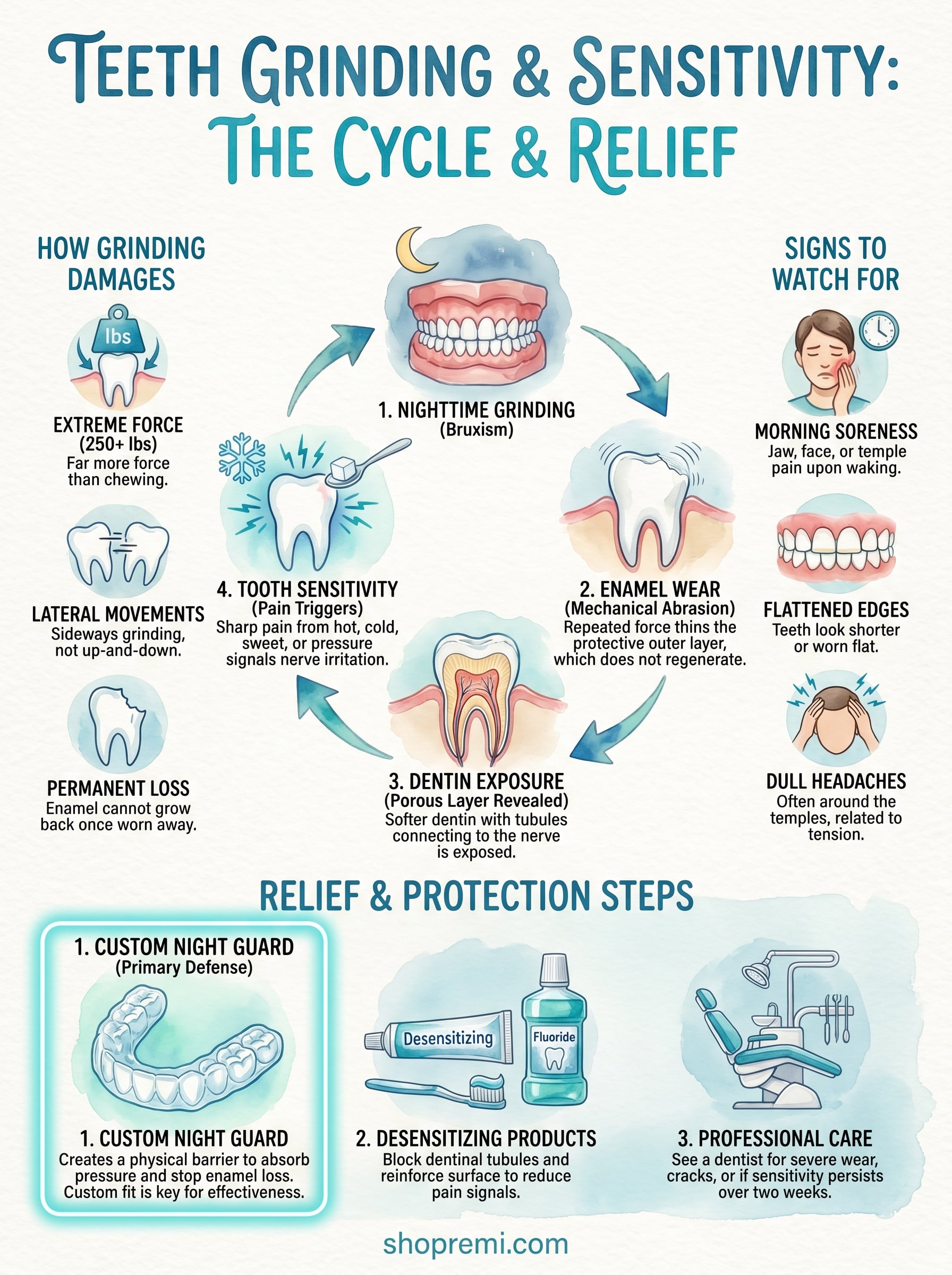
Teeth grinding tooth sensitivity does not have to be a permanent part of your daily life. The damage follows a clear pattern: grinding wears enamel, exposed dentin triggers pain, and the cycle continues until you break it. Starting with a custom night guard is the single most impactful move you can make, because it stops the enamel loss that drives every other symptom. Pair that protection with desensitizing toothpaste, fluoride rinses, and a dentist check-in, and you have a solid, manageable foundation to build from.
Small and consistent steps make the biggest difference over time. Switching to a custom-fitted guard instead of a drugstore option protects your bite more accurately and reduces the mechanical stress that accumulates night after night. Your enamel cannot grow back, so protecting what you have starts today. Try a Remi custom night guard and give your jaw the reliable protection it needs.

