
 Guards + Retainers
 Custom Night Guard
 Retainer
 Emergency Order

 Whitening
 Whitening Kit
 Teeth Whitening Gel
 Dual-Action Foam
 Cleaning + Care
 Ultrasonic Cleaner Pro
 Water Flosser
 UV Toothbrush Sanitizer
 Deep Clean + Freshening Tablets
 Accessories
 Guard Removal Tool
 Replacement Nozzles
 Bundles

You're lying in bed, jaw tight, teeth clenched, and you know exactly what's happening, but your dentist appointment isn't for another three weeks. If you've been searching for a natural bruxism treatment that actually works, you're not alone. Roughly 1 in 3 adults grind their teeth, and most of them want relief that doesn't require a prescription or an expensive office visit.
The good news? Several evidence-backed techniques can help reduce grinding and jaw tension starting tonight. From targeted jaw exercises to stress-reduction methods, these approaches address the root causes, not just the symptoms. At Remi, we build custom night guards to protect your teeth from bruxism damage, but we also believe in giving you every tool available to manage the condition holistically.
Below, you'll find five natural treatment options you can put into practice before bed tonight. Some tackle the physical tension in your jaw muscles, while others work on the stress and habits that trigger grinding in the first place.
1. Custom night guard from Remi
A custom night guard is not just a physical barrier between your teeth. It repositions your jaw slightly, which reduces the muscle activation that drives grinding. While this article covers several natural bruxism treatment options, a well-fitted guard remains one of the most clinically supported tools you can add to your routine starting tonight.
Why it helps with grinding and clenching
When you grind, your jaw muscles fire repeatedly throughout the night. A night guard absorbs that force and prevents enamel wear, but the bigger benefit is positional: a properly fitted guard shifts your bite to a place where your muscles have less leverage to clench hard, which directly reduces the intensity of each grinding episode.
Who it works best for
Remi night guards work best for people who grind consistently at night rather than occasionally. If you wake up with jaw soreness, headaches near your temples, or a partner has mentioned hearing you grind, you are a strong candidate. The at-home impression kit also makes it a practical option for anyone who cannot commit to multiple dental office visits.
What to expect the first few nights
Your mouth needs time to adjust. During the first two to three nights, the guard may feel bulky or unfamiliar. This is normal. Most people stop noticing it within a week, and many report waking up with noticeably less jaw tension once their muscles adapt to the repositioned bite.
Give yourself at least five nights before deciding whether a night guard is working for you.
Common fit and comfort mistakes to avoid
The most common mistake is not following the impression instructions carefully. A rushed impression leads to a poor fit, which creates pressure points or causes the guard to shift during sleep. Always make sure your teeth are completely dry before pressing the tray into place, since moisture weakens the impression material.
Cost and timing
Remi's custom night guards start well under $100, compared to the $300 to $800 most dental offices charge. Your guard ships within days of submitting your impressions, so ordering tonight means you could have protection in hand by the end of the week.
2. Warm compress for jaw muscles
Heat is one of the simplest natural bruxism treatment tools you already have at home. Applying warmth to your jaw before bed increases blood flow and signals your muscles to release tension, making it harder for them to clench hard through the night.
Why heat helps bruxism-related jaw tension
Your masseter muscles build up significant tension throughout the day. Heat loosens muscle fibers and reduces the lactic acid that causes that tight, sore feeling. Even 10 to 15 minutes of warmth before sleep can lower the intensity of overnight grinding.
How to do it safely before bed
Soak a small towel in warm (not hot) water, wring it out, and press it against your jaw for 10 to 15 minutes. A microwavable heat pack holds its temperature longer and works just as well. Keep the heat at a comfortable level; if your skin turns red, back off.
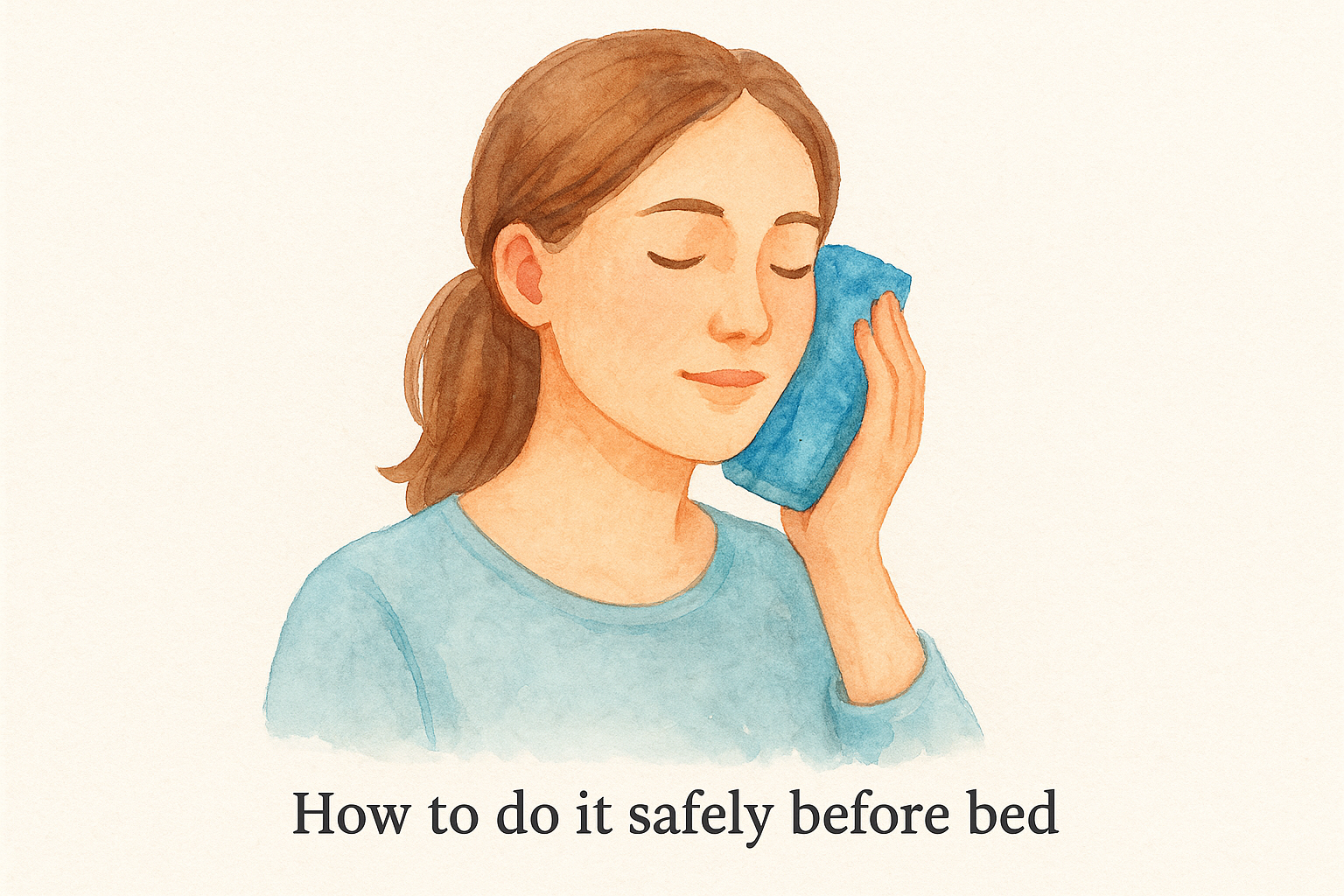
Apply the compress within 30 minutes of your planned sleep time for the best effect.
What to do if one side hurts more than the other
Start with your more painful side and hold the compress there for the full 10 minutes before moving to the other side. Uneven soreness usually means you favor one side when chewing or clenching during the day.
When to choose cold instead of heat
Use cold if your jaw feels swollen or acutely inflamed after waking. Cold reduces inflammation; heat relaxes tight muscle fibers. When in doubt, apply cold first, wait 20 minutes, then follow with heat.
Cost and timing
A basic microwavable heat pack runs $10 to $20 and lasts for years. You can start tonight with nothing more than a warm towel.
3. Jaw stretches and self-massage
Moving your jaw gently before bed is a natural bruxism treatment step many people skip. Targeted stretches and self-massage release accumulated tension in your masseter muscles before sleep, giving them less fuel for overnight grinding.
How gentle movement reduces nighttime clenching
Your jaw muscles build up significant tension from chewing, stress, and unconscious daytime clenching. Slow, controlled stretches reduce that residual tension and signal your nervous system to lower its activation level before sleep, which directly reduces grinding intensity overnight.
A short routine you can do in under 5 minutes
Open your mouth slowly as wide as comfortable, hold for five seconds, then close. Repeat six times. Next, move your jaw side to side three times each direction. Finish by pressing two fingers gently below each cheekbone and making small circles for 30 seconds per side.
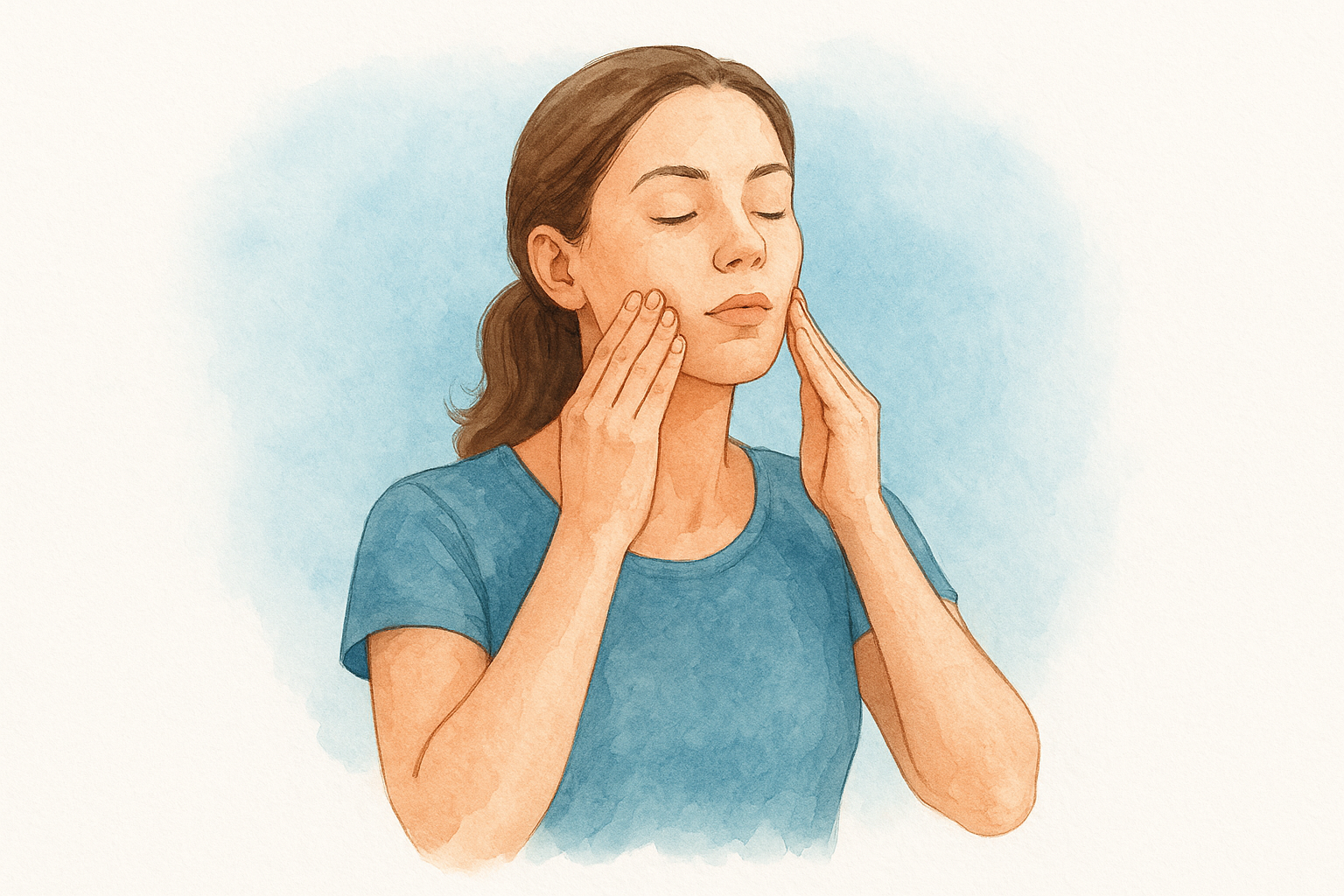
Do the stretches before the massage, in that order, to get the best effect from this routine.
Where to massage and where not to press
Focus pressure on the masseter muscle, which runs from your cheekbone down to your lower jaw. Avoid pressing directly on your temporomandibular joint, the small indentation just in front of your ear canal, as direct pressure there can worsen irritation.
Signs you may be dealing with TMJ issues
If you notice clicking or popping when opening your mouth, or your jaw briefly locks, stop these exercises and see a dentist. Those are signs of a TMJ disorder that needs professional assessment before you continue.
Cost and timing
This routine costs nothing and takes under five minutes. Do it right after your warm compress for a stronger combined effect on jaw muscle tension.
4. A low-stress bedtime wind-down
Your nervous system controls how much your muscles fire during sleep, and stress keeps that system in high gear. A consistent, calming pre-sleep routine is a powerful natural bruxism treatment tool that costs nothing and can reduce grinding within days.
How stress and sleep quality connect to bruxism
Elevated cortisol levels at night are directly linked to increased jaw muscle activity during sleep. When your body stays in a stress response, your muscles stay primed to clench. Poor sleep quality also shortens the restorative phases where your nervous system actually downregulates, making the cycle worse.
Lowering your stress before bed does not just help you sleep better; it directly reduces the intensity of overnight grinding.
Simple relaxation options that do not feel "woo"
Skip the elaborate rituals. Slow diaphragmatic breathing for five minutes (inhale four seconds, exhale six seconds) lowers your heart rate and tells your muscles to stand down. Reading a physical book for 15 minutes also works well because it pulls your attention off whatever is generating tension.
How to set up a bruxism-friendly sleep environment
Keep your room cool and dark, and remove screens from arm's reach. Sleeping on your back with a supportive pillow reduces the jaw pressure that side-sleeping can create.
What to track for one week to spot triggers
Write down what you ate and how stressed you felt on a 1-to-10 scale, then note how your jaw felt each morning. One week of data often reveals a clear pattern.
Cost and timing
This approach costs nothing upfront. Most people notice lighter jaw tension within three to five nights of consistent wind-down habits.
5. Evening habit and diet tweaks
What you eat and do in the last two to three hours before bed directly affects how hard your jaw works overnight. A few targeted tweaks make this a practical natural bruxism treatment step that costs almost nothing.
What to avoid at night that can worsen grinding
Caffeine and alcohol are the two biggest dietary triggers for nighttime grinding. Caffeine keeps your nervous system activated well past your bedtime, and alcohol fragments your sleep cycles and increases muscle activity during the night.
Cutting alcohol within three hours of sleep often produces noticeable jaw relief within just a few nights.
What to add that may calm muscles and sleep
Magnesium-rich foods support muscle relaxation and may reduce nighttime jaw tension. Try adding a small serving of any of these in the evening:
- Almonds or pumpkin seeds (small handful)
- Dark leafy greens like spinach
- Warm chamomile tea as a caffeine-free wind-down drink
A realistic cutoff schedule for drinks, snacks, and screens
Use this as a starting point:
- 3 hours before bed: Stop caffeine and alcohol
- 2 hours before bed: Finish your last large meal or snack
- 30 minutes before bed: Put screens away
How to prevent daytime clenching from carrying into sleep
Check your jaw position throughout the day. Your teeth should rest slightly apart with your lips closed. Setting a phone reminder every two hours helps you catch and release tension before it carries into sleep.
Place a sticky note on your monitor as a physical cue. Daytime awareness is one of the most underused tools in managing bruxism long-term.
Cost and timing
These changes cost nothing extra and you can start tonight. Most people notice lighter morning jaw soreness within three to five days of consistent habit changes.
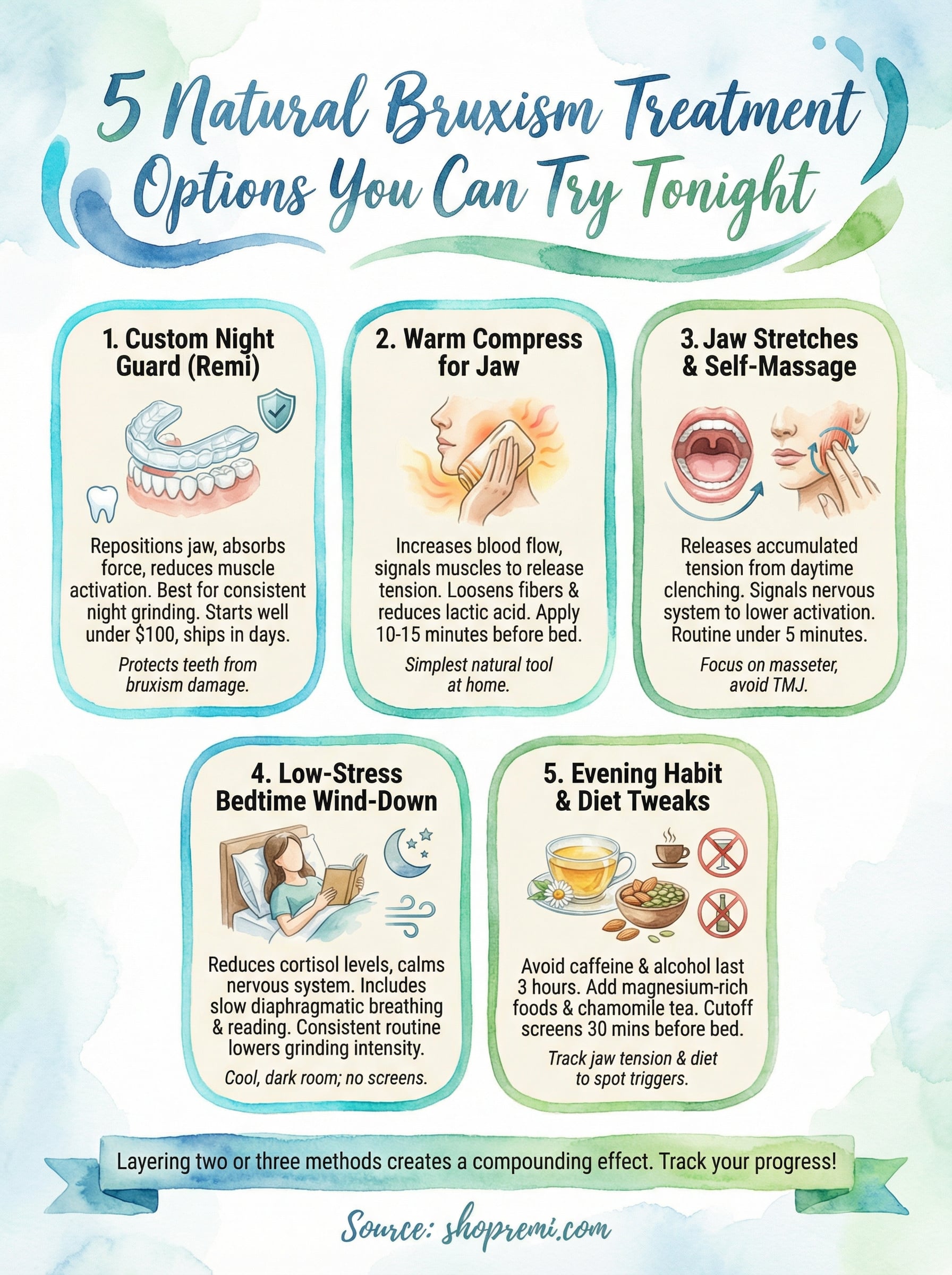
Your plan for tonight
You now have five practical options to work with tonight. Start with the warm compress and jaw stretches since they require no preparation and deliver immediate tension relief. Add the bedtime wind-down routine and cut caffeine at least three hours before sleep. If you grind consistently, consider ordering a custom night guard from Remi so physical protection arrives before the week is out.
No single natural bruxism treatment eliminates grinding overnight, but layering two or three of these methods creates a compounding effect that most people notice within days. Track your jaw tension each morning on a 1-to-10 scale and note what you ate and how stressed you felt the night before. One week of that data will reveal which combination works best for your specific triggers. Start with just one method from this list right now and build from there. Your teeth take the damage every night you wait.

