
 Guards + Retainers
 Custom Night Guard
 Retainer
 Emergency Order

 Whitening
 Whitening Kit
 Teeth Whitening Gel
 Dual-Action Foam
 Cleaning + Care
 Ultrasonic Cleaner Pro
 Water Flosser
 UV Toothbrush Sanitizer
 Deep Clean + Freshening Tablets
 Accessories
 Guard Removal Tool
 Replacement Nozzles
 Bundles

You pull your night guard out of its case in the morning, and it hits you, that sour, funky smell that makes you wonder if something went wrong. If you've been searching for how to stop night guard smell, you're not alone. It's one of the most common complaints among night guard wearers, and it doesn't mean your guard is ruined.
That odor comes from bacteria buildup, and it happens faster than most people expect. Saliva, warmth, and moisture create the perfect environment for bacterial growth on your night guard's surface. Without the right cleaning routine, even a brand-new guard can start smelling within a couple of weeks.
At Remi, we make custom night guards and hear this question constantly from our customers. So we put together this guide with practical cleaning steps that actually eliminate the smell, plus daily habits to keep it from coming back. Whether you're using a Remi night guard or another brand, these methods work across the board to keep your guard fresh and hygienic night after night.
Why your night guard smells and when to worry
Your night guard spends six to eight hours in your mouth every night, bathed in warm saliva and pressed against your teeth and gums. That combination creates an environment where bacteria, fungi, and other microorganisms thrive and multiply. When those microorganisms break down organic matter from your saliva and food debris, they release compounds that produce that familiar sour or stale odor. Understanding what's driving the smell is the first step toward solving it.
The main causes of night guard odor
The smell usually comes from one or more of the following sources. Bacterial biofilm is the biggest culprit. It forms on the surface of your guard the same way plaque forms on your teeth, and it starts accumulating within hours of wearing the guard. Calcium deposits from your saliva can also build up over time, creating rough patches where bacteria hide and concentrate. Skipping cleaning steps, even for one or two nights, gives that biofilm a head start that's hard to reverse with a quick rinse.
Here are the most common causes ranked by how quickly they contribute to odor:
| Cause | How fast it develops | Main fix |
|---|---|---|
| Bacterial biofilm | Within 24-48 hours | Daily brushing and soaking |
| Calcium/mineral deposits | 2-4 weeks | Weekly deep clean |
| Mold from improper storage | 1-2 weeks without drying | Proper drying and ventilation |
| Food debris | Same night | Rinse immediately after removing |
Skipping even one night of cleaning can set off a cycle that makes the smell significantly harder to remove.
When the smell signals a bigger problem
Most of the time, odor is a hygiene issue, not a health emergency. But there are situations where the smell tells you something more serious is happening. If your night guard develops visible mold or black spots, that goes beyond normal bacterial buildup. Mold can cause irritation in your mouth and throat, and no amount of cleaning will fully restore a guard that has mold growing into the material itself.
You should also pay attention if you notice a persistent foul smell that doesn't improve after a proper deep clean. This can indicate that bacteria have colonized micro-cracks or scratches in the guard's surface, which are impossible to sanitize fully. A cracked or heavily scratched night guard traps bacteria in spots your brush and cleaning solution can't reach. Knowing how to stop night guard smell starts with recognizing when cleaning can fix the problem and when the guard itself needs to be replaced.
Step 1. Reset it with a deep clean
If your night guard already has a strong smell, a quick rinse won't fix it. You need to start with a full reset deep clean that strips away existing biofilm, mineral buildup, and odor-causing bacteria before you move into a maintenance routine. Think of this as clearing the slate so daily cleaning can actually stay ahead of the problem.
What you need
Before you start, pull together a few simple supplies you likely already have at home. You don't need specialized dental equipment or expensive cleaning products to do this effectively. Here's what works:
- White distilled vinegar (undiluted) or a dental appliance tablet like Polident or Efferdent
- A soft-bristle toothbrush designated only for your night guard, never your regular one
- Clean, cool water (hot water can warp the guard's shape)
- A bowl large enough to fully submerge the guard
How to do the deep clean
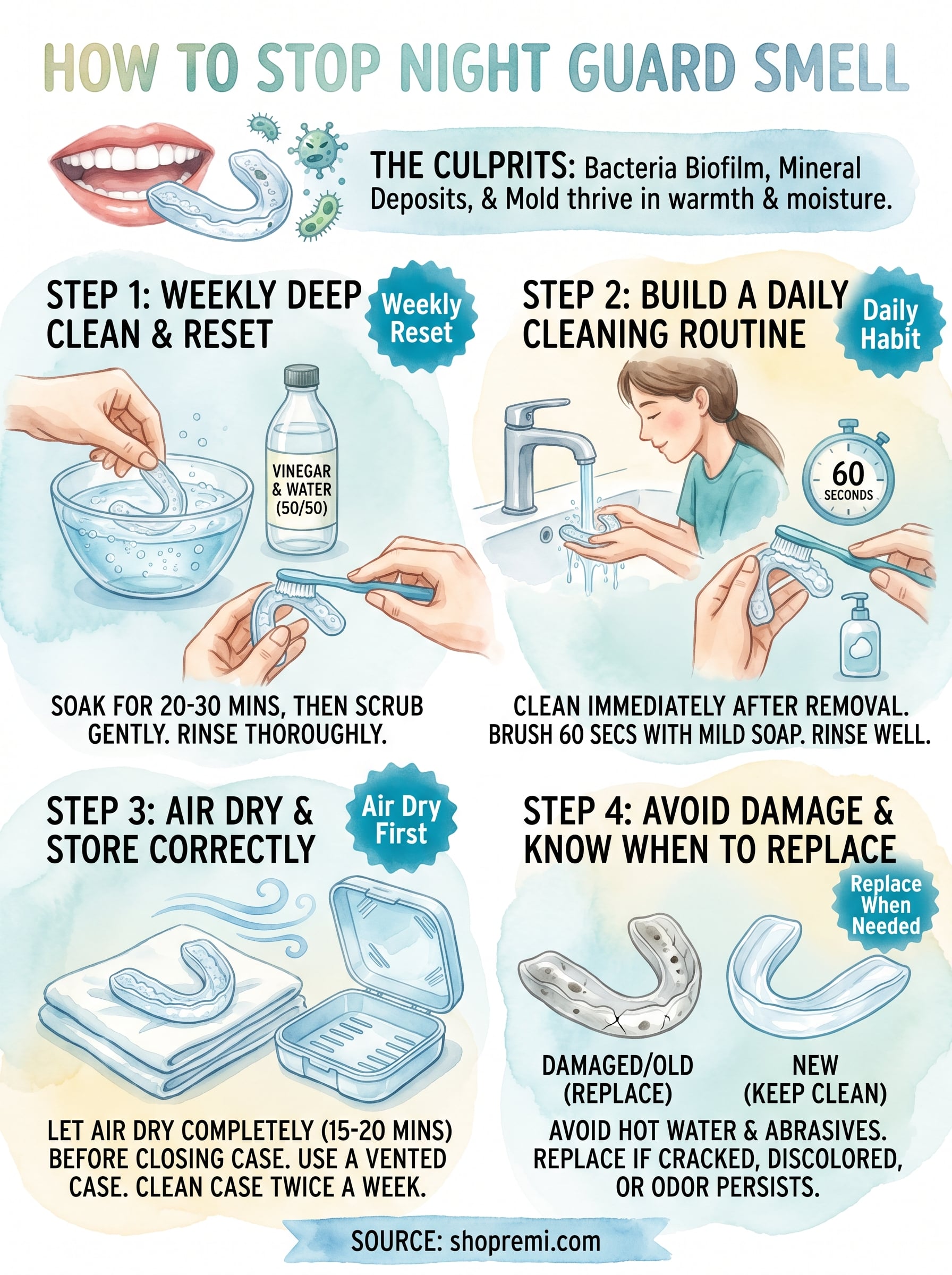
Start by rinsing your night guard under cool water to remove any loose debris. Then soak it in a 50/50 mixture of white vinegar and water for 20 to 30 minutes. Vinegar's acidity breaks down calcium deposits and kills a large portion of the bacteria responsible for the odor. After soaking, use your soft-bristle toothbrush to gently scrub all surfaces, including the inside ridges and crevices. Rinse thoroughly under cool water when done.
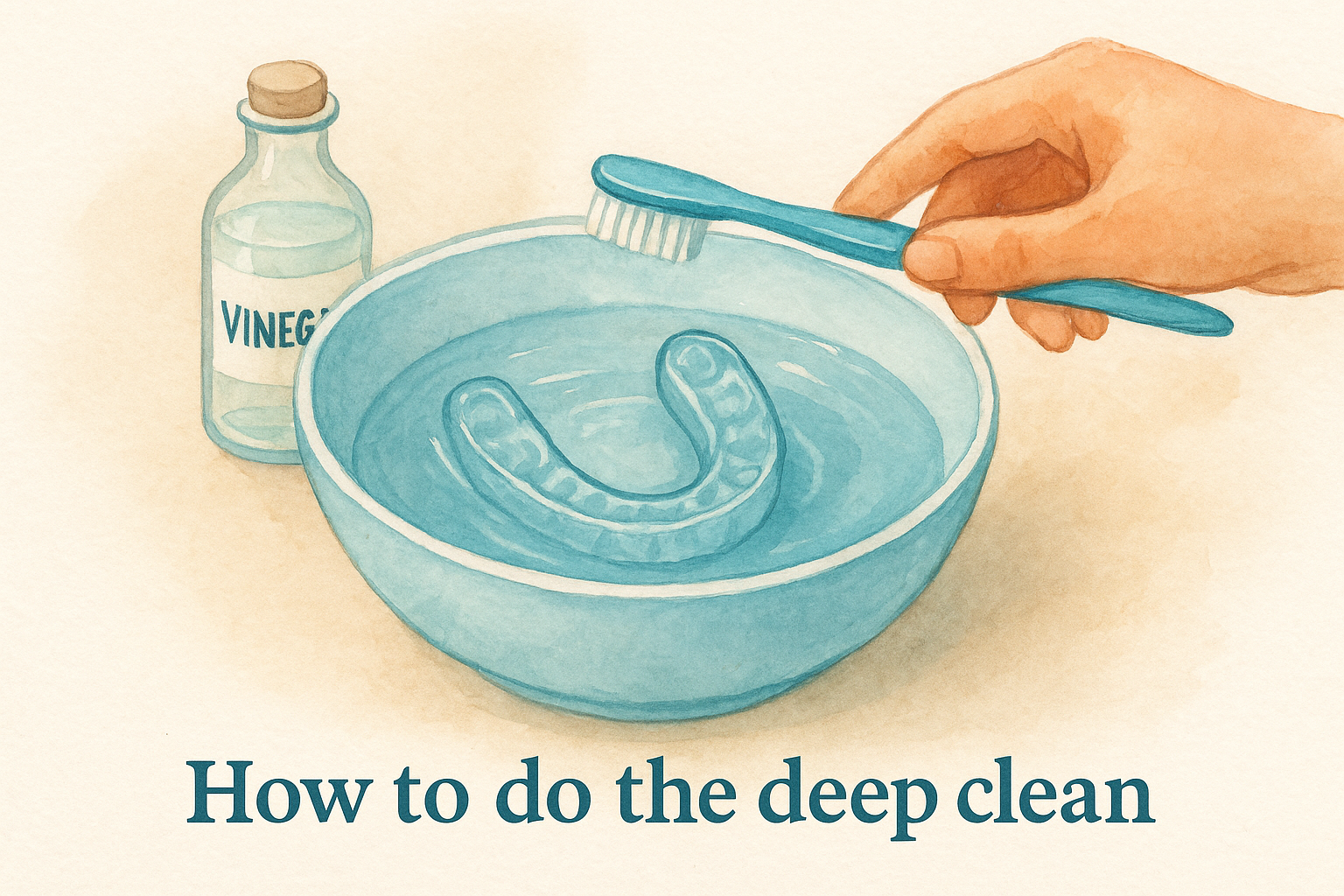
If vinegar alone doesn't remove the odor, follow up immediately with a 15-minute soak in a dental appliance cleaning tablet solution for a more complete result.
Knowing how to stop night guard smell means dealing with existing buildup before it gets worse. Repeat this deep clean once a week, not just as a one-time fix. Consistent weekly resets stop the smell from reaching the point where it becomes difficult to eliminate.
Step 2. Build a daily cleaning routine
The deep clean resets your guard, but daily cleaning is what keeps the smell from returning. Bacteria rebuild their biofilm quickly, so your routine needs to happen every single day without skipping. A consistent process takes less than two minutes and makes a significant difference in how fresh your night guard stays long-term.
Clean it first thing in the morning
Your best window to clean the guard is immediately after you remove it, before the bacteria and saliva on the surface have time to dry and harden. Rinse it under cool water right away, then spend 60 seconds brushing all surfaces with your dedicated soft-bristle toothbrush and a small amount of non-abrasive soap or plain dish soap. Avoid anything with harsh abrasives, as they create micro-scratches where bacteria settle in.
Cleaning your guard the moment you take it out is the single most effective daily habit for how to stop night guard smell before it builds up again.
Follow this daily routine
Keeping your steps consistent makes the habit automatic. Here is a simple routine you can follow each morning:
- Rinse under cool water immediately after removing the guard
- Brush gently on all surfaces for 60 seconds with a soft toothbrush
- Rinse again thoroughly under cool water
- Pat dry with a clean cloth or paper towel before placing it in its case
- Check the guard for any visible debris or discoloration
Avoid common cleaning mistakes
Several habits actually make the odor problem worse. Hot water warps the guard's custom fit over time, so always use cool or lukewarm water. Using regular toothpaste with whitening agents or abrasive mint formulas can degrade the guard's material and leave a residue that bacteria feed on. Stick to mild soap or a designated dental appliance cleaner for best results.
Step 3. Store it so it stays dry and clean
How you store your night guard between wears has a direct impact on how quickly odor develops. Sealing a damp guard inside a closed case creates an airless, moist environment where mold and bacteria multiply fast. Even the cleanest night guard can start to smell within days if you skip this step.
Let it air dry before you close the case
After your morning cleaning, give your guard at least 15 to 20 minutes of open-air drying before placing it in its case. Set it on a clean surface or paper towel in an area with good airflow and away from direct sunlight, which can warp the material. Rushing this step and sealing in moisture is one of the most overlooked reasons night guards develop a persistent smell.
Letting your guard dry completely each day is one of the simplest answers to how to stop night guard smell before it becomes a recurring problem.
Use the right case and clean it regularly
Your storage case matters just as much as the guard itself. A case that never gets cleaned builds up the same bacteria and moisture residue that causes odor, and then transfers it right back onto your freshly cleaned guard. Rinse your case with cool water and mild soap at least twice a week and let it dry fully before closing it.
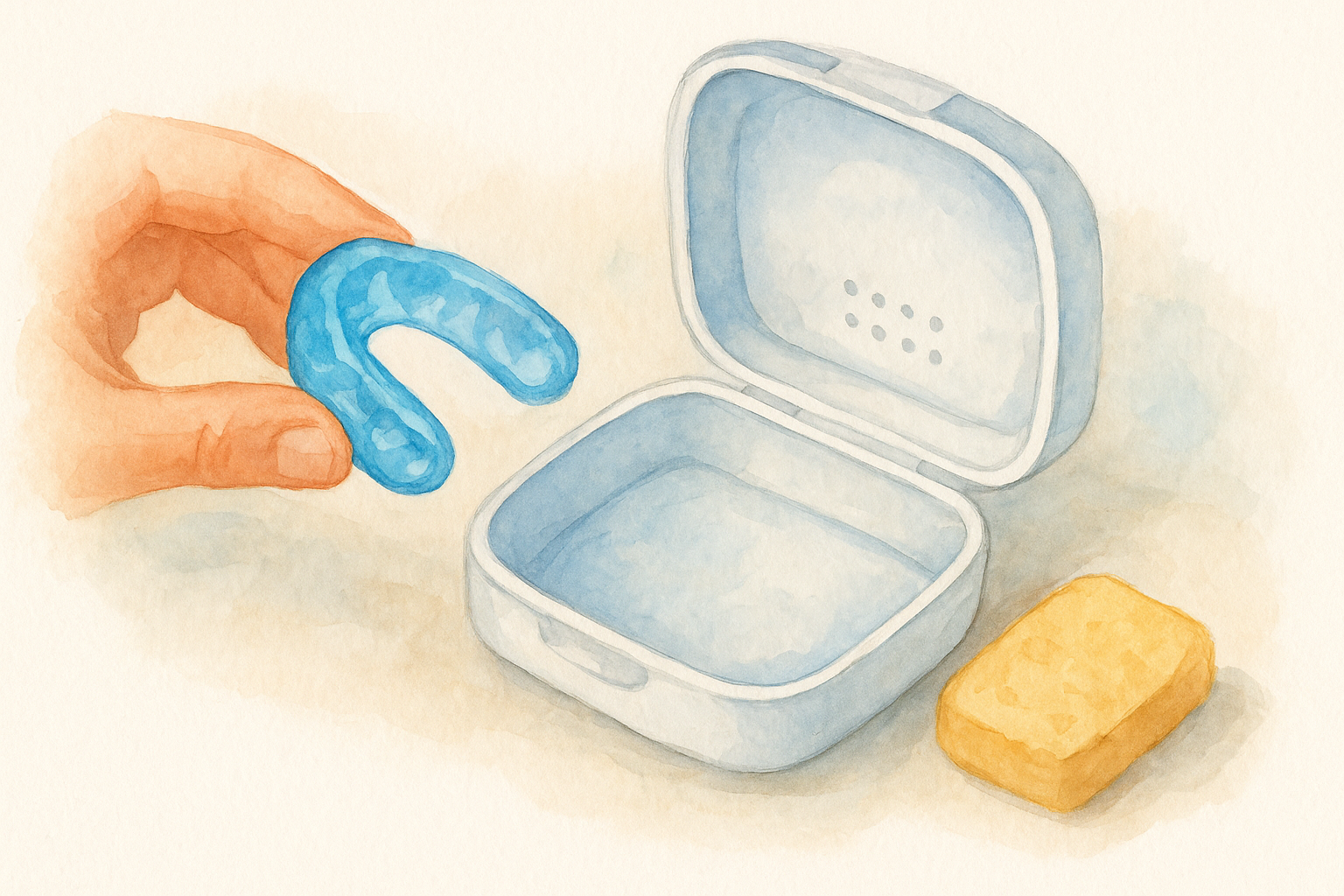
Here is what to look for in a storage case:
- Ventilation holes or a vented lid to allow airflow and prevent moisture buildup
- A hard shell to protect the guard's shape
- An easy-to-clean interior with no deep ridges where residue can collect
Replacing your case every few months is a low-cost habit that makes a noticeable difference in keeping your guard consistently fresh between deep cleans.
Step 4. Avoid damage and know when to replace it
Cleaning and storage habits only work if your night guard is still in good shape. Physical damage to the guard creates microscopic cracks and scratches that trap bacteria in spots no brush or soaking solution can fully reach. When that happens, no amount of cleaning effort fully solves the odor problem, and knowing how to stop night guard smell sometimes means recognizing that the guard itself is the source.
Handle it with care to prevent micro-damage
The way you handle your night guard outside of wear time directly affects how long it stays cleanable and odor-free. Biting down on the guard while inserting it or removing it roughly can create small tears in the material. Always insert and remove it with your fingers, applying gentle and even pressure. Avoid placing it face-down on hard surfaces, which creates fine scratches where odor-causing bacteria tend to concentrate most.
Common handling mistakes that accelerate damage:
- Using hot water to rinse, which warps the guard's shape and weakens the material over time
- Dropping it on hard flooring or countertops repeatedly
- Storing it in a pocket or bag without a case, where it bends or cracks under pressure
Using a dedicated soft-bristle toothbrush prevents the surface scratches that give bacteria a place to settle in long-term.
Signs it's time to replace your night guard
Even with careful handling, every night guard has a natural lifespan. Watching for these specific warning signs tells you when cleaning is no longer enough:
- Visible cracks or chips in the material that don't smooth out
- Persistent odor that remains even after a thorough deep clean
- Warping or fit changes that make the guard feel loose or uncomfortable
- Discoloration that won't lift, especially dark spots suggesting mold penetration
- The guard is more than one to two years old with heavy nightly use
Replacing your night guard at the right time is not just about smell. A damaged or poorly fitting guard also causes jaw discomfort and uneven bite pressure, so treating replacement as a routine step protects both your sleep and your teeth.
Keep it fresh going forward
Knowing how to stop night guard smell comes down to consistency. The steps in this guide work best when you treat them as a system rather than a series of one-time fixes. Daily brushing after removal, weekly deep cleans with vinegar or a dental tablet, complete drying before storage, and regular case cleaning all reinforce each other. Skip one step regularly, and the others can't fully compensate.
Your night guard is a direct investment in your sleep quality and dental health, so it deserves the same routine care you give your teeth. Check it monthly for cracks, discoloration, or fit changes, and replace it when those signs appear rather than pushing it further. A clean, well-maintained guard performs better and lasts longer.
If your current guard is damaged or no longer fitting well, a fresh start makes the biggest difference. Get a custom night guard from Remi and build your new routine from day one.

