
 Guards + Retainers
 Custom Night Guard
 Retainer
 Emergency Order

 Whitening
 Whitening Kit
 Teeth Whitening Gel
 Dual-Action Foam
 Cleaning + Care
 Ultrasonic Cleaner Pro
 Water Flosser
 UV Toothbrush Sanitizer
 Deep Clean + Freshening Tablets
 Accessories
 Guard Removal Tool
 Replacement Nozzles
 Bundles

Not all water flossers are created equal, and picking the wrong one usually means it ends up collecting dust in a bathroom drawer. If you've started searching for a water flosser buying guide, you're already ahead of most people who grab whatever's on sale and hope for the best. The reality is that a few key differences, like pressure settings, tank size, and portability, can make or break your daily flossing habit.
At Remi, we design oral care products (including our own Cordless Water Flosser) alongside dental professionals, so we know exactly what separates a great water flosser from a frustrating one. We put this guide together to give you a clear, no-nonsense breakdown of what actually matters when you're comparing options.
Below, you'll find the five most important features to evaluate before you buy. Each one directly affects how well the flosser works, how long it lasts, and whether you'll actually use it every day. Let's get into it.
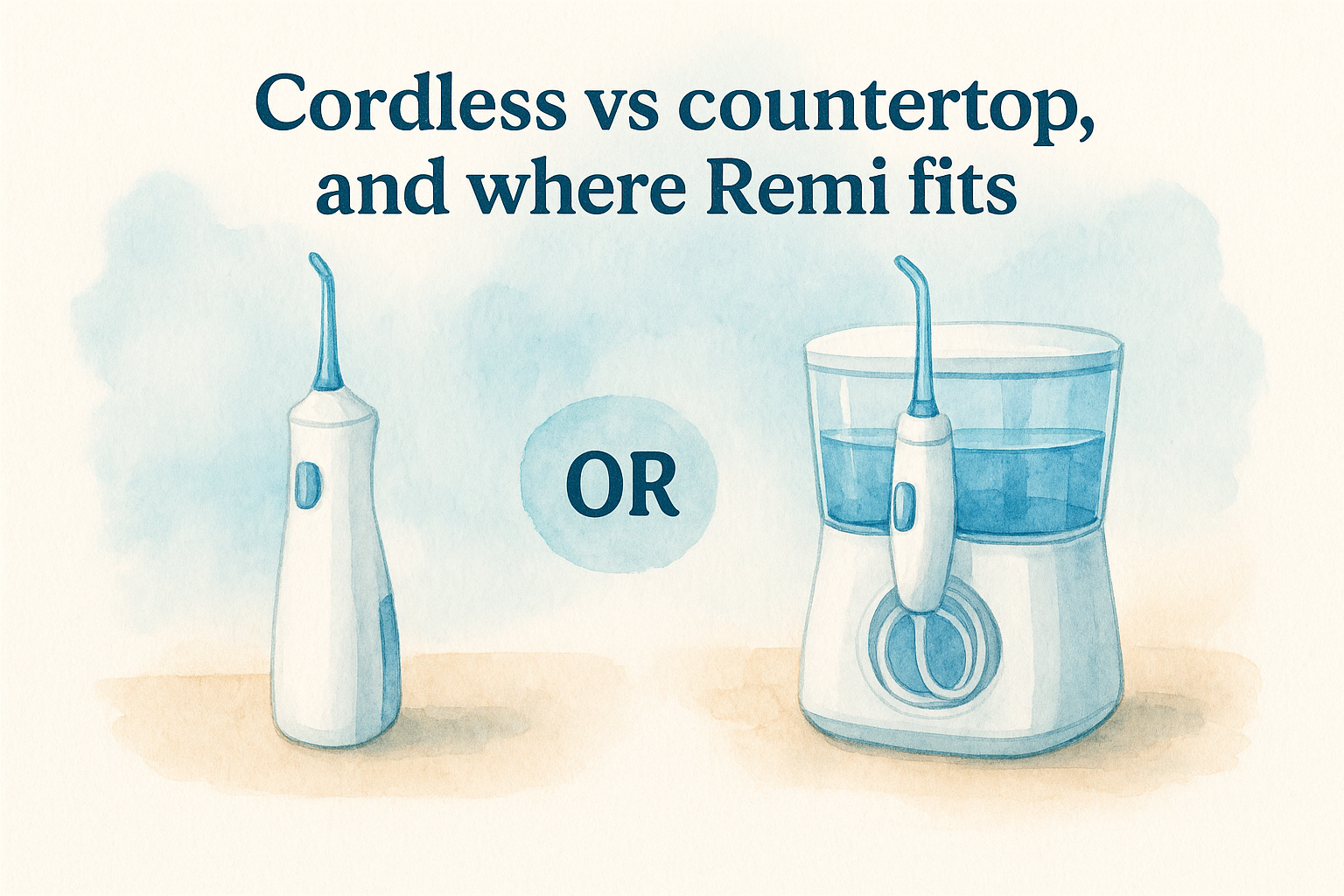
1. Cordless vs countertop, and where Remi fits
The type of water flosser you choose shapes your daily routine from the moment you pick it up. Cordless models run on a rechargeable battery with a compact built-in tank, while countertop units plug into an outlet and hold significantly more water. Neither is universally better, but one will fit your bathroom and habits far more naturally.
What cordless water flossers do best
Cordless flossers give you freedom of movement without being tethered to a wall outlet, making it easier to angle the tip correctly around every tooth. They pack down small enough to fit in a carry-on or gym bag with almost no added bulk. Key advantages include:
- Compact size for small or shared bathrooms
- Travel-ready design with no cord to manage
- Flexible positioning over the sink or in the shower
When a countertop water flosser makes more sense
A countertop model works best when you have dedicated counter space and need longer sessions without stopping to refill. Their tanks often hold 600ml or more, which matters if you're cleaning a full set of braces or multiple bridges in one go.
If you have significant dental work like implants or a full set of braces, a countertop unit's larger tank and higher pressure ceiling can make a real difference in how thoroughly you clean.
Your cleaning time per session directly affects which tank size you need, so be honest about how thorough your routine actually is before defaulting to the smaller option.
Who should choose the Remi cordless water flosser
The Remi Cordless Water Flosser suits people who want a reliable daily tool without a cord or a large countertop footprint. It delivers adjustable pressure in a slim, rechargeable design developed alongside dental professionals. If you're upgrading from string floss or a basic drugstore pick, it covers the essentials without unnecessary bulk.
Space, mess, and shower use considerations
Cordless models win when it comes to shower use, since a countertop cord makes that option unavailable. Consider where puddles collect and how much counter space you realistically have; a compact cordless unit keeps your sink area tidier and reduces the splash issues that come with larger, wide-based tank setups.
2. Pressure range and settings
Pressure is the most misunderstood spec in any water flosser buying guide. A number printed on the box tells you the maximum PSI, but how much control you have over the full range matters far more than the ceiling alone.
Understand PSI and why it matters
Water pressure, measured in PSI (pounds per square inch), determines how forcefully the stream hits your gum line. Most models fall into these ranges:
- Entry-level cordless: 10 to 45 PSI
- Mid-range cordless or countertop: 45 to 75 PSI
- High-end countertop: 75 to 100 PSI
Look for a pressure ramp you can control
Choose a flosser with at least three distinct pressure settings so you can build up gradually rather than jumping straight to full force. A single fixed-pressure mode limits your ability to clean thoroughly without irritating your gum tissue.
Starting at the lowest setting and increasing over two weeks is the safest way to build tolerance without causing unnecessary bleeding.
Pick the right pressure for sensitive gums
If your gums bleed easily, start at the lowest available setting and move up slowly. Most dental professionals recommend staying under 70 PSI for patients with gum recession until the tissue adapts.
Spacing out pressure increases by several days gives your gums time to respond, which reduces the chance of swelling or soreness that discourages people from keeping up the habit.
Avoid common pressure mistakes
Two mistakes come up repeatedly: starting at maximum pressure on day one and angling the tip directly into the gum instead of holding it at roughly 45 degrees. Both errors push bacteria deeper into the pocket rather than flushing it out.
3. Reservoir size and refill workflow
Reservoir size directly affects how many times you stop mid-session to refill, and that interruption breaks your rhythm and adds time to your routine. Most people skip over this spec when working through any water flosser buying guide, yet it shapes how smoothly your daily clean actually flows.
Compare tank size by type
Cordless models typically hold 150ml to 300ml, while countertop units range from 400ml to 650ml. The gap seems small on paper until you're mid-session and the tank runs dry before you finish.
| Type | Typical Tank Size |
|---|---|
| Cordless | 150ml to 300ml |
| Countertop | 400ml to 650ml |
Estimate refill frequency for a full clean
A standard flossing session runs about 60 to 90 seconds. At moderate pressure, a 200ml cordless tank covers most people's full mouth in a single fill, though larger mouths or significant dental work may push you into a second refill.
If you consistently need more than two refills per session, move up to a larger tank rather than rushing your clean.
Watch for fill design and splash control
Look for a wide-mouth opening that lets you fill the tank quickly without spilling around the edges. Poor fill design causes water to pool near the seal and lid, which shortens the unit's life and leaves your counter wet every morning.
Keep the reservoir clean and odor-free
Bacteria and mold grow inside tanks left damp between uses. Empty the reservoir after each session and leave the lid off so it air-dries completely before your next use.
- Rinse with warm water after every session
- Deep-clean with a diluted white vinegar solution weekly
- Avoid leaving standing water overnight
4. Tips and modes for your mouth
The tip attachments and spray modes in any water flosser buying guide often get buried under specs like PSI and tank size, but they directly determine how well the flosser reaches specific problem areas in your mouth. Checking what attachments are included before you buy saves you from tracking down add-ons later.
Match tips to braces, implants, and bridges
If you have orthodontic hardware or dental work, a standard jet tip alone will not reach all the surfaces you need to clean. Look for these specialized options:
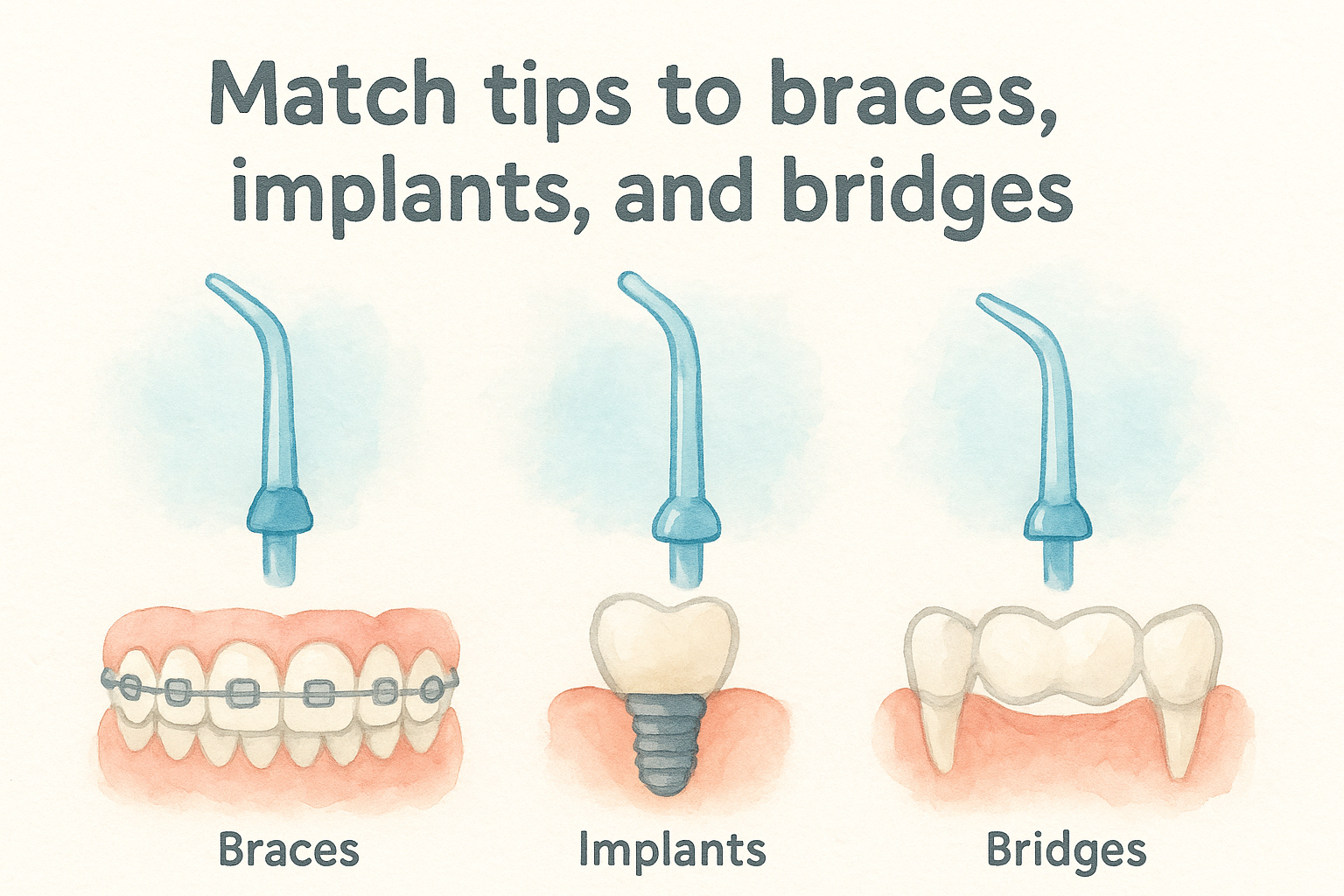
- Orthodontic tip: angled to slip under wires and around brackets
- Implant tip: softer rubber nozzle for sensitive implant sites
- Plaque seeker tip: thin tufted brush for crowns and bridges
Decide if you need a gum pocket tip
A gum pocket tip is a narrow, tapered nozzle that directs water just below the gum line where bacteria collect. If your dentist has flagged early-stage gum disease or deep pockets, this tip delivers a more targeted clean than a standard jet can.
A gum pocket tip works best at low to medium pressure; high pressure directed below the gum line causes more irritation than benefit.
Compare rotation, pause, and pulse features
Some models offer pulse mode, which alternates the stream on and off to massage gum tissue. A pause button lets you stop the flow mid-session without turning the unit off or losing your pressure setting.
Know when a basic jet tip is enough
For most people with healthy gums and no significant dental work, a standard jet tip at the right pressure handles everything a water flosser needs to do. Extra tips only make sense when you have a specific cleaning challenge the standard tip physically cannot reach.
5. Battery, charging, and travel durability
Battery performance separates a dependable daily tool from one you constantly nurse back to life. Any solid water flosser buying guide should address how long the battery lasts, how it charges, and whether the build holds up when you pack it for a trip.
Compare battery life and charge time
Look for a cordless flosser rated for at least 30 days of use per charge at once-daily frequency. Models that need charging every few days eat into the core convenience that makes cordless worth choosing in the first place.
A full charge time under two hours is a practical benchmark; anything longer risks dead-battery interruptions mid-week.
Choose the right charging setup for your routine
USB-C charging beats a proprietary cradle because you can use cables you already own while traveling. Check these specifics before committing to a model:
- Whether the port is USB-C or a proprietary connector
- Whether the cradle sits flat or requires a wall mount
- Whether a battery indicator shows remaining charge at a glance
Check waterproofing and build quality for travel
Aim for an IPX7 waterproof rating, which means the unit survives submersion up to one meter for 30 minutes. A solid lid seal and nozzle connection matter most when the flosser gets tossed in a bag alongside shampoo bottles and chargers on a trip.
Consider noise, storage, and replacement parts
A quieter motor matters if you share a bathroom or floss early in the morning before others wake up. Confirm that replacement tips are sold individually by the manufacturer so a worn nozzle does not force you to replace the entire unit ahead of schedule.
Next steps
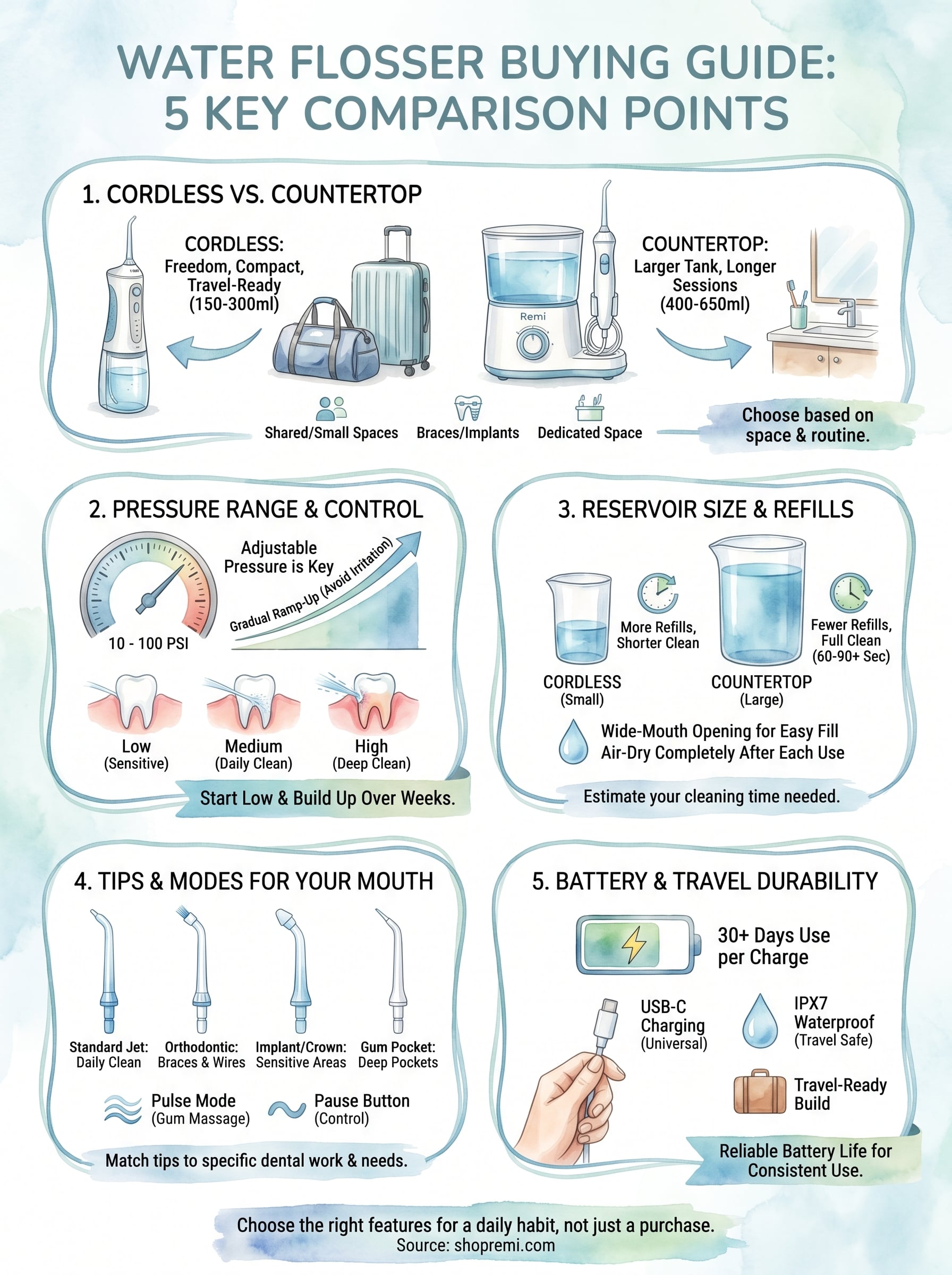
The five factors in this water flosser buying guide cover everything you need to make a confident choice: type, pressure range, tank size, tip selection, and battery performance. Each one connects directly to whether the flosser becomes a daily habit or an unused appliance. Work through them in order, and you will eliminate options that look good on paper but fail in real bathroom use.
Your final decision comes down to matching the specs to your actual routine, not the routine you plan to start. If you want a cordless option that covers the essentials without compromise, the Remi Cordless Water Flosser is designed alongside dental professionals, built for everyday use, and fits easily into any bathroom setup without a cord or a large countertop footprint. Pick the right tool, use it consistently, and your gum health will show the difference within a few weeks.

