


Gum disease affects nearly half of adults over 30, yet most cases are entirely preventable with the right habits. The early stage, gingivitis, often shows up as bleeding gums or persistent bad breath, symptoms many people brush off until the damage progresses. The good news? Effective gum disease prevention tips don't require expensive dental procedures or complicated routines.
Your gums form the foundation of your oral health, and protecting them starts with what you do at home every single day. Whether you're noticing early warning signs or simply want to stay ahead of potential problems, the daily choices you make matter more than occasional dental visits alone.
At Remi, we believe quality oral care should be accessible and straightforward. That's why we've put together these seven practical prevention strategies you can start using today, no dental degree required. From brushing techniques to tools that make a real difference, here's how to keep your gums healthy for the long haul.
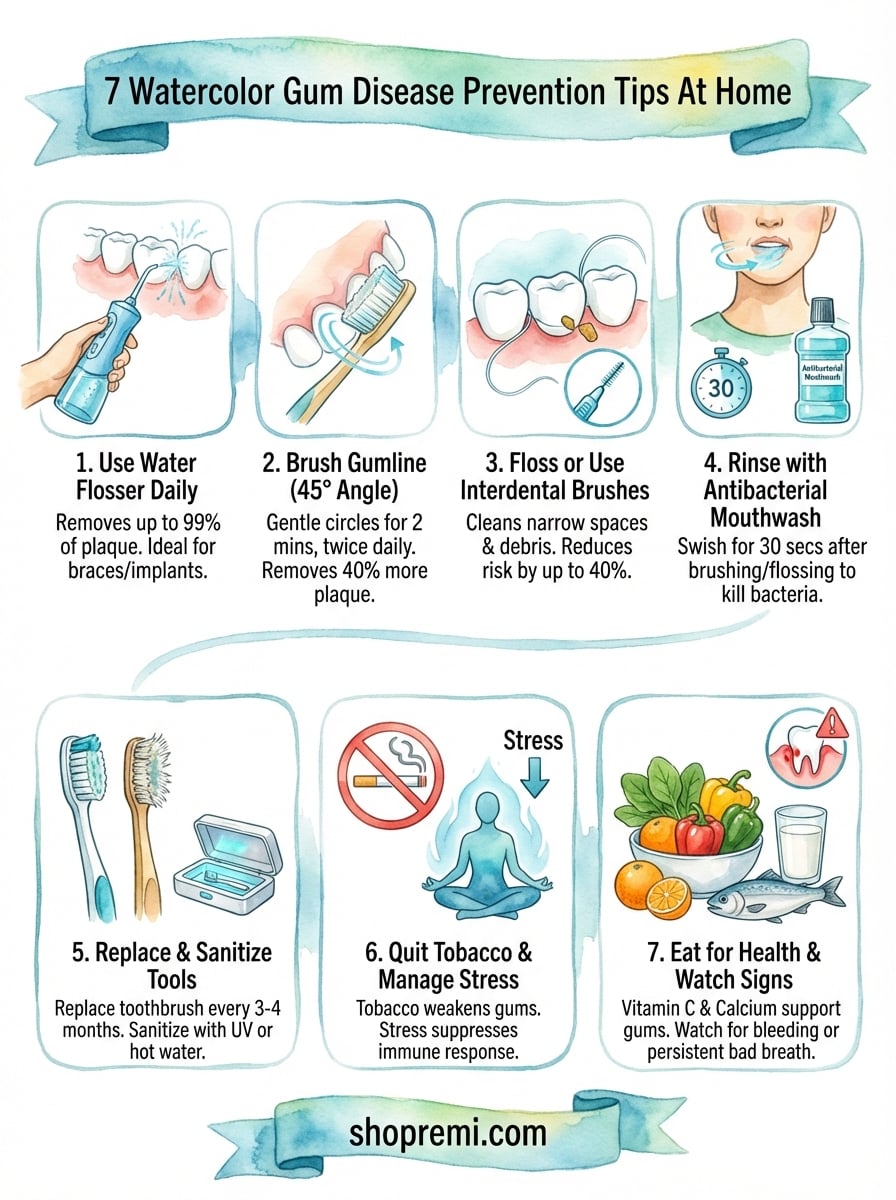
1. Use a water flosser daily
Water flossers shoot a pulsating stream of water between your teeth and along the gumline, dislodging food particles and bacteria that traditional brushing misses. Unlike string floss, this tool reaches areas where manual dexterity often falls short, making it one of the most effective gum disease prevention tips for home use. Studies show water flossing removes up to 99% of plaque from treated areas, and it's gentler on sensitive or inflamed gums than scraping with string.
What to do at home
Fill your water flosser's reservoir with lukewarm water and start on the lowest pressure setting until your gums adjust. Lean over the sink and place the tip at a 90-degree angle to your gumline, letting the water drain naturally from your mouth as you move along each tooth. Work systematically from back molars to front teeth, spending about 10 seconds per section and pausing between each tooth to allow the water stream to clean the pocket where your gum meets the tooth surface.
Why it helps prevent gum disease
The pressurized water stream flushes out bacterial colonies that form in gingival pockets, the spaces between your gums and teeth where plaque accumulates. Regular use reduces gingival inflammation by removing irritants before they trigger an immune response that breaks down gum tissue. Water flossers also stimulate blood flow to your gums, which strengthens tissue and helps your body fight infection more effectively.
Water flossing daily can reduce bleeding by 93% and gingivitis by 52% compared to brushing alone.
Who benefits most from this tip
You'll see the biggest impact if you have braces, bridges, or implants where traditional floss can't navigate around hardware. People with arthritis or limited hand mobility find water flossers easier to control than string floss. Those with receding gums or deep periodontal pockets also benefit from the deeper cleaning that water pressure provides without causing additional damage.
Mistakes that reduce results
Using too much pressure at first can cause temporary bleeding or discomfort, which discourages consistent use. Start low and gradually increase intensity as your gums toughen. Skipping the back teeth or rushing through the process leaves plaque deposits that fuel gum disease. Don't forget to empty and rinse your reservoir after each use to prevent bacterial growth in standing water.
2. Brush the gumline twice a day
Your toothbrush does more than clean tooth surfaces. The gumline accumulates plaque faster than any other area in your mouth, creating a breeding ground for bacteria that cause inflammation and infection. Brushing with the right technique targets this vulnerable zone where your gums meet your teeth, removing biofilm before it hardens into tartar and triggers gum disease.
The technique that removes plaque at the gumline
Hold your brush at a 45-degree angle toward the gumline and use gentle circular motions rather than harsh scrubbing. This position lets bristles slip beneath the gum margin where plaque hides. Spend about 30 seconds on each quadrant of your mouth, making sure you cover both outer and inner surfaces of every tooth.
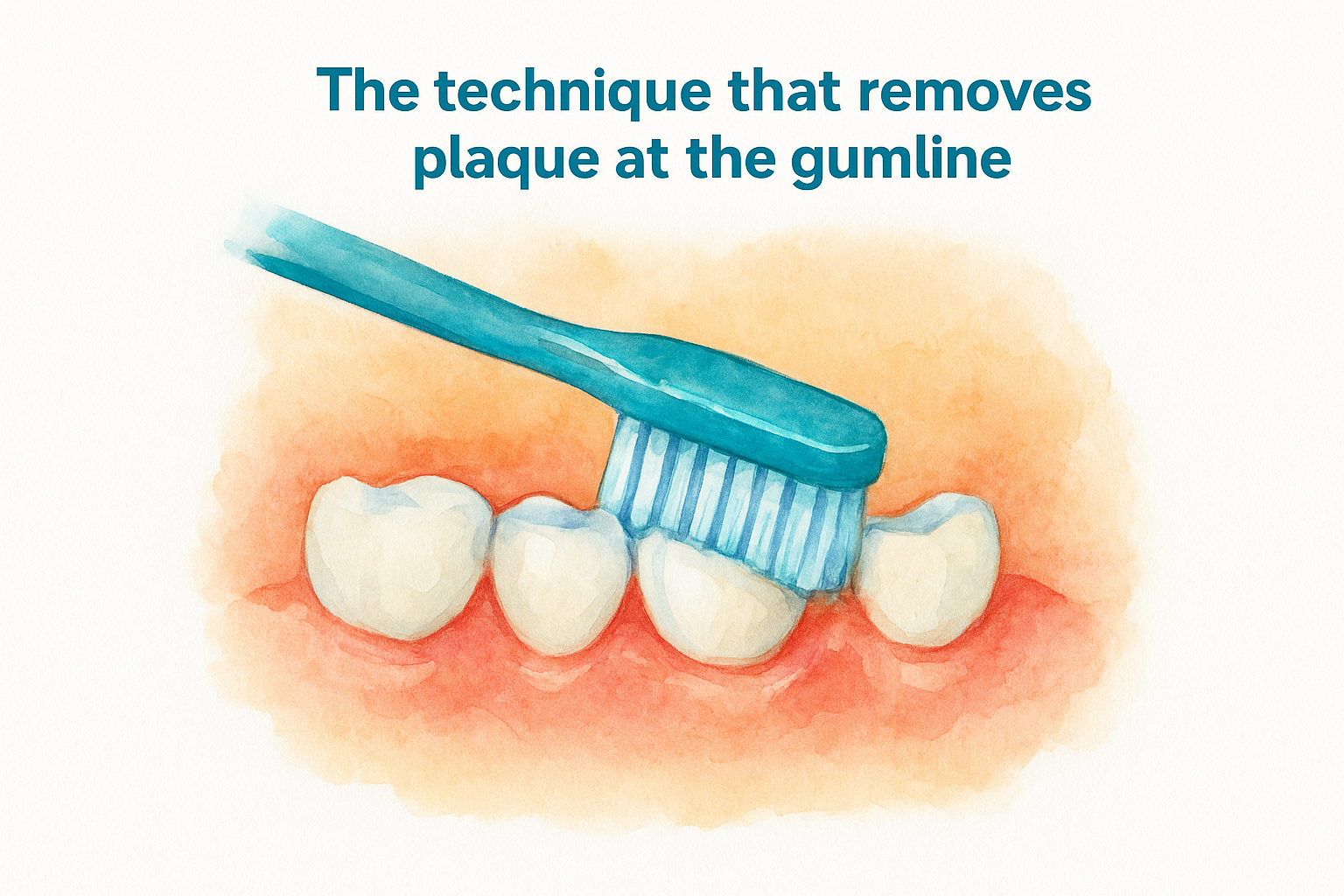
Brushing at the correct angle removes 40% more plaque than straight horizontal strokes.
Toothbrush and toothpaste choices that matter
Pick a soft-bristled brush that won't damage delicate gum tissue when you angle it properly. Electric toothbrushes with pressure sensors prevent you from pushing too hard, a common mistake that causes gum recession. Use fluoride toothpaste to strengthen enamel while antibacterial ingredients help reduce plaque buildup along the gumline.
How long to brush and what to do after meals
Brush for two full minutes twice daily, morning and night, to give the fluoride time to work. After meals, rinse with water if you can't brush immediately. Wait 30 minutes before brushing after eating acidic foods that temporarily soften enamel.
Signs you need to adjust your brushing
Your gums shouldn't bleed or feel sore after brushing. Persistent bleeding indicates either too much pressure or insufficient plaque removal. Receding gumlines mean you're brushing too aggressively. These warning signs demand technique changes immediately to stop damage before it becomes one of those preventable gum disease cases.
3. Floss or use interdental brushes
String floss and interdental brushes clean the narrow spaces between teeth where your toothbrush can't reach. These tools scrape away plaque from tooth surfaces and remove food debris that feeds bacteria along your gumline. Without this daily cleaning, biofilm builds up between your teeth and creates inflammation that spreads to surrounding gum tissue.
How to choose between floss, picks, and brushes
Traditional string floss works best for tight spaces where your teeth sit close together. Interdental brushes fit larger gaps and prove easier to maneuver if you have dental work like bridges or implants. Floss picks offer convenience but provide less control than wrapped string floss.
People who floss daily reduce their risk of gum disease by up to 40% compared to those who skip this step.
A step-by-step technique to avoid inflaming gums
Wrap 18 inches of floss around your middle fingers and use a fresh section for each tooth. Curve the floss into a C-shape against one tooth and slide it gently beneath the gumline. Move the floss up and down several times, then repeat on the adjacent tooth before moving to the next space.
How to build a daily habit that sticks
Keep your flossing supplies visible on your bathroom counter where you'll see them every time you brush. Start with just your front teeth if a full mouth feels overwhelming, then gradually add more teeth until you complete the entire routine each night.
What to do if your gums bleed when you start
Light bleeding during the first week signals inflammation, not damage. Continue flossing daily with gentle pressure and the bleeding typically stops within seven to ten days as your gums heal and strengthen.
4. Rinse with an antibacterial mouthwash
Antibacterial mouthwash reaches spots your brush and floss miss, killing bacteria throughout your entire mouth in one 30-second rinse. The active ingredients penetrate biofilm and reduce the bacterial load that causes inflammation along your gumline. This extra layer of protection works best when combined with proper brushing and flossing, not as a replacement for mechanical cleaning.
When mouthwash helps and when it doesn't
Mouthwash delivers the most benefit when you use it after mechanical cleaning removes plaque first. The liquid reaches between teeth, around dental work, and along gum pockets where bacteria hide. However, rinsing alone won't remove established plaque buildup, so you can't skip brushing and flossing even if you use mouthwash twice daily.
How to use mouthwash without irritating your mouth
Pour the recommended amount into the cap and swish for 30 seconds, moving the liquid around all tooth surfaces and gumlines. Avoid rinsing with water afterward since that dilutes the active ingredients. Choose alcohol-free formulas if you experience burning or dry mouth, which can actually increase bacterial growth.
Alcohol-free antibacterial mouthwash reduces gingivitis just as effectively as alcohol-based versions without causing tissue irritation.
Don't skip tongue cleaning
Your tongue harbors millions of bacteria that spread to your gums with every swallow. Brush or scrape your tongue before rinsing to remove this bacterial reservoir and maximize the effectiveness of your mouthwash.
Quick routine for mornings and nights
Brush first, floss second, then rinse with mouthwash as your final step. This sequence ensures you remove plaque mechanically before applying chemical protection. Morning rinses freshen breath while evening rinses work overnight when bacterial growth peaks, making both essential gum disease prevention tips for your daily routine.
5. Replace and sanitize oral care tools
Your oral care tools accumulate bacteria every time you use them, and worn bristles lose their cleaning effectiveness over time. Regular replacement and proper sanitization prevent you from reintroducing harmful bacteria into your mouth with each brushing or flossing session. These maintenance habits often get overlooked, yet they form critical gum disease prevention tips that protect the investment you make in daily cleaning routines.
When to replace toothbrush heads and floss tools
Replace your toothbrush or electric brush head every three to four months, or sooner if bristles fray or splay outward. Worn bristles can't effectively remove plaque and may damage your gums when you apply normal pressure. Toss your toothbrush immediately after recovering from a cold or flu since bacteria and viruses linger on bristles even after you feel better.
How to sanitize toothbrushes safely
Rinse your toothbrush thoroughly under hot water after each use to remove toothpaste residue and debris. Store your brush upright in an open holder that allows air circulation to dry bristles completely between uses. UV sanitizers kill 99% of bacteria within minutes, providing deeper cleaning than rinsing alone without using harsh chemicals that might degrade bristles.
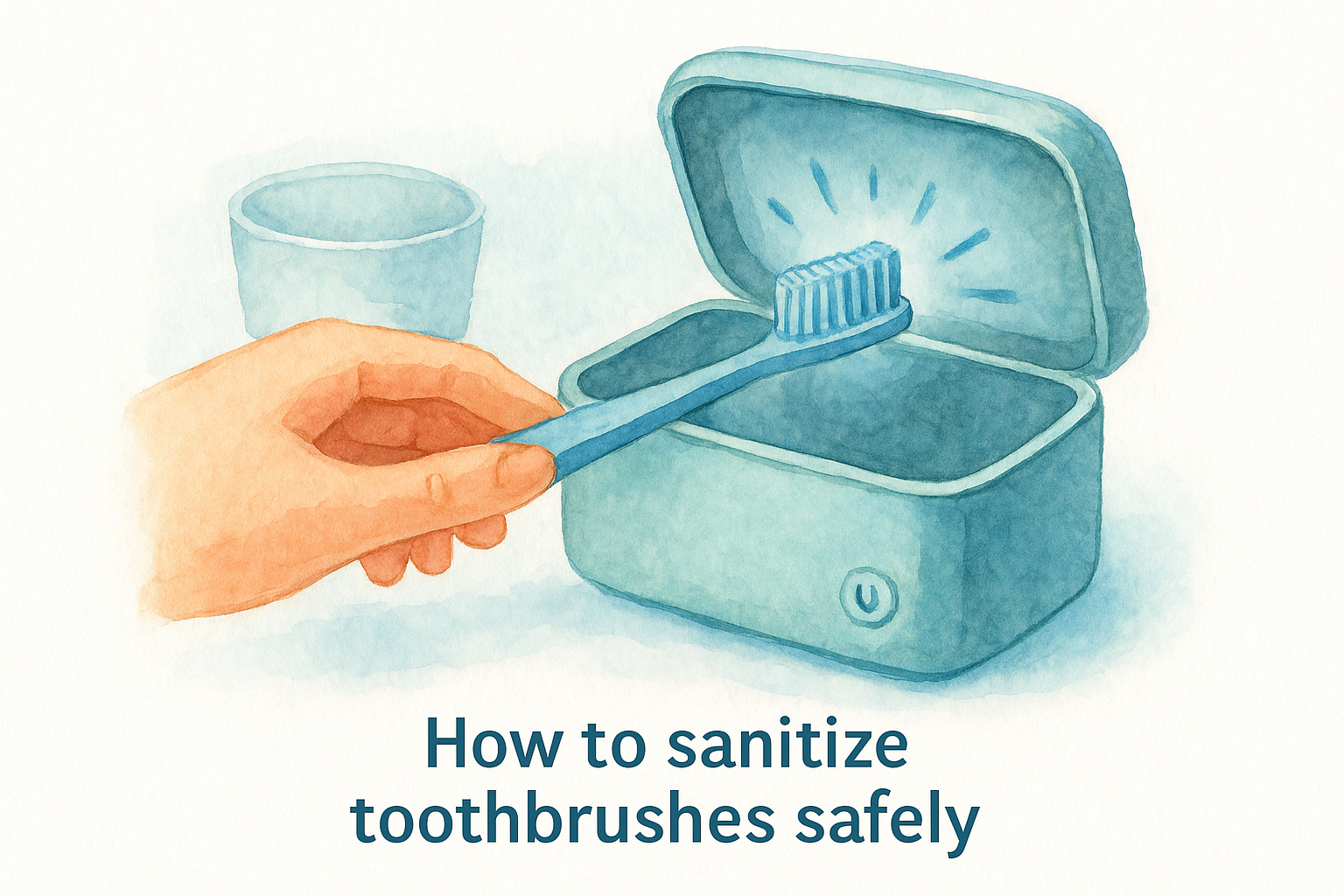
UV sanitization reduces bacterial colonies on toothbrushes by up to 99.9% compared to air drying alone.
How to keep retainers and night guards from harboring bacteria
Rinse your dental appliances with cool water immediately after removing them each morning to prevent saliva from hardening on the surface. Clean them daily with a specialized foam cleaner that removes bacteria without scratching the material. Deep clean weekly using an ultrasonic cleaner that reaches microscopic crevices where bacteria hide.
Simple storage habits that prevent recontamination
Keep your toothbrush at least three feet away from the toilet to avoid airborne particles that spread during flushing. Store dental appliances in ventilated cases rather than sealed containers that trap moisture and encourage bacterial growth.
6. Quit tobacco and manage stress
Tobacco and chronic stress create a perfect storm for gum disease by weakening your immune system and reducing blood flow to your gums. Smoking or chewing tobacco directly damages gum tissue while stress hormones suppress your body's ability to fight bacterial infections. These two factors multiply each other's negative effects, making them critical targets in any comprehensive approach to gum disease prevention tips.
How tobacco raises your gum disease risk
Nicotine constricts blood vessels in your gums, starving tissue of oxygen and nutrients needed for healing. Tobacco users develop deeper periodontal pockets and lose bone support around teeth at twice the rate of non-users. The chemicals in tobacco also interfere with the normal function of gum tissue cells, leaving you vulnerable to infection even with good brushing habits.
What stress does to your mouth and immune response
Stress hormones like cortisol suppress your immune system, making it harder for your body to fight the bacteria that cause gum disease. Chronic stress also increases inflammation throughout your body, including your gums. You might notice more bleeding or swelling during particularly stressful periods when your defenses drop.
How to reduce clenching and grinding at night
Stress-related clenching puts excessive pressure on your gums and can loosen teeth over time. A custom night guard from Remi protects your teeth and reduces the force transferred to surrounding gum tissue while you sleep. Practice relaxation techniques before bed to lower muscle tension in your jaw.
People who quit tobacco see gum healing begin within just two weeks of their last cigarette.
When to involve a dentist for help
Schedule a dental visit if you notice persistent bleeding that doesn't improve after two weeks of better home care. Professional cleanings remove hardened tartar that brushing can't touch, and your dentist can assess whether stress or tobacco damage requires additional treatment beyond daily prevention.
7. Eat for gum health and watch for signs
What you eat directly affects the bacterial balance in your mouth and your body's ability to fight gum inflammation. Nutrient-dense foods strengthen your immune response while frequent sugar exposure feeds the bacteria that attack your gumline. Staying alert to early warning signs turns these gum disease prevention tips into a complete protection system that catches problems before they require professional intervention.
Foods and nutrients that support healthy gums
Vitamin C strengthens collagen production in your gum tissue, making it more resistant to bacterial invasion. Eat citrus fruits, bell peppers, and leafy greens daily to maintain healthy levels. Calcium and vitamin D work together to support jawbone density that anchors your teeth, so include dairy products, fatty fish, or fortified alternatives in your meals.
How sugar frequency affects plaque and inflammation
Each time you eat sugar, bacteria produce acid that attacks your gums for about 20 minutes afterward. Sipping sugary drinks throughout the day creates constant acid exposure that never gives your mouth time to recover. Limit sugar to mealtimes and choose whole foods over processed snacks to reduce bacterial fuel.
Reducing sugar frequency cuts your gum disease risk more effectively than reducing total sugar intake.
Hydration and dry mouth habits that protect gums
Saliva washes away food particles and neutralizes bacterial acids naturally. Drink water throughout the day to maintain steady saliva production. Chronic dry mouth from medications or mouth breathing lets bacteria multiply unchecked, so address the underlying cause with your doctor.
Early warning signs that mean you should act fast
Bleeding gums during brushing signal inflammation that requires immediate attention through better home care. Persistent bad breath despite good hygiene indicates bacterial buildup in gum pockets. Gums that feel tender or look darker red than normal mean you need to intensify your routine before minor inflammation becomes permanent damage.
Your next step
These seven gum disease prevention tips give you everything you need to protect your gums without expensive dental procedures or complicated routines. Start with whichever tip addresses your biggest concern, whether that's bleeding gums, plaque buildup, or simply maintaining what's already working. Building these habits takes consistent daily effort, but the payoff comes in healthier gums, fewer dental bills, and confidence in your smile.
Your tools matter as much as your technique. A quality water flosser makes daily plaque removal easier and more effective than string floss alone, especially around hard-to-reach areas where gum disease starts. Remi's cordless water flosser delivers professional-level cleaning at home with rechargeable convenience and adjustable pressure settings that work for sensitive gums.
Take action today by implementing just one or two of these prevention strategies, then add more as they become routine. Your gums will thank you with reduced bleeding and stronger tissue.

