


If you're researching Glidewell night guard material, you probably want to know exactly what's going into a product that sits against your teeth for hours every night. That's a reasonable thing to dig into. Glidewell is one of the largest dental labs in the United States, and their night guards are commonly prescribed by dentists, but the specifics of what they're made from aren't always spelled out clearly at your appointment.
This article breaks down the actual materials used across Glidewell's night guard lineup, including the differences between their hard acrylic options, dual-laminate designs, and thermoformed products made from polyurethane and copolyester. We'll cover how these compositions affect durability, comfort, and fit. At Remi, we make custom-fitted night guards for teeth grinding and clenching using professional-grade materials, so understanding what separates one night guard material from another is something we think about constantly. Whether you're comparing lab options or just want to make a more informed choice, here's what you need to know.
Why night guard material matters
The material your night guard is made from determines almost everything about how well it performs. Thickness, hardness, and chemical composition affect whether the guard can absorb bruxism forces without cracking, and how long the guard lasts before needing replacement. Choosing the wrong material is not just uncomfortable; it can actively fail to protect your teeth during the hours you need it most. For anyone comparing lab-made options or researching a dental prescription, this is worth understanding before you commit.
Durability and grinding resistance
Not all night guard materials handle grinding pressure equally. Hard acrylic resins, like those used in many professionally fabricated guards, are dense enough to resist the significant bite forces that bruxism generates night after night. Softer materials, or poorly formulated laminates, wear through faster, especially if you grind heavily or clench with a lot of force.
The harder you grind, the faster a low-grade material breaks down, which means you end up replacing your guard more often and spending more over time.
Understanding the specific Glidewell night guard material in each product matters before your dentist places an order on your behalf. You want to know what you're getting, rather than discovering the guard is showing visible wear after just a few months of use.
Comfort, fit, and daily wearability
Jaw comfort and wearability come down to material stiffness and how precisely the guard conforms to your bite. Rigid guards made from hard acrylic distribute force evenly but can feel bulky, while softer or dual-laminate options add a cushioning layer that many people find easier to tolerate, particularly if they're new to wearing a guard each night.
A poorly fitting guard made from the wrong material can cause bite shifts or jaw muscle soreness that makes mornings genuinely unpleasant. Material selection and fit precision are not separate concerns; they work together to determine whether your night guard protects or causes problems.
How to choose a night guard material
Picking the right material starts with an honest assessment of how hard you grind and what your daily wear tolerance actually is. If you're comparing lab options or researching Glidewell night guard material before your next dental appointment, understanding these two factors will narrow your decision quickly and help you avoid a guard that wears out too fast or one you simply stop wearing.
Match material hardness to your grinding intensity
Heavy grinders need a hard acrylic or a dual-laminate guard with a rigid outer layer, because softer materials compress and degrade quickly under sustained bite force. If your dentist has already flagged visible tooth wear or enamel erosion, that's your signal to prioritize hardness over cushion.
A material that feels comfortable at first but degrades within six months is not saving you money; it's just costing you more in replacements.
Factor in comfort for long-term compliance
Nightly compliance matters more than most people expect. A guard you stop wearing because it feels too bulky or rigid is simply not doing its job.
Dual-laminate designs that pair a soft inner layer with a hard outer shell tend to solve this problem for people who struggle with fully rigid guards. Your final material choice is as much about whether you'll actually keep wearing it as it is about clinical performance.
Glidewell Comfort H/S material breakdown
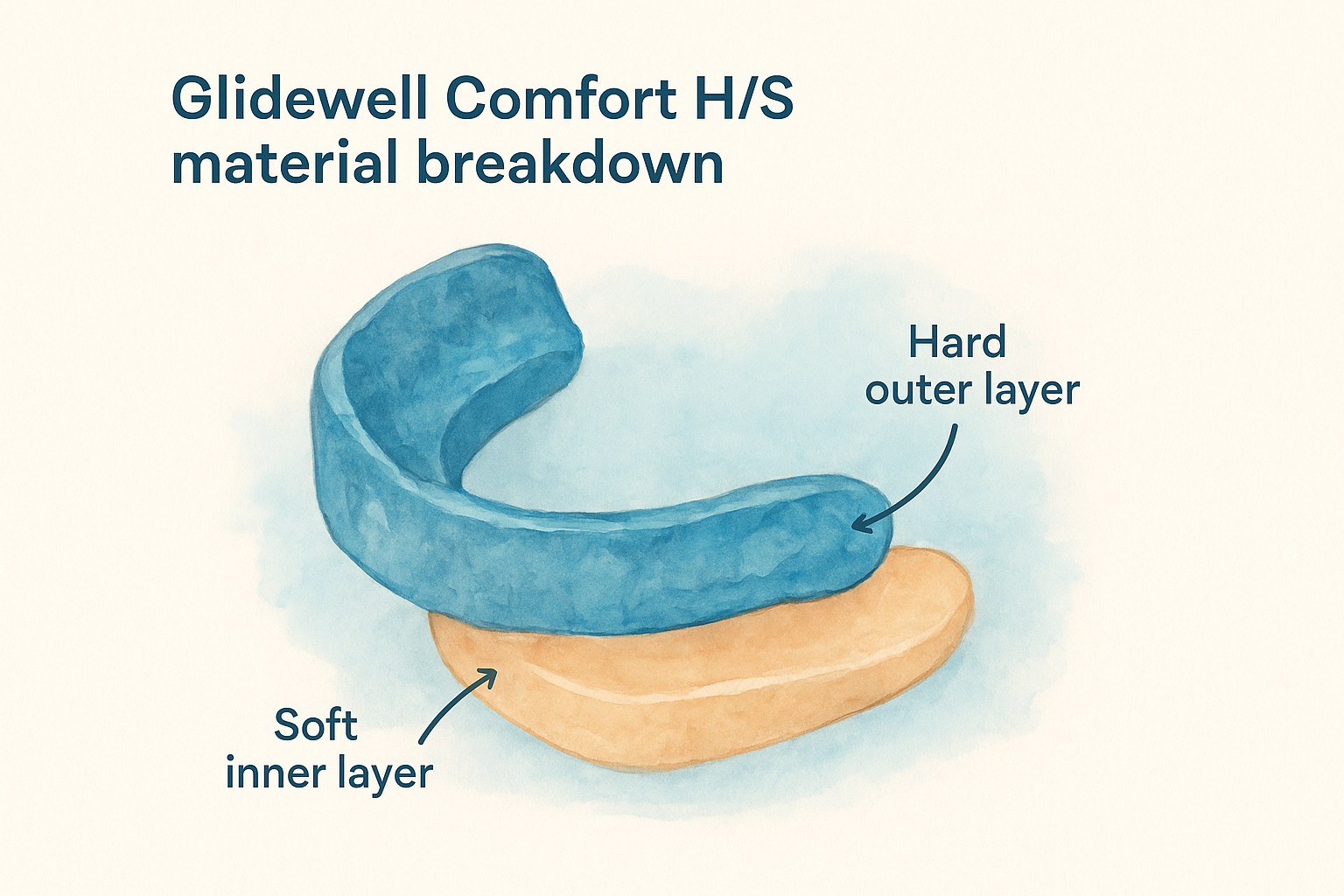
The Glidewell Comfort H/S is a dual-laminate night guard designed to handle both protection and comfort within a single appliance. The name tells you the structure: a hard outer shell bonded to a soft inner layer, giving it the grinding resistance of a rigid guard while keeping the teeth-facing side more tolerable for your nightly wear. This is one of the most commonly prescribed Glidewell night guard material options in clinical settings.
Hard outer layer composition
Fabricated from methyl methacrylate acrylic resin, the hard external layer is the same class of material used in many full-coverage occlusal splints. This layer handles the bulk of grinding force, resisting deformation under repeated pressure without cracking under normal bruxism loads.
Hard acrylic distributes bite force evenly across the guard surface, which reduces localized wear and extends the appliance's working life.
Soft inner layer function
The inner laminate is a flexible, rubberized material that cushions the teeth-facing surface. This layer improves retention and comfort without compromising the structural integrity of the outer shell. Because the two layers are pressure-bonded during fabrication, your guard functions as a unified unit rather than two separate materials that can delaminate over time.
Most heavy grinders find this laminate combination holds up well for six to twelve months before requiring replacement, depending on their grinding severity and nightly wear habits.
Glidewell Comfort3D and CLEARsplint materials
Glidewell's Comfort3D and CLEARsplint represent two distinct approaches to night guard fabrication, each built from different material classes with different clinical goals. Understanding what separates these two products helps you ask the right questions when a dentist recommends a specific Glidewell night guard material option.
Comfort3D material
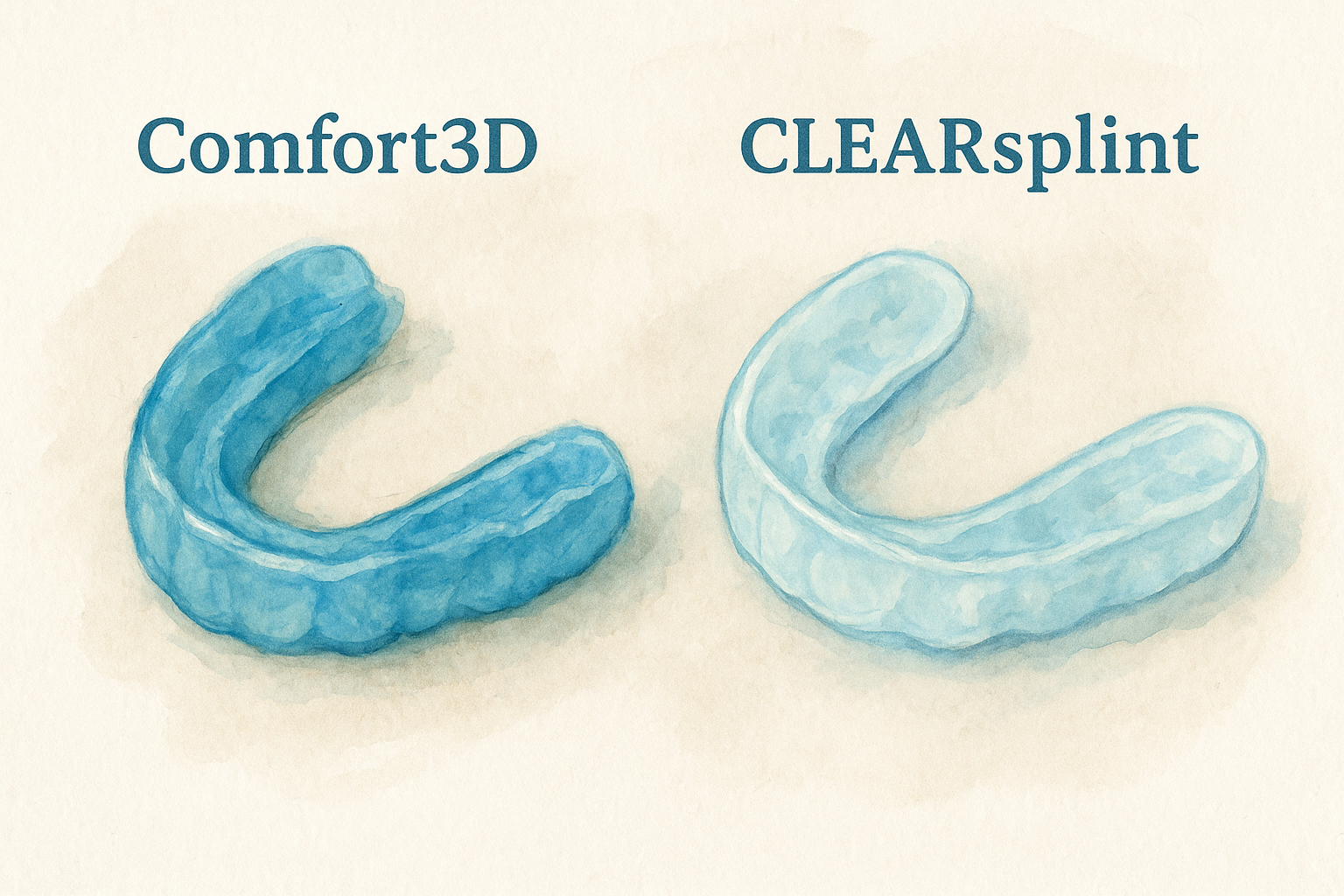
The Comfort3D guard is fabricated from a triple-laminate construction, combining layers of varying hardness into a single pressure-processed unit. This design gives you graduated flexibility from the hard outer surface to a softer core, which distributes occlusal load more evenly than a simple dual-layer design.
The multi-layer construction is particularly useful for moderate grinders who need protection without the full rigidity of hard acrylic.
CLEARsplint material
CLEARsplint uses a transparent hard acrylic resin, making it functionally similar to a traditional full-coverage splint but with improved aesthetics. The material is dense and dimensionally stable, which means it holds its shape accurately over time without warping during nightly wear.
Dentists often prescribe CLEARsplint when visibility and discretion matter, since the clear resin is less noticeable than standard opaque acrylic. The tradeoff is that it offers less cushioning than laminate options, so it works best for patients with moderate to severe bruxism who need maximum grinding resistance over softness.
Thermoformed materials Glidewell sells for in-office
Beyond their lab-fabricated acrylic and laminate options, Glidewell also supplies thermoformed blank materials that dental offices use to fabricate night guards chairside or through an in-office workflow. These are not the same as the custom-milled or pressure-processed guards; instead, they're sheet materials that heat and conform to a plaster model of your teeth. Understanding this category helps you recognize which type of Glidewell night guard material your dentist may be working with.
Polyurethane thermoformed blanks
Glidewell offers polyurethane-based thermoformed sheets for in-office use, which are known for their flexibility and tear resistance under grinding stress. Polyurethane holds its shape well after forming and resists the type of edge cracking or splitting that harder materials sometimes show when trimmed chairside.
Polyurethane thermoformed guards tend to perform better for moderate grinders than standard EVA blanks because the material stays flexible without losing retention.
Copolyester thermoformed options
Copolyester sheets provide a harder, more dimensionally stable alternative to polyurethane. Glidewell supplies these specifically to serve heavier grinders who need a guard with less flex and more resistance to deformation under sustained bite pressure.
Unlike polyurethane, copolyester produces a cleaner and more transparent finish when formed, which makes it a practical choice for patients where aesthetics matter alongside protection.
Key takeaways and next steps
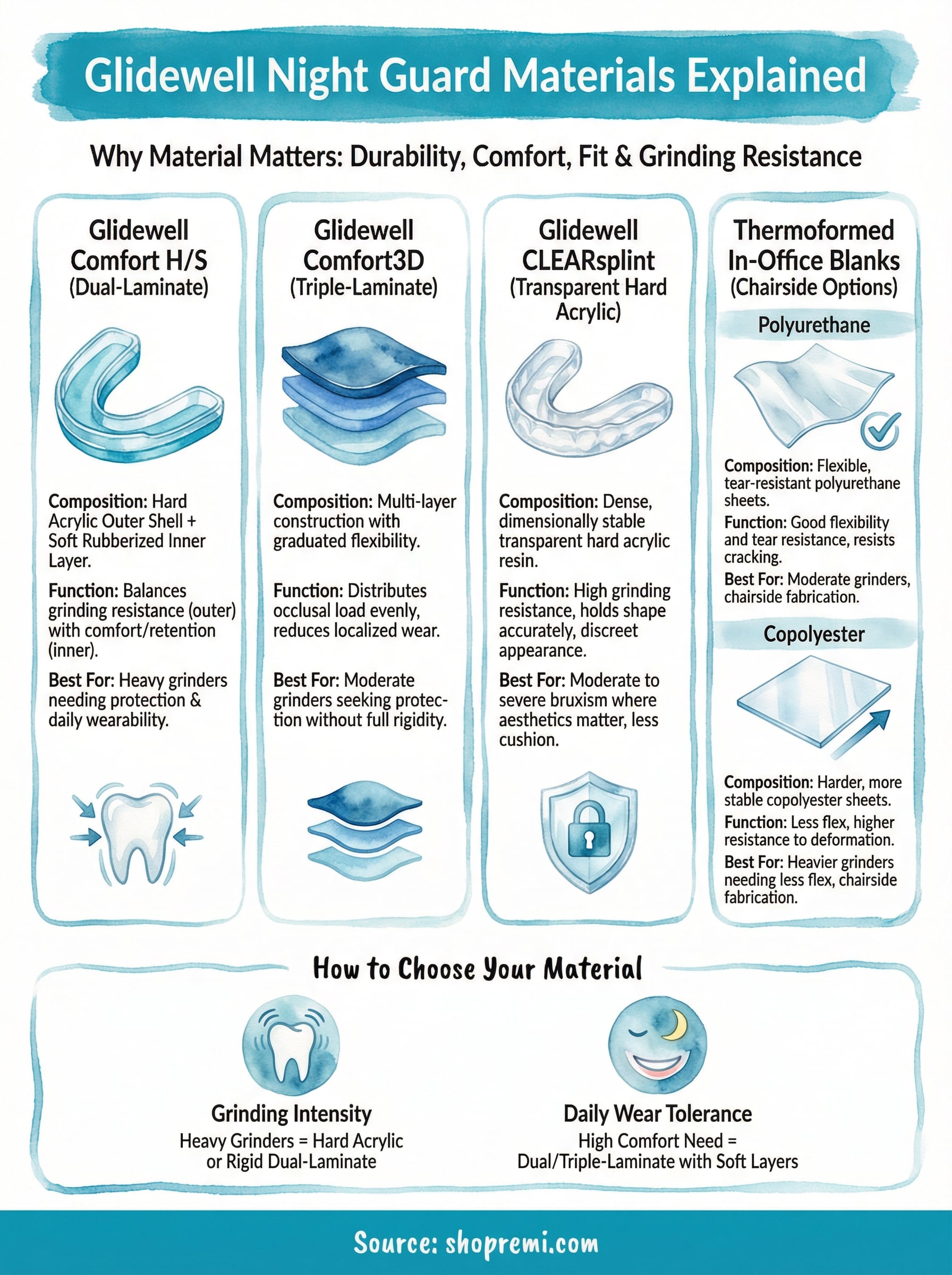
Glidewell produces night guards across several material categories, and knowing the difference matters before your dentist places an order. The Comfort H/S dual-laminate works well for heavy grinders who need both protection and daily wearability. Comfort3D and CLEARsplint each serve more specific needs, with CLEARsplint prioritizing grinding resistance and aesthetics together. Thermoformed blanks in polyurethane and copolyester round out the in-office workflow side of what Glidewell offers, giving dental practices a chairside option for lighter cases.
Understanding your Glidewell night guard material options puts you in a better position to ask the right questions at your next dental appointment. If you want a custom-fitted night guard that skips the dental office markup without cutting corners on professional quality, Remi delivers exactly that at a fraction of the traditional cost. Get started with a custom night guard from Remi and protect your teeth without the high price tag.

