
 Guards + Retainers
 Custom Night Guard
 Retainer
 Emergency Order

 Whitening
 Whitening Kit
 Teeth Whitening Gel
 Dual-Action Foam
 Cleaning + Care
 Ultrasonic Cleaner Pro
 Water Flosser
 UV Toothbrush Sanitizer
 Deep Clean + Freshening Tablets
 Accessories
 Guard Removal Tool
 Replacement Nozzles
 Bundles

You spent months, maybe years, wearing braces. Your teeth are finally straight. Now your orthodontist hands you a retainer and tells you to wear it consistently. Understanding the dental retainer purpose is the first step to protecting that new smile.
Here's the reality: without a retainer, your teeth will gradually shift back toward their original positions. This process, called relapse, can undo all your orthodontic progress. Your teeth aren't locked in place just because braces came off, they need ongoing support to stay aligned.
This article explains why retainers are necessary, how they work to maintain tooth alignment, and what happens if you skip wearing one. At Remi, we create custom clear removable retainers delivered directly to your door at a fraction of dental office prices, so we know what it takes to keep your smile in place for the long haul.
What a dental retainer does and how it works
A retainer is a custom-fitted device that applies gentle, consistent pressure to keep your teeth in their new positions after orthodontic treatment. Unlike braces, which actively move teeth, retainers work by preventing movement and allowing the surrounding bone and tissues to stabilize around your newly aligned teeth.
How retainers hold teeth in place
Your teeth sit in sockets within your jawbone, surrounded by periodontal ligaments that act like elastic fibers connecting each tooth to the bone. When braces move your teeth, these ligaments stretch and compress. Even after your braces come off, these ligaments want to snap back to their original shape, pulling your teeth with them.
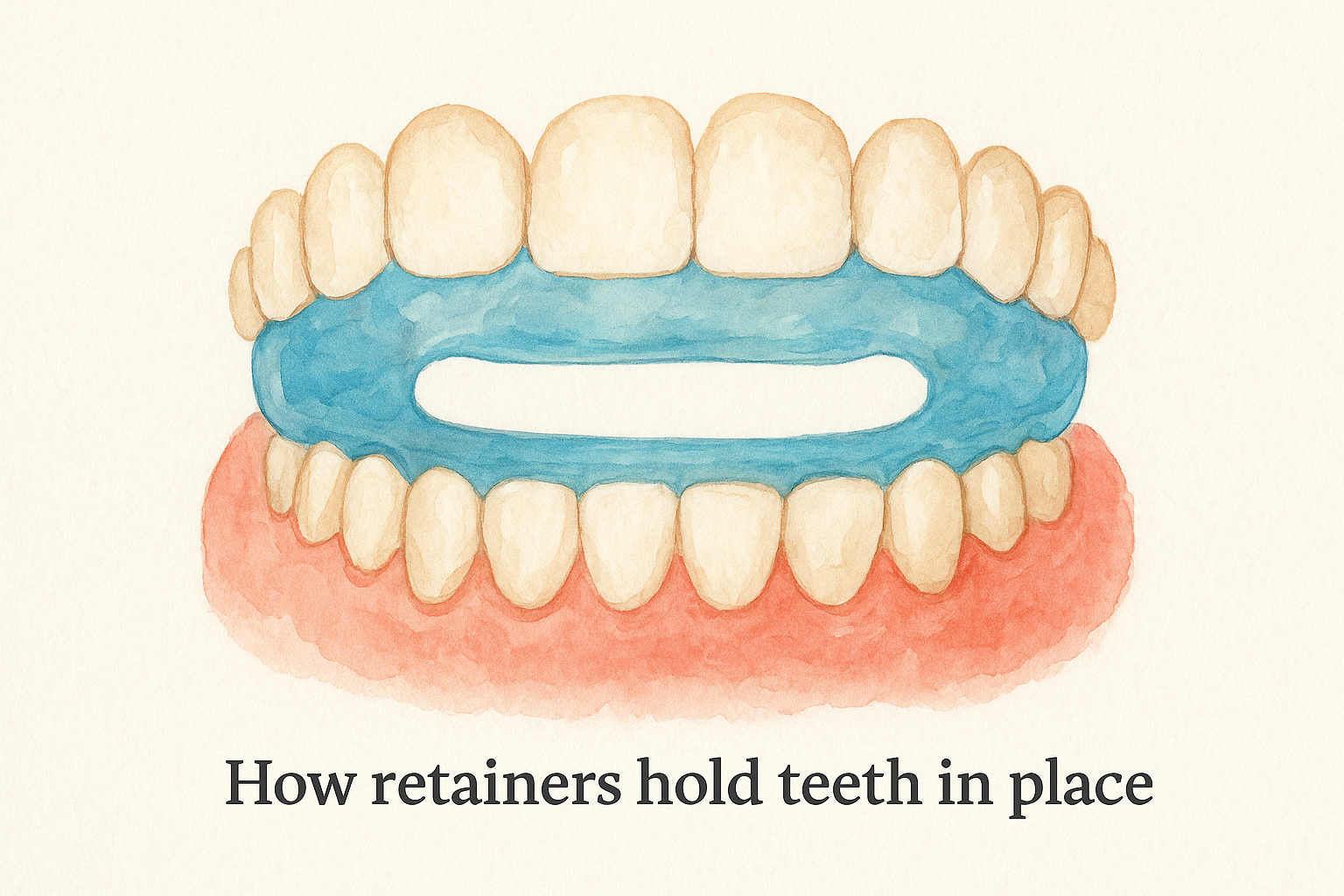
Retainers counteract this force by holding your teeth steady while your bone and ligaments remodel themselves around the new positions. This process takes months, sometimes years, depending on how much your teeth were moved. The dental retainer purpose is essentially to give your mouth time to adapt to its new alignment without allowing backward drift.
Without this stabilization period, teeth can shift noticeably within just weeks of removing braces.
What happens in your jaw during retention
After braces come off, your body begins depositing new bone tissue around your teeth in their adjusted positions. This bone remodeling happens slowly and needs consistent support. Your gums and soft tissues also need time to reorganize themselves around the changed tooth positions.
Retainers provide the physical barrier that prevents unwanted movement during this critical healing phase. They distribute pressure evenly across your teeth, maintaining alignment while your jaw completes its biological adjustment. The device doesn't push or pull, it simply keeps everything stationary so natural processes can finish what orthodontic treatment started.
Why you still need a retainer after braces
Your teeth achieved perfect alignment, but that doesn't mean they'll stay there without help. The dental retainer purpose goes beyond just maintaining your smile after braces come off. Your teeth face constant pressure from everyday forces like chewing, tongue movement, and even natural growth patterns that continue into your twenties and beyond.
Your teeth naturally want to drift back
Relapse isn't a sign of failed orthodontic treatment. It's a biological response your body undergoes as it tries to return to familiar patterns. The ligaments and soft tissues in your mouth have muscle memory from years spent in their original positions, and they pull your teeth back toward those spots whenever given the chance.
Even teeth that were perfectly straight before braces can shift without retention.
Most people see noticeable movement within the first three to six months after braces removal if they don't wear their retainer consistently. Front teeth, especially lower incisors, tend to crowd first because they have less bone support and experience more pressure from your tongue and lips during speech and swallowing.
Age and growth patterns affect stability
Younger patients face higher relapse risk because their jaws are still developing. Your facial bones don't finish growing until your mid-twenties, and this ongoing growth can shift teeth even after orthodontic treatment ends. Adults typically need retainers indefinitely because bone density naturally decreases with age, making teeth more prone to movement over time.
Types of retainers and how to choose
Retainers come in two main categories: fixed and removable. Each type serves the dental retainer purpose effectively, but they work differently and require different levels of commitment. Your orthodontist typically recommends one based on how much your teeth moved during treatment, your age, and your ability to wear a removable device consistently.
Fixed retainers vs removable retainers
Fixed retainers consist of a thin metal wire bonded to the back of your front teeth, usually on the lower arch. You can't remove them yourself, and they work 24/7 without requiring any effort on your part. They're ideal if you had significant crowding or rotation in your front teeth because they prevent movement in the most vulnerable areas.
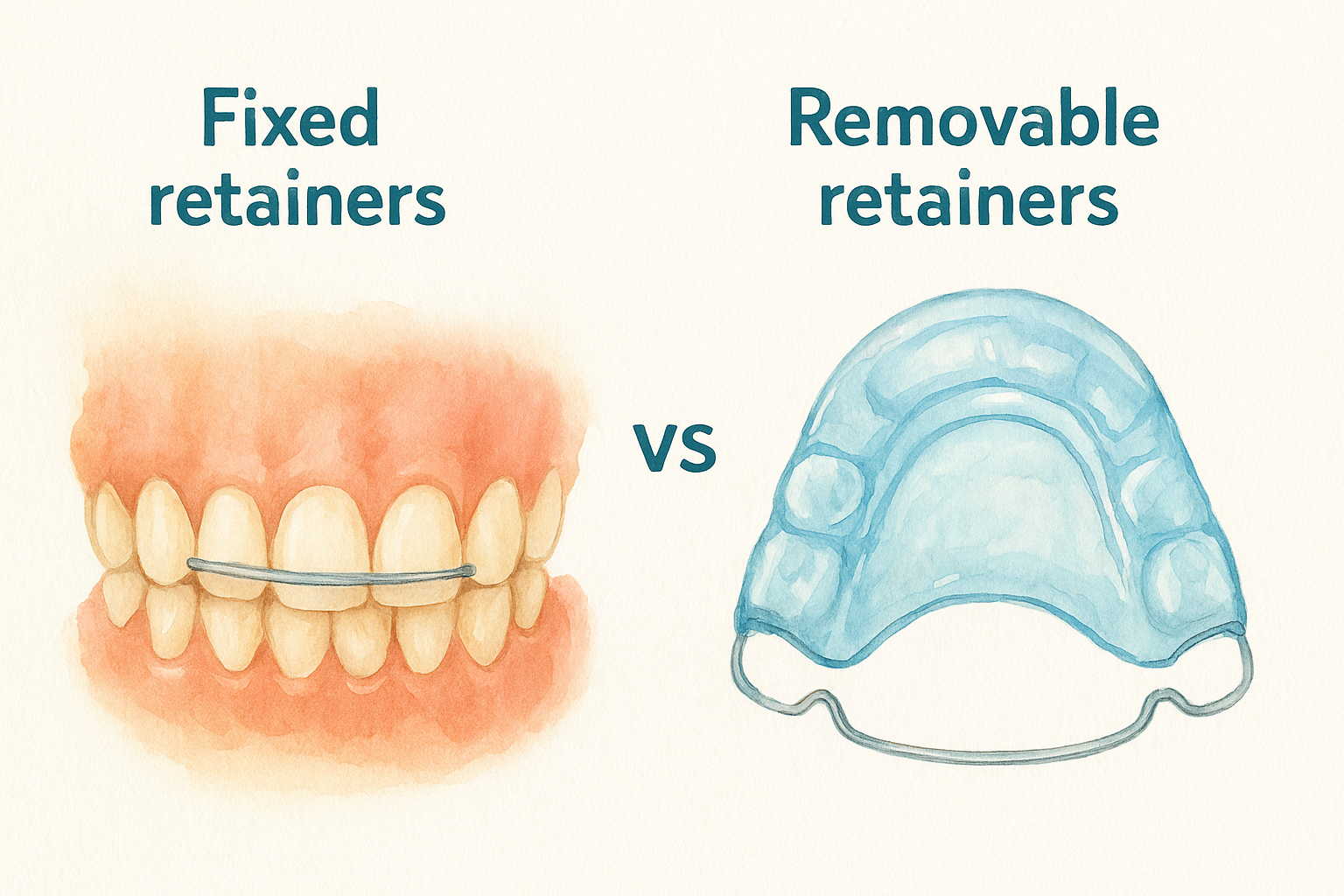
Removable retainers include clear plastic trays (similar to Invisalign) and traditional wire-and-acrylic Hawley retainers. Clear retainers fit snugly over your entire arch and are nearly invisible, making them popular for adults. Hawley retainers use a metal wire across your front teeth with an acrylic plate that rests against the roof of your mouth or behind your lower teeth.
Clear removable retainers offer the best combination of effectiveness and discretion for most patients.
Which retainer type fits your lifestyle
Your daily routine determines which option works best. Fixed retainers require excellent flossing habits because food gets trapped around the wire, but you never have to remember to wear them. Removable retainers demand consistent discipline to wear them as prescribed, but they're easier to clean and allow normal flossing.
How long to wear your retainer and what to expect
Your orthodontist will give you a specific wearing schedule based on your treatment, but most patients follow a similar pattern. The dental retainer purpose remains the same throughout: preventing your teeth from drifting back to their original positions as your mouth adjusts to its new alignment.
First few months after braces
You'll wear your retainer full-time for at least three to six months after your braces come off, taking it out only to eat and brush your teeth. This constant wear gives your bone and ligaments the uninterrupted stabilization they need during the most vulnerable period for relapse.
Your teeth are most likely to shift during the first year after orthodontic treatment.
Expect some initial discomfort similar to when you first got braces, but it should fade within a few days. Your speech might sound slightly different until your tongue adapts to the retainer's presence. These adjustments are normal and temporary.
Long-term retention schedule
After the initial full-time phase, most orthodontists reduce wear to nights only for at least a year. Many patients continue nightly wear indefinitely because teeth can shift at any age. Some people transition to wearing their retainer a few nights per week after several years of consistent nightly use, but this depends on how stable your teeth remain and your orthodontist's assessment of your specific case.
How to care for a retainer and handle common problems
Proper retainer maintenance directly impacts how well it serves its dental retainer purpose of keeping your teeth aligned. Your retainer sits in your mouth for hours each day, collecting bacteria, plaque, and food particles that can damage both the device and your oral health if not cleaned regularly.
Daily cleaning routine
Rinse your retainer with cool water every time you remove it to prevent saliva and debris from hardening on the surface. Brush it gently with a soft-bristled toothbrush and clear antibacterial soap or non-abrasive toothpaste at least once daily, preferably in the morning after overnight wear.
Never use hot water on your retainer because heat warps the plastic and ruins the fit.
Soak your retainer in a cleaning solution or denture cleaner two to three times per week to remove buildup that brushing alone can't eliminate. Store it in its case when not wearing it to protect against damage and bacteria exposure.
Common problems and quick fixes
Cloudy or discolored retainers usually result from mineral deposits from saliva or inadequate cleaning. Increase your soaking frequency and avoid leaving your retainer to dry without rinsing it first. If your retainer develops an odor, it means bacteria have accumulated, so deep clean it immediately with a specialized retainer cleaner.
Contact your orthodontist right away if your retainer cracks, breaks, or no longer fits properly. A damaged retainer can't hold your teeth in position effectively, and delays in replacement increase your risk of tooth movement.
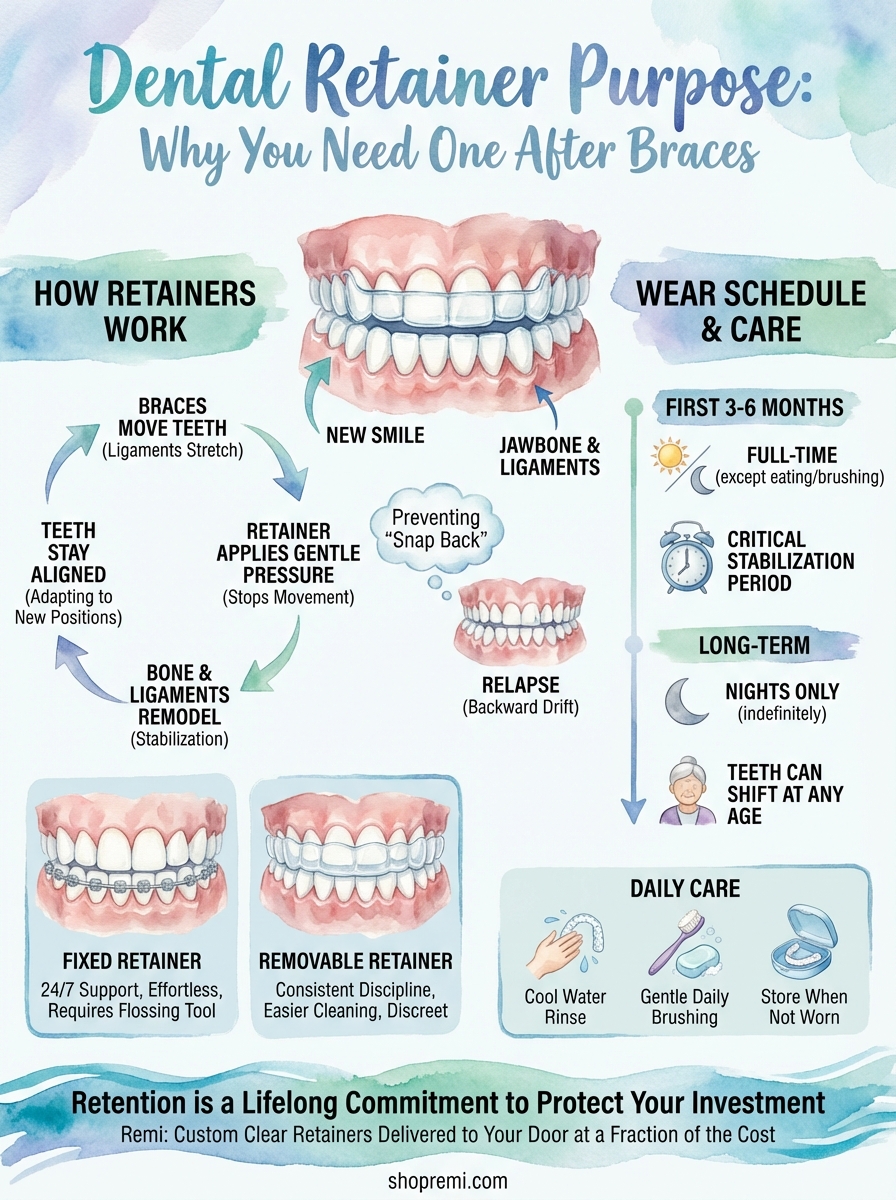
Keep your smile stable for the long run
Your orthodontic investment doesn't end when braces come off. Understanding the dental retainer purpose means accepting that retention is a lifelong commitment if you want to maintain your perfectly aligned smile. Your teeth will always have the biological tendency to drift back toward their original positions, regardless of how many years pass since treatment ended.
Consistent retainer wear protects the time, money, and effort you invested in straightening your teeth. Skipping nights or abandoning your retainer altogether leads to gradual tooth movement that can eventually require additional orthodontic treatment to correct. The small daily habit of wearing your retainer prevents the frustration and expense of repeating work you already completed.
Remi makes long-term retention affordable and accessible with custom clear retainers delivered directly to your door at a fraction of dental office costs. Our impression kit lets you create a perfect fit from home, and replacements cost significantly less than traditional dental visits. Order today and keep your smile exactly where it belongs.

