
 Guards + Retainers
 Custom Night Guard
 Retainer
 Emergency Order

 Whitening
 Whitening Kit
 Teeth Whitening Gel
 Dual-Action Foam
 Cleaning + Care
 Ultrasonic Cleaner Pro
 Water Flosser
 UV Toothbrush Sanitizer
 Deep Clean + Freshening Tablets
 Accessories
 Guard Removal Tool
 Replacement Nozzles
 Bundles

You've probably seen both clear aligners and retainers mentioned when researching orthodontic options, but understanding clear aligners vs retainers comes down to one simple distinction: one moves teeth, the other keeps them in place. These two dental tools serve completely different purposes, and mixing them up could mean wasted money or undone progress.
Clear aligners actively shift your teeth into new positions over months of treatment. Retainers, on the other hand, lock in those results after the work is done. Knowing when to use each, and why, helps you protect your investment in a straighter smile and avoid unnecessary dental visits.
This guide breaks down the key differences between clear aligners and retainers, explains exactly when each one fits into your dental journey, and covers what to expect from both. At Remi, we specialize in custom-fitted retainers designed to maintain your results comfortably and affordably, so we'll also share what makes a quality retainer worth wearing long-term.
What clear aligners and retainers do
Clear aligners and retainers look similar, but they perform completely opposite jobs in your mouth. Understanding what each one does helps you avoid the mistake of thinking one can replace the other at any stage of treatment.
How clear aligners move teeth
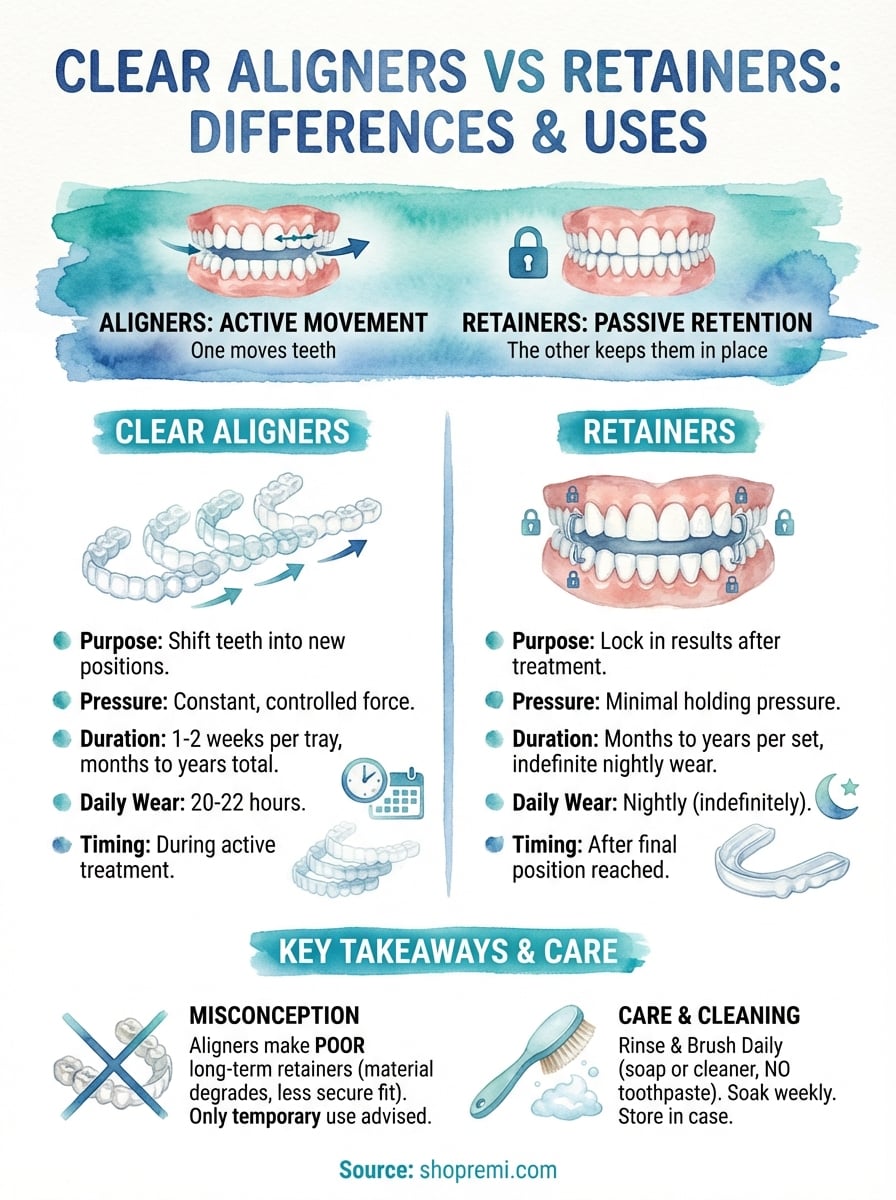
Clear aligners apply constant, controlled pressure to shift your teeth into new positions over time. Your orthodontist or dentist designs a series of these trays, each slightly different from the last, to guide your teeth through a planned movement sequence. You wear each set for one to two weeks before switching to the next tray in the series, and the gradual progression creates the tooth movement you want.
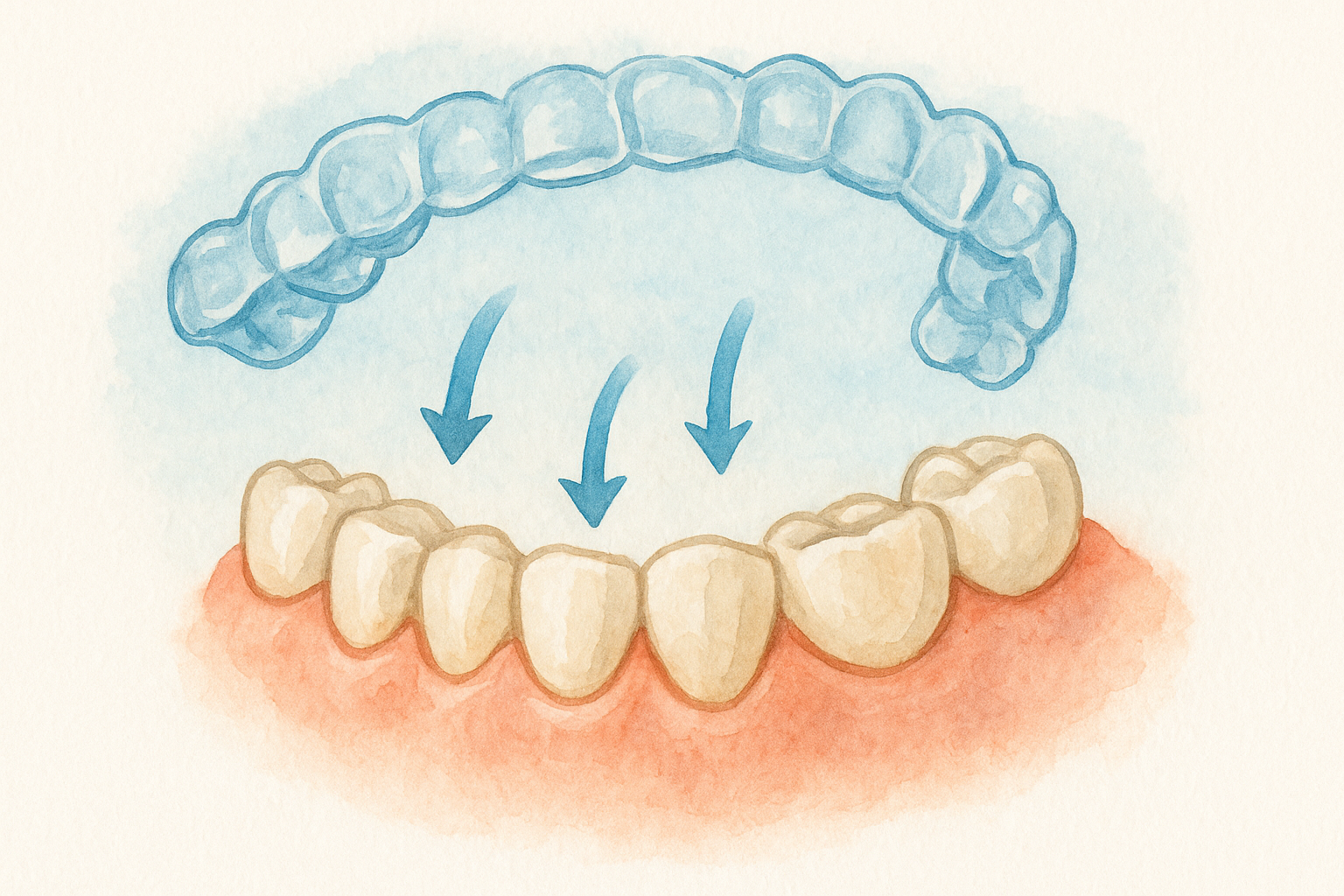
The material in aligners is engineered to push against specific teeth at precise angles. This pressure triggers your body's natural bone remodeling process, which allows teeth to move through your jawbone. Treatment typically runs six months to two years depending on how much correction you need, and you remove the aligners only for eating and cleaning.
Clear aligners actively reshape your smile by applying engineered pressure that triggers biological tooth movement over months of treatment.
How retainers preserve tooth position
Retainers hold your teeth exactly where they are after orthodontic treatment finishes. Your teeth naturally want to drift back toward their original positions because the bone and soft tissue around them take time to stabilize. A retainer prevents this backward movement by creating a physical barrier that keeps each tooth locked in place.
The clear aligners vs retainers distinction becomes obvious here: retainers exert minimal pressure and don't attempt to create new movement. Your dentist or orthodontist takes impressions or scans of your teeth after alignment is complete, then creates retainers that match those final positions perfectly. You wear them nightly (or as directed) to maintain your results indefinitely, since teeth can shift at any age without retention.
Retainers don't need frequent replacement like aligners do. You typically wear the same retainer set for months or years unless it wears out or breaks, making them a long-term maintenance tool rather than an active treatment device.
Key differences at a glance
The clear aligners vs retainers comparison centers on purpose, pressure, and duration. These three factors determine which device you need at any given point in your dental journey, and understanding them prevents confusion when your orthodontist discusses your treatment plan.
Purpose and pressure application
Aligners apply constant force designed to move teeth millimeter by millimeter through planned stages. Each tray in your aligner series creates specific pressure points that trigger bone remodeling and tooth movement. Retainers, in contrast, use minimal holding pressure just strong enough to prevent teeth from drifting back. You won't feel the same tightness with retainers because they're not trying to create new positions, they're simply maintaining existing ones.
Duration and replacement schedule
You wear each aligner set for one to two weeks before moving to the next tray in your treatment sequence. Your entire aligner journey requires dozens of trays over months or years, with each one slightly different from the last. Retainers follow a completely different timeline: you use the same retainer for months or even years until it wears out or breaks. Most people wear retainers every night indefinitely after treatment ends, while aligners require daily wear for 20 to 22 hours during active treatment.
Aligners work through a progression of trays over months, while retainers use the same set for years to lock in your results.
When you need each one and why timing matters
The clear aligners vs retainers timeline follows a strict sequence that your orthodontist plans from day one. Skipping stages or switching between the two devices at the wrong time can undo months of progress or leave your teeth vulnerable to shifting back. Understanding this timeline helps you protect your investment and maintain your results long-term.
During active tooth movement
You need clear aligners when your teeth require repositioning or straightening. This phase begins after your dentist or orthodontist diagnoses your alignment issues and creates a treatment plan. Aligners do the heavy lifting during this period, applying the precise pressure needed to guide teeth through bone and soft tissue into new positions. Treatment continues until your teeth reach the planned final alignment, which typically takes six months to two years depending on your case complexity.
After your teeth reach their final positions
Retainers become necessary the moment your aligner treatment ends. Your teeth sit in newly remodeled bone at this stage, and the surrounding tissue hasn't fully stabilized yet. Without a retainer, your teeth will drift back toward their original positions within weeks or months. You wear retainers every night indefinitely to prevent this regression, since teeth can shift at any age. Most orthodontists recommend permanent nightly wear rather than stopping after a few years, ensuring your straight smile stays exactly where you worked so hard to put it.
Aligners move your teeth during active treatment, while retainers preserve those results for life after treatment ends.
Can you use an aligner as a retainer
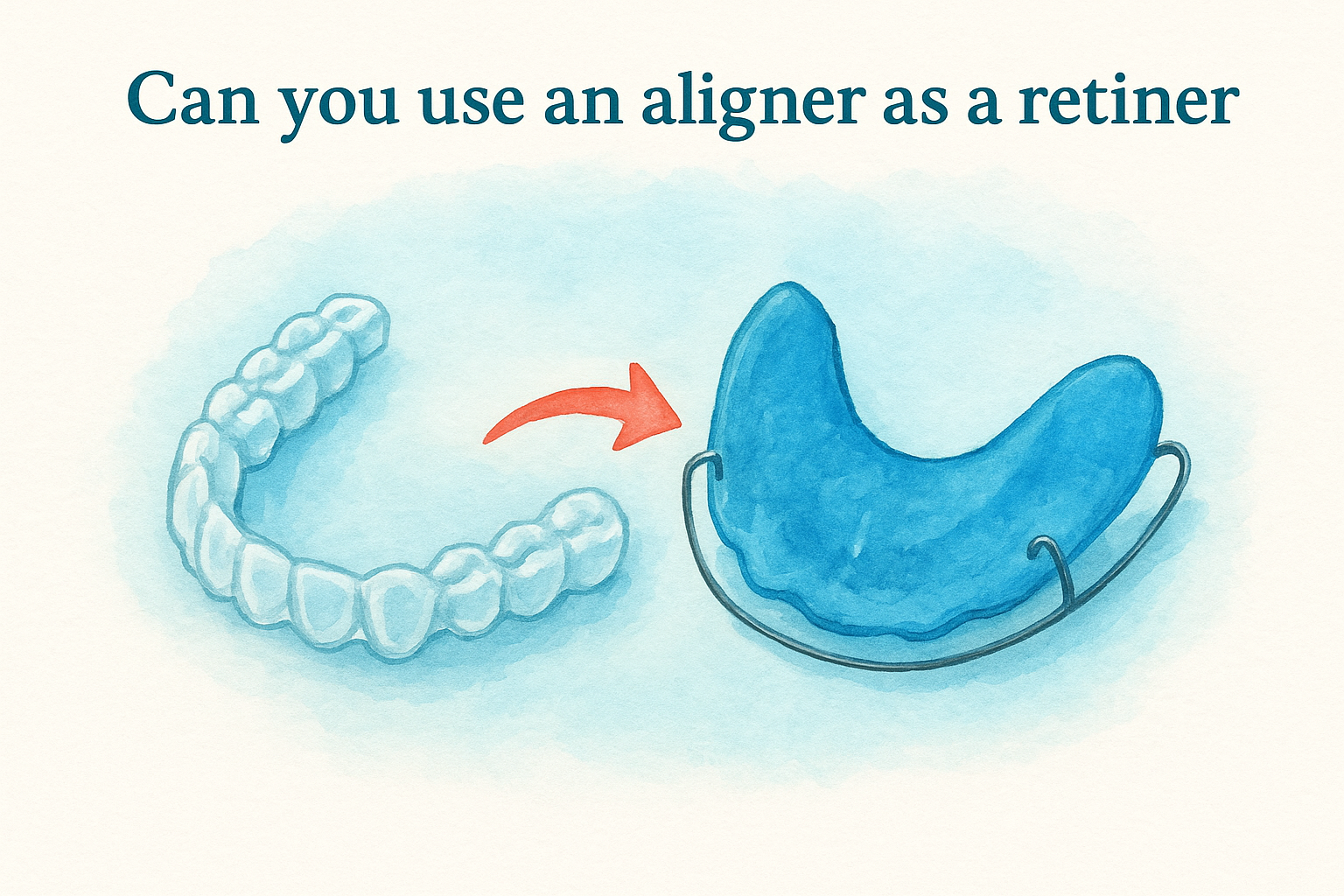
You might wonder whether your last aligner set can double as a retainer after treatment ends, especially since the clear aligners vs retainers debate often highlights their similar appearance. The short answer: aligners make poor long-term retainers because they're designed for a completely different job, and using them beyond their intended purpose creates serious problems.
Why aligners fail as long-term retainers
Aligner material breaks down faster than retainer material because it's engineered for temporary wear during active treatment. Your aligners typically last one to two weeks before you switch to the next set, and the plastic starts to lose its shape and strength after that brief period. Using a worn-out aligner as a retainer means you're relying on degraded material that can't hold your teeth securely in position.
The fit also becomes an issue. Aligners create slight gaps to allow for planned tooth movement, while retainers fit snugly with no movement allowance. This difference means an aligner won't lock your teeth as effectively as a purpose-built retainer.
The temporary exception
Your orthodontist may tell you to wear your final aligner set for a few days or weeks while your custom retainer gets manufactured. This short-term use works fine because you're only bridging a brief gap between treatment phases. Your aligner provides enough hold to prevent immediate shifting during this waiting period, but you should never extend this arrangement beyond what your dentist recommends.
Using aligners as permanent retainers risks tooth shifting because the material degrades and the fit allows unwanted movement.
Care, cleaning, and replacement tips
The clear aligners vs retainers comparison extends to maintenance, since each device requires different cleaning approaches and replacement schedules. Proper care protects your investment and ensures your dental appliance works effectively throughout its lifespan, whether you're wearing aligners during active treatment or retainers to maintain your results.
Daily cleaning routines
You should rinse your aligner or retainer every time you remove it to prevent saliva and bacteria from drying on the surface. Brush the device gently with a soft-bristled toothbrush and clear, antibacterial soap or non-abrasive denture cleaner twice daily. Avoid toothpaste because its abrasive ingredients scratch the plastic, creating tiny grooves where bacteria can hide and multiply.
Soaking your retainer or aligner in a cleaning solution once or twice per week removes buildup that brushing alone misses. Products like Remi's Night Guard Cleaning + Teeth Whitening Foam simplify this process by cleaning and whitening simultaneously, or you can use denture tablets dissolved in water. Store your device in its protective case when you're not wearing it to prevent damage and contamination.
Regular cleaning prevents bacterial buildup that can cause bad odors, discoloration, and potential oral health issues.
When to replace them
Aligners get replaced every one to two weeks as part of your treatment plan, so wear and tear isn't a concern. Retainers last much longer, typically six months to several years depending on how well you care for them. Replace your retainer immediately if you notice cracks, warping, or a loose fit, since damaged retainers can't hold your teeth properly in position.
Final takeaways
The clear aligners vs retainers distinction is straightforward once you understand their purposes. Aligners actively move your teeth during treatment, while retainers preserve those results afterward. You need both at different stages of your dental journey, and using the wrong device at the wrong time undermines your progress.
Proper care extends the life of both devices, but retainers require the most attention since you'll wear them indefinitely. Daily cleaning and safe storage protect your investment and keep your mouth healthy. When your retainer shows signs of wear, replace it immediately to prevent your teeth from shifting back.
If you've completed orthodontic treatment and need a quality retainer to maintain your results, Remi's custom clear retainers provide dentist-quality fit at a fraction of traditional costs. Our at-home impression kit makes the process simple, and you'll have your custom retainer delivered directly to your door.

