
 Guards + Retainers
 Custom Night Guard
 Retainer
 Emergency Order

 Whitening
 Whitening Kit
 Teeth Whitening Gel
 Dual-Action Foam
 Cleaning + Care
 Ultrasonic Cleaner Pro
 Water Flosser
 UV Toothbrush Sanitizer
 Accessories
 Guard Removal Tool
 Replacement Nozzles

You just got your clear retainers, and lunchtime rolls around. So, can you eat with clear retainers still in? The short answer is no, and doing so can lead to cracked plastic, trapped food particles, and bacterial buildup that puts both your retainer and your teeth at risk.
It's a common question, especially for anyone new to wearing removable retainers. At Remi, we make custom clear retainers designed to fit your teeth precisely, so the last thing we want is for a snacking habit to cut their lifespan short. Understanding how to handle meals, drinks, and cleaning routines will help you protect your investment and your smile.
This guide breaks down exactly why eating with clear retainers is a bad idea, what can happen if you do, and the best practices to keep your retainers clean and intact for as long as possible.
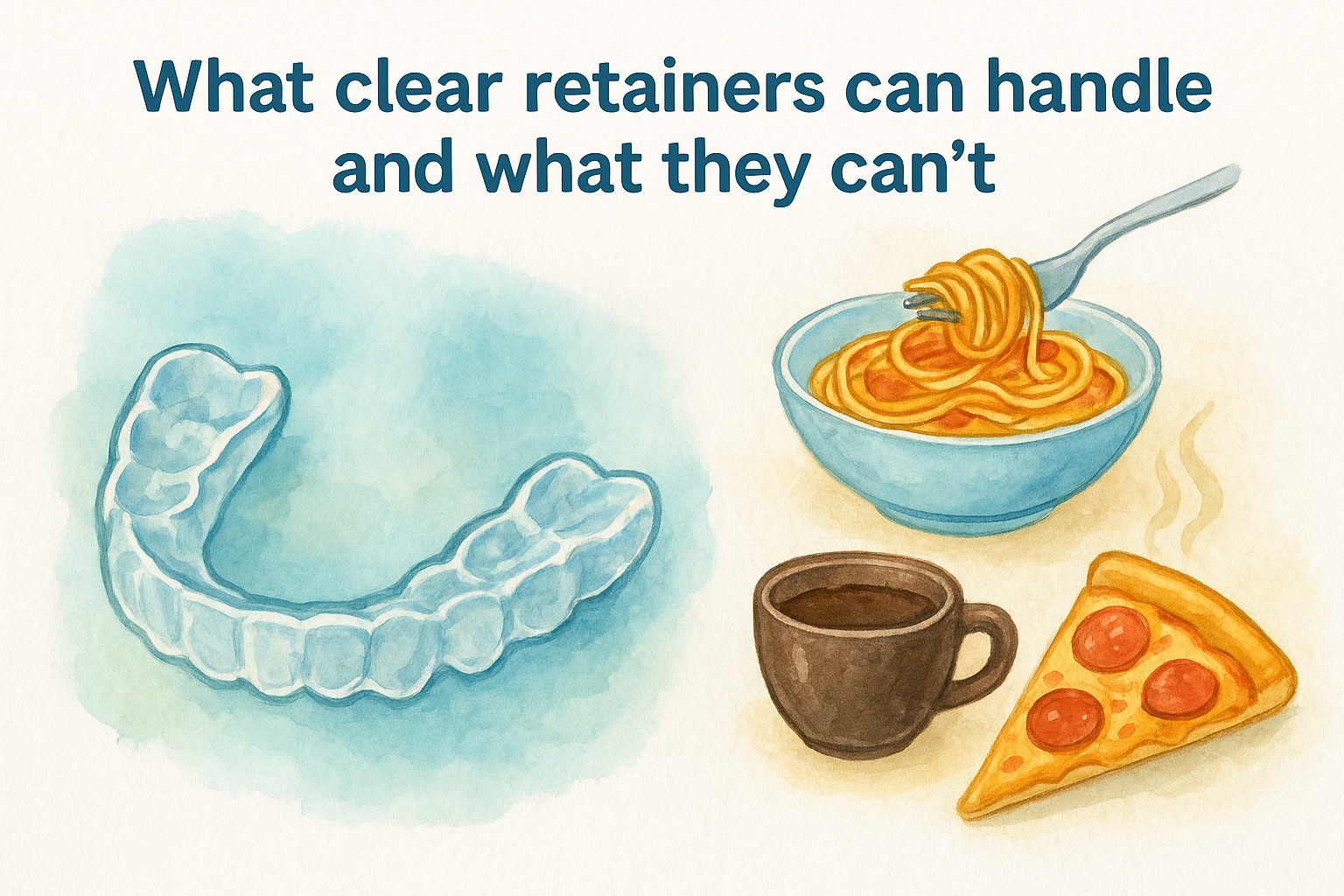
What clear retainers can handle and what they can't
Clear retainers are made from thin thermoplastic material, typically between 1mm and 2mm thick. That material is strong enough to hold your teeth in position overnight or throughout the day, but it was never designed to withstand the force, heat, and friction that come with chewing food.
What they're built to do
Your retainer's job is straightforward: keep your teeth from shifting after orthodontic treatment. The plastic conforms tightly to the shape of your teeth, applying gentle, consistent pressure that prevents movement. This works well when your mouth is at rest, but chewing introduces uneven biting forces that the material simply isn't engineered to absorb.
Clear retainers perform well in these situations:
- Sleeping with them in overnight
- Wearing them during low-activity periods
- Speaking and drinking plain, room-temperature water
Where the material breaks down
When you wonder can you eat with clear retainers in place, the real issue is what happens to the plastic under stress. Even soft foods create enough pressure to warp or crack the tray, especially along the thinner edges near your gum line. Hot food and drinks add another layer of risk because heat causes the plastic to soften and distort, meaning your retainer no longer fits correctly once it cools.
A poorly fitting retainer stops doing its job, and wearing a warped tray can actually push your teeth in the wrong direction.
Staining is the third concern. Colored foods and drinks like coffee, tea, tomato sauce, and berries contain pigments that bond directly to the plastic. Once the tray stains, brushing alone rarely clears the discoloration. Beyond appearance, food debris trapped under the tray creates a breeding ground for bacteria that causes cavities and gum irritation.
A quick breakdown of what damages retainers
| Threat | Why it causes damage |
|---|---|
| Hard or crunchy food | Cracks or splits the plastic |
| Hot beverages | Warps the tray shape |
| Sugary drinks | Pools against teeth under the tray |
| Colored foods | Stains the plastic permanently |
Step 1. Remove them for meals and most drinks
The single most important habit you can build is taking your retainers out before eating anything. It takes five seconds and prevents cracked trays, warped plastic, and bacteria buildup all at once. If you are still asking yourself can you eat with clear retainers in, treat the answer as a hard rule: the retainers come out first, every time.
When to take them out
Remove your retainers before every meal, snack, and most beverages. Solid food of any kind creates bite pressure that can crack the tray, and even something soft like a banana introduces sugar that pools underneath the plastic against your teeth. The list below covers the specific situations that require removal:
- All meals and snacks, including soft foods
- Hot drinks such as coffee, tea, or soup broth
- Sugary drinks including juice, soda, and sports drinks
- Alcoholic beverages, which can stain and dry out the plastic
Getting into this habit early protects the precise fit that makes your retainer effective in the first place.
What you can drink with them in
Plain, room-temperature water is the one exception. Water contains no sugar, no pigment, and no heat that would warp the tray, so drinking it while wearing your retainer is completely fine. Sparkling water is also acceptable as long as it is unflavored and unsweetened. Everything else goes on the removal list above.
Step 2. Store them safely while you eat
Taking your retainers out solves one problem, but where you put them next matters just as much. Leaving them on a napkin, a plate, or the edge of the sink exposes them to bacteria, physical damage, and accidental loss. A dedicated retainer case is the only safe storage spot during a meal, and building this habit protects the precise fit your retainer depends on.
Use a case, not a napkin or pocket
Every time you answer the question of can you eat with clear retainers by correctly removing them, the next move is placing them directly into your case. Hard-sided retainer cases protect the tray from being sat on, dropped, or crushed inside a bag. Soft pouches offer almost no crush resistance, so a rigid case is worth the small investment. Keep the case in a consistent spot, such as a bag pocket or your nightstand, so it is always within reach at mealtimes.
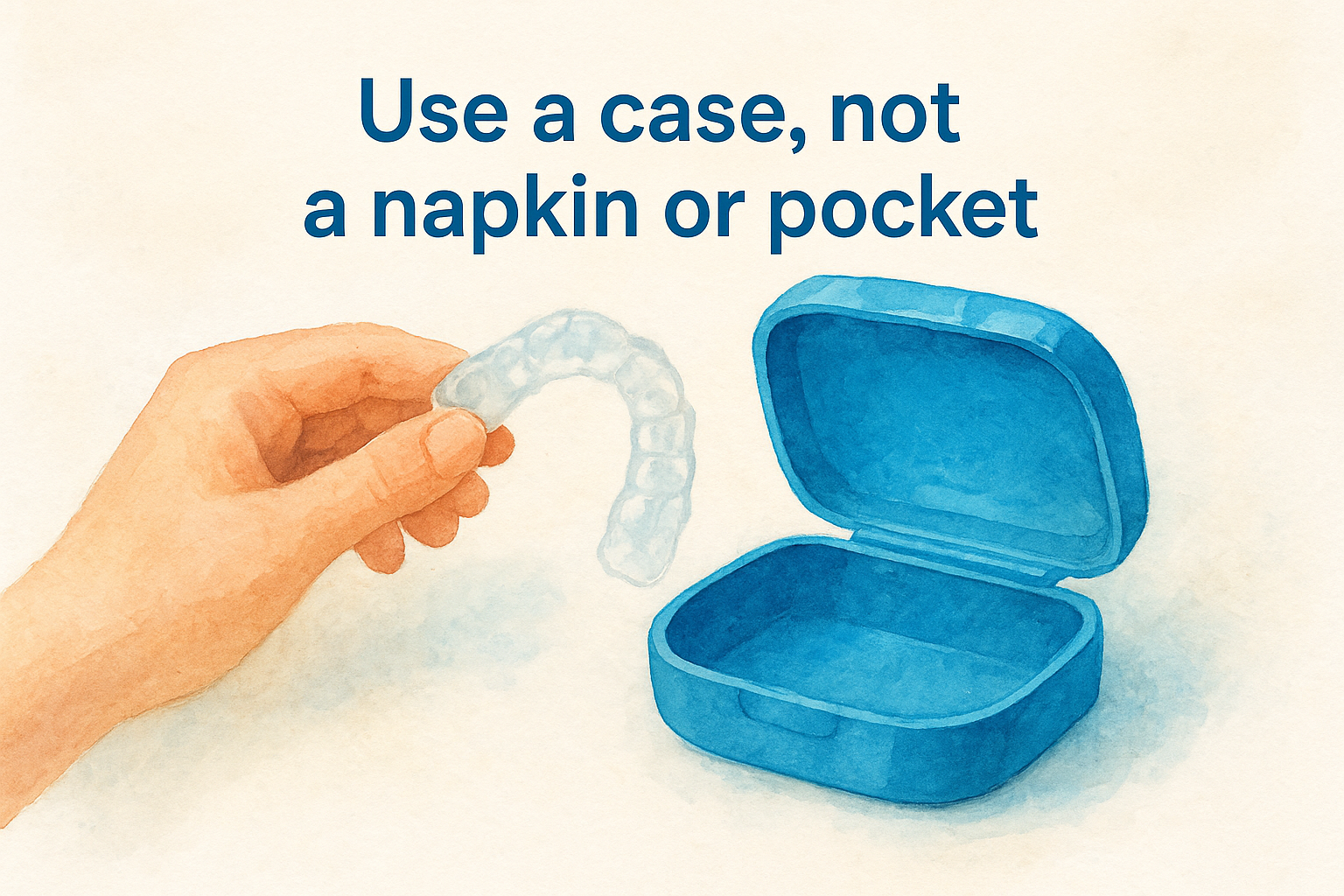
Wrapping your retainer in a napkin is one of the most common ways people accidentally throw it away at restaurants.
A few habits that protect your retainer during storage:
- Rinse the tray with cool water before placing it in the case
- Close the case fully after every use
- Keep a backup case in your work bag or purse for meals away from home
Avoid heat and direct sunlight
Your retainer can warp even while stored if the case sits in a hot car, near a stove, or in direct sunlight. High temperatures distort the thermoplastic permanently, so store your case somewhere cool and shaded between meals.
A warped retainer no longer fits correctly and can push your teeth out of position instead of holding them in place. If your case gets accidentally exposed to heat, inspect the tray carefully before reinserting it.
Step 3. Clean your teeth and trays before reinserting
Once you finish eating, reinserting your retainer over food residue or unbrushed teeth creates bacterial buildup that damages both your oral health and the tray itself. Even people who already know you can't eat with clear retainers in sometimes skip the post-meal cleaning step, which causes nearly the same problems as wearing them during a meal. Taking two minutes to clean before you put the tray back in protects your enamel and keeps the plastic clear and odor-free.
Brush and floss your teeth first
Before reinserting, brush your teeth thoroughly and floss to remove any food particles trapped between them. If you're away from home without a toothbrush, rinsing your mouth vigorously with water for 30 seconds is an acceptable temporary fix, though brushing remains the better option. Skipping this step means trapping bacteria and sugar directly against your enamel under a tight-fitting tray, which accelerates cavity formation.
Reinserting your retainer over unbrushed teeth essentially seals harmful bacteria against your enamel for hours at a time.
Rinse your tray before it goes back in
Even if your retainer was sitting in a clean case, rinse the tray under cool water before placing it back in your mouth. A quick rinse removes dust, saliva residue, or case debris that may have collected during the meal. For a deeper clean, use a soft-bristled toothbrush with gentle, unscented soap rather than toothpaste, which contains abrasives that scratch the plastic and cloud the tray over time. This routine takes under a minute and makes a noticeable difference in how long your retainer stays fresh.
Step 4. Handle slip-ups, damage, and replacements
Mistakes happen. Even if you know you can't eat with clear retainers in, you will occasionally forget and take a bite before removing them. What you do in the next few minutes determines whether the tray survives or needs replacing.
When you eat with them in by mistake
Remove your retainer immediately and rinse it under cool water to clear away any food particles. Check the tray closely under good lighting for cracks, warping, or sharp edges. A single soft bite may leave the retainer intact, but any visible distortion or cracking means the tray no longer fits correctly and should be replaced rather than worn again.
Wearing a cracked or warped retainer is worse than wearing none at all because it can apply uneven pressure and shift your teeth out of position.
Follow these steps after an accidental eating incident:
- Rinse the tray immediately with cool water
- Brush and floss your teeth before reinserting
- Inspect the tray for cracks, sharp edges, or visible warping
- If the fit feels loose or tight in a new spot, stop wearing it and order a replacement
Recognizing damage and when to replace
Not all damage shows up as a visible crack. If your retainer feels uncomfortable, sits unevenly, or develops a persistent odor that cleaning does not fix, those are signs the tray has degraded. Most clear retainers last six to twelve months with proper care, but rough handling or repeated exposure to heat shortens that window considerably. Order a replacement as soon as you notice fit issues rather than waiting until the tray breaks completely.
Keeping your retainer and smile on track
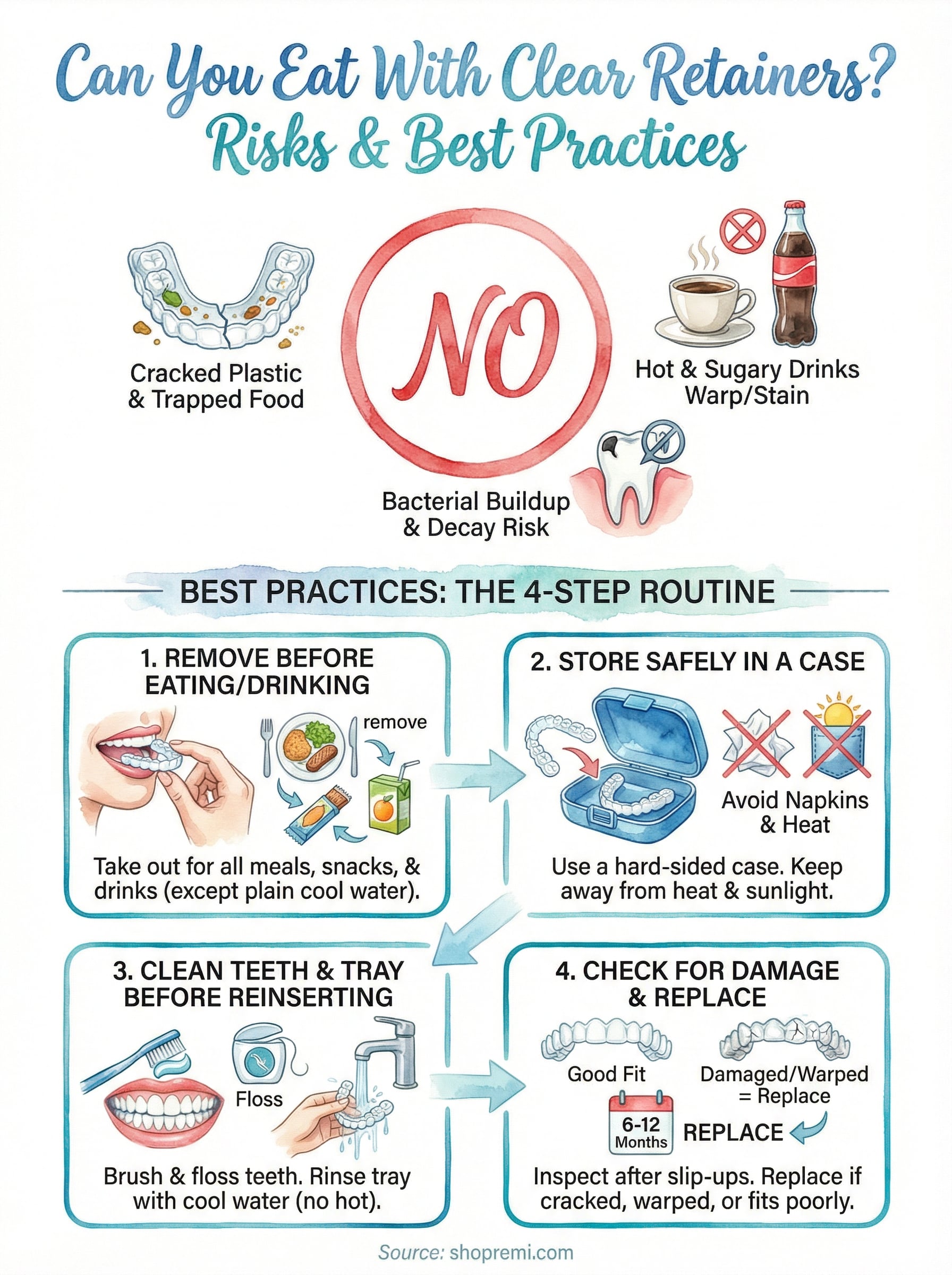
The answer to can you eat with clear retainers never changes: take them out before every meal, store them in a hard-sided case, clean your teeth and tray before reinserting, and replace the tray when you notice damage or a poor fit. These four steps protect both the plastic and your long-term teeth alignment.
Consistency is what separates people who get years of use from their retainers from those who replace them every few months. Small daily habits like rinsing your tray before storing it and keeping a backup case in your bag add up quickly. Your retainer does its job when you treat it right, and your teeth stay exactly where your orthodontic treatment left them. If you need a fresh start or a replacement, order a custom clear retainer from Remi and get a precise, dentist-quality fit delivered straight to your door.

