
 Guards + Retainers
 Custom Night Guard
 Retainer
 Emergency Order

 Whitening
 Whitening Kit
 Teeth Whitening Gel
 Dual-Action Foam
 Cleaning + Care
 Ultrasonic Cleaner Pro
 Water Flosser
 UV Toothbrush Sanitizer
 Deep Clean + Freshening Tablets
 Accessories
 Guard Removal Tool
 Replacement Nozzles
 Bundles

If you've ever wondered whether a clear retainer vs night guard serves the same purpose, you're not alone. Both appliances look similar, clear, custom-fitted, and worn over your teeth, but they're designed for completely different jobs. One keeps your teeth in place after orthodontic treatment, while the other protects against the damage caused by grinding and clenching.
Choosing the wrong appliance (or assuming one can replace the other) often leads to broken retainers, ongoing tooth damage, or wasted money. At Remi, we make both custom night guards and clear retainers, so we see this confusion regularly. Understanding what each device actually does helps you protect your investment in your smile and your sleep.
This guide breaks down the key differences between retainers and night guards, covering materials, durability, fit, and when you might need both. By the end, you'll know exactly which appliance matches your needs.
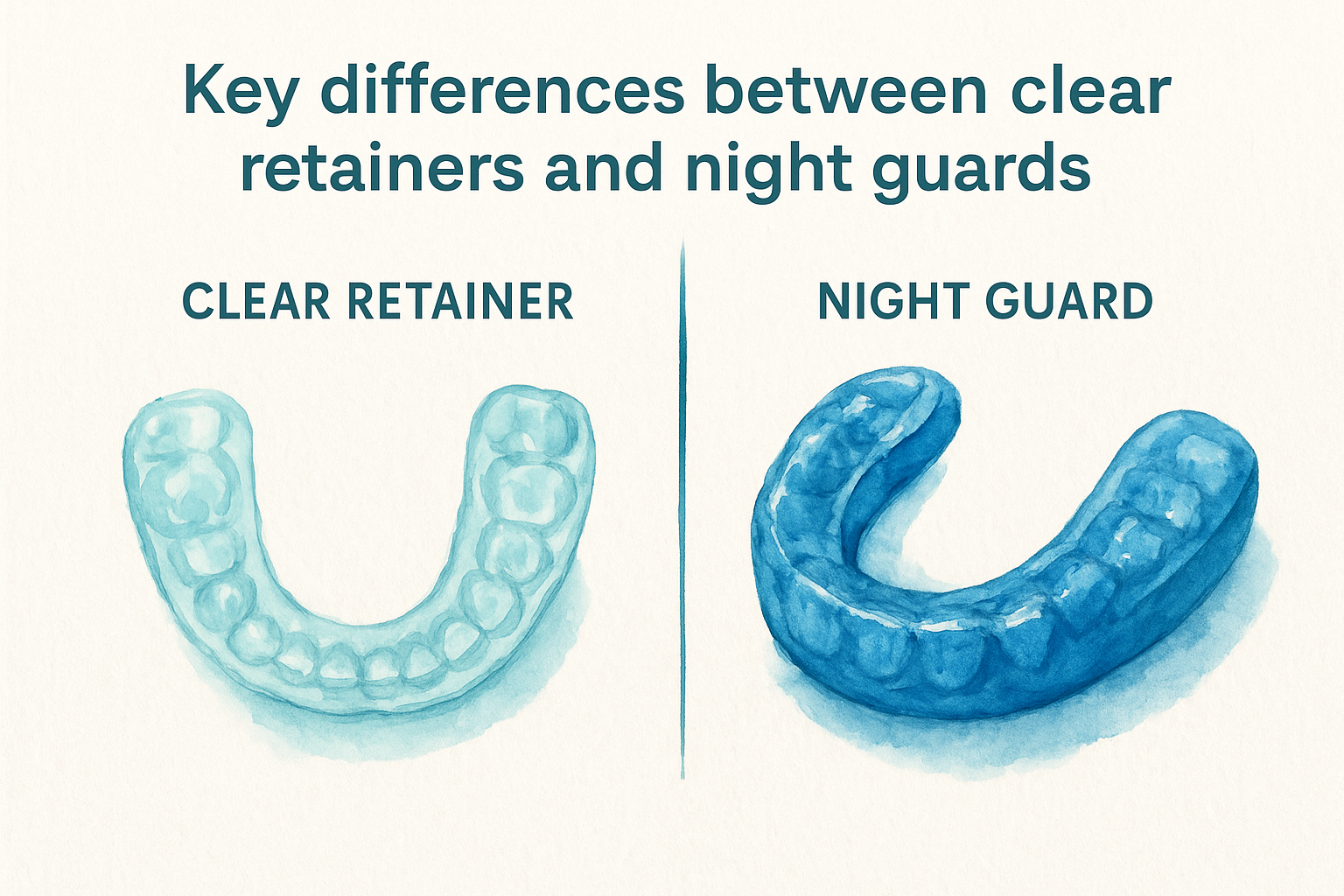
Key differences between clear retainers and night guards
The clear retainer vs night guard debate comes down to three major distinctions: material thickness, design purpose, and how long each lasts. While both appliances fit over your teeth, they're engineered differently to handle specific tasks. Understanding these differences prevents you from using the wrong tool for the job.
Material thickness and durability
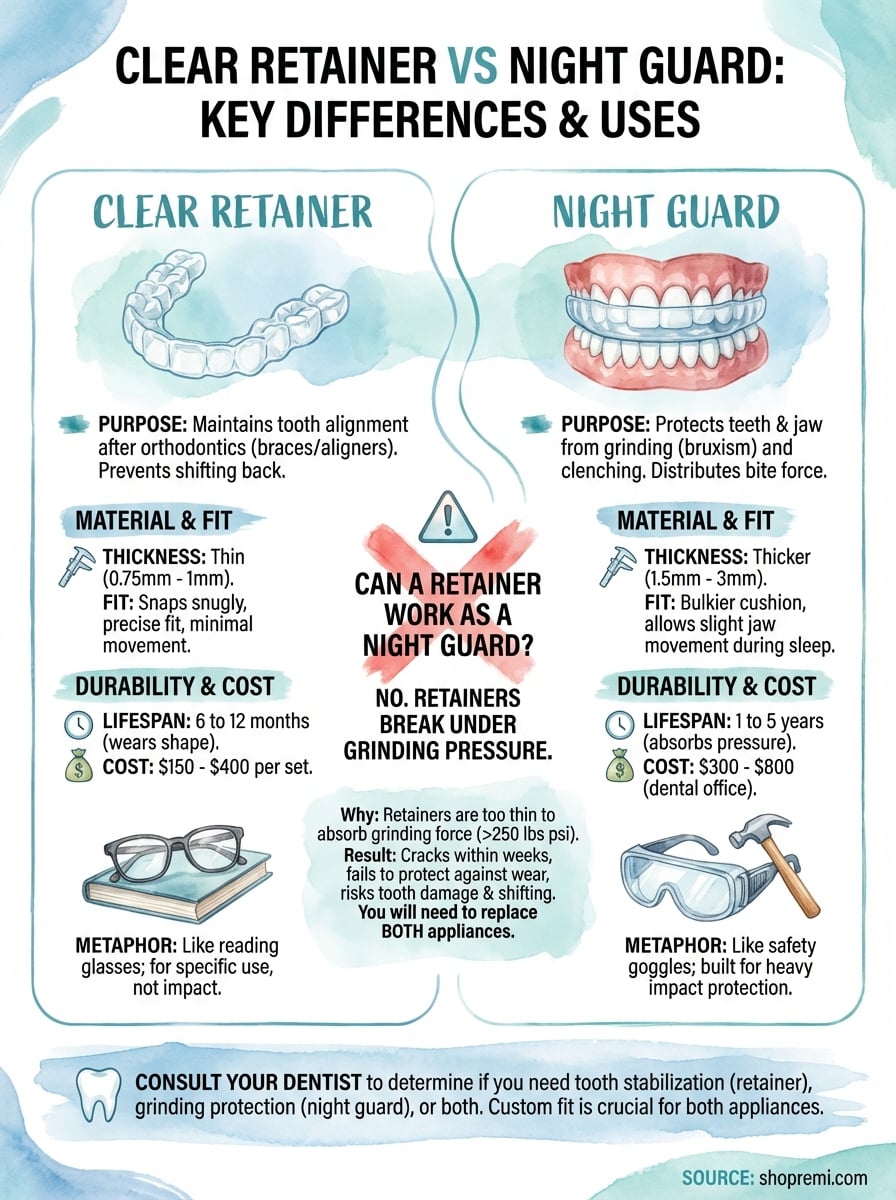
Clear retainers typically measure 0.75mm to 1mm thick, making them lightweight enough for all-day wear without discomfort. Night guards range from 1.5mm to 3mm thick depending on whether you grind lightly or heavily. This extra thickness acts as a protective cushion that absorbs grinding forces, while retainers simply hold your teeth in position with minimal material. You'll notice the difference immediately when you compare them side by side, as night guards feel substantially bulkier in your mouth.
Design purpose and fit
Retainers focus on maintaining tooth alignment after braces or clear aligner treatment by applying gentle, consistent pressure. Night guards prioritize surface protection and bite distribution, spreading the force of grinding across your entire arch instead of concentrating it on individual teeth. The fit differs too, as retainers snap snugly against your teeth for precision positioning, while night guards allow slight movement to accommodate jaw motion during sleep.
Wearing a thin retainer to protect against grinding forces is like using a rain jacket in a snowstorm; it's simply not built for that level of stress.
Cost and replacement timeline
You'll replace a clear retainer every 6 to 12 months under normal conditions, as the thin material gradually loses its shape from daily wear. Night guards last 1 to 5 years depending on grinding severity and thickness, with heavier grinders wearing through them faster. Retainers typically cost $150 to $400 per set at a dental office, while custom night guards range from $300 to $800. The price difference reflects both the material costs and the durability requirements, as night guards must withstand hundreds of pounds of grinding pressure each night.
When you need a clear retainer vs a night guard
Your dentist will recommend a clear retainer if you've recently finished orthodontic treatment and need to prevent your teeth from shifting back to their original positions. Retainers are maintenance devices that preserve the results of braces or clear aligners, typically worn full-time initially, then transitioned to nighttime-only wear after several months. You need a retainer when your teeth have been actively moved and require stabilization in their new positions.
Signs you need a night guard instead
You need a night guard when you grind your teeth (bruxism) or clench your jaw during sleep, which causes worn enamel, jaw pain, or morning headaches. Your dentist might notice flattened tooth surfaces or chips during routine exams, or you might wake up with sore jaw muscles and unexplained tooth sensitivity. Night guards address these grinding forces rather than tooth positioning concerns.
If you wake up with headaches or your partner hears grinding sounds at night, you need a night guard regardless of whether you've had orthodontic work.
When you might need both appliances
The clear retainer vs night guard decision isn't always either-or. You need both appliances if you've completed orthodontic treatment and grind your teeth. Your retainer maintains tooth alignment while your night guard protects against grinding damage, though you'll wear them at different times or alternate nights based on your dentist's recommendation. Some patients wear a retainer during the day and switch to a night guard before bed.
Can a clear retainer work as a night guard
A clear retainer cannot effectively replace a night guard, even though both appliances fit over your teeth. The thin material of retainers (0.75mm to 1mm) quickly breaks down under grinding forces that can exceed 250 pounds of pressure per square inch. You'll crack or puncture your retainer within weeks if you use it to protect against bruxism, leaving you without tooth alignment support and no grinding protection.
Why retainers break under grinding pressure
Your retainer's design focuses on gentle, consistent pressure to maintain tooth position, not on absorbing impact forces. Night grinding creates lateral and vertical forces that retainers weren't engineered to handle. The material compresses, warps, and develops stress fractures that compromise both its protective ability and its orthodontic function. Patients who grind through retainers often need replacement every few weeks instead of the normal 6 to 12 months.
Using a retainer as a night guard is like using reading glasses as safety goggles; the form factor looks similar, but the protection level is completely inadequate.
Long-term damage risks
Grinding through a thin retainer exposes your teeth to the same damage you're trying to prevent, including enamel wear, chips, and fractures. The worn retainer also loses its ability to hold your teeth in position, allowing them to shift while simultaneously failing to protect against grinding. You end up needing both a replacement retainer and a proper night guard, doubling your costs when you could have addressed each issue correctly from the start.
How to choose the right option and fit
Your decision between a clear retainer vs night guard starts with identifying your primary concern: maintaining tooth alignment after orthodontic work or protecting against grinding damage. Schedule a dental exam to assess both your bite alignment and any signs of bruxism, as your dentist can spot grinding patterns you might not notice yourself. The right choice directly impacts both your oral health outcomes and how much you'll spend on dental care over time.
Getting the right fit matters
Custom-fitted appliances work better than over-the-counter options for both retainers and night guards. You'll take dental impressions at home or visit a dental office for scans that capture your exact tooth positioning and bite pattern. Poor-fitting appliances slip during sleep, fail to provide adequate protection, and cause gum irritation or tooth movement you're trying to prevent.
A properly fitted appliance should feel snug but comfortable, with no gaps between the material and your teeth that allow unwanted movement or reduce protection.
Testing comfort before committing
Ask your dentist about trial periods or adjustment policies before paying full price for custom appliances. Your night guard might need bite adjustments after your jaw muscles adapt to the new position, while retainers should fit precisely from day one. Discomfort lasting beyond the first few nights signals fit problems that require professional adjustment rather than something you'll simply get used to wearing.
Care, cleaning, and how long each lasts
Your cleaning routine and replacement schedule differ significantly between retainers and night guards due to their material thickness and wear patterns. Proper maintenance extends the life of both appliances and prevents bacterial buildup that causes bad breath, discoloration, and potential oral infections. The clear retainer vs night guard comparison includes different durability expectations based on how each device handles daily stress.
Daily cleaning routines
You should rinse your retainer or night guard with cool water immediately after removing it each morning to prevent saliva from hardening on the surface. Brush the appliance gently with a soft-bristled toothbrush and clear, unscented soap (never toothpaste, which scratches the material and creates bacterial hiding spots). Deep clean either appliance weekly by soaking it in a denture cleaner solution or specialized retainer cleaning foam for 15 to 30 minutes, then rinse thoroughly before your next use.
Heat warps both retainers and night guards permanently, so always use room temperature or cool water when cleaning and never leave them in hot cars or near heaters.
Replacement timelines and costs
Your thin retainer needs replacement every 6 to 12 months as normal wear causes the material to lose its shape and retention ability. Night guards last 1 to 5 years depending on grinding severity, with heavy grinders wearing through thicker guards faster than light clenchers. Budget for retainer replacements annually and night guard replacements every 2 to 3 years on average, setting aside funds before your current appliance shows visible damage or fit problems.
Quick recap and next steps
The clear retainer vs night guard choice depends entirely on your specific dental needs. Retainers maintain tooth alignment after orthodontic treatment with thin, lightweight material designed for gentle positioning. Night guards protect against grinding and clenching with thicker, more durable construction that absorbs substantial bite forces. Using one appliance to replace the other damages both your oral health and your wallet through premature wear, broken devices, and potential tooth damage.
Schedule a dental exam if you're unsure which appliance you need or whether you require both. Your dentist will assess your bite pattern, tooth alignment, and grinding signs to recommend the right solution. Once you know what you need, consider getting your custom night guard from Remi if grinding is your concern, which delivers dental-grade protection at 80% less than traditional dental office costs. The at-home impression process takes minutes, and your custom-fitted guard arrives at your door within weeks, protecting your teeth without the premium dental office markup.
