


Waking up with a sore jaw, headaches, or worn-down teeth often points to one culprit: bruxism. If you've been grinding or clenching your teeth, whether during sleep or throughout the day, you're not alone. Millions of Americans deal with this condition, and understanding what is bruxism treatment can help you find relief before the damage gets worse. The good news? Multiple effective options exist, ranging from professional dental interventions to simple lifestyle changes.
Treatment approaches vary based on severity, underlying causes, and personal preferences. Some people benefit from stress management techniques, while others need physical barriers like custom night guards to protect their teeth from grinding forces. At Remi, we specialize in providing affordable, professionally-made custom night guards that fit your teeth precisely, one of the most common and effective treatments available.
This guide breaks down your options so you can make an informed decision about managing bruxism and protecting your smile long-term.
Why bruxism treatment matters
Ignoring bruxism doesn't make it disappear. Instead, untreated teeth grinding progressively damages your oral health and overall wellbeing. Understanding what is bruxism treatment and taking action early prevents problems that become exponentially more expensive and painful to fix later. Your teeth can withstand normal chewing forces, but the sustained pressure from grinding exceeds what enamel can handle, leading to cracks, chips, and premature wear that require extensive dental work.
Physical consequences you can't ignore
Bruxism creates a domino effect throughout your mouth and jaw. Constant grinding wears down tooth enamel, exposing the softer dentin underneath and increasing your risk of cavities and sensitivity. You might notice your teeth becoming shorter, flatter, or developing visible fractures that compromise their structural integrity. Beyond your teeth, the temporomandibular joint (TMJ) takes significant stress from repeated clenching, potentially causing chronic jaw pain, clicking sounds, or difficulty opening your mouth fully.
Treatment prevents irreversible damage that no amount of dental work can completely restore to your original tooth structure.
Muscle tension from bruxism radiates beyond your jaw. Many people experience frequent tension headaches, earaches, and neck pain without realizing bruxism is the root cause. Your facial muscles work overtime during grinding episodes, leading to soreness and fatigue that affects your ability to eat comfortably or speak clearly.
Impact on daily life
The consequences extend into your everyday experiences. Poor sleep quality affects both you and your partner, as grinding noises can be surprisingly loud and disruptive throughout the night. You wake up feeling unrested, which impacts your concentration, mood, and productivity during the day. The financial burden also adds up quickly, with untreated bruxism eventually requiring crowns, root canals, or even tooth replacements that cost thousands of dollars compared to preventive treatment options.
How bruxism gets diagnosed
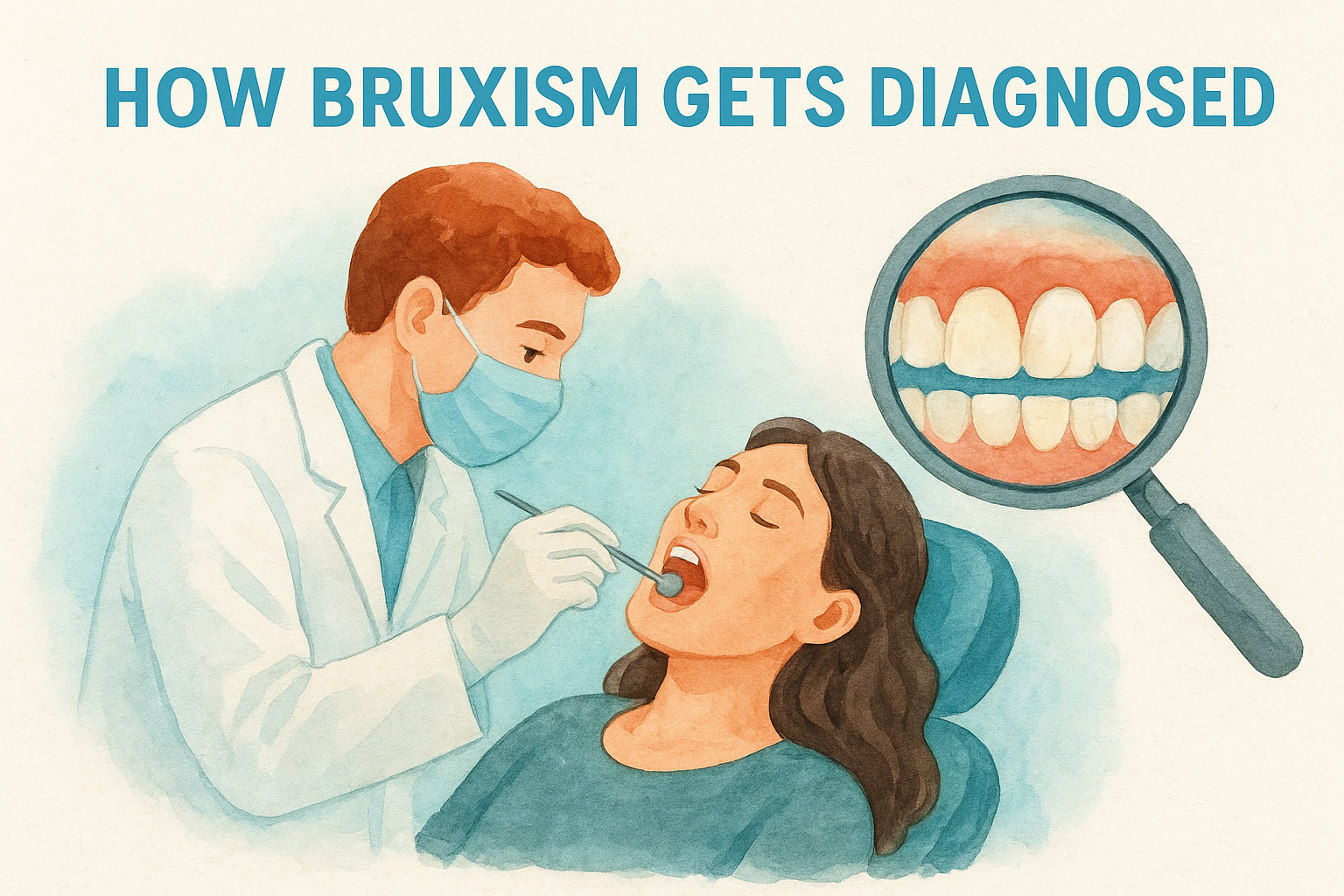
Diagnosing bruxism typically starts with a routine dental examination, though sometimes you might seek help specifically for jaw pain or worn teeth. Your dentist looks for telltale physical signs during your checkup, and no special equipment is usually required for an initial diagnosis. Understanding what is bruxism treatment begins with accurate identification of the problem, which relies on both visual inspection and your description of symptoms.
What your dentist examines
Your dentist checks for visible wear patterns on your teeth, including flattened chewing surfaces, chips, cracks, or unusually smooth enamel. They also look for indentations along the side of your tongue and damage to the inside of your cheeks, which indicate repeated clenching pressure. The jaw muscles get palpated to detect tenderness or tightness, and your dentist tests your temporomandibular joint for clicking, popping, or restricted movement that suggests grinding-related stress.
Physical evidence on your teeth and jaw provides the clearest diagnostic picture, often before you realize damage has occurred.
Questions that help identify causes
Your dentist asks about sleep quality, stress levels, and whether anyone has mentioned grinding noises while you sleep. They inquire about morning symptoms like headaches, jaw soreness, or tooth sensitivity that typically accompany nocturnal bruxism. Questions about caffeine intake, alcohol consumption, and medications help identify contributing factors. Some dentists recommend sleep studies if they suspect sleep apnea or other disorders that frequently occur alongside bruxism.
Bruxism treatment options that actually work
Understanding what is bruxism treatment means knowing you have multiple proven approaches that target different aspects of the condition. The most effective strategy often combines several methods rather than relying on a single solution. Your dentist typically recommends starting with conservative treatments before considering more invasive options, giving your body time to respond to gentler interventions while protecting your teeth from further damage.
Dental appliances and guards
Custom night guards represent the most common and effective first-line treatment for protecting your teeth from grinding damage. These devices create a barrier between your upper and lower teeth, absorbing the force of clenching while you sleep. Professional custom-fitted guards outperform generic pharmacy versions because they match your unique bite pattern and stay securely in place throughout the night. At Remi, we provide professionally-made custom night guards at a fraction of traditional dental office costs through a convenient at-home impression process.
Night guards don't stop the grinding habit itself, but they prevent the physical damage that makes bruxism a serious dental concern.
Stress management techniques
Since stress often triggers or worsens bruxism, mindfulness practices, regular exercise, and relaxation techniques help reduce grinding episodes. Cognitive behavioral therapy addresses underlying anxiety that contributes to jaw clenching. Establishing a calming bedtime routine signals your body to relax before sleep, potentially reducing nocturnal bruxism intensity.
How to choose the right mouth guard
Selecting the right mouth guard directly impacts how well your bruxism treatment works and whether you'll actually wear it consistently. When evaluating what is bruxism treatment options, the mouth guard you choose becomes your nightly defense against grinding damage. The right guard fits comfortably, stays in place, and provides adequate protection without causing gagging or jaw discomfort that disrupts your sleep.
Material and thickness options
Mouth guards come in soft, dual-laminate, or hard acrylic materials, each suited to different grinding intensities. Soft guards work for light grinders but may encourage more chewing in moderate to severe cases. Hard acrylic guards provide maximum durability and work best for aggressive grinders who quickly destroy softer materials. Dual-laminate guards combine a soft interior for comfort with a hard exterior for protection, offering a middle ground that suits many people.
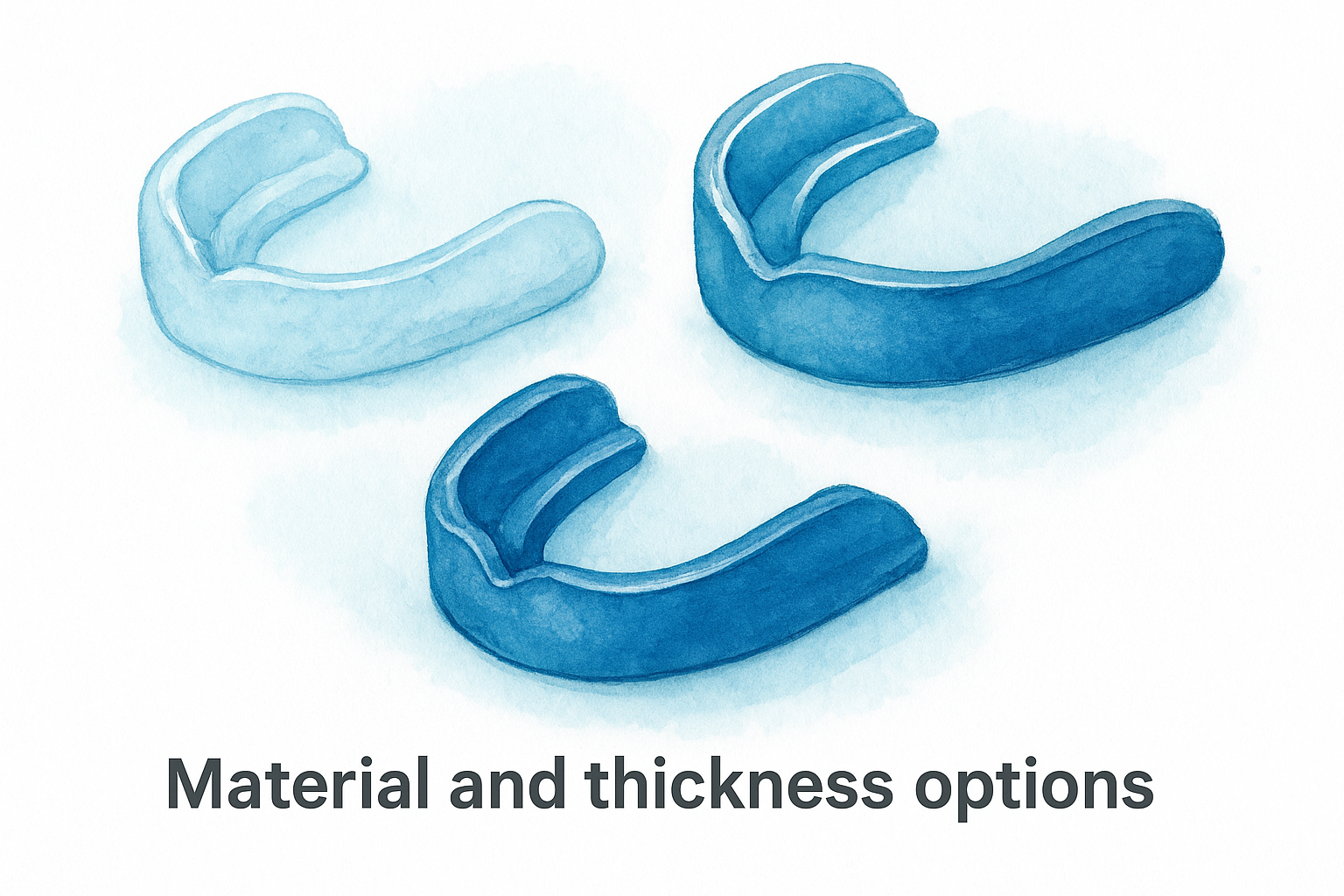
Thickness matters because guards that are too thin wear through quickly, while overly thick guards feel bulky and uncomfortable.
Custom versus over-the-counter choices
Generic boil-and-bite guards from pharmacies cost less upfront but rarely fit properly and often fall out during sleep. They bulk up your mouth unnecessarily and typically last only a few months. Custom-fitted guards made from dental impressions conform precisely to your teeth, staying secure throughout the night while maintaining a low profile that feels natural. At Remi, you get professionally-made custom guards without the high dental office prices through our convenient at-home impression kit.
When to see a dentist or doctor
Knowing when to seek professional help ensures you get appropriate treatment before bruxism causes irreversible damage. Schedule a dental appointment if you notice worn, chipped, or cracked teeth during your daily oral care routine. You should also see your dentist if jaw pain, headaches, or facial soreness persist for more than a week despite trying home remedies. Understanding what is bruxism treatment includes recognizing when professional intervention becomes necessary rather than continuing to manage symptoms on your own.
Signs you need immediate attention
Severe jaw pain that limits your ability to open your mouth fully requires prompt evaluation, as this may indicate temporomandibular joint disorder requiring specialized treatment. Seek help immediately if you experience tooth sensitivity to hot or cold that suddenly worsens, which could signal exposed nerves from grinding damage. Any clicking, popping, or locking of your jaw joint warrants professional assessment to prevent long-term complications.
Waiting to address severe symptoms often leads to more complex and expensive treatments than early intervention would have required.
Regular monitoring needs
Even with a night guard, schedule dental checkups every six months to monitor wear patterns and adjust your treatment approach. Your dentist tracks whether grinding improves, worsens, or causes new issues that need different interventions. Persistent bruxism despite conservative treatments may require referral to a sleep specialist or oral surgeon for evaluation of underlying conditions like sleep apnea.
Next steps
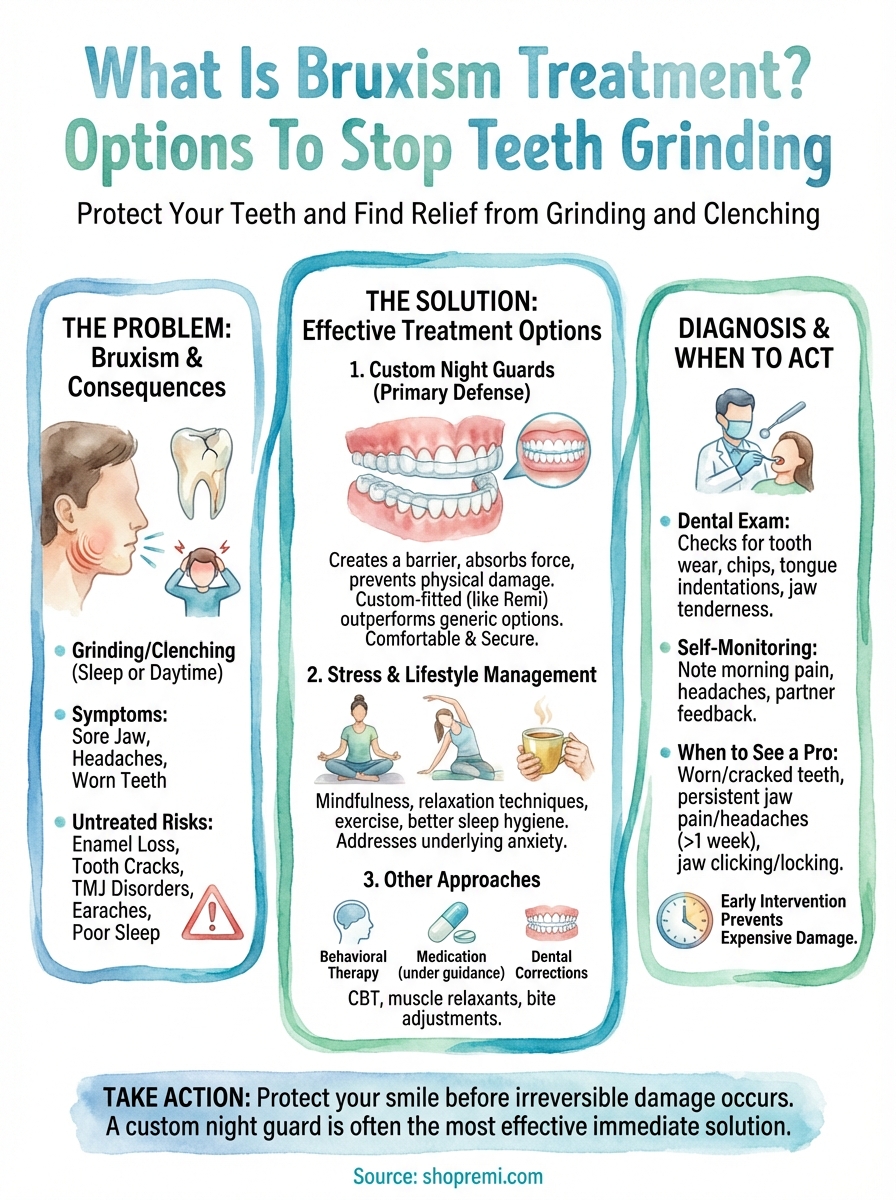
You now understand what is bruxism treatment involves and how multiple approaches work together to protect your teeth and reduce grinding damage. The sooner you take action, the less likely you'll face expensive dental repairs from worn enamel, cracked teeth, or jaw joint problems that develop over time.
Start by protecting your teeth tonight with a properly fitted night guard, the most effective immediate solution for preventing grinding damage. Track your symptoms, identify stress triggers, and implement relaxation techniques that help reduce clenching episodes throughout your day. Schedule a dental checkup if you haven't already, especially if you notice tooth wear or persistent jaw pain that doesn't improve with home care.
At Remi, we make professional bruxism treatment affordable and convenient through custom night guards delivered directly to your door. Our custom night guards cost 80% less than traditional dental offices while providing the same dental-grade protection your teeth need to stay healthy and strong for years to come.

