


You've probably seen water flossers on bathroom countertops, in dentist recommendations, or all over social media, but what is a water flosser used for, exactly? At its core, a water flosser is a handheld device that shoots a targeted stream of pressurized water between your teeth and along the gumline to flush out food particles, plaque, and bacteria that your toothbrush can't reach.
If you struggle with traditional string floss, whether it's the awkward finger wrapping, bleeding gums, or working around braces, implants, or other dental work, a water flosser can be a serious upgrade. Studies consistently show that water flossers remove significantly more plaque than string floss alone, especially in hard-to-reach areas. That's exactly why we designed the Remi Cordless Water Flosser to fit into your daily oral care routine alongside our custom night guards and retainers.
This article breaks down how water flossers work, who benefits most from using one, the specific advantages over traditional flossing, and how to get the most out of yours. Whether you're new to water flossing or trying to decide if it's worth adding to your routine, you'll walk away with a clear answer.
Why water flossing matters
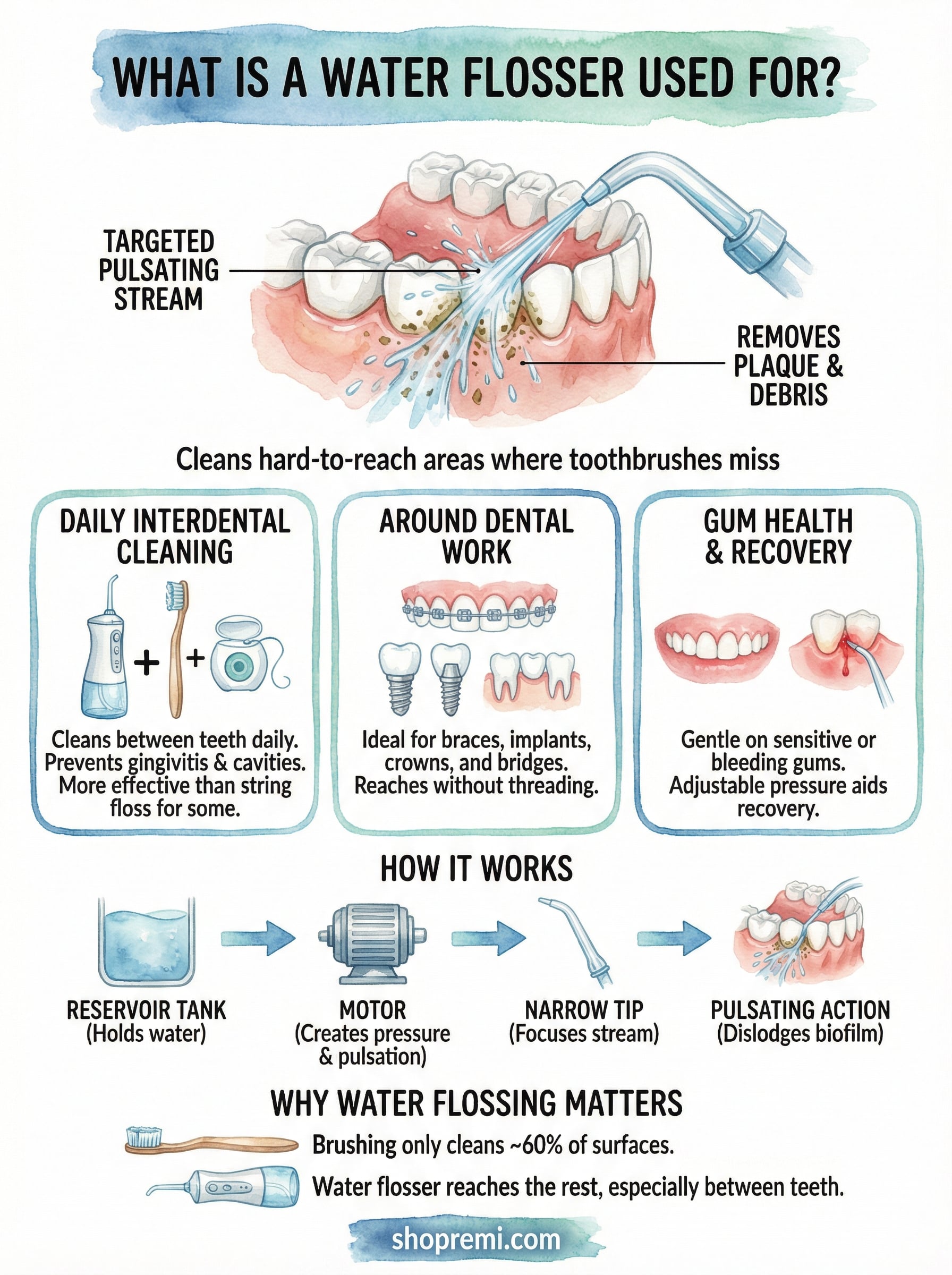
Most people brush twice a day and assume that covers the job. But brushing only cleans about 60% of your tooth surfaces, leaving the spaces between teeth and along the gumline wide open to plaque buildup and gum disease. That's where water flossing steps in, and it's a big part of why understanding what is a water flosser used for matters more than most people realize.
The gap your toothbrush leaves
Your toothbrush bristles do solid work on the flat surfaces of your teeth, but they cannot physically reach into the narrow gaps between teeth or below the gumline. Plaque that sits undisturbed in those spaces for 24 to 48 hours starts to harden into tartar, and at that point, only a dental professional can remove it. Consistent interdental cleaning, every single day, is what stops that cycle before it starts.
String floss is effective when used correctly, but most people either skip it or use poor technique. Research consistently shows that fewer than 30% of American adults floss daily, which means the majority are leaving significant portions of their mouths uncleaned. A water flosser lowers the barrier because it's faster, easier to handle, and far more comfortable for most people to stick with long term.
What the research actually shows
The evidence behind water flossing is concrete. A clinical study found that a water flosser combined with a manual toothbrush was up to 51% more effective at reducing gingivitis than string floss and a toothbrush together. That is not a minor difference. Gingivitis, the early stage of gum disease, is almost entirely preventable with daily cleaning, and water flossing makes that habit easier to maintain consistently.
Gum disease affects nearly half of adults over 30 in the United States, according to the CDC, and inadequate interdental cleaning is one of the primary contributing factors.
Who feels the biggest difference
Not everyone starts from the same place, and some people notice a much sharper improvement than others. If you wear braces, dental implants, crowns, or bridges, traditional string floss becomes genuinely difficult to work with, and many people simply stop trying. A water flosser reaches around brackets, under bridgework, and along implant margins without the frustration of threading string through tight spaces or awkward angles.
People dealing with sensitive or bleeding gums also tend to see fast results after making the switch. Devices like the Remi Cordless Water Flosser include adjustable pressure settings so you can start at a gentler level and work up as your gum health improves. Healthier gums bleed less, and regular water flossing is one of the most direct ways to get there.
What a water flosser is used for
Understanding what a water flosser is used for starts with recognizing its core job: removing plaque, food debris, and bacteria from the spaces between your teeth and along your gumline that a toothbrush simply cannot reach. Your brush cleans the broad, flat surfaces of each tooth, but the tight gaps between teeth and the shallow pocket where each tooth meets your gum require a completely different approach. A water flosser fills that gap with a targeted stream of pressurized water, giving you full coverage across your whole mouth in a way brushing alone never will.
Daily interdental cleaning
A water flosser handles everyday interdental cleaning, which is the part of most oral care routines that gets skipped most often. You direct the stream between each pair of teeth and along the gumline, and the pressurized pulse dislodges soft plaque and trapped food particles before they harden into tartar that only a dental hygienist can remove. Using it once daily is enough to significantly reduce your risk of cavities forming between teeth and early gum inflammation taking hold.
Consistent interdental cleaning is the most direct action you can take to prevent gingivitis from advancing into more serious, harder-to-reverse gum disease.
Cleaning around dental work
People with braces, implants, bridges, or crowns tend to benefit from a water flosser more than almost anyone else. Threading string floss under a bridge wire or carefully around an implant post is genuinely difficult, and many people stop trying, leaving those margins unclean for days at a time. A water flosser targets those exact hard-to-reach areas without snagging, awkward threading, or irritating the surrounding tissue.
Supporting gum health and recovery
Your dentist may also recommend a water flosser if you are managing early-stage gum disease or recovering from a dental procedure. The gentle pulsating stream clears bacteria from gum pockets without the friction or sharp pressure of string floss, making it far more comfortable to clean areas that are already inflamed or tender. Adjustable pressure settings allow you to start at a lower intensity and gradually increase as your gum health improves over time.
How a water flosser works
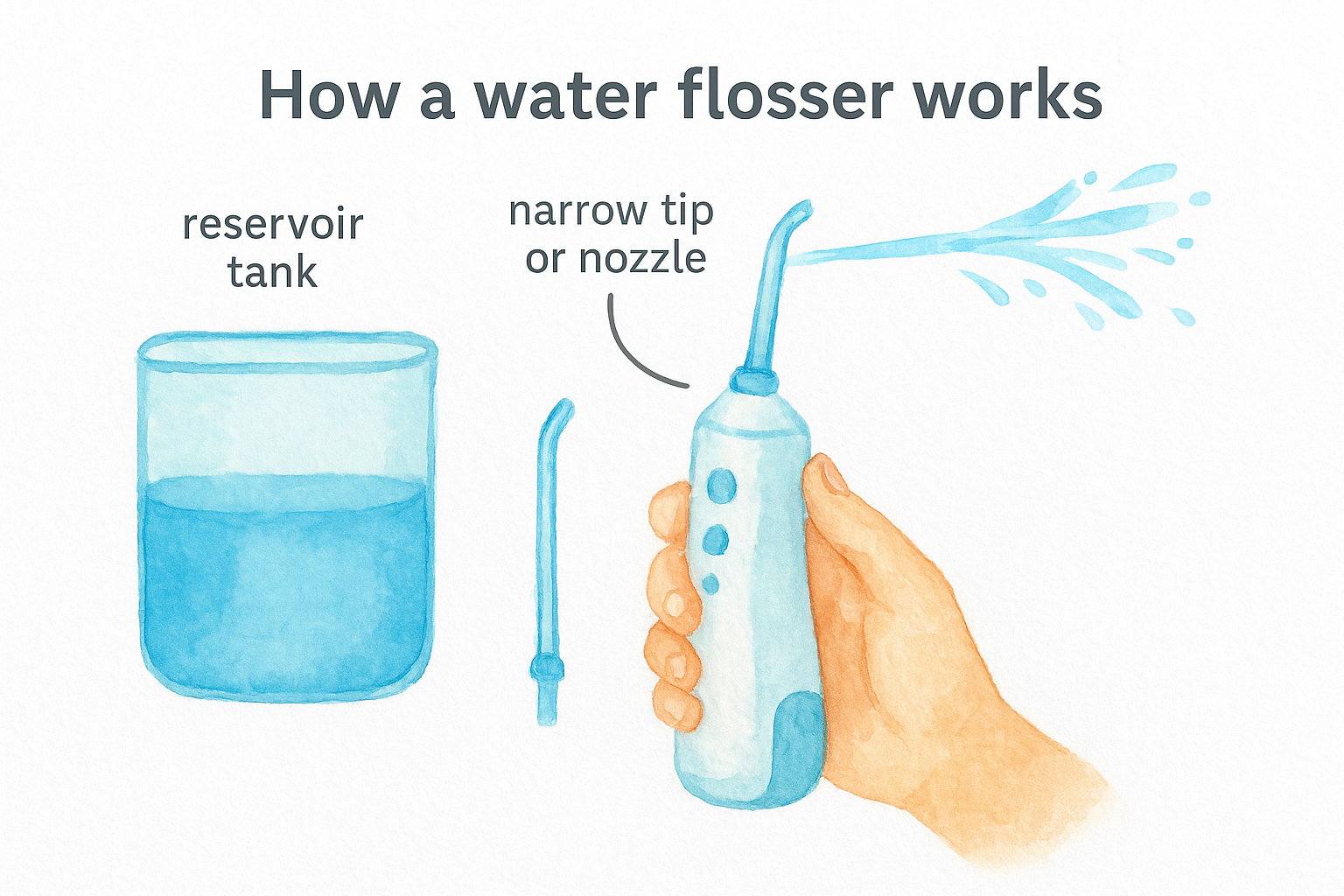
A water flosser works by drawing water from a reservoir tank and pushing it through a small motor that generates pressure. That pressurized water travels through a narrow tip or nozzle, which you aim between your teeth and along your gumline. The result is a focused, pulsating stream that physically dislodges plaque and food debris from the interdental spaces your toothbrush misses.
The pulsation effect
Most water flossers, including the Remi Cordless Water Flosser, do not produce a constant jet of water. Instead, the motor creates a rapid pulsating rhythm that delivers short bursts of water in quick succession. This pulsation is what makes water flossing so effective: the compression and decompression of each burst actively pulls debris out from between teeth and from the shallow gum pockets that surround each tooth.
The pulsating action goes beyond simple rinsing; it creates a dynamic fluid movement that disrupts the bacterial biofilm forming in those hard-to-clean spaces before it can harden into tartar.
Pressure settings and tip design
Your ability to control the pressure is one of the most important features to consider when evaluating what is a water flosser used for in your specific situation. Lower pressure settings work well for sensitive gums, fresh dental work, or beginners adjusting to the sensation. Higher settings deliver a more thorough clean once your gums have strengthened. Most devices offer between 3 and 10 pressure levels, giving you full control over your experience.
Tip design also plays a direct role in how effectively the stream reaches difficult areas. Standard jet tips handle everyday cleaning between teeth. Orthodontic tips are angled to work around brackets and wires. Periodontal tips go deeper into gum pockets for people managing gum disease or recovering from periodontal treatment. Choosing the right tip for your dental situation makes a measurable difference in how clean your mouth actually gets.
How to use a water flosser at home
Using a water flosser at home is straightforward, but a few habits around setup and technique make a real difference in how thoroughly your mouth gets cleaned. Knowing what a water flosser is used for on a daily basis means understanding not just that it removes plaque and debris, but how to position and move the tip to get consistent results from every session.
Set up your device
Fill the reservoir tank with lukewarm water before you start. Cold water can feel jarring on sensitive gums, and warm water is simply more comfortable to work with across a full session. Attach your preferred tip firmly until it clicks into place, then choose a low to medium pressure setting if you are new to water flossing. Lean over the sink so water can drain freely as you move through each section of your mouth.
Starting at lower pressure gives your gums time to adjust, especially if they are currently sensitive or tend to bleed when irritated.
Your step-by-step flossing routine
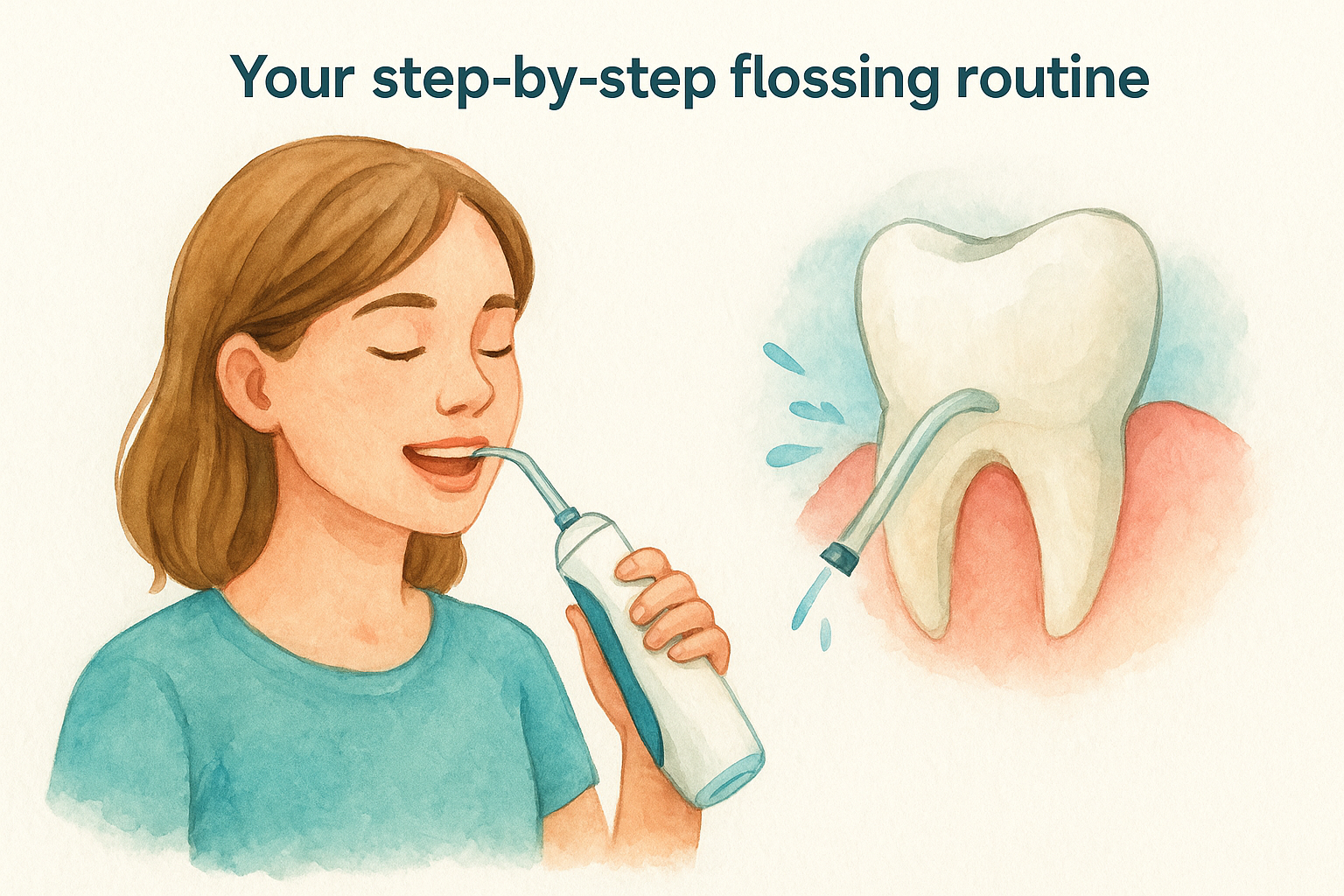
Place the tip inside your mouth before you turn the device on to avoid water spraying before you are positioned correctly. Angle the tip at roughly 90 degrees to your gumline and work systematically from the back teeth toward the front, pausing briefly between each pair of teeth. Cover both the front and back sides of every tooth to clean the full gumline, and expect the whole session to take about 60 to 90 seconds once you have the routine down.
Consistency matters far more than perfect form. Using your water flosser once a day before brushing lets your toothbrush work across a cleaner surface and allows the fluoride in your toothpaste to reach your enamel more directly. If you wear a Remi night guard or retainer, flossing before you insert it keeps bacteria and food particles from sitting against your teeth overnight, which also helps your appliance stay cleaner between thorough cleans.
Common questions, downsides, and safety
Even after learning what a water flosser is used for, most people still have practical questions before they commit to one. The answers to those questions are straightforward once you know what to expect from the device.
Can a water flosser replace string floss?
A water flosser handles interdental cleaning very effectively, but most dental professionals still recommend using both a water flosser and string floss for the most thorough results. String floss physically scrapes the sides of teeth in a way that water alone cannot fully replicate, especially for dense plaque that has started to adhere to enamel. That said, if you currently floss rarely or not at all, switching to a water flosser consistently is a significant improvement over doing nothing.
Using a water flosser daily is far more valuable than using string floss occasionally with poor technique.
Are there any downsides?
The main drawbacks are cost and counter space. A quality water flosser costs more upfront than a pack of string floss, and the reservoir tank takes up room in smaller bathrooms. There is also a short learning curve during the first few sessions where you will almost certainly get water on the mirror. Leaning over the sink and keeping the tip inside your mouth the entire time solves most of that quickly.
Is it safe for everyone to use?
For most adults, water flossing is completely safe with no medical concerns. If you have had recent oral surgery, a tooth extraction, or a periodontal procedure, check with your dentist before using one, since high-pressure water near a healing site can disrupt recovery. People with pacemakers should also confirm with their physician before using any ultrasonic dental device. Once your dentist clears you, starting at the lowest pressure setting and working upward gradually keeps the experience comfortable from the very first session.
A simple routine you can stick with
Now that you know what a water flosser is used for, the hardest part is gone. Use your water flosser once a day before brushing, work systematically from back to front along both the upper and lower teeth, and keep the tip angled at your gumline the entire time. The whole process takes under two minutes once you have done it a few times. Pair that habit with brushing twice a day and regular dental checkups, and you have a complete routine that actually protects your teeth and gums long term.
If you wear a night guard or retainer, consistent flossing before you insert your appliance keeps bacteria from sitting against your enamel overnight and extends the life of your dental device. Remi makes it easy to cover both sides of that routine. Check out the Remi Cordless Water Flosser and keep your whole mouth in better shape starting tonight.

