


You want whiter teeth but dental office treatments cost hundreds of dollars. Store bought whitening strips leave your teeth sensitive. You wonder if those DIY tricks you see online actually work or if they'll damage your enamel. The confusion around safe teeth whitening keeps you stuck with a smile you'd rather improve.
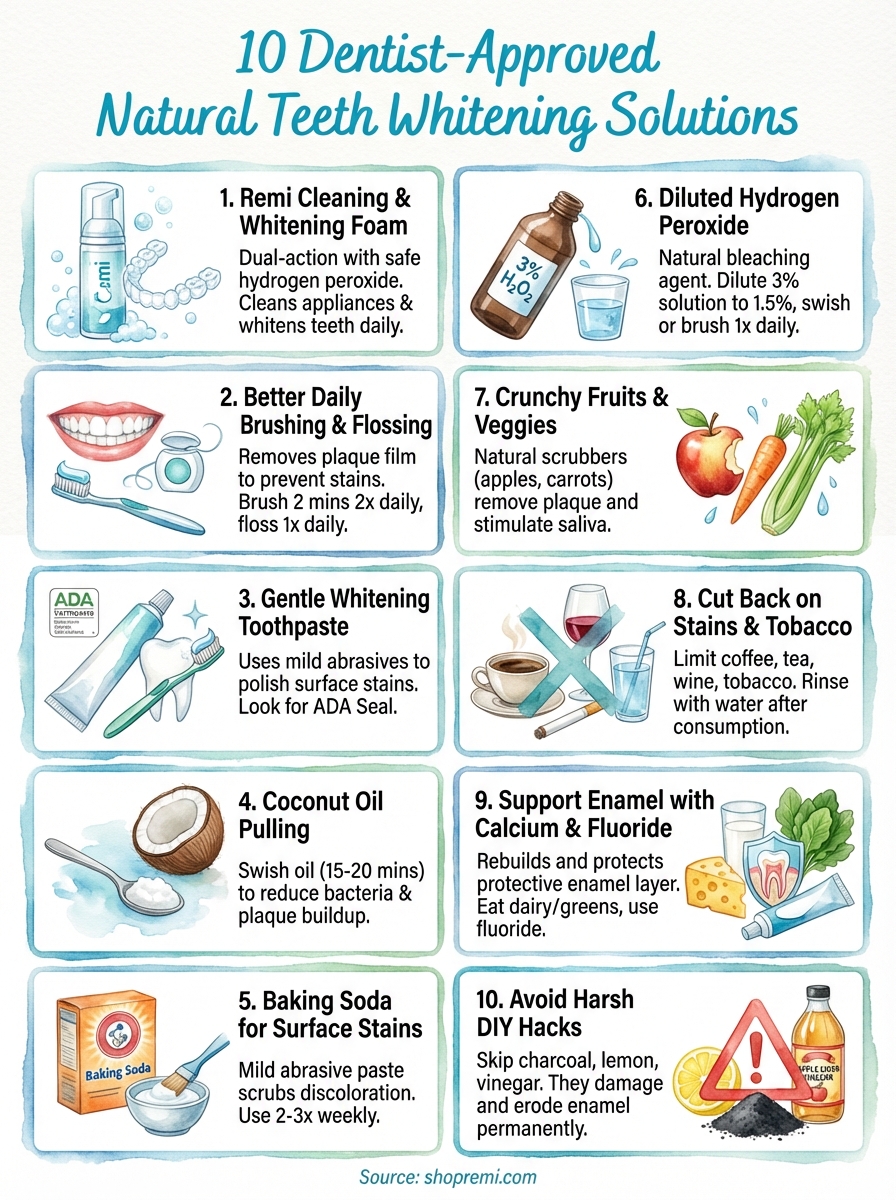
This guide breaks down 10 dentist-approved natural teeth whitening solutions you can use at home. You'll learn which methods actually work based on dental research and which trendy hacks to skip. We cover everything from professional grade cleaning foams to simple diet changes that prevent new stains. Each tip includes clear instructions on how to use it safely and who should avoid it. By the end you'll know exactly which natural whitening methods fit your needs and budget without risking your dental health.
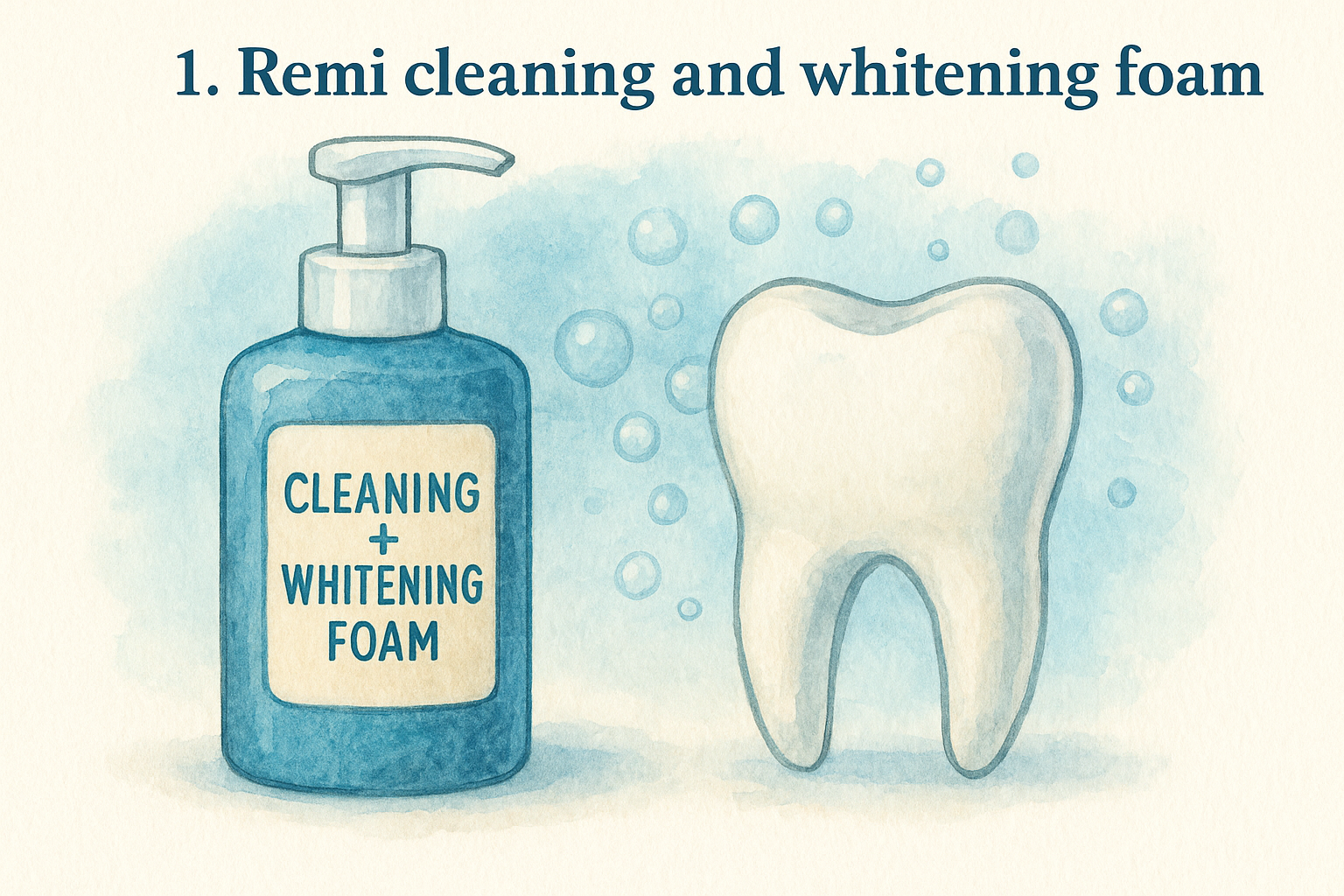
1. Remi cleaning and whitening foam
Remi's Night Guard Cleaning + Teeth Whitening Foam combines two dental care functions in one product. The formula uses hydrogen peroxide as its active whitening ingredient while cleaning your dental appliances. This dual-purpose approach saves you time and makes teeth whitening part of your regular night guard or retainer care routine.
How this whitens teeth
The foam contains hydrogen peroxide at a concentration safe for daily use on both teeth and dental appliances. When you apply it to your teeth, the oxygen molecules in hydrogen peroxide break down surface stains from coffee, tea, and food. The bubbling action lifts discoloration without requiring harsh scrubbing that might damage your enamel. Unlike many natural teeth whitening solutions that take weeks to show results, this professional-grade formula delivers visible improvements within days of consistent use.
Regular use of low-concentration hydrogen peroxide products can gradually brighten teeth while supporting overall oral hygiene.
How to use it at home
You apply the foam directly to your clean, dry teeth using the built-in applicator or a soft-bristled toothbrush. Let it sit for 60 to 90 seconds before rinsing thoroughly with water. For best results, use it after your regular brushing routine at night. If you wear a night guard or retainer, apply the foam to your appliance as well to keep it fresh and bacteria-free. Consistency matters more than duration, so daily application works better than sporadic intensive treatments.
Safety tips and who it suits
This foam works well for most adults with healthy teeth and gums who want gradual whitening. Skip it if you have sensitive teeth, exposed roots, or gum disease until you consult your dentist. Pregnant and nursing mothers should also check with their healthcare provider first. Store the bottle away from direct sunlight to maintain the formula's effectiveness. If you experience any burning or prolonged sensitivity, stop use immediately.
2. Better daily brushing and flossing
Your daily brushing and flossing routine forms the foundation of all natural teeth whitening solutions. Plaque buildup creates a sticky film that traps staining particles from food and drinks. When you remove this film consistently, you prevent new stains from setting into your enamel. Regular mechanical cleaning also polishes away surface discoloration that accumulates throughout the day. This method costs nothing beyond your existing dental care supplies and delivers the most reliable long-term results.
How this whitens teeth
Brushing removes food debris and plaque before they harden into tartar, which appears yellow and cannot be removed at home. Flossing reaches the 40% of tooth surfaces your toothbrush misses between teeth and along the gumline. Together, these actions prevent the dull, yellowed appearance that comes from bacterial buildup. Your teeth look brighter because you're exposing their natural color rather than viewing them through a layer of film.
Consistent plaque removal through proper brushing and flossing prevents most surface staining before it starts.
How to use it at home
You need to brush for two full minutes twice daily using gentle circular motions rather than harsh back-and-forth scrubbing. Hold your toothbrush at a 45-degree angle to your gumline to clean where teeth meet gums effectively. Floss once per day, preferably before bedtime, sliding it gently up and down each tooth side. Don't snap the floss against your gums, which causes damage without improving cleaning.
Safety tips and who it suits
This approach works for everyone regardless of age or dental condition. Replace your toothbrush every three months or when bristles fray. Choose a soft-bristled brush to protect your enamel and gums from abrasion. If you have arthritis or limited dexterity, electric toothbrushes make proper brushing easier. Consult your dentist if bleeding persists beyond the first week of establishing a flossing routine.
3. Gentle whitening toothpaste choice
Whitening toothpastes offer one of the most accessible natural teeth whitening solutions for daily use. These products contain mild abrasives like silica or calcium carbonate that polish away surface stains without the harsh chemicals found in professional bleaching treatments. You'll find options carrying the American Dental Association (ADA) Seal of Acceptance, which confirms they meet safety and effectiveness standards. Unlike intense whitening procedures, gentle whitening toothpastes work gradually through your existing brushing routine.
How this whitens teeth
The abrasive particles in whitening toothpaste physically scrub away surface stains from coffee, tea, and pigmented foods. Some formulas also include low concentrations of hydrogen peroxide or carbamide peroxide that chemically lighten deeper discoloration. This dual-action approach removes both fresh and set-in stains. The polishing effect makes your teeth appear brighter by reflecting light more evenly across smooth enamel surfaces.
Whitening toothpastes with the ADA Seal remove surface stains effectively while protecting your enamel from damage.
How to use it at home
You replace your regular toothpaste with a whitening formula approved by dental professionals. Brush twice daily for two minutes each session using the same gentle technique you'd use with any toothpaste. Results typically appear within two to six weeks of consistent use. Rotate between whitening and sensitivity formulas if you notice any discomfort.
Safety tips and who it suits
This method works well for adults with healthy enamel seeking gradual whitening. Avoid whitening toothpastes if you have exposed dentin, worn enamel, or sensitive teeth until consulting your dentist. Children under 12 should stick with regular fluoride toothpaste. Check ingredients for abrasiveness ratings if you have concerns about enamel wear.
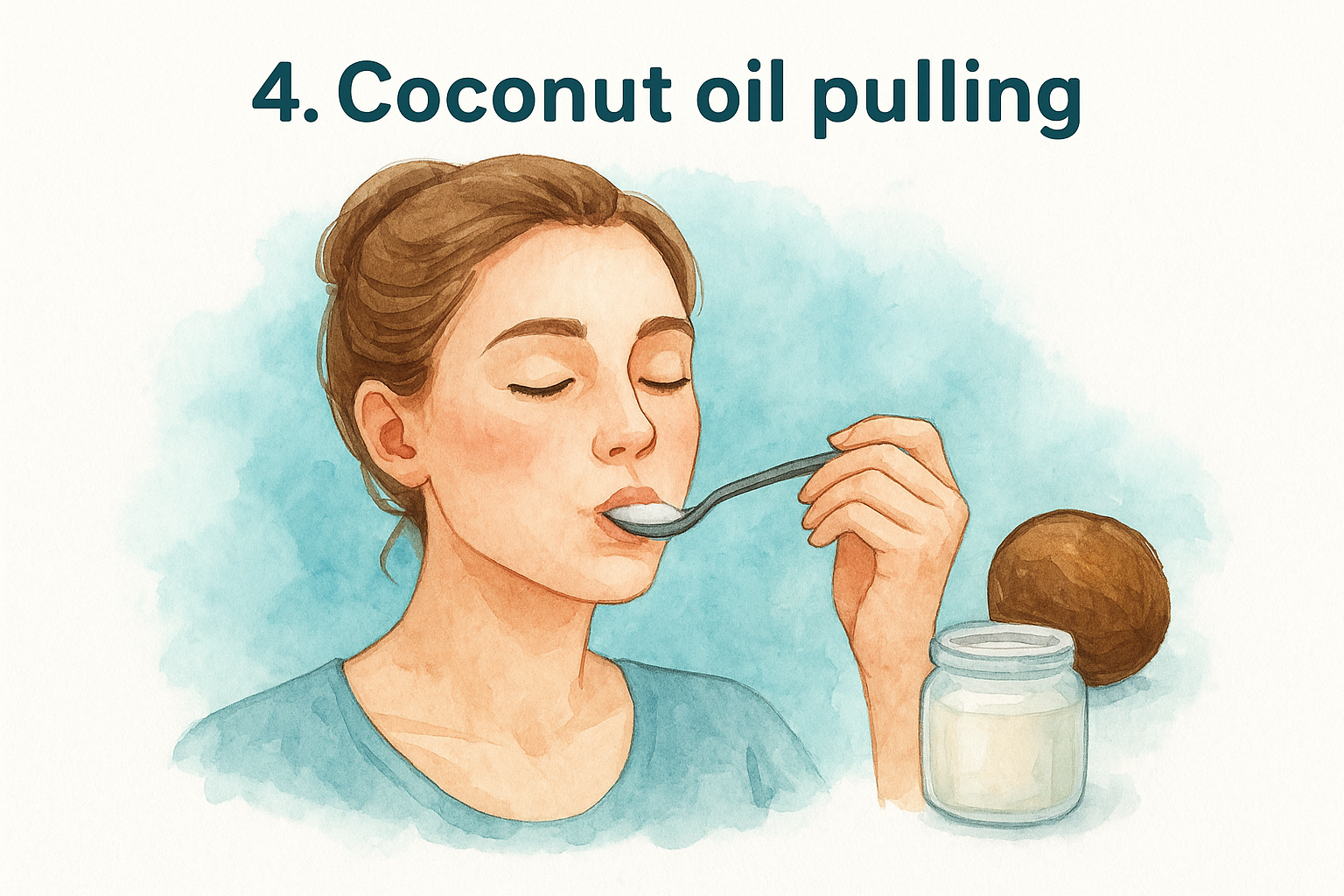
4. Coconut oil pulling
Oil pulling represents one of the oldest natural teeth whitening solutions rooted in traditional Indian medicine. You swish coconut oil around your mouth for an extended period to remove bacteria and plaque that make teeth appear yellow. This method has gained popularity among people seeking chemical-free whitening options. The practice requires nothing more than coconut oil from your kitchen pantry.
How this whitens teeth
Oil pulling works by reducing harmful bacteria that contribute to plaque buildup on your teeth. The lauric acid in coconut oil has antimicrobial properties that target the bacteria responsible for yellowing. As you swish the oil, it binds to plaque and bacteria, pulling them away from tooth surfaces. This mechanical action combined with bacterial reduction helps reveal brighter teeth underneath accumulated film.
Coconut oil's antimicrobial action targets the bacteria that cause plaque and surface discoloration.
How to use it at home
You put one tablespoon of coconut oil in your mouth first thing in the morning before eating or drinking. Swish it gently around your teeth for 15 to 20 minutes without swallowing. Spit the oil into a trash can rather than your sink to avoid plumbing clogs. Rinse with warm water and brush your teeth normally afterward.
Safety tips and who it suits
This method suits adults seeking gentle whitening without chemicals. Skip oil pulling if you have coconut allergies or jaw pain conditions like TMJ. Start with shorter sessions of 5 minutes and gradually increase duration as your jaw muscles adapt.
5. Baking soda for surface stains
Baking soda ranks among the most researched natural teeth whitening solutions backed by scientific evidence. Its mildly abrasive texture gently scrubs away surface stains without the harsh chemicals found in commercial whitening products. You probably already have this ingredient in your kitchen pantry, making it one of the most affordable whitening options available. Many commercial toothpastes include baking soda specifically because studies confirm its stain-removal effectiveness.
How this whitens teeth
The fine crystalline structure of baking soda acts as a gentle mechanical scrubber that removes surface discoloration from your enamel. Its alkaline properties create an environment that discourages bacterial growth in your mouth. This dual action both removes existing stains and prevents new ones from forming. Research shows toothpastes containing baking soda remove plaque and surface stains more effectively than formulas without it.
Baking soda's mild abrasiveness and alkaline nature make it effective at removing surface stains while inhibiting bacterial growth.
How to use it at home
You mix one teaspoon of baking soda with two teaspoons of water to form a paste. Apply this mixture to your teeth using a soft-bristled toothbrush and brush gently for two minutes. Rinse thoroughly with water afterward. Limit this treatment to two or three times per week rather than daily use to protect your enamel from excessive abrasion.
Safety tips and who it suits
This method works well for adults with healthy enamel seeking to remove coffee or tea stains. Avoid baking soda if you have sensitive teeth, thin enamel, or orthodontic appliances like braces. Excessive use can wear down enamel over time, so stick to the recommended frequency.
6. Diluted hydrogen peroxide use
Hydrogen peroxide serves as a natural bleaching agent that dentists have used in professional whitening treatments for decades. You can buy 3% hydrogen peroxide solutions at any drugstore for a few dollars. This compound kills bacteria while breaking down the molecules that cause tooth discoloration. When properly diluted, it offers safer whitening than many natural teeth whitening solutions that lack scientific backing.
How this whitens teeth
Hydrogen peroxide releases oxygen molecules that penetrate your enamel and break apart the chemical bonds holding stain molecules together. This process lightens both surface stains and deeper discoloration that other methods cannot reach. The antibacterial properties also reduce plaque buildup that makes teeth appear yellow. Research confirms that toothpastes containing higher concentrations of hydrogen peroxide whiten more effectively than those with lower amounts.
Hydrogen peroxide's oxygen molecules break down stain molecules at a deeper level than surface-cleaning methods alone.
How to use it at home
You dilute 3% hydrogen peroxide with equal parts water to create a 1.5% solution safe for daily use. Swish this mixture in your mouth for 30 to 60 seconds before brushing your teeth. Spit it out completely and rinse with plain water. Alternatively, you can dip your toothbrush in the diluted solution and brush gently for two minutes. Limit this treatment to once daily to avoid irritating your gums.
Safety tips and who it suits
This method works for adults with healthy gums seeking deeper stain removal than brushing alone provides. Avoid hydrogen peroxide if you have open sores, sensitive teeth, or damaged enamel. Never swallow the solution, as it can cause stomach irritation. Stop immediately if you experience burning, excessive sensitivity, or gum inflammation. Pregnant women should consult their healthcare provider before using hydrogen peroxide for whitening.
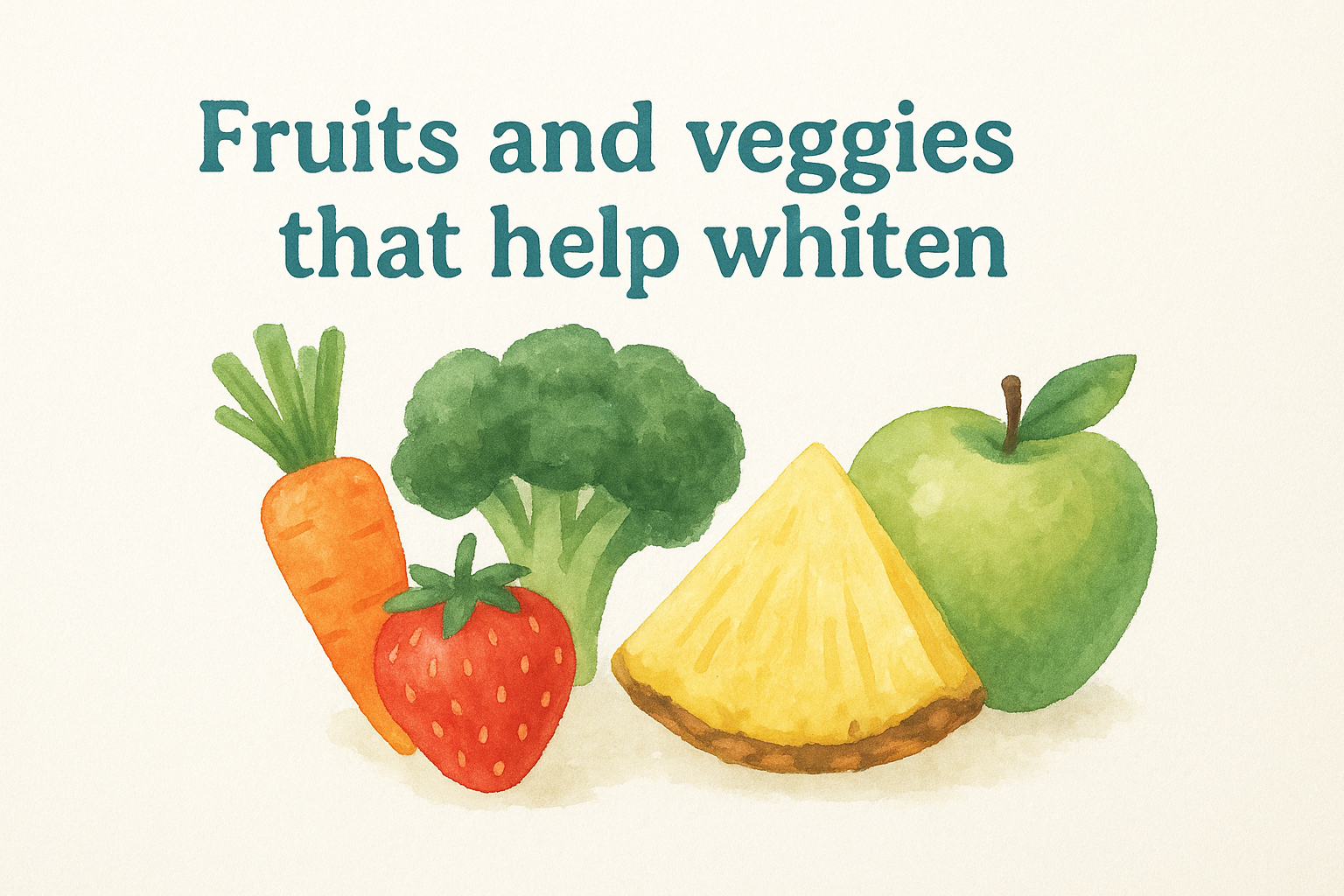
7. Fruits and veggies that help whiten
Crunchy fruits and vegetables act as natural tooth scrubbers that remove plaque and surface stains while you chew. These foods offer one of the simplest natural teeth whitening solutions because they require no preparation or special products. Raw carrots, celery, apples, and broccoli work particularly well due to their firm texture. Strawberries and pineapple contain specific compounds that target tooth discoloration through different mechanisms.
How this whitens teeth
The fibrous texture of raw vegetables mechanically scrubs away plaque that traps staining particles on your teeth. Crunchy produce also stimulates saliva production, which naturally rinses away food debris and neutralizes acids that weaken enamel. Strawberries contain malic acid that helps break down surface stains, while pineapple has bromelain enzymes that combat discoloration.
Raw, crunchy produce naturally cleans teeth while stimulating saliva production that protects against staining.
How to use it at home
You simply eat raw fruits and vegetables as snacks throughout your day instead of processed foods. Finish meals with crunchy produce like apples or celery to naturally clean your teeth when brushing isn't convenient. Chew thoroughly to maximize the scrubbing action against your tooth surfaces.
Safety tips and who it suits
This method works for everyone regardless of age or dental condition. Avoid biting into hard produce if you have dental crowns, veneers, or loose fillings that could dislodge. Rinse with water after eating acidic fruits like strawberries or pineapple to protect your enamel from prolonged acid exposure.
8. Cut back on stains and tobacco
Prevention outranks any treatment when it comes to maintaining white teeth. Coffee, tea, red wine, and dark sodas deposit pigmented molecules onto your enamel that accumulate over time. Tobacco products cause some of the most stubborn staining that natural teeth whitening solutions struggle to remove. You protect your investment in a bright smile by limiting exposure to these staining substances rather than constantly fighting to remove discoloration they cause.
How this whitens teeth
Reducing contact with staining agents prevents new discoloration from forming on your enamel surface. Dark beverages contain tannins and chromogens that bind to tooth enamel and create yellow or brown stains. Tobacco introduces tar and nicotine that penetrate deeper into your enamel structure than food stains. By cutting back on these sources, you give your natural whitening efforts a chance to show results instead of constantly counteracting new staining.
Preventing stains from forming protects your teeth more effectively than trying to remove stubborn discoloration later.
How to use it at home
You can drink staining beverages through a straw to minimize contact with your front teeth. Rinse your mouth with water immediately after consuming coffee, tea, or wine to wash away staining compounds before they set. Wait 30 to 60 minutes after acidic drinks before brushing to avoid damaging softened enamel. Schedule regular dental cleanings every six months to remove tartar buildup that traps staining particles.
Safety tips and who it suits
This prevention strategy works for everyone who wants to maintain their natural tooth color. Quitting tobacco benefits your entire body beyond just whiter teeth. Substitute staining drinks with water, milk, or clear beverages when possible. Monitor your teeth between dental visits to catch new staining early when it responds better to natural whitening methods.
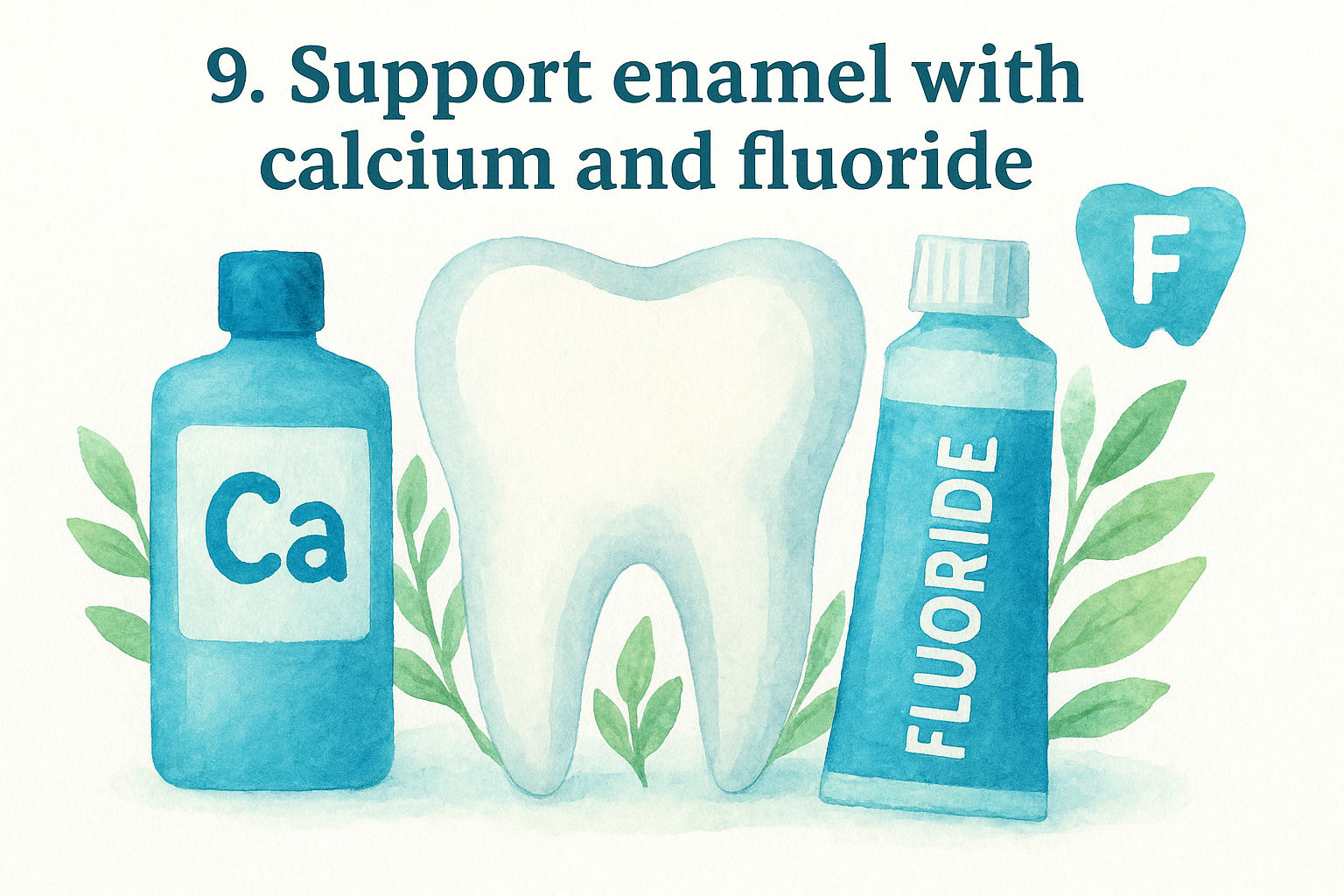
9. Support enamel with calcium and fluoride
Strong enamel forms the foundation of white teeth by protecting the yellowish dentin layer underneath. Calcium and fluoride work together to rebuild weakened enamel and prevent erosion that exposes discolored inner tooth structure. Many natural teeth whitening solutions focus on removing stains, but protecting your enamel ensures those results last. Mineral-rich foods and fluoridated products strengthen your teeth from within rather than just treating surface problems.
How this whitens teeth
Your enamel acts as a protective white coating that reflects light and gives teeth their bright appearance. When enamel thins or wears down, the yellow dentin underneath shows through and makes your teeth look darker. Calcium strengthens the crystalline structure of your enamel, while fluoride helps remineralize areas where acids have begun breaking it down. Together, these minerals maintain the thick, healthy enamel layer that keeps your teeth naturally white.
Maintaining strong enamel through calcium and fluoride prevents the yellowing that occurs when protective enamel wears thin.
How to use it at home
You boost your calcium intake by eating dairy products, leafy greens, and fortified foods throughout your day. Aim for at least 1,000 mg of calcium daily through diet or supplements. Use fluoride toothpaste twice daily and drink tap water if your community adds fluoride to its water supply. Some mouthwashes also contain fluoride for extra protection. Your dentist may recommend prescription-strength fluoride treatments if you have weak enamel or high cavity risk.
Safety tips and who it suits
This approach benefits everyone who wants to maintain their natural tooth color long-term. Children especially need adequate calcium and fluoride during tooth development. Avoid excessive fluoride supplements that can cause fluorosis, which ironically creates white spots on teeth. Consult your dentist about appropriate fluoride levels for your specific needs based on your water source and cavity risk.
10. Avoid harsh DIY whitening hacks
Popular social media trends promote charcoal powder, lemon juice, and apple cider vinegar as miracle whitening solutions. These methods promise quick results but often damage your enamel permanently. Activated charcoal lacks scientific evidence for whitening effectiveness and its abrasiveness can scratch protective enamel. Acidic substances like lemon juice and vinegar erode tooth structure faster than they remove stains. Understanding which trendy hacks to skip protects you from expensive dental repairs down the road.
How this whitens teeth
These harsh methods do not actually whiten teeth safely. Acidic treatments temporarily lighten your enamel by dissolving its surface layer, which exposes the yellower dentin underneath once the acid wears through. Abrasive substances like charcoal or kaolin clay scratch away enamel rather than gently polishing it. You end up with weaker, more stain-prone teeth that look worse over time. These approaches contradict the principles behind effective natural teeth whitening solutions that work with your enamel instead of against it.
Harsh DIY methods damage your enamel's protective layer, leading to increased yellowing and sensitivity rather than lasting whiteness.
How to use it at home
You avoid these methods entirely. Skip any whitening hack involving citrus fruits, vinegar, or activated charcoal regardless of how many testimonials you see online. Stick to the dentist-approved methods covered in previous sections. If you find a new whitening trend online, research whether dental professionals recommend it before trying it on your teeth.
Safety tips and who it suits
This advice applies to everyone who wants to protect their dental health while pursuing whiter teeth. Consult your dentist before trying any unconventional whitening method you discover. Enamel damage from harsh DIY treatments cannot be reversed and requires professional intervention to manage.
Wrapping up
You now have 10 proven natural teeth whitening solutions that work safely at home without expensive dental visits. These methods range from simple diet changes to professional-grade products like Remi's whitening foam, all backed by dental research rather than social media hype. The key to lasting results lies in consistency and combining multiple approaches that fit your lifestyle and dental health needs.
Start with the foundation of better brushing and flossing, then add targeted whitening methods like gentle toothpaste or baking soda treatments. Prevention matters just as much as treatment, so cutting back on staining beverages and supporting your enamel with proper nutrition protects your investment in a brighter smile. Skip the risky DIY hacks that promise quick results but damage your teeth permanently.
Your oral hygiene routine plays a crucial role in maintaining white teeth between whitening treatments. Remi's cordless water flosser helps you remove plaque and food particles that contribute to discoloration, making your natural whitening efforts more effective.

