


TMJ pain can turn everyday basics like eating, talking, and sleeping into genuinely miserable experiences. If you've been dealing with jaw soreness, clicking, or headaches and started searching for how to relieve TMJ pain, you're far from alone, millions of Americans deal with temporomandibular joint disorders, and many don't realize that teeth grinding and clenching are among the most common triggers.
The good news: you don't necessarily need an expensive dental procedure or prescription to start feeling better. Several effective relief methods can be done right at home, from targeted jaw exercises to simple habit changes that reduce pressure on the joint.
Below, we'll walk through five practical ways to ease TMJ discomfort on your own, including how a custom-fitted night guard from Remi can help address one of the root causes by protecting your teeth and jaw while you sleep.
1. Wear a custom night guard for clenching and grinding
If you grind or clench your teeth at night, your TMJ absorbs enormous stress while you sleep. Nighttime bruxism is one of the most common drivers of jaw pain, and wearing a properly fitted night guard is one of the most direct ways to interrupt that cycle.
Why clenching and grinding can trigger TMJ pain
Your temporomandibular joint sits just in front of each ear, and it takes the full force of your bite every time you clench. Bruxism keeps your jaw muscles contracting for hours through the night, which inflames the joint and the surrounding soft tissue.
Over time, that repeated strain builds into chronic soreness, clicking sounds, and reduced jaw mobility that can spill into your daytime hours.
How a custom night guard helps your jaw joint
A night guard places a physical barrier between your upper and lower teeth, cutting off direct contact and reducing the muscle force your jaw transfers to the joint. Custom-fitted versions hold your bite in a more neutral resting position, which lets the muscles stay relaxed rather than fighting against an awkward fit.
A guard made to your exact bite does more than protect your enamel; it repositions your jaw so the joint can recover instead of absorbing repeated strain every night.
How to tell if you need a night guard
Common signs that grinding is fueling your TMJ pain include:
- Worn, flat, or chipped tooth surfaces your dentist has pointed out
- Jaw soreness or stiffness first thing in the morning
- Frequent headaches around your temples
- A partner who has heard you grinding while you sleep
How to use a night guard comfortably and safely
Start by wearing your guard for short periods before bed so your jaw adapts gradually. Clean it each morning with a soft brush and cool water, and always store it in a ventilated case to prevent warping or bacterial buildup.
When to skip a night guard and see a dentist first
If you experience severe jaw locking, visible swelling, or acute pain that makes wearing anything in your mouth unbearable, get a professional evaluation before trying a guard. A dentist can rule out a displaced disc or joint injury that requires targeted treatment first.
Remi custom night guards, what to expect
Remi sends you an at-home impression kit, you take your own molds, ship them back, and receive a guard built precisely to your bite. The entire process skips the dental office, and the finished product is made to professional-grade standards at a fraction of the typical cost.
2. Use heat and cold to calm a flare-up
Applying temperature directly to your jaw is one of the fastest, cheapest ways to manage a TMJ flare. Both ice and heat target different parts of the pain cycle, so knowing which to reach for and when makes a real difference.
When to use ice vs heat for TMJ pain
Use ice during the first 48 hours of an acute flare, when the joint feels actively inflamed or swollen. Cold slows blood flow and reduces sharp pain and swelling quickly. Once the acute phase passes, switch to heat, since warmth loosens tight muscles and increases circulation to stiff tissue around the joint.
Cold is for new inflammation; heat is for chronic muscle tightness. Using them in the right order shortens your recovery.
A simple at-home schedule for heat and cold
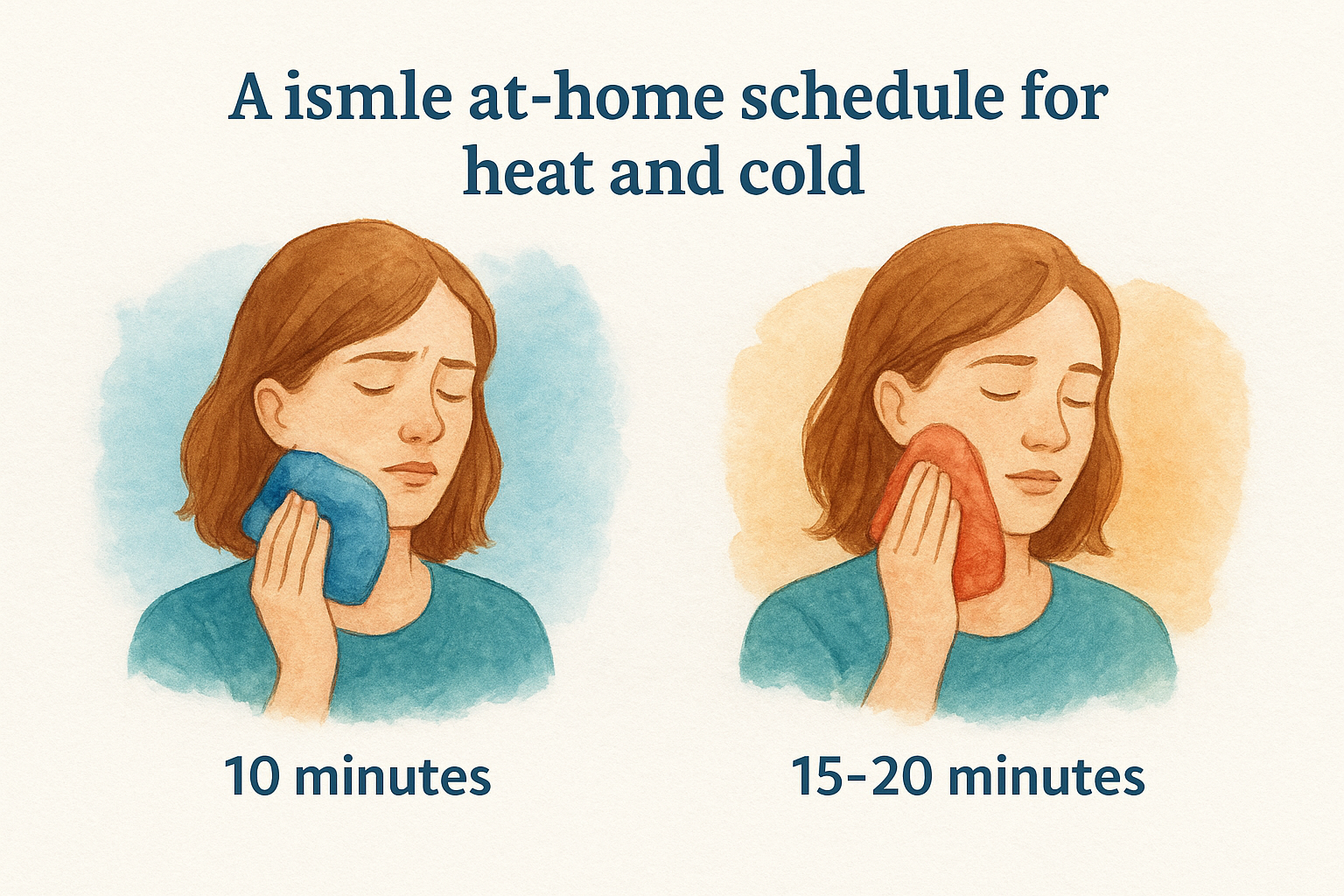
Apply a cold pack wrapped in a thin cloth for 10 minutes, then rest the area for 10 minutes. For heat, use a warm damp towel or a low-setting heating pad for 15 to 20 minutes. Repeat two to three times per day during a flare.
Mistakes that can make inflammation worse
Placing ice or heat directly on bare skin risks burns or frostbite. Avoid applying heat to a joint that is still actively swollen, since warmth at that stage can amplify inflammation and extend your recovery time significantly.
When heat and cold do not help
If your pain does not ease after several days of consistent temperature therapy, the problem may go beyond simple muscle tension. Persistent swelling, limited jaw opening, or radiating ear pain are all signals to get a professional evaluation rather than continuing at-home treatment alone.
3. Do gentle jaw and neck exercises daily
Daily jaw and neck exercises reduce muscle tension and restore normal joint mechanics. They are a low-cost, practical way to relieve TMJ pain at home without putting extra stress on already irritated tissue.
Resting jaw position that reduces strain
Most people unknowingly hold their jaw in a tense, compressed position all day. The correct rest position keeps your lips closed, teeth slightly apart, and tongue resting lightly on the roof of your mouth, which immediately cuts the load on your jaw muscles.
Goldfish jaw openings for controlled movement
Place one finger on your TMJ and another on your chin. Slowly drop your jaw halfway, then close it. This movement rebuilds normal joint tracking and loosens the tight muscles surrounding the hinge without forcing the joint open against resistance.
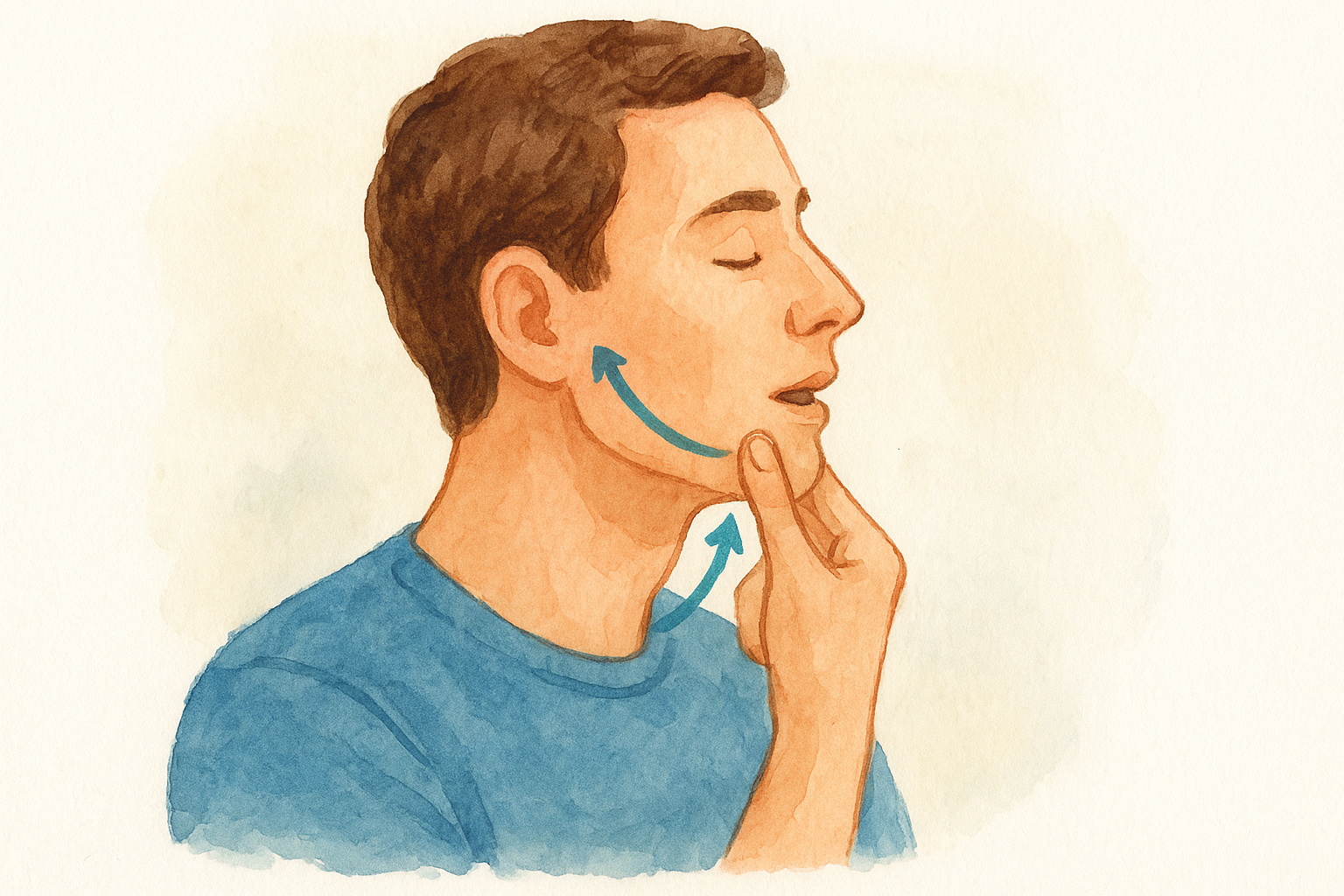
Slow, partial jaw openings are far more effective than forcing your mouth wide, which can aggravate inflamed joint tissue.
Side-to-side and forward jaw glides
Slide your jaw gently left, then right, then forward in small, smooth movements. Keep every glide entirely pain-free - you are retraining joint mechanics, not aggressively stretching the area.
Chin tucks for posture and jaw support
Pull your chin straight back to create a gentle double-chin position and hold for five seconds. Forward head posture pulls the jaw forward and increases TMJ load, and this simple correction directly counters that strain.
How often to do exercises and when to stop
Perform six repetitions of each exercise twice daily. Stop immediately if a movement triggers sharp pain or louder clicking, since those signs call for professional evaluation before you continue.
4. Change habits that overload your jaw
Daily habits can quietly pile stress onto your jaw joint without you noticing. Identifying and adjusting these behaviors is one of the most sustainable ways to manage how to relieve TMJ pain over the long term.
Avoid chewing triggers and switch to a soft-food plan
Hard, chewy, or crunchy foods force your jaw to work harder than an irritated joint can handle. Switch to soft foods like eggs, cooked vegetables, fish, and yogurt during flare-ups, and cut food into small pieces rather than biting into large portions directly.
Stop daytime clenching with quick awareness cues
Many people clench without realizing it at work, while driving, or during stressful tasks. Set a phone reminder every hour as a quick check-in. When the alarm goes off, relax your jaw into the correct rest position (lips closed, teeth apart) and reset.
Small, frequent awareness checks throughout your day do more for daytime clenching than any single intervention.
Improve sleep position and pillow setup
Sleeping on your stomach presses your jaw into the pillow and twists your neck all night. Switch to back or side sleeping and use a supportive pillow that keeps your head and neck aligned to reduce joint strain while you rest.
Reduce stress to lower jaw tension
Stress is a direct driver of jaw clenching and muscle tightness. Short breathing exercises, regular movement, or even a brief walk can lower the tension your jaw carries throughout the day.
Manage screen posture to ease jaw and neck load
Forward head posture from looking down at a phone or up at a misaligned monitor pulls your jaw out of its neutral position. Keep your screen at eye level and check your head position regularly to prevent that added load from feeding into TMJ pain.
5. Use safe pain relief options and know when to get help
When other home strategies are not enough, over-the-counter medications and professional care can fill the gap. Knowing how to relieve TMJ pain safely means understanding which options work and recognizing when self-treatment is no longer appropriate.
Over-the-counter options for TMJ pain and inflammation
NSAIDs like ibuprofen (Advil, Motrin) reduce both pain and inflammation around the joint, making them more effective for TMJ flare-ups than acetaminophen, which only addresses pain. Common starting-point options include:
- Ibuprofen (200-400 mg): targets inflammation directly
- Naproxen sodium (Aleve): longer-lasting relief for persistent soreness
- Acetaminophen (Tylenol): pain relief only, no anti-inflammatory effect
Ibuprofen targets the inflammatory component of TMJ pain directly, which is why it often outperforms a plain painkiller for joint flare-ups.
What to avoid if you have ulcers, reflux, or kidney issues
If you have stomach ulcers, acid reflux, or reduced kidney function, skip NSAIDs and use acetaminophen at the lowest effective dose instead. Always check with your doctor before starting any medication regularly.
Signs your symptoms may not be TMJ
Ear pain paired with fever, hearing loss, or drainage may point to an ear infection rather than a joint problem. Chest pain or neck swelling can signal conditions that need urgent evaluation.
When to see a dentist, doctor, or physical therapist
See a professional if your jaw locks, swelling increases, or pain persists beyond two weeks despite home care. A physical therapist addresses muscle imbalances, while a dentist handles bite-related causes.
Common in-office treatments you may hear about
Providers often recommend occlusal splints, corticosteroid injections, or guided physical therapy for persistent TMJ disorders. Surgical options exist but are rare, and most patients improve without invasive procedures.
Next steps
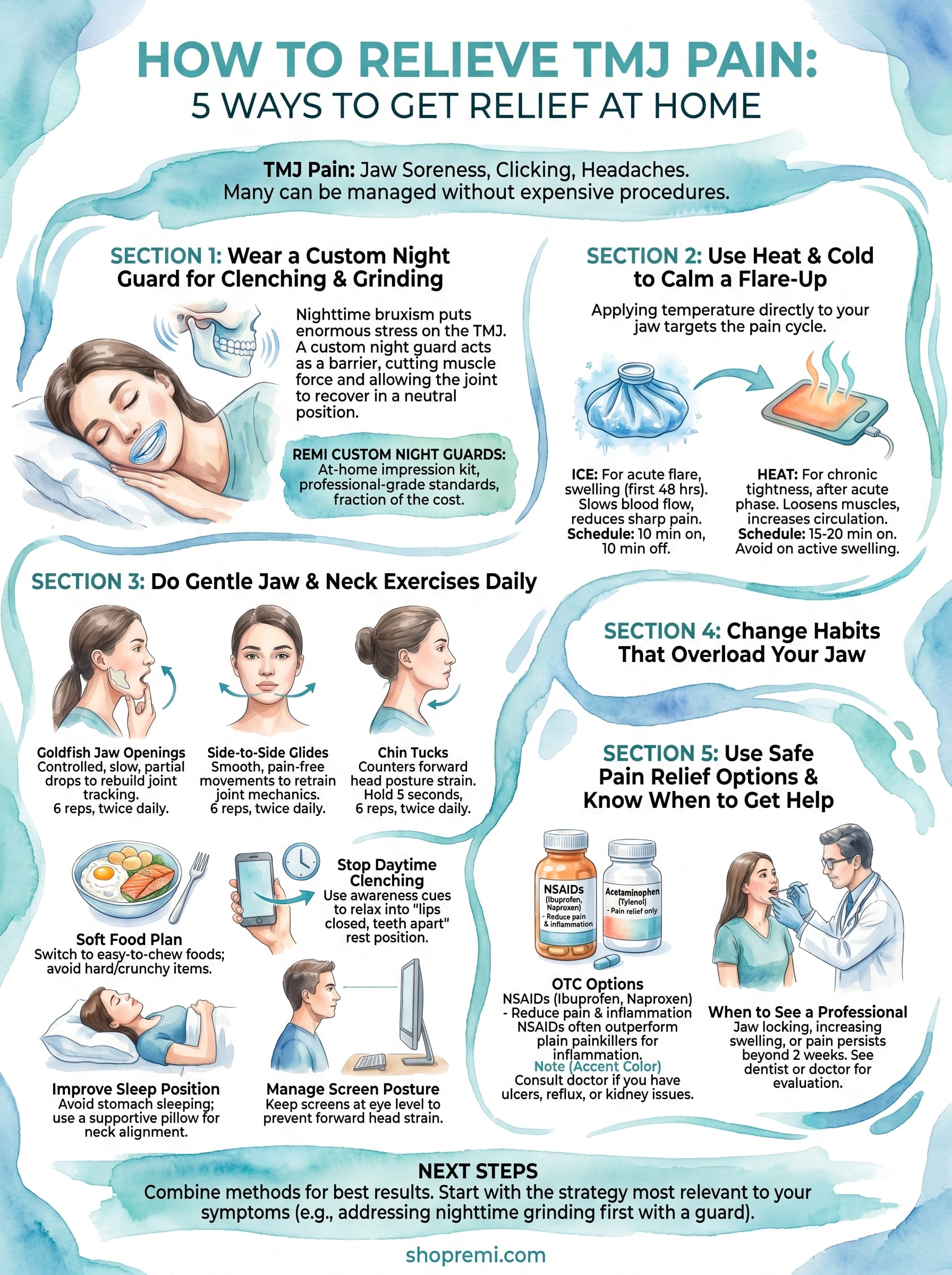
You now have five concrete methods to work with when figuring out how to relieve TMJ pain at home: protecting your jaw at night, managing flare-ups with temperature therapy, doing daily exercises, adjusting habits that load the joint, and using the right pain relief options. Most people see real improvement by combining two or three of these approaches consistently rather than cycling through them one at a time.
Start with the strategy most relevant to your symptoms. If morning jaw soreness or grinding is driving your pain, addressing the nighttime cause first will give you the clearest results. A custom-fitted night guard protects your joint every single night and removes one of the most common triggers from the equation entirely. If you want a professional-grade option without the dental office price tag, check out the Remi custom night guard and see how the at-home process works.

