
 Guards + Retainers
 Custom Night Guard
 Retainer
 Emergency Order

 Whitening
 Whitening Kit
 Teeth Whitening Gel
 Dual-Action Foam
 Cleaning + Care
 Ultrasonic Cleaner Pro
 Water Flosser
 UV Toothbrush Sanitizer
 Deep Clean + Freshening Tablets
 Accessories
 Guard Removal Tool
 Replacement Nozzles
 Bundles

You finally got your teeth white. Maybe you used whitening strips, got a professional treatment, or stuck with whitening toothpaste for months. Either way, you put in the work. Now comes the harder part: keeping them white. Coffee, tea, red wine, and even healthy foods like berries can leave stains. Within weeks, that bright smile starts looking dull again. You're left wondering if maintaining white teeth means giving up everything you enjoy drinking and eating.
This guide walks you through five dentist-approved strategies to keep teeth white after you've achieved your results. You'll learn how to build a whitening-friendly daily routine, what foods and drinks to watch for, which products actually protect your enamel, and when professional cleanings help most. These tips help you maintain your bright smile without extreme restrictions or risky DIY methods. White teeth can last when you follow the right approach.
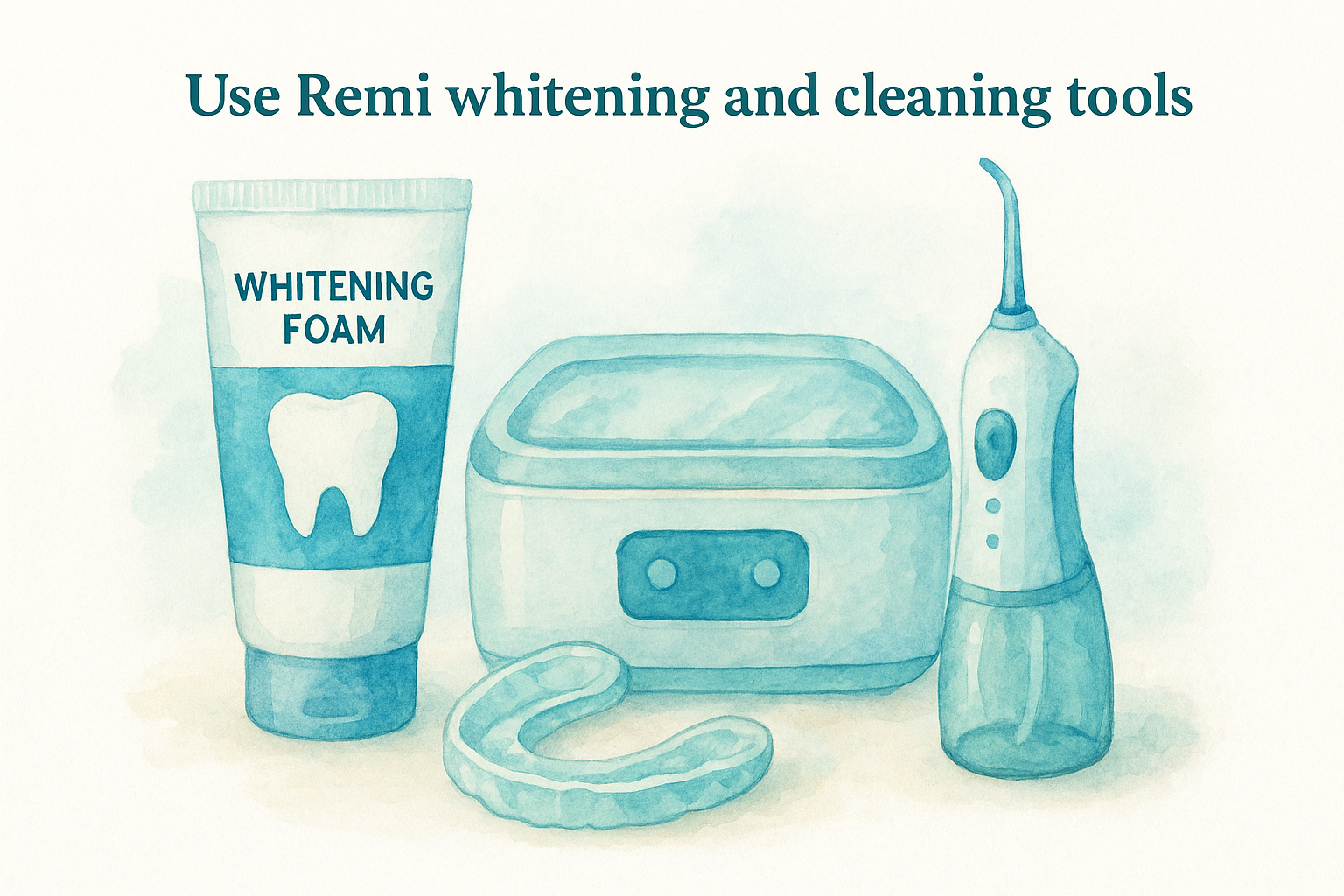
1. Use Remi whitening and cleaning tools
Whitening products work best when you use them consistently after your initial treatment. Your teeth stay exposed to staining agents every day, so you need tools that fight back against new discoloration. Remi offers whitening and cleaning solutions designed specifically for maintaining your results without harsh chemicals or expensive dental visits.
Why ongoing whitening maintenance matters
You can't whiten your teeth once and forget about them. Surface stains build up gradually from foods, drinks, and natural aging. Your enamel picks up microscopic particles that dull your smile over time. Without maintenance, even professional whitening results fade within months. Regular use of gentle whitening products keeps stains from settling in and maintains the brightness you worked hard to achieve.
How Remi whitening foam and cleaners work
Remi's Night Guard Cleaning + Teeth Whitening Foam does double duty. The formula cleans your dental appliances while whitening your teeth at the same time. You apply it to your night guard or retainer, and it works while you sleep. The gentle hydrogen peroxide-based formula lifts surface stains without damaging enamel. Remi's Ultrasonic Cleaner Pro removes deeper buildup from your dental devices, preventing bacteria and discoloration from transferring back to your teeth.
Regular cleaning of your dental appliances prevents them from becoming a source of new stains.
Build an aftercare routine around Remi
Start by using the whitening foam three to four nights per week after your initial whitening treatment. Clean your night guard or retainer with the Ultrasonic Cleaner Pro weekly to remove stubborn buildup. Pair these tools with Remi's Cordless Water Flosser to remove food particles that cause staining between teeth. This combination addresses how to keep teeth white by targeting stains at multiple points throughout your day and night.
2. Lock in a whitening friendly daily routine
Your daily habits determine whether your white teeth stay bright or fade back to yellow. Consistent oral hygiene prevents new stains from forming and removes surface discoloration before it sets in. You need a routine that targets common stain-prone areas and works with your schedule. The best approach combines smart brushing techniques with interdental cleaning that reaches spots your toothbrush misses.
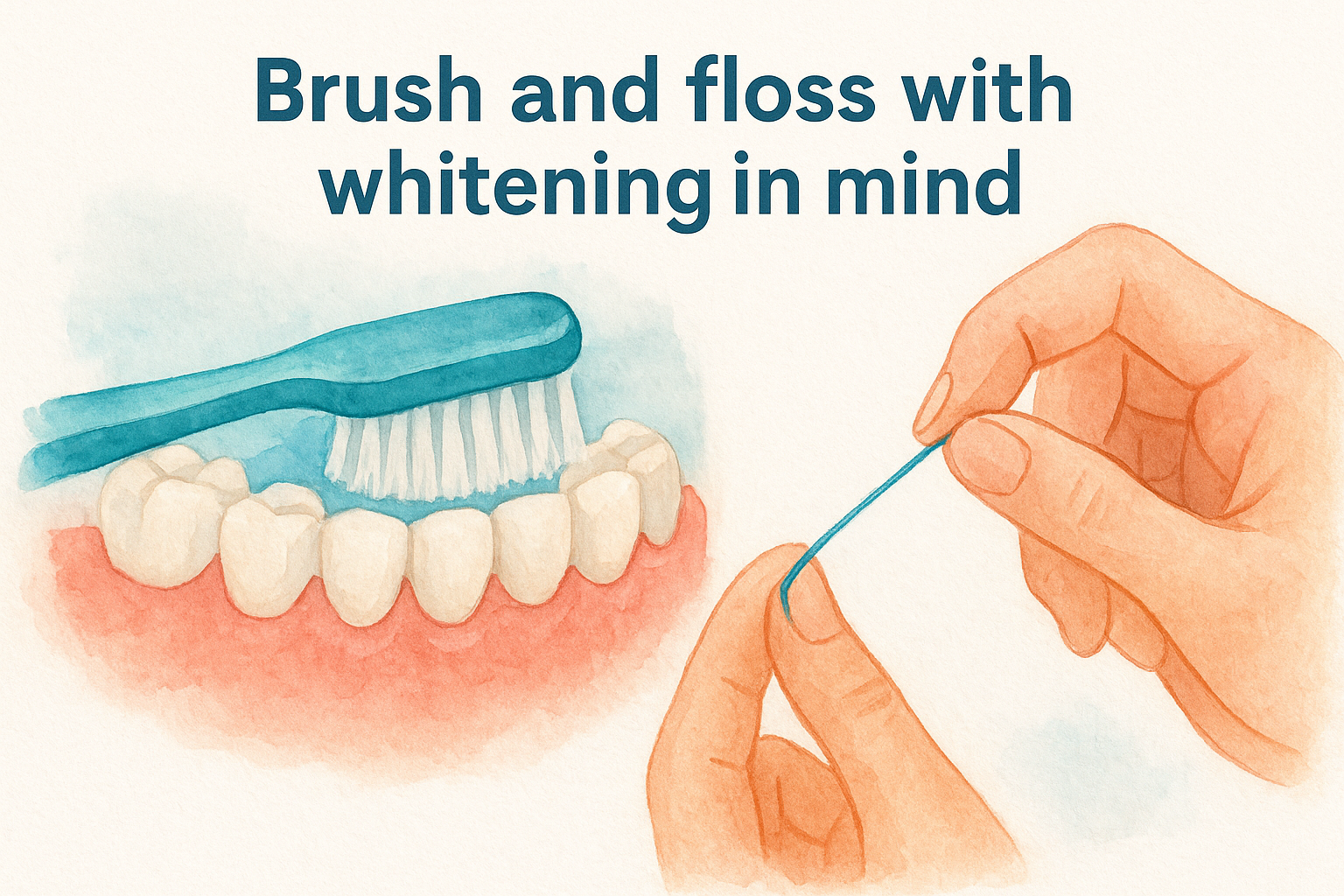
Brush and floss with whitening in mind
Brush your teeth twice daily for two minutes using whitening toothpaste that carries the ADA Seal of Acceptance. These toothpastes contain mild abrasives that remove surface stains without damaging your enamel. Hold your toothbrush at a 45-degree angle to your gums and use gentle circular motions rather than aggressive scrubbing. Floss once per day to remove food particles that cause discoloration between teeth, where stains often start.
Clean between teeth for stain prone spots
Food debris lodges between your teeth and along your gumline, creating dark spots that regular brushing cannot reach. Use interdental brushes or a water flosser to flush out particles that accumulate throughout the day. These areas trap coffee, tea, and other staining substances that gradually discolor your smile. Clean between your teeth before bedtime to prevent overnight staining.
Regular interdental cleaning removes up to 40% more plaque than brushing alone.
Create simple morning and night habits you can keep
Establish a morning routine where you brush immediately after breakfast to remove staining foods. At night, floss first to loosen debris, then brush with whitening toothpaste. Keep your oral care tools in plain sight on your bathroom counter so you never skip steps. Understanding how to keep teeth white means building habits that become automatic rather than requiring daily motivation.
3. Eat and drink in ways that prevent stains
Your diet affects your tooth color more than any other factor. Certain foods and drinks leave behind pigments that bond to your enamel, creating stubborn stains that dull your smile. You don't need to eliminate everything you enjoy, but you do need to be strategic about when and how you consume staining substances. Smart eating and drinking habits protect your investment in white teeth without requiring extreme restrictions.
Limit staining drinks and use smart coffee habits
Coffee, tea, red wine, and dark sodas contain chromogens that attach to tooth enamel. Drink these beverages during a 30-minute window rather than sipping them throughout the day. Use a straw positioned toward the back of your mouth to minimize contact with your front teeth. Switch to lighter options like white tea or add milk to coffee, which reduces staining compounds.
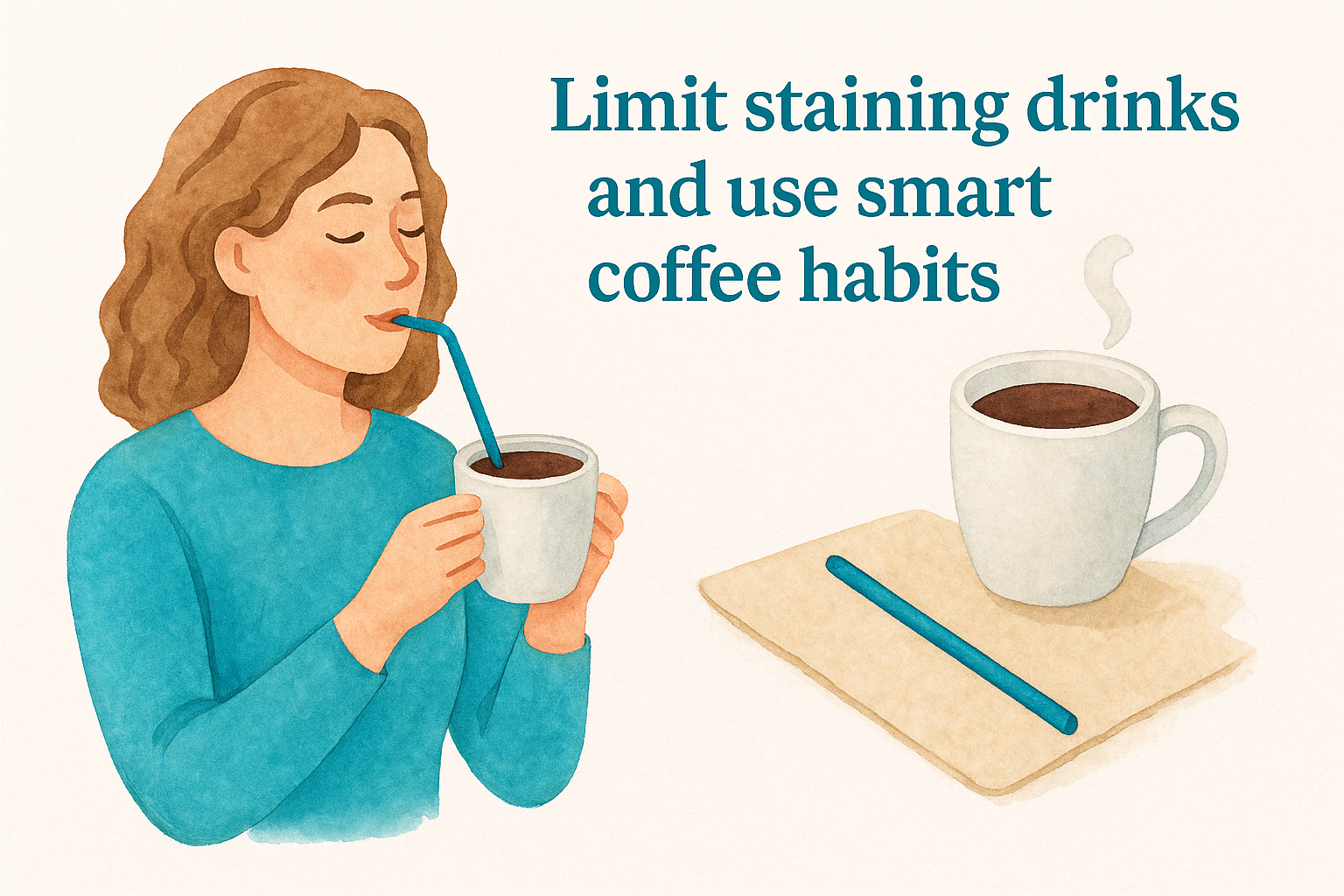
Limiting your coffee-drinking window to 30 minutes and brushing within an hour significantly reduces stain buildup.
Add teeth friendly foods to your meals and snacks
Crunchy vegetables like celery, carrots, and apples scrub your teeth naturally while you chew. Cheese and milk contain calcium that strengthens enamel and neutralizes acids. Strawberries and pineapple contain enzymes that help break down surface stains. Include these foods in your daily meals to fight discoloration.
Rinse and time your brushing to protect enamel
Rinse your mouth with water immediately after consuming staining foods or drinks. This washes away pigments before they settle into your enamel. Wait 60 minutes before brushing after acidic foods or beverages, as your enamel softens temporarily and aggressive brushing causes damage. Learning how to keep teeth white includes protecting your enamel during vulnerable moments.
4. Protect enamel and avoid risky DIY hacks
Your enamel serves as the protective outer layer that determines your teeth's natural color and strength. Damaged enamel cannot regenerate, and once you wear it away, you expose the yellow dentin underneath. Many popular whitening methods actually harm your enamel rather than protect it. Understanding how to keep teeth white requires knowing which products and techniques preserve your enamel's integrity while removing stains safely.
Understand how enamel color sets your smile's baseline
Enamel naturally ranges from bluish-white to grayish-yellow depending on your genetics. The thicker your enamel, the whiter your teeth appear. As you age or wear down enamel through aggressive brushing or acidic foods, the yellow dentin layer shows through more prominently. You can remove surface stains, but your teeth will never look whiter than your enamel's natural shade allows.
Skip harsh scrubs, acids, and viral whitening tricks
Activated charcoal, lemon juice, baking soda scrubs, and apple cider vinegar all wear away your enamel despite their popularity online. These substances act as abrasives or acids that permanently damage your tooth structure. Oil pulling and turmeric have no scientific evidence supporting their whitening claims. Stick with ADA-accepted whitening products that have undergone safety testing.
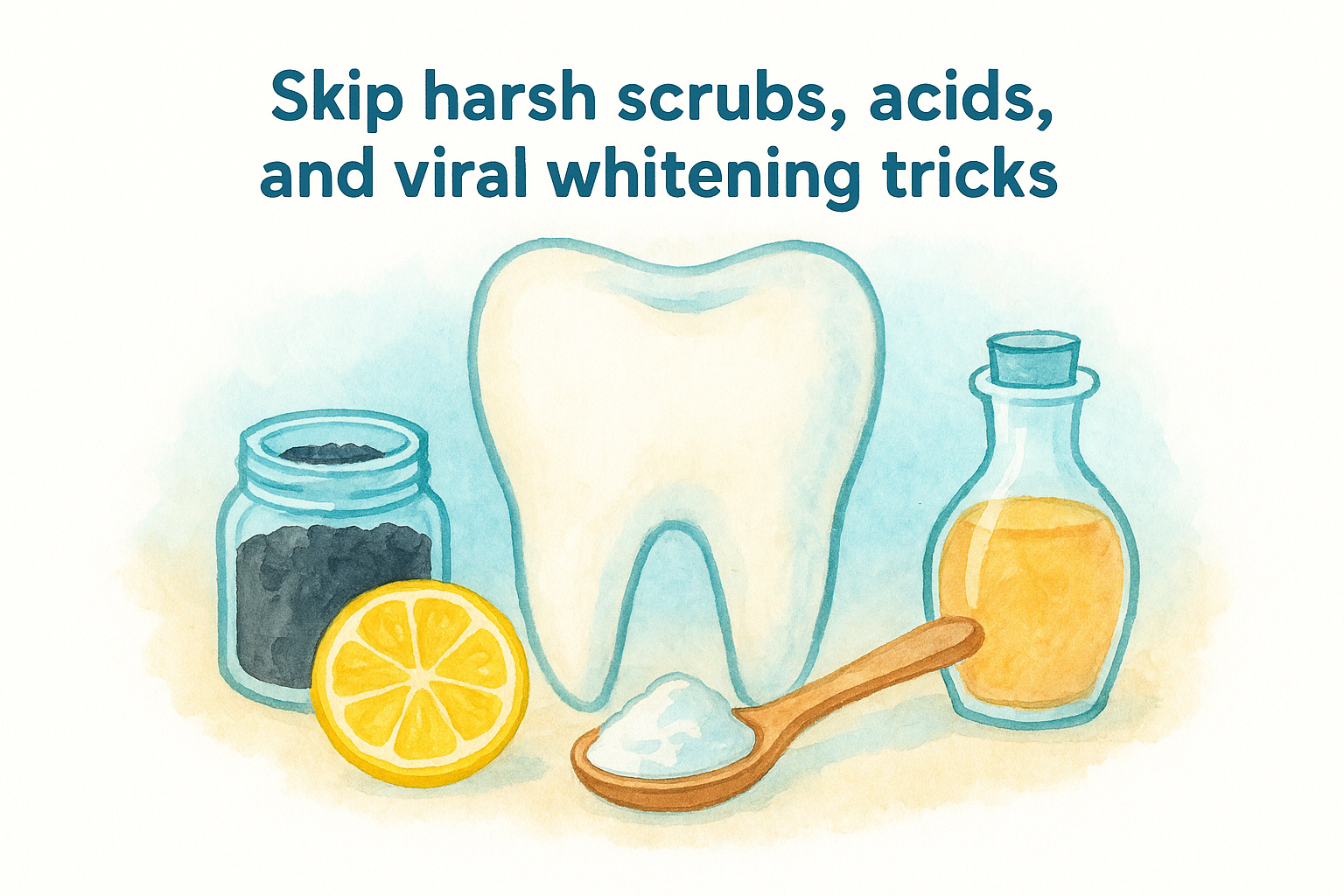
DIY whitening methods often cause irreversible enamel damage that leads to increased sensitivity and darker-looking teeth.
Manage sensitivity and strengthen enamel safely
Use toothpaste containing potassium nitrate or fluoride to reduce sensitivity after whitening treatments. Fluoride strengthens enamel by remineralizing weakened spots where stains penetrate most easily. Apply a pea-sized amount of sensitivity toothpaste directly to affected areas before bed. If sensitivity persists beyond two weeks, reduce your whitening frequency or consult your dentist.
5. See your dentist for cleanings and checkups
Professional dental care removes buildup that home care cannot reach. Your dentist has specialized tools and training to eliminate hardened tartar and deep-set stains. Regular checkups catch problems early and provide personalized whitening advice based on your specific tooth structure and oral health needs.
What professional cleanings can remove that brushing cannot
Tartar forms when plaque hardens on your teeth and cannot be removed by brushing or flossing. This calcified buildup traps stains and creates a yellowish appearance. Professional cleanings use ultrasonic scalers and polishing tools that eliminate tartar and surface stains your toothbrush misses.
Professional cleanings remove tartar that causes persistent discoloration and provides a fresh baseline for maintaining white teeth at home.
Talk about safe whitening options for your teeth
Your dentist evaluates whether professional whitening treatments suit your tooth condition. Some teeth respond better to in-office treatments, while others benefit from custom take-home trays. Dentists identify underlying issues like enamel erosion or cavities that could worsen with over-the-counter products.
Plan regular visits to keep stains from coming back
Schedule cleanings every six months to prevent tartar buildup that dulls your smile. These visits let your dentist track your tooth color over time and adjust your whitening maintenance plan. Consistent professional care reinforces how to keep teeth white by addressing problems before they become visible stains.
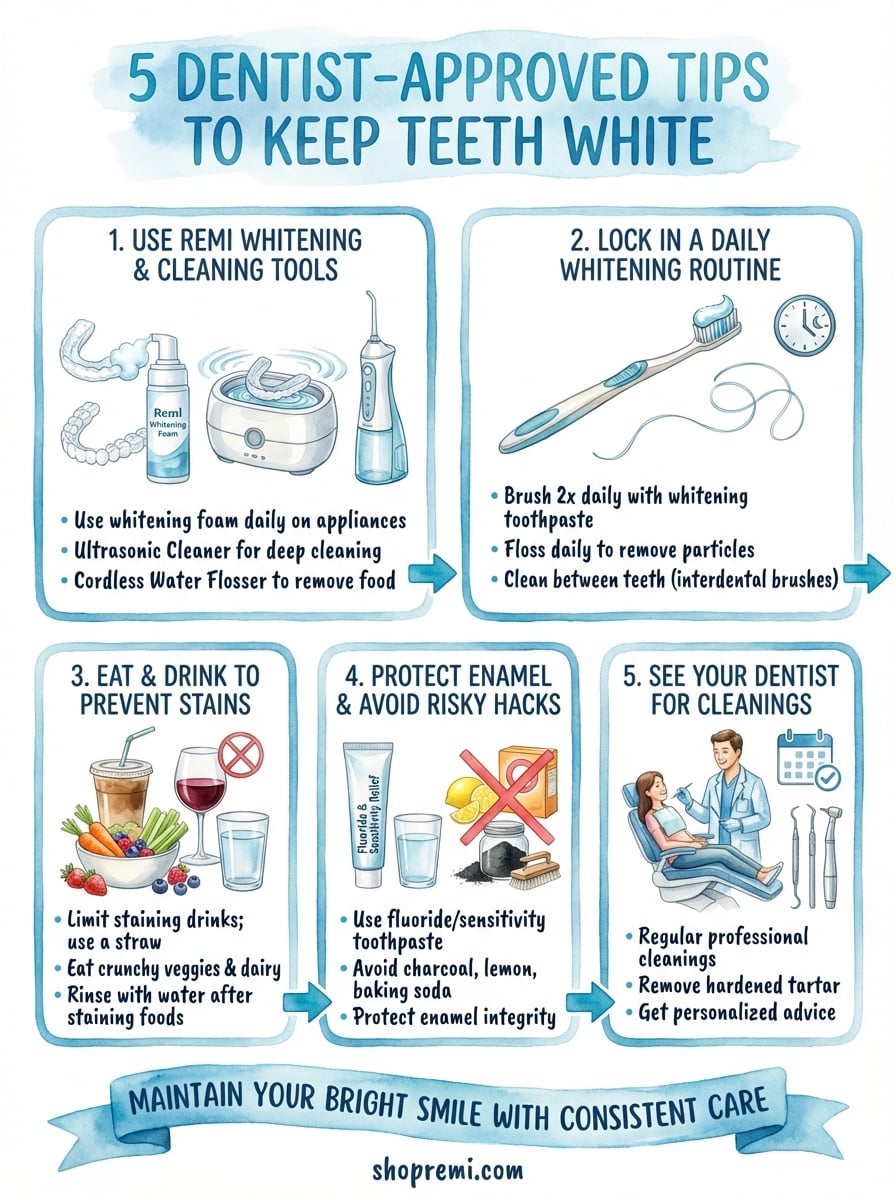
Keep your smile bright
Knowing how to keep teeth white comes down to consistent daily care and smart choices about what you eat and drink. You now have five dentist-approved strategies that protect your investment in a brighter smile. Regular brushing with whitening products, strategic food choices, enamel protection, and professional cleanings work together to prevent new stains from forming.
Start with tools that make maintenance simple. Remi's whitening foam and cleaning devices integrate seamlessly into your daily routine without requiring extreme lifestyle changes. Shop Remi's ultrasonic cleaning collection to keep your dental appliances and teeth free from stain-causing buildup. Your white smile lasts when you combine the right products with consistent habits.

