
 Guards + Retainers
 Custom Night Guard
 Retainer
 Emergency Order

 Whitening
 Whitening Kit
 Teeth Whitening Gel
 Dual-Action Foam
 Cleaning + Care
 Ultrasonic Cleaner Pro
 Water Flosser
 UV Toothbrush Sanitizer
 Accessories
 Guard Removal Tool
 Replacement Nozzles

You've invested time and money into straightening your teeth, and now your retainer feels... off. Maybe it's pinching, sliding around, or just doesn't seem right. Understanding how should a retainer fit is essential for protecting your orthodontic results and avoiding unnecessary discomfort. A properly fitting retainer should feel snug yet comfortable, not painful or loose.
The tricky part is knowing what's normal and what signals a problem. Some pressure when you first start wearing a retainer (or after a break) is expected. But persistent pain, visible gaps, or difficulty keeping it in place? Those are red flags that something needs attention. Ignoring fit issues can lead to teeth shifting back toward their original positions, undoing months or years of orthodontic work.
At Remi, we create custom-fitted retainers designed to match your unique dental impressions, so you get a precise, comfortable fit from the start. This guide breaks down exactly what proper retainer fit looks and feels like, how to spot signs that yours is too tight or too loose, and when it's time to consider a replacement.
Why retainer fit matters after braces or aligners
Your teeth finish moving the day you get your braces off or complete your aligner treatment, but they don't magically stay in place on their own. The bone and soft tissue surrounding your teeth need time to stabilize in their new positions. Without a properly fitting retainer holding everything steady, your teeth will naturally drift back toward where they started. This process, called relapse, can begin within just a few weeks of stopping retainer wear.
Your teeth want to shift back
The ligaments and fibers that anchor your teeth to your jawbone have memory. After orthodontic treatment moves your teeth, these structures remain stretched and want to pull your teeth back to their original positions. A well-fitting retainer counteracts this biological tendency by applying consistent, gentle pressure that keeps your teeth where your orthodontist positioned them. If your retainer doesn't fit correctly, it can't do this job effectively. Gaps between the retainer and your teeth allow movement, while excessive tightness can actually push teeth in unwanted directions.
A retainer that doesn't fit properly can't prevent your teeth from shifting, making it essentially useless for maintaining your results.
Poor fit equals wasted treatment
Understanding how should a retainer fit directly impacts whether your orthodontic investment pays off long-term. Americans typically spend $3,000 to $7,000 on braces or aligners, plus months or years wearing them. When your retainer doesn't fit correctly, you risk undoing all that progress. Even minor shifts can create gaps, crowding, or bite problems that require additional treatment to fix. The financial and time cost of retreatment often exceeds the original orthodontic work, especially if you delay addressing the problem.
Retainer fit also affects your daily comfort and compliance. A retainer that causes pain or keeps falling out becomes something you avoid wearing, which accelerates tooth movement. Your orthodontist prescribes a specific wear schedule (often nightly for life) based on the assumption that your retainer fits properly and you'll actually use it. When fit issues make wearing your retainer unpleasant, you're less likely to follow through, which puts your smile stability at serious risk.
What a properly fitting retainer feels like
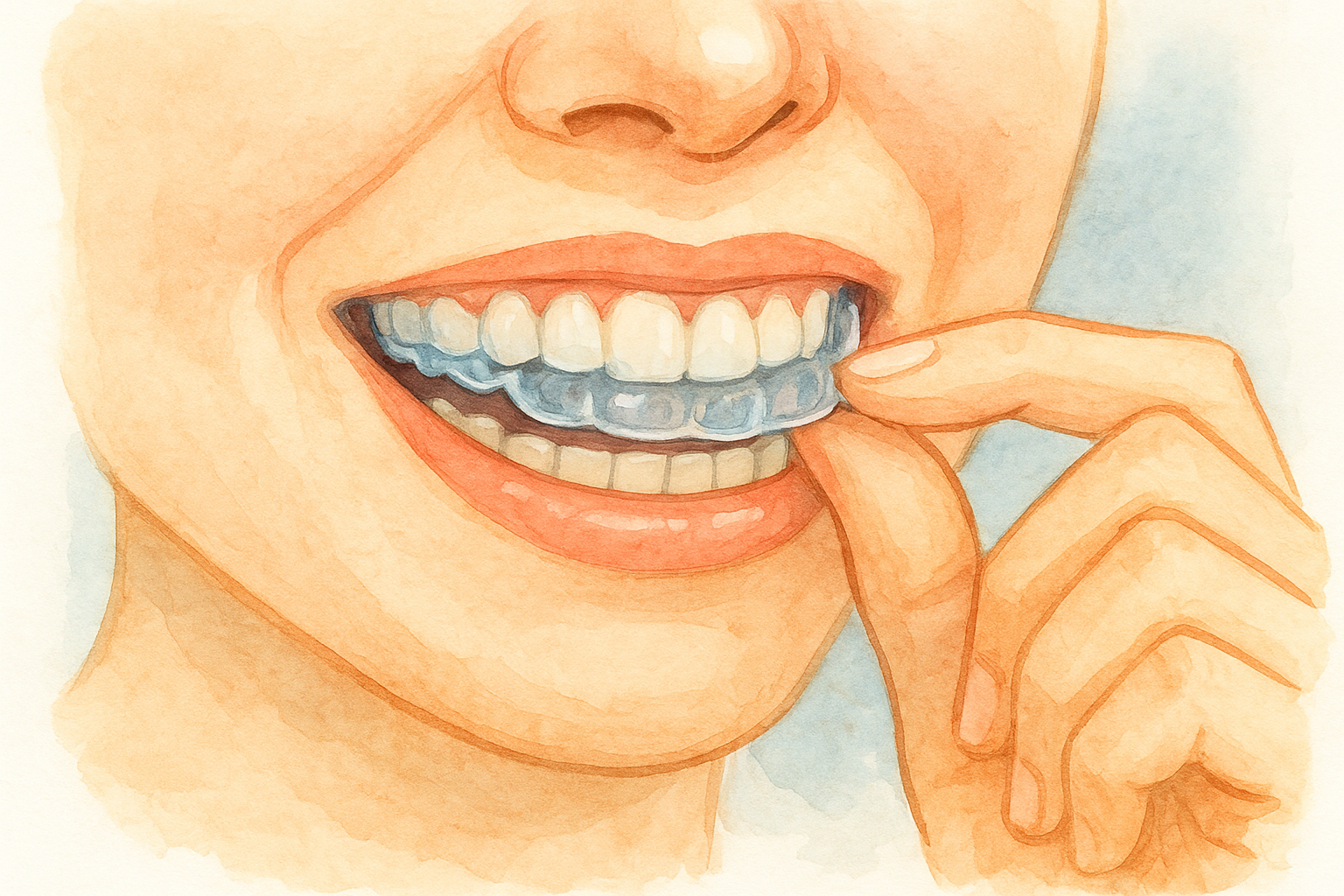
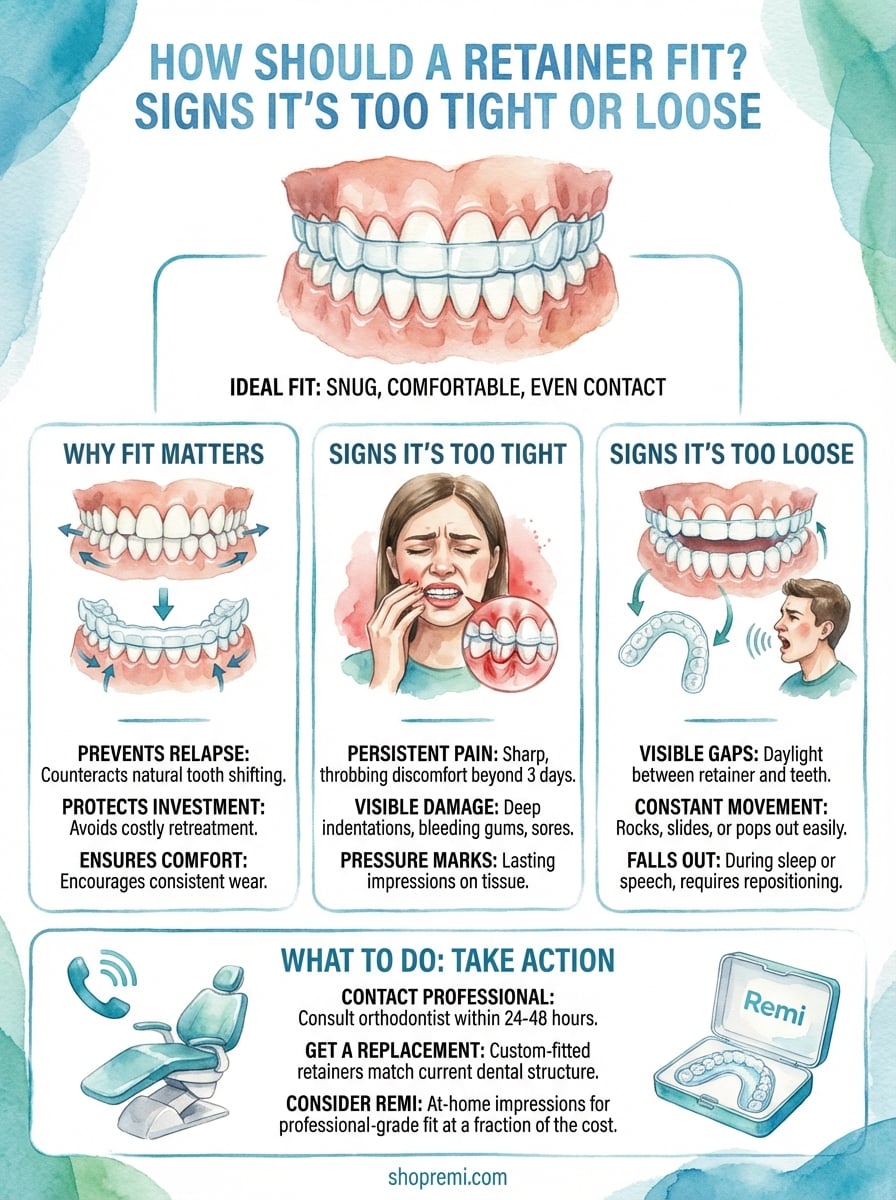
When you first insert a correctly fitting retainer, you should notice immediate snugness without sharp pain. The retainer clicks into place over your teeth with slight pressure, and you feel it making even contact across all surfaces. This sensation means the retainer is doing its job of holding your teeth in position. You might experience mild soreness for the first few nights, especially if you haven't worn your retainer in a while, but this discomfort should fade quickly as your mouth adjusts.
The initial sensation
The moment you put your retainer in, it should seat fully against your teeth without gaps. You'll feel gentle, consistent pressure that's noticeable but not painful. Your retainer shouldn't rock back and forth or require multiple attempts to position correctly. If you run your tongue along the inside, the retainer should feel stable and secure, not loose or shifting around your mouth.
A properly fitting retainer becomes almost unnoticeable after the first few minutes of wear, allowing you to speak and swallow normally.
After the first few minutes
Once your retainer settles in, understanding how should a retainer fit means recognizing that you barely notice it's there. You can talk without a significant lisp (though some speech adjustment is normal initially), and you don't feel constant pressure or irritation. The retainer stays in place when you open and close your mouth, and you're not producing excessive saliva or fighting the urge to remove it. This comfortable, secure feeling indicates your retainer is doing exactly what it should.
Signs your retainer is too tight
A retainer that's too tight creates distinct discomfort that goes beyond normal adjustment pressure. You'll know your retainer doesn't fit correctly when the pain doesn't fade after the first few days, or when you notice physical changes to your teeth and gums. Knowing how should a retainer fit helps you distinguish between expected tightness and problematic compression that requires professional attention.
Persistent pain that doesn't improve
Your retainer should feel snug initially, but sharp or throbbing pain that continues beyond the first three nights signals excessive tightness. This discomfort often intensifies when you bite down or worsens throughout the night rather than improving. You might wake up with headaches, jaw soreness, or teeth that feel bruised and sensitive to temperature. If you find yourself taking pain medication regularly just to wear your retainer, the fit is wrong.
Visible pressure marks and tissue damage
Check your teeth and gums after removing your retainer. Deep indentations in your gum tissue that take more than a few minutes to fade indicate excessive pressure. You might also notice bleeding gums or white spots where the retainer edges dig in too hard. Your teeth may develop small cuts or sores where the plastic presses against soft tissue, and your tongue might detect raised ridges on your teeth from constant compression.
A retainer that leaves lasting marks or causes bleeding isn't protecting your teeth, it's damaging your oral health and needs immediate replacement.
These signs mean your teeth have shifted enough that your current retainer no longer matches your dental structure, or the retainer itself has warped from improper care.
Signs your retainer is too loose
A loose-fitting retainer poses just as much risk as one that's too tight. When your retainer doesn't grip your teeth securely, it can't prevent tooth movement or maintain your orthodontic results. Understanding how should a retainer fit means recognizing when excessive space between your retainer and teeth signals that replacement is necessary. Unlike the pain of an overly tight retainer, loose fit often feels comfortable at first, which makes the problem easy to ignore until your teeth have already shifted.
Visible gaps and constant movement
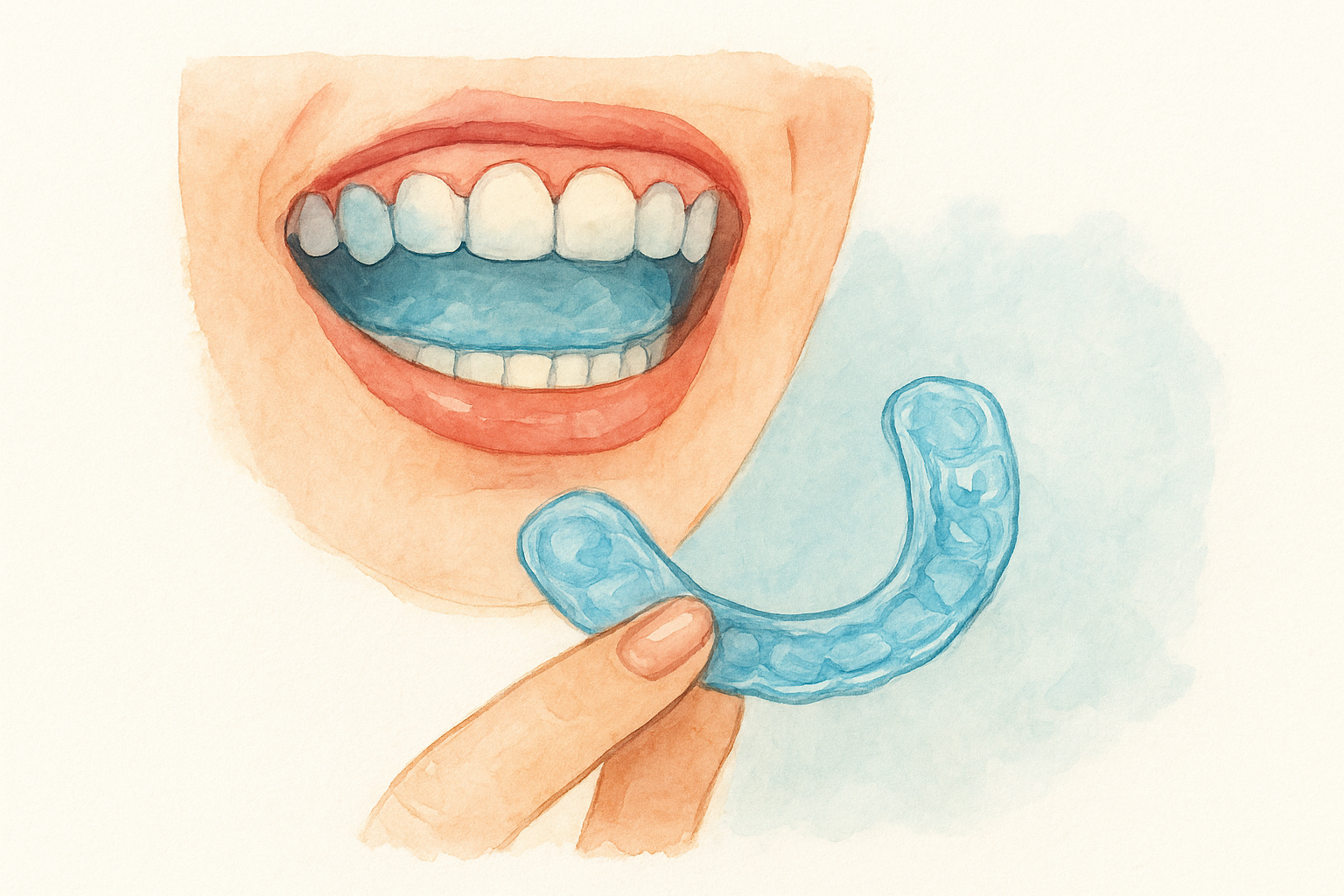
Your retainer should sit flush against your teeth with no visible space between the plastic and your tooth surfaces. If you can see daylight through gaps or notice the retainer rocking when you press on it with your tongue, it's too loose. You might also feel it sliding around when you talk or swallow, requiring constant tongue adjustments to keep it in position. When you remove your retainer, you may notice it comes out far too easily without any resistance or gentle pulling sensation.
Falling out during sleep or speech
Loose retainers frequently pop out of place during normal activities. You wake up to find your retainer sitting on your pillow or stuck to your cheek rather than on your teeth. Speaking becomes challenging because the retainer shifts mid-sentence, creating clicking sounds or causing you to accidentally spit it out. You find yourself constantly pushing it back into place with your fingers or tongue, which disrupts your daily routine.
A retainer that falls out regularly provides zero protection for your teeth and needs immediate replacement before significant shifting occurs.
What to do if your retainer doesn't fit
Your first response to fit problems should be immediate action, not waiting to see if things improve. Continuing to wear a retainer that's too tight or too loose causes more harm than going without one temporarily. Stop wearing your ill-fitting retainer right away and contact your dental professional within 24 to 48 hours. The longer you wait, the more your teeth can shift, making replacement more expensive and time-consuming. Take photos of how the retainer sits on your teeth to show your orthodontist exactly what's happening.
Contact your orthodontist or dentist first
Your orthodontist keeps records of your original dental impressions and treatment plan, making them the best first point of contact for fit issues. Schedule an appointment to have them examine both your teeth and retainer. They'll determine whether your teeth have shifted, your retainer has warped, or both problems exist simultaneously. This professional assessment tells you if minor adjustments can fix the problem or if you need a complete replacement. Never attempt to bend or modify your retainer yourself, as this almost always makes the problem worse and can damage the appliance beyond repair.
Consider a replacement retainer
If your orthodontist recommends replacement, you have options beyond returning to their office. Understanding how should a retainer fit means getting a custom solution that matches your current dental structure. At Remi, we create custom clear removable retainers using your at-home impressions, delivering professional-grade fit at a fraction of traditional dental office costs. Our retainers arrive within days, helping you protect your smile before significant shifting occurs.
Getting a properly fitting replacement quickly prevents tooth movement that could require expensive retreatment to correct.
Keep your smile stable
Your retainer only works when it fits correctly. Understanding how should a retainer fit gives you the knowledge to spot problems early, before your teeth shift back toward their original positions. Check your retainer regularly for signs of poor fit, including gaps, excessive pressure, or movement during normal activities. The moment you notice these issues, take action to get a properly fitting replacement rather than waiting for your teeth to move.
Protecting your orthodontic investment doesn't require expensive dental office visits or long wait times. Remi's custom clear retainers deliver professional-grade fit using your at-home impressions, arriving at your door within days. You get the same quality and precision as traditional dental retainers at a fraction of the cost, keeping your smile stable without breaking your budget. Don't let an ill-fitting retainer undo months or years of orthodontic work when the solution is this simple and affordable.

