
 Guards + Retainers
 Custom Night Guard
 Retainer
 Emergency Order

 Whitening
 Whitening Kit
 Teeth Whitening Gel
 Dual-Action Foam
 Cleaning + Care
 Ultrasonic Cleaner Pro
 Water Flosser
 UV Toothbrush Sanitizer
 Deep Clean + Freshening Tablets
 Accessories
 Guard Removal Tool
 Replacement Nozzles
 Bundles

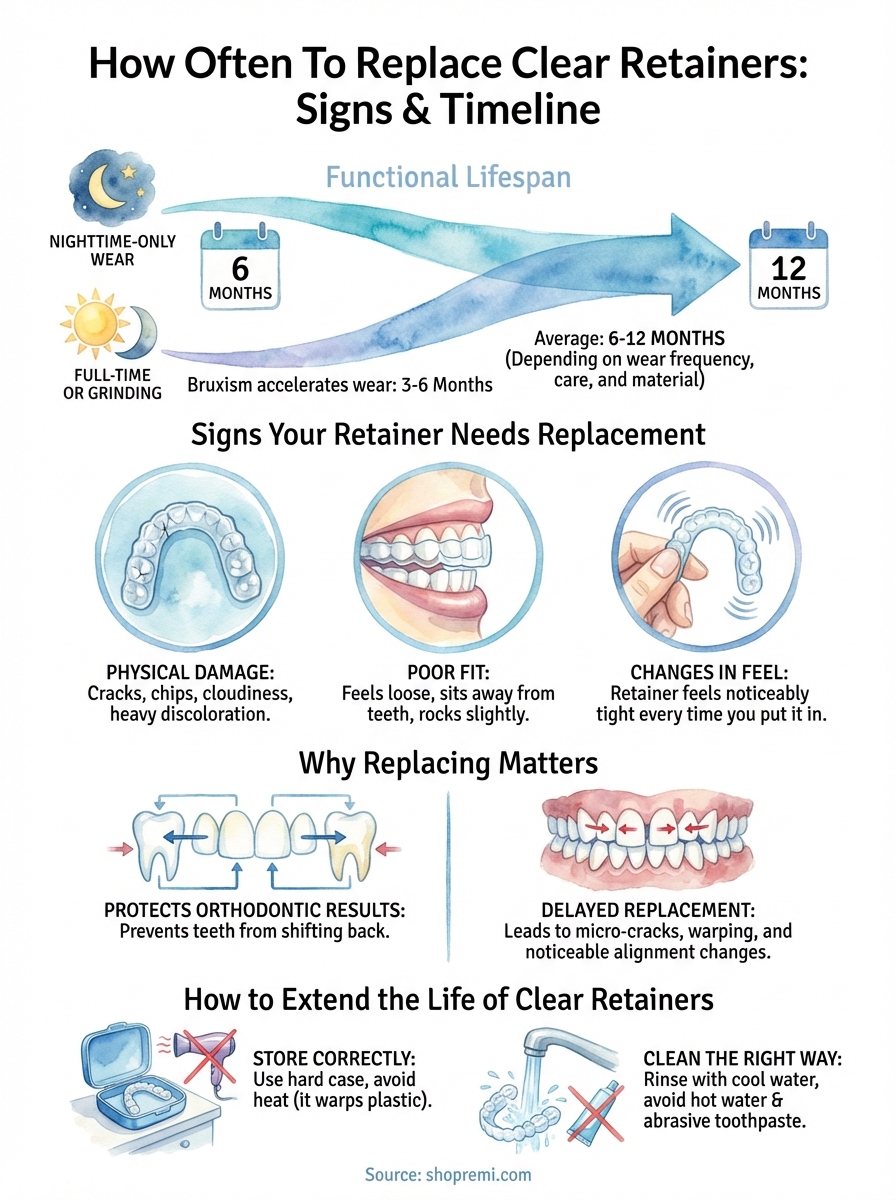
Clear retainers don't last forever, even if they still look okay sitting in their case. If you've been wearing yours for a while and started wondering how often to replace clear retainers, you're asking the right question. Most clear retainers have a functional lifespan of about 6 to 12 months, though that range depends on factors like how often you wear them, how well you care for them, and the quality of the material.
The tricky part is that retainers can lose their effectiveness gradually. A retainer that's warped, cracked, or just doesn't grip your teeth the way it used to isn't doing its job anymore, even if it still fits in your mouth. Waiting too long to replace one can mean your teeth start shifting back, undoing months or years of orthodontic work. Knowing the signs of a worn-out retainer matters just as much as knowing the general timeline.
At Remi, we make custom clear removable retainers using an at-home impression kit, so getting a replacement doesn't mean scheduling a dental appointment or paying dental-office prices. Below, we'll break down exactly when and why you should swap out your retainer, what wear patterns to watch for, and how to get the most life out of each one.
Why replacing a clear retainer on time matters
A clear retainer holds your teeth in position by applying gentle, consistent pressure against the surfaces and edges of your teeth. When the plastic ages, warps, or thins out, it loses that precise fit. Your teeth don't know the retainer is worn out; they just start moving in whatever direction the surrounding tissue pulls them.
Your teeth shift faster than you expect
Teeth are never fully static. Even years after finishing orthodontic treatment, the periodontal fibers connecting your teeth to your jawbone continue pulling them back toward their original positions. Without a well-fitting retainer, that process speeds up. Wearing a degraded retainer gives you a false sense of security, because you're going through the motions of retention without actually getting the benefit.
Replacing your retainer before it fails costs far less than retreatment if your teeth shift significantly.
What happens when you delay
When you delay replacing a retainer, two things tend to happen. First, micro-cracks and warping in the plastic alter the pressure distribution across your teeth, which makes the retainer uncomfortable and uneven in how it holds. Second, the retainer may sit slightly off your teeth, creating small gaps. Those gaps, left unchecked, turn into noticeable alignment changes over time.
Thinking carefully about how often to replace clear retainers is really about protecting how long your orthodontic results last. A retainer that looks fine but fits poorly is no longer doing the job you need it to do. Your teeth can shift enough in just a few months to make your next retainer feel noticeably tight when you put it back in.
The structural limits of clear plastic
Clear retainer material is not built to last indefinitely. The thermoplastic used in most clear retainers becomes more brittle and less flexible with repeated wear, removal, and exposure to heat or cold. Once the material passes that threshold, no amount of cleaning or careful handling reverses the problem. At that point, replacement is the only real fix.
Typical replacement timeline for clear retainers
Most clear retainers last 6 to 12 months under normal conditions, but that window shifts depending on how often you wear yours. Someone who wears their retainer every night will reach the replacement point faster than someone who only wears it a few times a week. The plastic has a fixed lifespan regardless of how carefully you handle it, so planning ahead for a replacement makes more sense than waiting until something breaks.
Full-time vs. nighttime-only wear
Nightly wear puts consistent stress on the plastic, which means most retainers worn every night land closer to the 6-month mark before they need replacing. If you only wear your retainer a few nights per week, you may stretch that closer to 12 months, though the material still ages whether it sits in your mouth or in its case.
Replacing your retainer every 6 to 12 months is the general benchmark most orthodontists reference, but your actual timeline depends on wear frequency and how well you maintain it.
When to replace on a shorter cycle
Understanding how often to replace clear retainers becomes more pressing if you grind your teeth at night. Bruxism accelerates wear significantly, and retainers used by grinders often need replacement every 3 to 6 months rather than the standard window. Retainers are not designed to absorb that level of sustained force, so heavy grinders typically wear through the material much faster than someone with a relaxed bite.
Signs your clear retainer needs replacement
Knowing when to replace is just as important as knowing how often to replace clear retainers. Your retainer gives you clear signals before it completely fails, so checking for these signs regularly helps you stay ahead of any alignment shifts.
Physical damage you can see
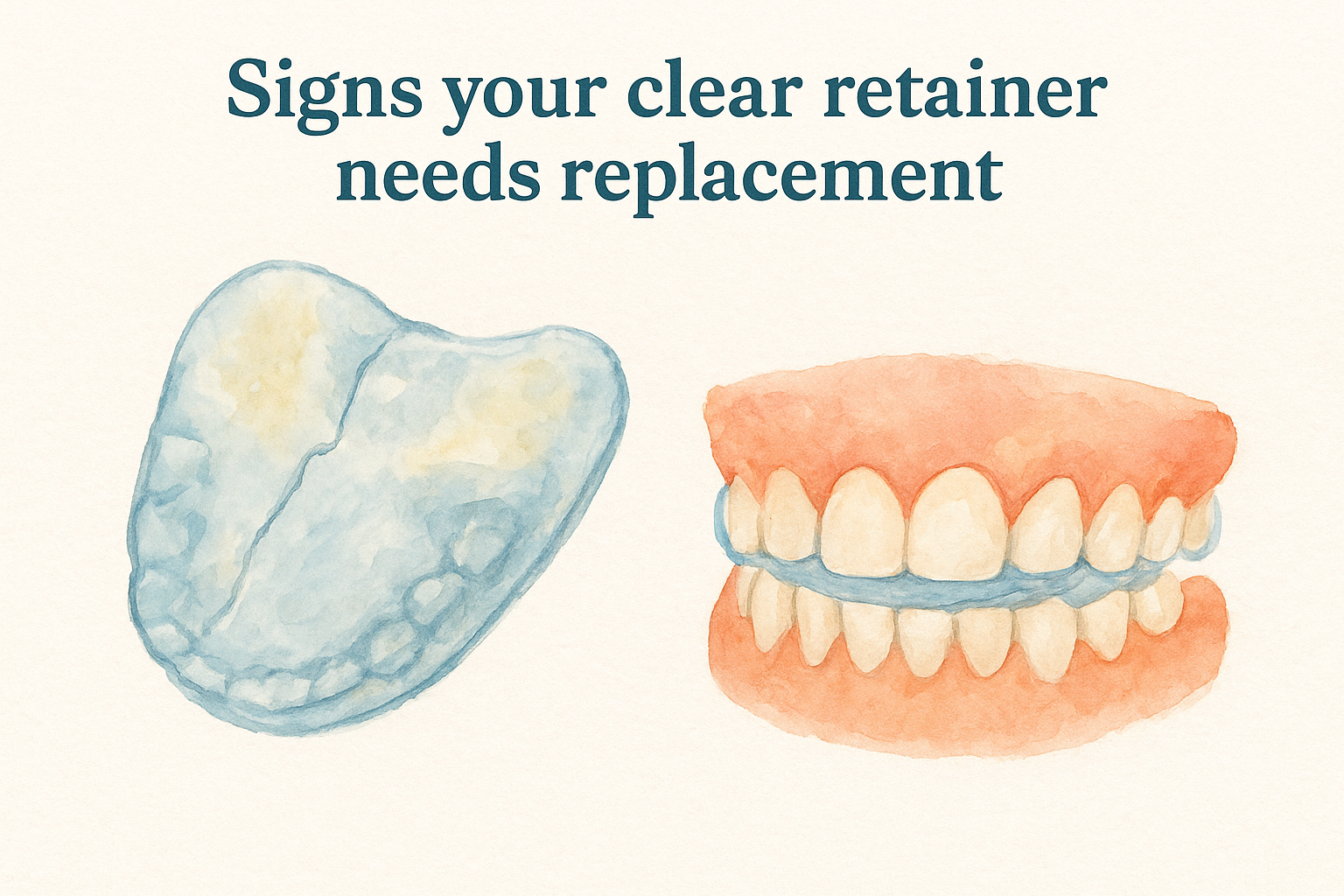
Visible cracks, chips, or cloudiness in the plastic are direct signs that your retainer has reached the end of its useful life. Small cracks compromise the structural integrity of the material, meaning the retainer can no longer distribute pressure evenly across your teeth. Yellowing or heavy discoloration that doesn't clear up with cleaning also signals material breakdown, not just surface staining.
If you can see a crack, even a minor one, replace your retainer immediately rather than waiting to see if it gets worse.
Poor fit and changes in feel
A retainer that feels loose or sits away from your teeth is no longer holding your alignment. If you notice gaps between the plastic and your gum line, or if the retainer rocks slightly when you press it in, the fit is off. This can mean your teeth have shifted, or the plastic has warped from heat exposure or regular wear.
You might also notice that your retainer feels tight every time you put it back in, even after consistent wear. That tightness often means your teeth have started moving during the gaps between wearing sessions, which points to a retainer that is no longer maintaining its shape.
What to do if your retainer is lost or no longer fits
If you lose your retainer or notice it no longer fits correctly, acting quickly matters. Every day without a properly fitting retainer is a day your teeth can move, and the longer you wait, the tighter your next retainer will feel when you finally put it back in.
Getting a replacement retainer
The traditional route is going back to your orthodontist or dentist for a new impression and a replacement retainer, but that process often involves scheduling delays and higher costs than most people expect. With Remi, you can order a custom replacement retainer using an at-home impression kit without stepping into a dental office, which cuts both the wait time and the price significantly.
If your retainer no longer fits even slightly, do not force it in. A retainer that doesn't seat properly can put uneven pressure on individual teeth and cause discomfort.
When your retainer no longer fits
A retainer that feels tight or pulls away from your teeth is a sign your teeth have shifted since the retainer was originally made. Before ordering a replacement, it helps to understand how often to replace clear retainers so you can plan ahead rather than scrambling after the fact. If significant shifting has already occurred, you will need a fresh impression taken to make sure your replacement retainer reflects your current tooth position rather than where your teeth were months ago.
How to extend the life of clear retainers
You can not stop plastic from aging, but how you handle and care for your retainer directly affects how long it holds up before needing replacement. A few consistent habits make a real difference in whether your retainer lasts closer to 6 months or 12, and they take very little effort once they become routine.
Store it correctly
Heat is the main enemy of clear retainer plastic. Leaving your retainer on a bathroom counter, in a hot car, or near any warm surface causes the plastic to warp and lose its original shape. Always store your retainer in its hard case when you are not wearing it, and keep that case away from heat sources. Wrapping it in a napkin and setting it aside is how retainers get tossed out by accident or sat on.
Clean it the right way
Rinse your retainer with cool water every time you remove it. Hot water softens and distorts the plastic over time, which is one of the most common causes of a poor fit that has nothing to do with how often to replace clear retainers on a set schedule.
Avoid toothpaste when cleaning your retainer. The abrasive particles scratch the plastic surface, which creates grooves where bacteria and buildup collect faster.
Using a retainer-specific cleaning foam or ultrasonic cleaner removes buildup without degrading the material, keeping the plastic clearer and the fit more precise for longer.
Keep your retainer working for your smile
Your clear retainer does one job: keeping your teeth in the position your orthodontic treatment created. When the plastic wears out, cracks, or loses its shape, it stops doing that job, and your teeth start moving in ways that are hard to reverse without significant time and money. Understanding how often to replace clear retainers means you can plan ahead instead of reacting after something goes wrong.
Caring for your retainer daily, storing it properly, and watching for the signs covered in this article will help you get the most out of each one. When replacement time comes, you do not have to go back to a dental office and wait weeks for a new one. Remi's at-home impression kit makes the process straightforward and affordable, so your smile stays protected without the hassle. Order your custom clear retainer and keep your results lasting as long as possible.

