


Traditional retail channels eat into your margins and keep you disconnected from your customers. You sell to distributors who sell to retailers who sell to shoppers. By the time your product reaches someone who might love it, you know nothing about them. You can't talk to them directly, can't test new products with them, and can't build the kind of relationship that turns first-time buyers into loyal fans.
Direct to consumer solutions change that equation. When you sell straight to your customers through your own channels, you control the experience, keep more of each sale, and own the relationship. You can test ideas faster, respond to feedback immediately, and build a brand that customers actually care about.
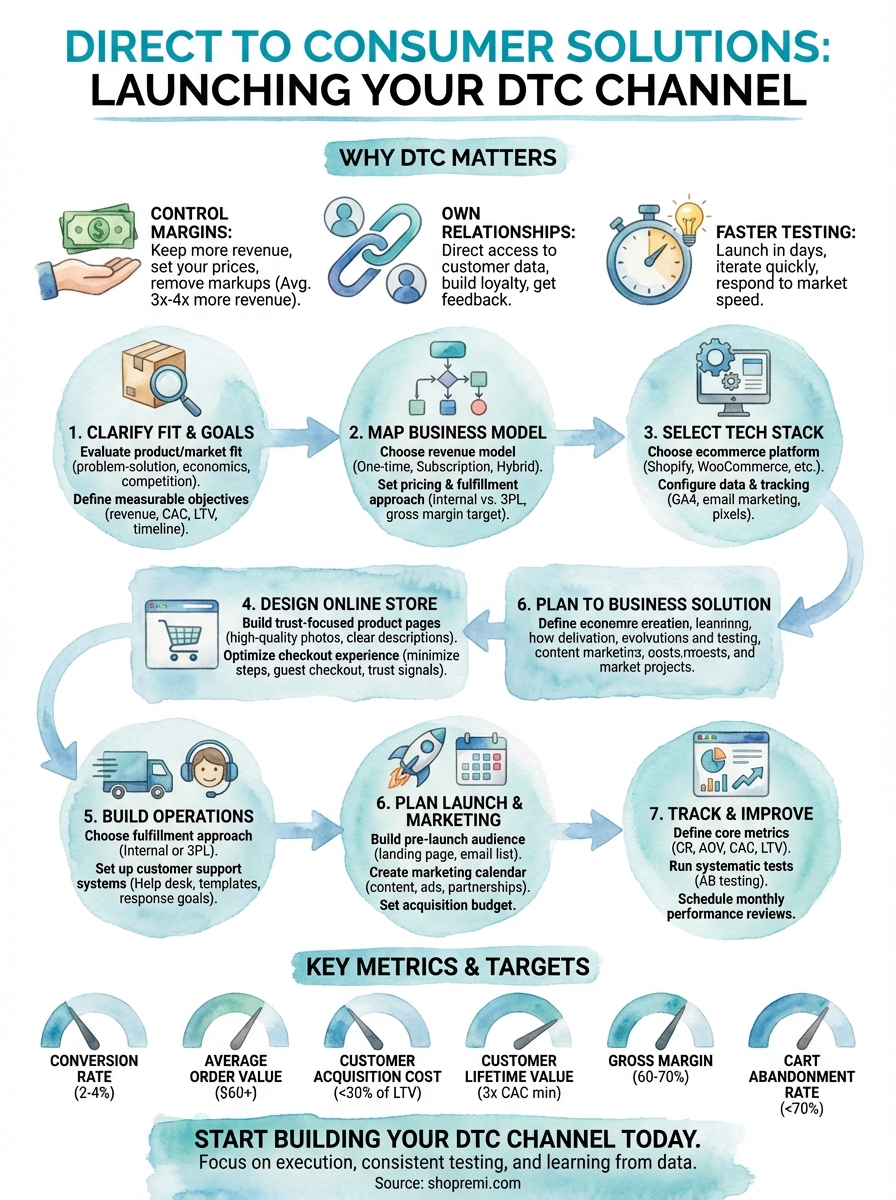
This guide walks you through launching a functional DTC channel from scratch. You'll learn how to evaluate if DTC fits your business, choose the right ecommerce platform, set up fulfillment, and plan your launch. Each step includes specific decisions you'll need to make and practical advice to help you move forward. Whether you're adding DTC to an existing business or building something new, these seven steps will get you there.
Why direct to consumer solutions matter
You lose 30 to 60 percent of your revenue every time a product passes through traditional distribution channels. Wholesalers take their cut, retailers mark up your products again, and you end up with a fraction of what customers actually pay. That money funds someone else's business while you struggle to justify your margins. Direct to consumer solutions eliminate these intermediaries and let you keep more of what you earn.
Customer data represents another massive advantage. When Target or Walmart sells your product, they own the relationship with the buyer. You never learn who bought it, why they chose it, or whether they came back for more. You can't email them, offer them personalized recommendations, or ask what would make your product better. The retailer controls that relationship and guards it closely.
Control your margins and pricing
Traditional retail forces you to set wholesale prices low enough for retailers to mark up and still compete. You might sell a product for $15 to a distributor, who sells it for $30 to a retailer, who sells it for $60 to a customer. Your margin stays fixed at that $15 while everyone else makes money from your work. DTC lets you capture the full $60 while still offering customers better prices than retail because you've removed the markup layers.
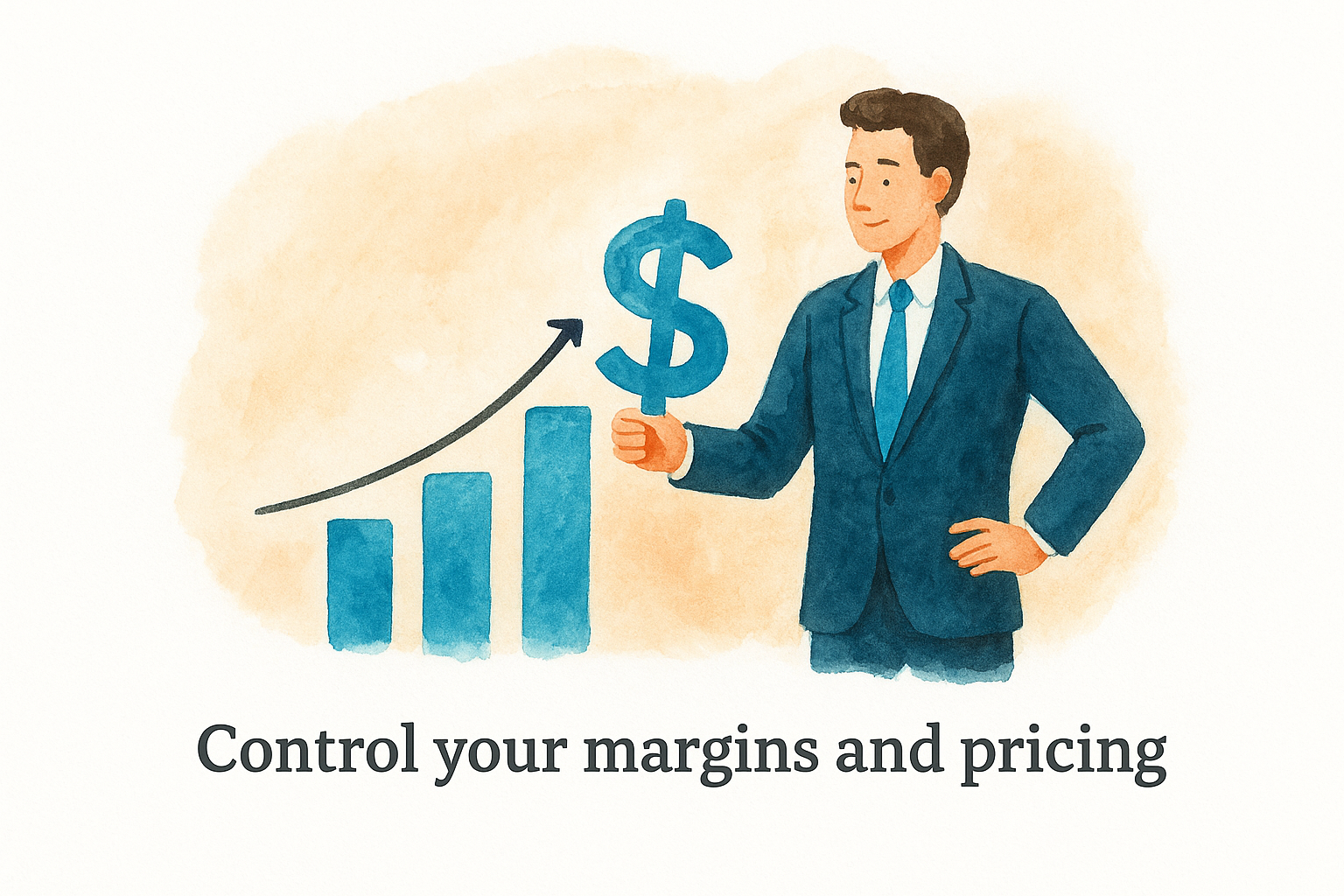
The average DTC brand captures 3x to 4x more revenue per product sold compared to wholesale channels.
Own your customer relationships
You need customer data to build a lasting business. Every purchase through your own channel gives you a name, email, purchase history, and behavioral data. You can segment customers by what they bought, send targeted campaigns, test new products with your best buyers, and build loyalty programs that actually work. Traditional retail gives you none of this. You're selling blind, hoping your products resonate but never knowing for sure until sales reports arrive weeks later.
Speed matters too. Testing a new product through retail means months of lead time, inventory commitments, and convincing buyers to give you shelf space. DTC lets you launch in days, test with a small batch, gather feedback, and iterate before you scale. You move at the speed of your decisions, not someone else's buying calendar.
Step 1. Clarify your DTC fit and goals
Not every product succeeds in direct to consumer solutions, and rushing into DTC without clear objectives wastes time and money. You need to evaluate whether your product, market, and business model actually fit the DTC channel before you invest resources. Some products thrive when sold directly, while others work better through traditional distribution. Your first task is honest assessment, not wishful thinking.
Evaluate your product and market fit
Your product needs to solve a specific problem that customers actively search for solutions to address. Generic or commodity products struggle in DTC because customers default to whatever Amazon or Walmart stocks. Products with unique features, strong branding potential, or educational components perform better because you can tell a story that justifies buying directly from you instead of a marketplace.
Consider these factors when evaluating fit:
- Unit economics: Can you price high enough to cover advertising, shipping, and operations while maintaining healthy margins?
- Purchase frequency: Do customers buy once or return regularly? Subscription and repeat purchase products build sustainable DTC businesses faster.
- Shipping complexity: Can your product ship safely and affordably in standard packaging? Heavy, fragile, or oversized items increase costs dramatically.
- Competition intensity: How many established brands already dominate the space? Breaking through in saturated markets requires significant marketing budgets.
Define specific DTC objectives
Vague goals like "grow sales" or "build our brand" won't guide your decisions when challenges arise. You need measurable targets that tell you whether your DTC channel works. Set specific numbers for revenue, customer acquisition cost, lifetime value, and timeline. These metrics determine which platforms you choose, how much you spend on marketing, and whether you continue investing in the channel.
Clear objectives let you make fast decisions about which opportunities to pursue and which to ignore.
Write down your primary goal first. Are you testing market demand for a new product? Building a customer email list for future launches? Replacing declining wholesale revenue? Your primary objective shapes everything else. Then add supporting metrics: target monthly revenue by month six, maximum customer acquisition cost, minimum repeat purchase rate, and acceptable return rate. These numbers become your decision framework for the next six steps.
Track these goals in a simple spreadsheet with monthly checkpoints. Update them as you learn what actually works in your market, but start with specific targets that force you to think through the economics before you launch.
Step 2. Map your DTC business model
Your business model determines how customers buy from you, how often they return, and how much revenue you capture from each relationship. You need to decide between one-time purchases, subscription models, or a hybrid approach before you build anything. This decision affects your pricing, fulfillment operations, customer service load, and cash flow timing. Choose the wrong model and you'll struggle with customer retention, inventory planning, and profitability even if everything else works perfectly.
Choose your revenue model
One-time purchase models work best for high-ticket items or products customers buy infrequently. You sell once, ship once, and move on to the next customer. This model requires constant customer acquisition because each sale stands alone. Your marketing costs stay high as a percentage of revenue, but you avoid the complexity of managing subscriptions and recurring billing.
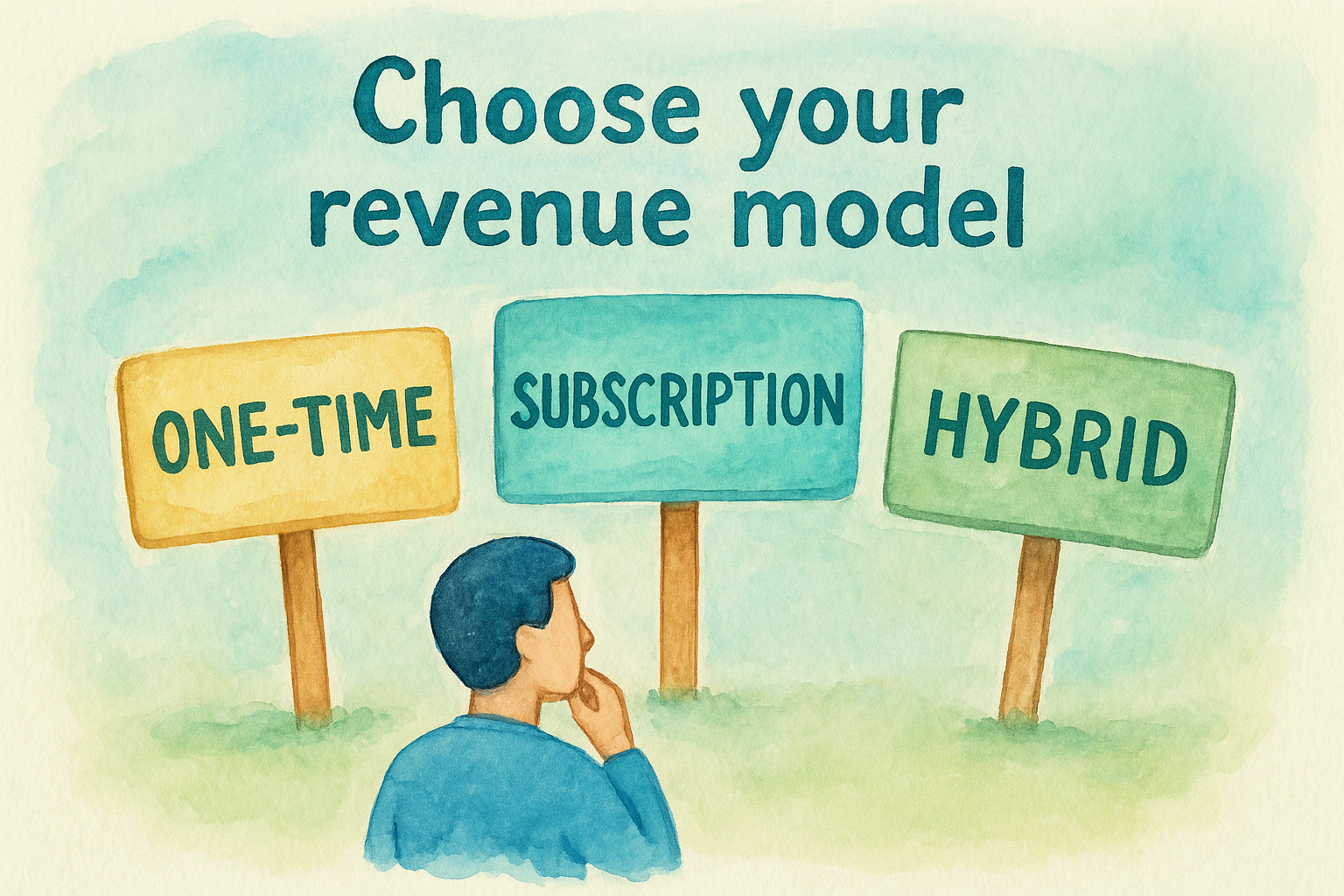
Subscription models generate predictable recurring revenue and higher customer lifetime values. Customers commit to regular shipments at fixed intervals, which smooths your cash flow and reduces acquisition costs over time. You invest heavily upfront to acquire each subscriber, then recover that investment across multiple billing cycles. Products that customers consume regularly or replace on a schedule fit subscriptions naturally.
Consider these model options:
- One-time: Customer buys once, you fulfill once. Works for durable goods, high-price items, or seasonal products.
- Subscription: Customer commits to regular deliveries. Ideal for consumables, replenishment items, or curated selections.
- Hybrid: Offer both one-time purchases and subscription options. Let customers choose based on their commitment level.
- Membership: Charge an annual fee for benefits like discounts, early access, or exclusive products.
Set your pricing and fulfillment approach
Calculate your true unit cost including product, packaging, shipping, and returns before you set prices. Add your target gross margin (typically 60 to 70 percent for sustainable direct to consumer solutions), then compare that price to what competitors charge. If your price lands significantly higher than alternatives, you need either a stronger value proposition or lower costs.
Price low enough to compete, high enough to fund growth, and transparent enough to build trust.
Fulfillment defines your operational complexity. Shipping products yourself gives you maximum control over packaging, inserts, and delivery speed, but requires warehouse space, staff, and inventory management systems. Using a third-party logistics provider (3PL) reduces upfront investment and scales easier, but you lose direct control over the customer unboxing experience. Map out both options with realistic cost projections before you commit to either path.
Step 3. Select your ecommerce and data stack
Your technology stack forms the foundation of your direct to consumer solutions channel, and choosing the wrong platform or tools forces painful migrations later. You need an ecommerce platform that handles transactions, inventory management that tracks stock levels, analytics tools that show customer behavior, and email marketing systems that nurture relationships. These systems must connect seamlessly or you'll spend hours manually transferring data between disconnected tools.
Evaluate ecommerce platforms
Your ecommerce platform manages your product catalog, checkout process, payment processing, and order fulfillment. Start with platforms built for direct to consumer businesses rather than enterprise systems designed for large retailers. You want something that launches quickly, integrates with standard tools, and grows with your business without requiring expensive developers.
Compare platforms based on these criteria:
- Monthly fees: Base platform cost plus transaction fees and add-on charges
- Payment processing: Built-in options versus requiring third-party integrations
- Customization limits: Theme flexibility and ability to modify checkout flows
- App ecosystem: Available integrations for email, analytics, and fulfillment
- Scalability: Performance under high traffic and ability to handle growth
- Support quality: Response times and availability of expert help
Shopify dominates the direct to consumer space for good reason. It handles everything out of the box, connects to thousands of apps, and requires minimal technical knowledge. WooCommerce works if you already run WordPress and want maximum control over every detail. BigCommerce offers more built-in features than Shopify but with a steeper learning curve. Test your top two choices by building a demo store with a few products to see which interface feels more natural.
Choose the platform that lets you launch in weeks, not months, even if it means accepting some limitations on customization.
Configure tracking and customer data
Install Google Analytics 4 on your site immediately after choosing your platform. This free tool tracks every visitor action from landing page to purchase completion. Set up ecommerce tracking within Analytics to capture revenue, conversion rates, and product performance automatically. You need this baseline data flowing from day one because you can't analyze trends without historical comparisons.
Connect an email marketing platform that integrates directly with your ecommerce system. This integration automatically syncs customer emails, purchase history, and browsing behavior without manual exports. Build three essential automated sequences before launch: a welcome series for new subscribers, an abandoned cart recovery flow for incomplete checkouts, and a post-purchase follow-up that requests reviews and suggests related products. These automations work while you sleep and typically generate 15 to 30 percent of total revenue.
Set up conversion tracking pixels for any paid advertising platforms you plan to use. Facebook Pixel, Google Ads conversion tracking, and TikTok Pixel let you measure which ads drive actual sales, not just clicks. Install these tracking codes during setup so historical data accumulates before you spend serious money on ads.
Step 4. Design a customer ready online store
Your online store converts browsers into buyers only when it looks professional, loads quickly, and makes purchasing effortless. Customers decide whether to trust you within three seconds of landing on your site, so every visual element, product description, and navigation choice either builds confidence or creates doubt. A poorly designed store wastes every dollar you spend driving traffic to it, while a polished store turns those visitors into revenue.
Build trust-focused product pages
Product pages carry the entire weight of convincing customers to buy without the benefit of touching, feeling, or trying your product first. Start with high-quality photos that show your product from multiple angles, in use, and at scale so customers understand exactly what they're buying. Include at least five images per product, with zoom functionality that lets shoppers examine details closely.
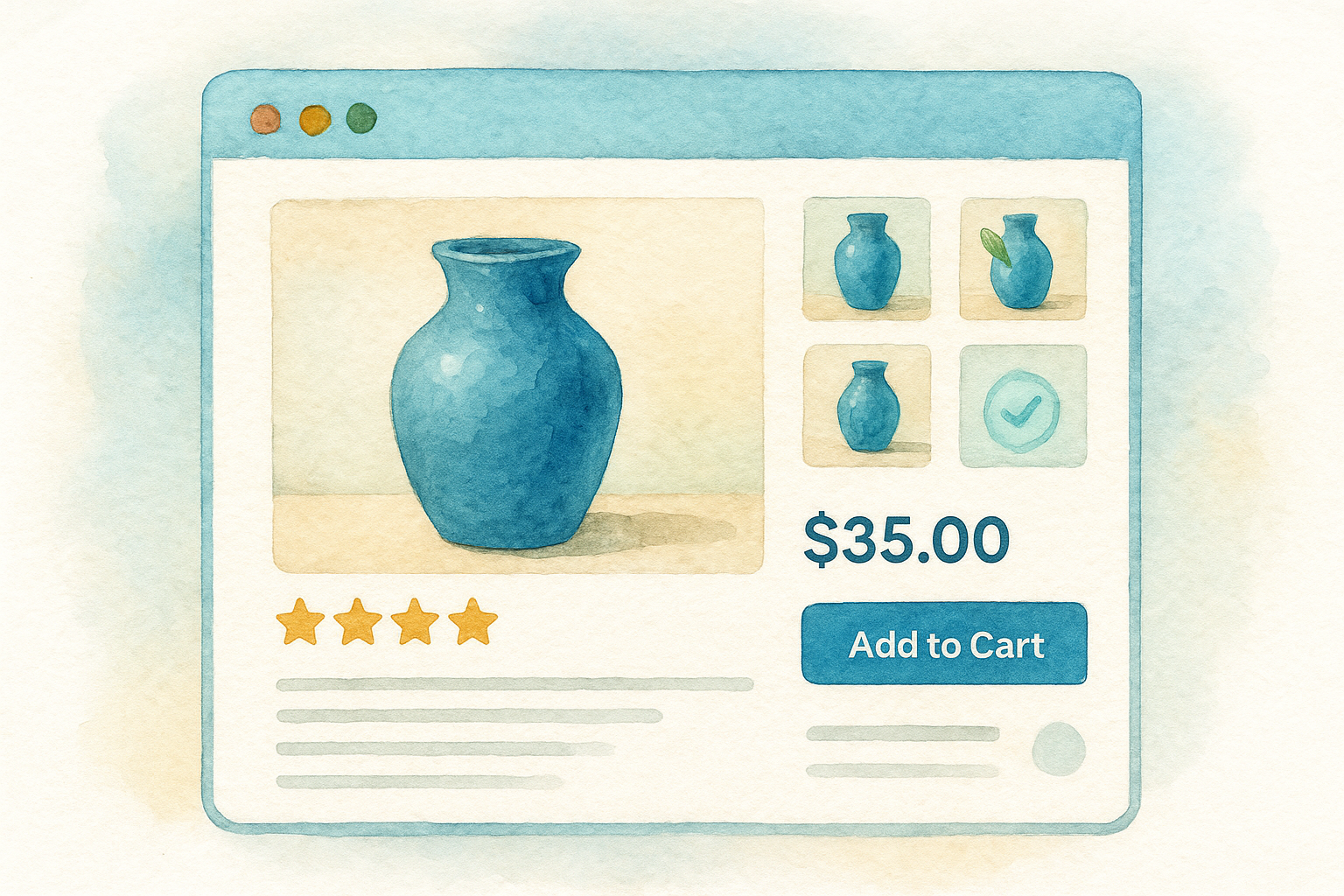
Write product descriptions that answer specific questions customers ask rather than listing generic features. Explain what problem your product solves, who benefits most from using it, and what makes it different from alternatives. Include dimensions, materials, care instructions, and usage tips in bulleted lists for easy scanning. Your descriptions should sound like you're explaining the product to a friend, not reading from a technical manual.
Customers buy based on outcomes, not specifications. Show them the result they'll get, not just what the product contains.
Structure your product information with these essential elements:
- Primary headline: Benefit-focused product name that describes the outcome
- Price and availability: Clear, prominent pricing with stock status
- Product images: Minimum five high-resolution photos with zoom capability
- Description: Problem-solution format explaining why customers need this
- Specifications: Technical details in scannable bullet points
- Social proof: Customer reviews, ratings, and user-generated photos
- Trust badges: Security seals, guarantees, and return policy links
Optimize checkout experience
Complicated checkout processes kill conversions even when everything else works perfectly. Reduce your checkout to three screens maximum: cart review, shipping details, and payment information. Each additional step costs you roughly 10 percent of potential customers who abandon before completing their purchase. Remove distractions like navigation menus and promotional banners from checkout pages so customers focus solely on completing their order.
Enable guest checkout alongside account creation options. Forcing account registration before purchase increases abandonment rates significantly, especially for first-time buyers who haven't decided if they trust you yet. Capture their email during checkout, then invite them to create an account after their first successful purchase when they've experienced your product quality.
Display trust signals prominently throughout checkout: security badges near payment fields, clear return policies above the final purchase button, and estimated delivery dates next to shipping options. Show a progress indicator at the top of each checkout page so customers know exactly how many steps remain. Calculate and display total costs including shipping and taxes early in the process to eliminate surprise fees that trigger last-minute abandonment.
Step 5. Build fulfillment and support operations
Your fulfillment and customer support systems determine whether customers receive their orders correctly and resolve problems quickly when issues arise. Poor fulfillment destroys trust faster than any other mistake in direct to consumer solutions. Late shipments, damaged products, and incorrect orders turn first-time buyers into one-time buyers who leave negative reviews and warn others away. You need reliable systems that handle both routine transactions and unexpected problems before you process your first order.
Choose your fulfillment approach
Fulfilling orders yourself gives you complete control over packaging, shipping speed, and the unboxing experience. You can include branded inserts, handwritten notes, or custom packaging that reinforces your brand at the moment customers receive their purchase. This approach works when you ship fewer than 50 orders daily and have space to store inventory, packing materials, and shipping supplies. Beyond that volume, you'll spend more time packing boxes than building your business.
Third-party logistics providers (3PLs) handle receiving inventory, storing products, picking orders, packing shipments, and sending tracking information to customers automatically. You send bulk inventory to their warehouse, and they fulfill each order as it arrives through your ecommerce platform. 3PLs make sense when you exceed 50 daily orders, sell products that require specialized storage, or want to offer multiple warehouse locations for faster delivery. Compare 3PLs based on these factors:
- Setup fees: One-time charges to integrate with your platform and receive initial inventory
- Storage costs: Monthly fees per pallet or cubic foot of warehouse space
- Pick and pack fees: Per-order charges for pulling products and preparing shipments
- Shipping rates: Negotiated carrier rates versus what you could get independently
- Integration quality: API connections to your ecommerce platform for automatic order routing
- Minimum commitments: Required order volumes or monthly spending thresholds
Choose fulfillment based on your current volume, not projected growth. You can switch later when volumes justify the change.
Set up customer support systems
Install a help desk system that manages customer emails, tracks conversation history, and measures response times from a central dashboard. Your customers will contact you about order status, product questions, returns, and billing issues. Answering from personal email accounts creates chaos once volumes exceed a handful of messages daily. Help desk software keeps every conversation organized and searchable.
Create templated responses for the most common questions before launch. These templates maintain consistent messaging, reduce response time, and help anyone on your team answer questions correctly. Build templates for these scenarios:
- Order status inquiries: Tracking number lookup and estimated delivery dates
- Return requests: Policy explanation and return authorization process
- Product questions: Sizing, materials, usage instructions, and compatibility
- Shipping issues: Lost packages, damaged goods, and delivery delays
- Billing problems: Payment failures, charge disputes, and refund processing
Set clear response time expectations that you can actually meet consistently. Promising two-hour responses when you work alone sets you up for failure. Start with a 24-hour response goal for all inquiries, then reduce that window as your systems improve. Display your support hours and expected response times prominently on your contact page so customers know when to expect answers.
Step 6. Plan your DTC launch and marketing
Launch preparation separates successful direct to consumer solutions from those that struggle to gain traction. You need momentum from day one because algorithms reward engagement, and customers ignore brands that appear inactive or uncertain. Start building your audience 30 to 60 days before you accept your first order, then execute a coordinated launch sequence that turns attention into revenue. Planning your marketing calendar before launch prevents the scramble that happens when orders slow down and you realize you have no strategy to bring customers back.
Build your pre-launch audience
Create a simple landing page that explains what you're building and captures email addresses from interested visitors. This page needs a headline that states your unique value proposition, three bullet points explaining key benefits, and an email signup form promising early access or launch discounts. Drive traffic to this page through your personal network, relevant online communities, and organic social media posts that document your journey building the business.
Focus your pre-launch efforts on these proven channels:
- Email list building: Offer a launch discount or exclusive early access in exchange for email signups
- Social media content: Post product development updates, behind-the-scenes content, and problem-solution explanations
- Community engagement: Join relevant Facebook groups, subreddits, or forums where your target customers gather
- Partnership outreach: Contact complementary brands or influencers for potential launch collaborations
Aim to collect at least 500 email addresses before your official launch date. These engaged subscribers form your initial customer base and provide the social proof that convinces later visitors to buy. Test your email sequences with this audience before you open for business, fixing any broken links or confusing messages before they cost you sales.
Create your launch marketing calendar
Map your first 90 days of marketing activities in a spreadsheet with specific dates, channels, content topics, and success metrics. Your launch week should include coordinated announcements across email, social media, and any partner channels you've secured. Week two focuses on collecting and sharing customer testimonials, while weeks three and four test different product angles and customer segments to identify what resonates most strongly.
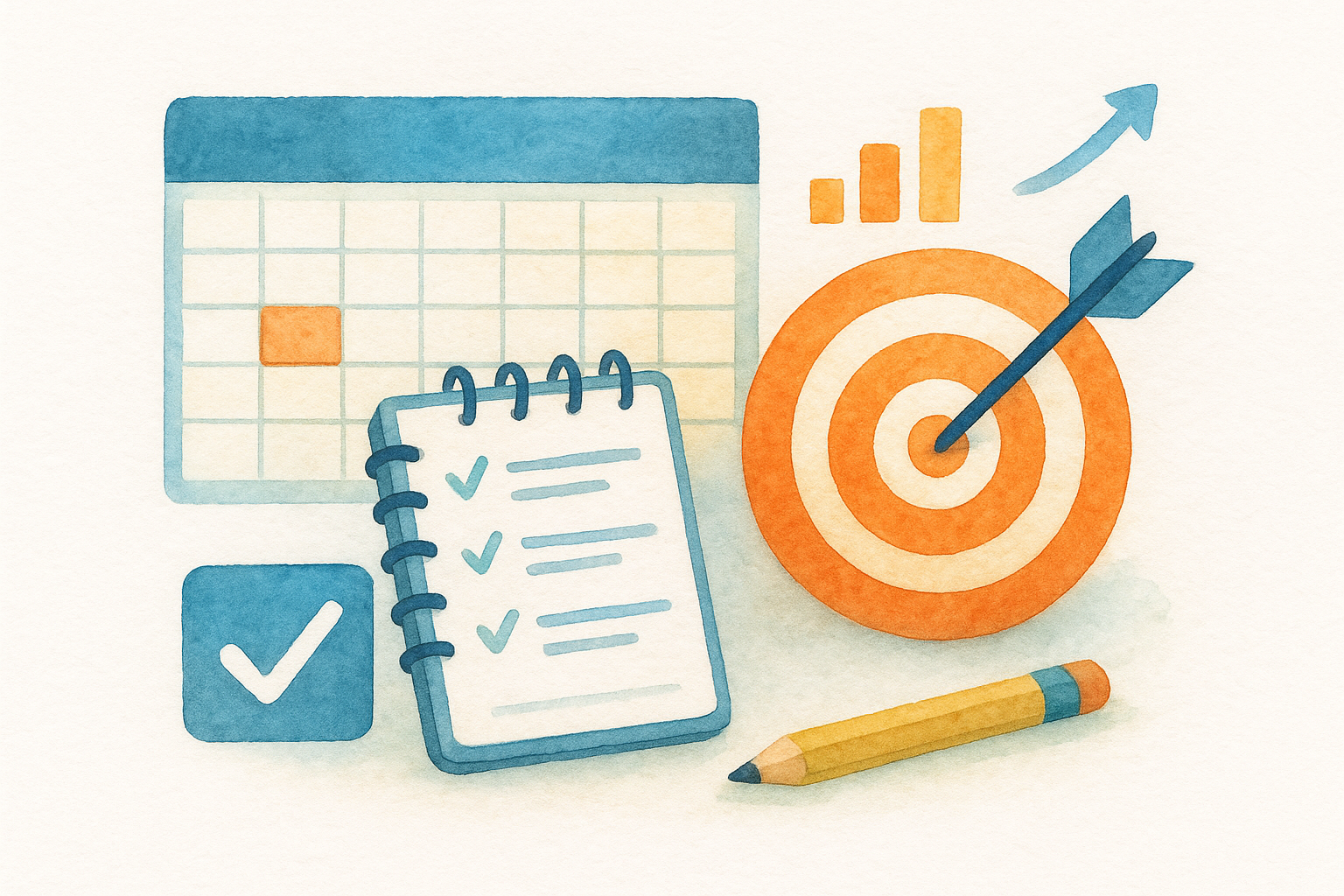
Plan daily marketing activities for your first month, then transition to weekly planning once you establish patterns that work.
Structure your calendar with these essential elements:
- Launch day: Email announcement to waitlist, social media posts across all platforms, partner posts
- Week 1: Daily social content, follow-up email to non-purchasers, first customer testimonial requests
- Weeks 2-4: Product education content, user-generated content campaigns, referral program launch
- Months 2-3: Scaled paid advertising, influencer partnerships, seasonal or event-based campaigns
Set your customer acquisition budget
Calculate how much you can spend to acquire each customer by working backward from your average order value and gross margin. If customers spend $60 on average and you keep 65 percent after costs, you have $39 per order to cover marketing and operations. Reserve at least $15 per order for advertising, which gives you room to test multiple channels before you find winners that scale profitably.
Allocate your initial $3,000 to $5,000 marketing budget across channels that let you learn quickly: 40 percent to Facebook and Instagram ads for audience testing, 30 percent to Google Shopping ads for capturing existing demand, 20 percent to influencer partnerships for social proof, and 10 percent to email marketing tools and design assets. Track spending daily during your first month and shift budgets toward channels that deliver customers below your target acquisition cost.
Step 7. Track performance and keep improving
Your direct to consumer solutions channel generates data with every visitor, click, and purchase, but raw data means nothing without systematic analysis and action. You need to establish core metrics that reveal whether your business moves toward or away from profitability, then create routines that force you to review those numbers and make adjustments. Most failed DTC brands collect mountains of data but never act on what it tells them. Your competitive advantage comes from measuring what matters and responding faster than competitors who ignore their numbers.
Define your core metrics
Track metrics that directly connect to profitability and growth rather than vanity numbers that feel good but don't predict success. Website traffic sounds impressive until you realize visitors mean nothing if they don't convert into customers. Focus your attention on metrics that reveal unit economics and customer behavior patterns. Build a simple spreadsheet that updates these numbers weekly and flags any metric that moves outside acceptable ranges.
Monitor these essential performance indicators:
| Metric | Target | Why It Matters |
|---|---|---|
| Conversion rate | 2-4% | Shows how well your site turns visitors into buyers |
| Average order value | $60+ | Determines if customers buy enough to cover acquisition costs |
| Customer acquisition cost | <30% of LTV | Reveals if your marketing spending scales profitably |
| Customer lifetime value | 3x CAC minimum | Indicates whether customers return and purchase again |
| Gross margin | 60-70% | Confirms pricing covers all costs with room for profit |
| Cart abandonment rate | <70% | Identifies friction in your checkout process |
Track fewer metrics with deeper analysis rather than watching dozens of numbers you never act on.
Run systematic tests
Improvement happens through deliberate experimentation, not random changes based on hunches or trends you notice on social media. Test one variable at a time so you know exactly what caused any change in performance. Common high-impact tests include product page layouts, email subject lines, ad creative variations, pricing structures, and shipping threshold adjustments. Run each test for at least two weeks or until you collect 100 conversions to ensure statistical significance.
Document every test in a shared spreadsheet with columns for hypothesis, test details, start date, end date, results, and next actions. Failed tests teach you as much as successful ones by eliminating options that don't work. Your test velocity matters more than your success rate because brands that test weekly discover winning variations faster than those that test monthly.
Schedule monthly performance reviews
Block two hours every month to review your metrics, analyze completed tests, and plan improvements for the next 30 days. Compare current performance to the previous month and to the same month last year if you have that history. Look for patterns in customer behavior, seasonal trends, and the compound effects of small optimizations over time. Successful direct to consumer solutions improve through consistent incremental gains rather than hoping for breakthrough discoveries.
Next steps
You now have a complete roadmap for launching direct to consumer solutions that connect you directly with customers. The seven steps covered here move you from initial evaluation through launch and ongoing optimization. Your success depends on executing consistently rather than waiting for perfect conditions that never arrive.
Start by choosing your ecommerce platform today and setting up your basic product catalog this week. Build your email capture page next week, then begin creating content that educates potential customers about the problems your products solve. Each completed step builds momentum that makes the next one easier.
Your DTC channel won't generate significant revenue immediately. Plan for three to six months of testing, learning, and refining before you achieve consistent profitability. The brands that succeed commit to this timeline and use early feedback to improve their offering continuously.
Ready to see how a successful DTC brand delivers custom products straight to customers? Check out how Remi's custom night guard eliminates traditional dental office markups while maintaining professional quality through an at-home impression process.

