


You've invested in a teeth whitening product, but now you're wondering: does it matter when you use it? The best time to whiten teeth can actually influence your results more than you might expect. Whether you're debating between morning or nighttime sessions, planning for an upcoming event, or trying to sync your whitening routine with professional cleanings, timing plays a real role in how effective your treatment will be.
At Remi, we developed our Night Guard Cleaning + Teeth Whitening Foam with convenience in mind, it fits naturally into your nightly routine while you clean your night guard. But understanding the science behind whitening timing helps you get the most from any product you choose.
This guide breaks down exactly when to whiten your teeth for optimal results, covering everything from daily timing strategies to pre-event planning and how professional cleanings factor into the equation.
Why timing matters for teeth whitening results
Your teeth don't respond to whitening treatments the same way throughout the day. Enamel porosity, saliva pH levels, and your eating patterns all shift based on when you apply whitening products. These biological factors directly impact how well the whitening agents penetrate your enamel and how long the results last.
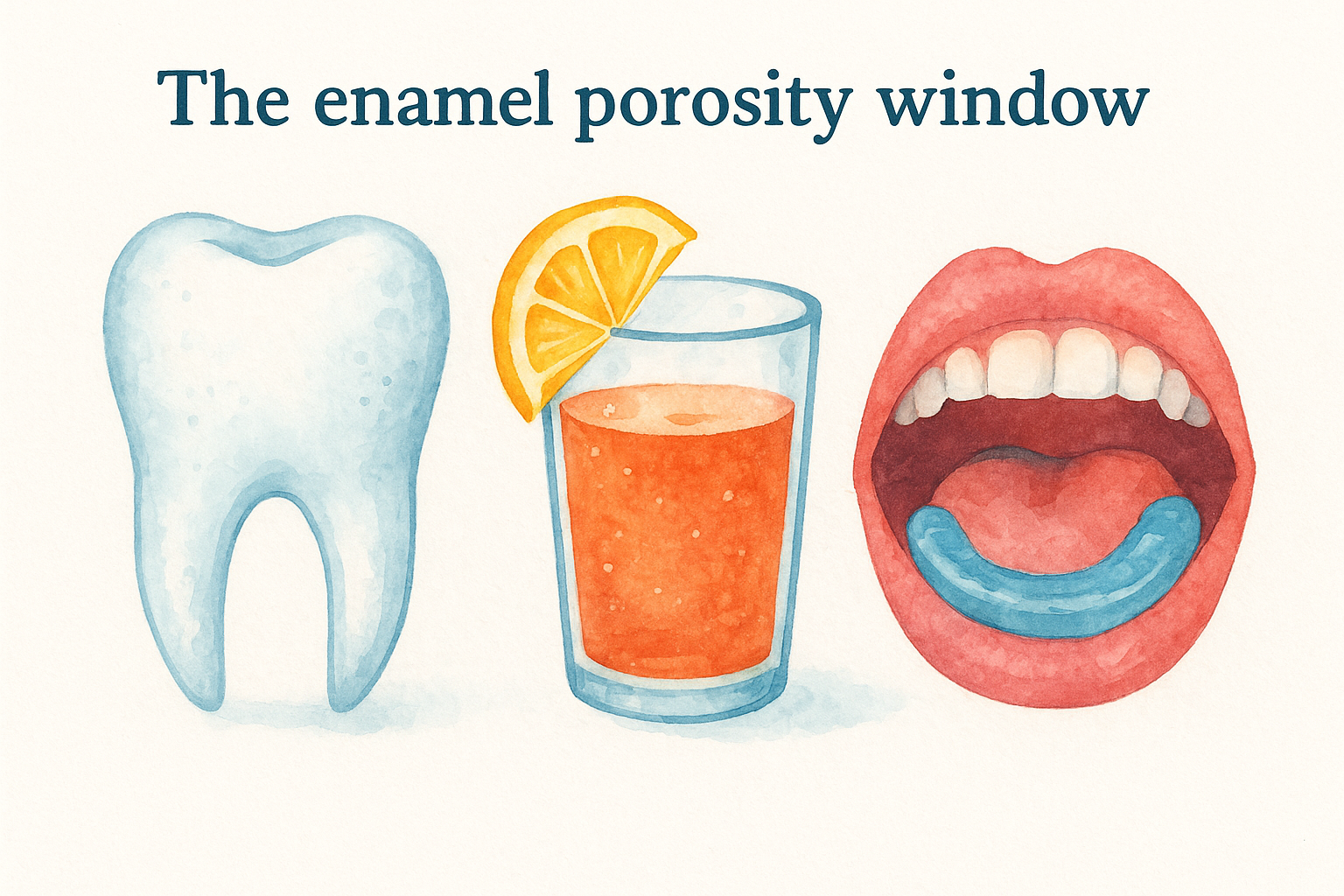
The enamel porosity window
Your enamel opens and closes its pores based on what you consume and when. Acidic foods and drinks cause your enamel to temporarily become more porous, which sounds ideal for whitening but actually makes your teeth more vulnerable to sensitivity and staining. After you brush at night, your enamel stabilizes into its most receptive state for treatment without the interference of food, drinks, or saliva production that happens during your waking hours.
Overnight application gives whitening agents six to eight uninterrupted hours to work. Your mouth produces less saliva while you sleep, which means the active ingredients stay in contact with your teeth longer instead of getting washed away.
The best time to whiten teeth is when your mouth is clean, your enamel is stable, and you won't be eating or drinking for several hours.
Your mouth's pH fluctuations
Your saliva pH drops after meals, creating an acidic environment that weakens enamel temporarily. This acidic state can interfere with how whitening agents bond to your tooth surface. Within 30 to 60 minutes after eating, your saliva naturally neutralizes and returns to a healthy pH of around 6.5 to 7.5.
Evening routines naturally align with this pH recovery. By the time you brush your teeth before bed, your mouth has typically recovered from dinner, and your saliva pH sits in the optimal range for whitening treatments to work effectively without fighting against an acidic environment.
Whiten after a dental cleaning for best payoff
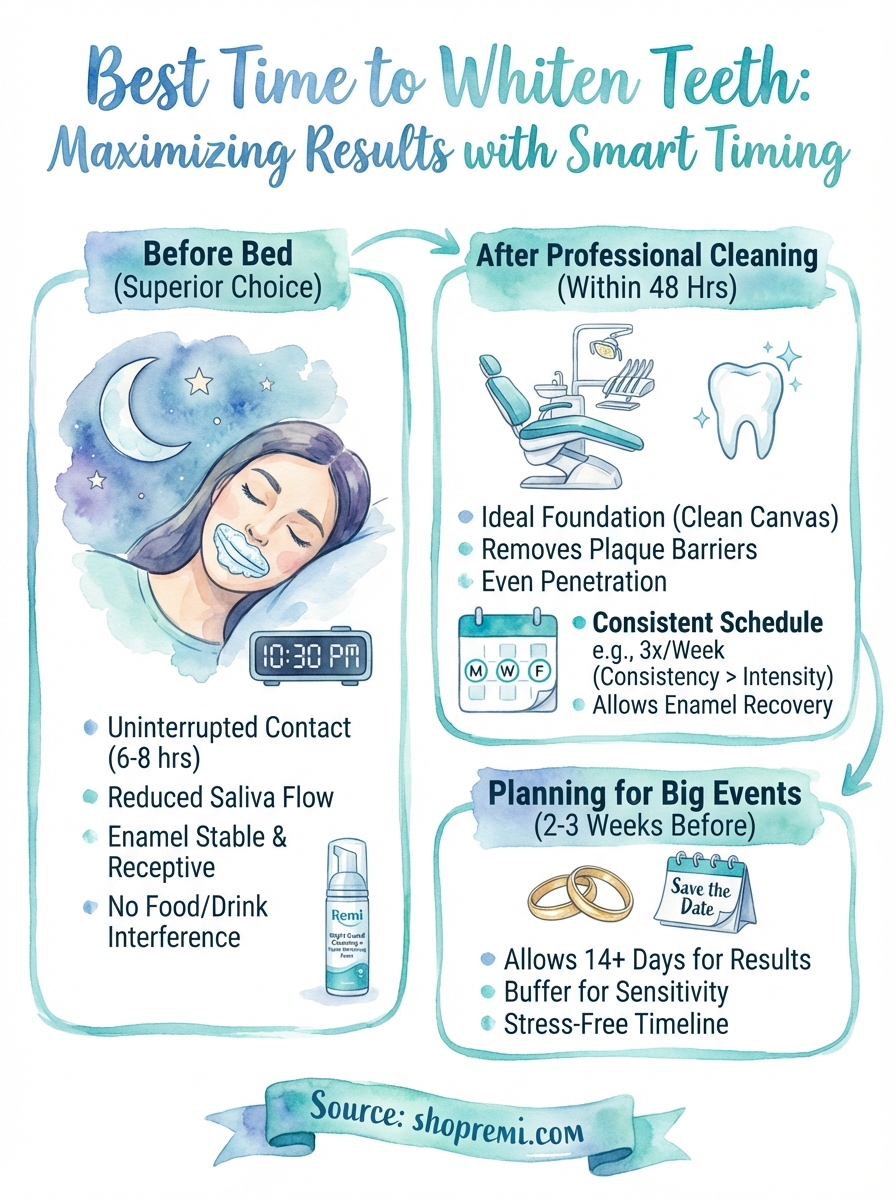
Professional dental cleanings create the ideal foundation for whitening treatments. Your dentist removes plaque, tartar, and surface stains that would otherwise block whitening agents from reaching your enamel effectively. This deep cleaning essentially gives your whitening product a clean canvas to work with, maximizing how much lighter your teeth can get.
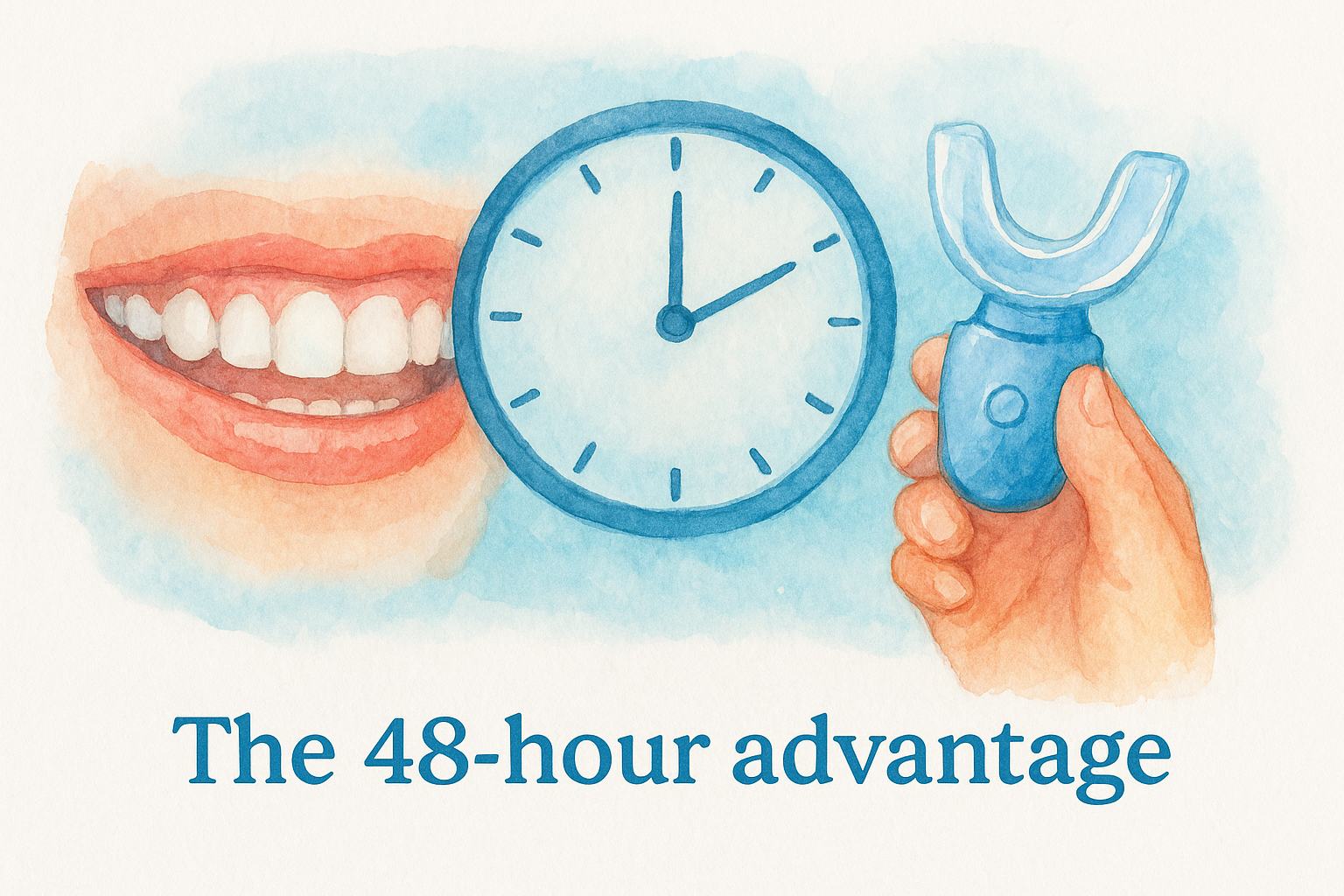
The 48-hour advantage
Schedule your first whitening session within 48 hours of your professional cleaning for maximum impact. During this window, your teeth are at their cleanest state and your enamel is free from the buildup that accumulates daily. The whitening agents can penetrate more evenly across all tooth surfaces instead of working around barriers.
Starting your whitening routine right after a professional cleaning delivers noticeably better results than whitening on teeth with months of buildup.
Waiting too long after your cleaning means you'll gradually lose this advantage. Plaque and pellicle (the thin protein film that forms on teeth) start reforming within hours, and by the end of the week, your teeth have already accumulated enough material to reduce whitening effectiveness. If you're planning to start whitening, the best time to whiten teeth is immediately following your next dental appointment.
Morning vs before bed: what dentists recommend
Dentists consistently point to nighttime application as the superior choice for whitening treatments. Your evening routine creates optimal conditions that morning sessions simply can't replicate. The extended contact time while you sleep, combined with reduced saliva flow and zero food or drink interference, makes before bed the clear winner for effectiveness.
Why nighttime wins
Your mouth produces significantly less saliva during sleep, which keeps whitening agents in place for the full duration. When you whiten in the morning, every sip of coffee, bite of breakfast, or even just your regular saliva production dilutes and removes the active ingredients before they finish working. The best time to whiten teeth for maximum concentration and contact is always when your mouth will remain undisturbed for hours.
Nighttime whitening gives your teeth six to eight hours of uninterrupted treatment time that morning application can't match.
When morning makes sense
Morning whitening works if you absolutely need to avoid potential sensitivity during sleep or if you have specific dental conditions that make overnight treatment uncomfortable. Some people find that whitening before bed triggers sensitivity that keeps them awake, and switching to morning application solves this issue even if the results come slower.
How far ahead to whiten for a big event
Start your whitening routine two to three weeks before your wedding, reunion, or important presentation to see meaningful results without rushing. This timeline gives you enough sessions to achieve noticeable brightness while leaving a buffer for any sensitivity issues that might pop up. If you experience discomfort, you can adjust your schedule or take breaks without sacrificing your deadline.
The two-week minimum
Most whitening treatments need at least 14 days of consistent use to deliver visible changes. Your teeth lighten gradually with each application, and starting too close to your event means you'll either panic about the results or push through sensitivity because you have no time to slow down. Planning ahead keeps the process stress-free and gives your enamel time to stabilize between treatments.
The best time to whiten teeth for special occasions is two to three weeks out, not the night before.
Last-minute exceptions
If your event is only a few days away, a single professional whitening session at your dentist delivers faster results than at-home products. Professional treatments use higher concentrations and can brighten your teeth by several shades in one visit, though they cost significantly more than products like Remi's Night Guard Cleaning + Teeth Whitening Foam. You'll sacrifice budget and potentially deal with sharper sensitivity, but you'll get immediate brightness when time runs out.
Build a whitening schedule you can stick to
Consistency beats intensity when it comes to whitening results. A realistic schedule you can maintain for weeks delivers far better outcomes than an aggressive plan you abandon after three days. Your teeth respond better to regular, moderate exposure to whitening agents rather than sporadic intense treatments that spike sensitivity and frustration.
The three-times-per-week standard
Start with three whitening sessions per week, spacing them evenly throughout your schedule. Monday, Wednesday, and Friday nights work well for most people because the pattern stays consistent and you have recovery days built in between applications. This frequency gives your enamel time to remineralize between treatments while maintaining steady progress toward your brightness goals.
The best time to whiten teeth follows a predictable pattern that your routine can absorb without disruption.
Adjusting for sensitivity
Drop to twice weekly if you experience discomfort after your first week. Your teeth may need more recovery time between sessions, and slowing down prevents the sharp sensitivity that makes people quit entirely. Pay attention to how your teeth feel 24 hours after each application, not just immediately after, since sensitivity often peaks the next day rather than during treatment.
A simple next step for a whiter smile
You now understand the best time to whiten teeth and how to build a schedule that delivers results without overwhelming your routine. The key is starting with clean teeth, applying treatments at night, and maintaining consistency over rushing for quick fixes that backfire with sensitivity. Your teeth respond best to patient, regular care that respects their natural cycles and gives enamel proper recovery time between sessions.
Remi's approach combines whitening with nightly dental protection in one simple step. Our Night Guard Cleaning + Teeth Whitening Foam works while you protect your teeth from grinding, turning your existing nighttime routine into a whitening session without adding extra tasks or complexity. You clean your night guard and whiten your teeth simultaneously, maximizing efficiency during those crucial overnight hours when your enamel sits in its most receptive state. Get your custom night guard and start whitening the smart way, at the exact time your teeth naturally respond best to treatment.

