


Benefits Of Good Sleep: Energy, Mood, Brain, Heart Health
Good sleep means getting seven to nine hours of quality rest each night. Your body moves through different sleep stages that repair tissues, consolidate memories, and regulate hormones. When you consistently get this kind of sleep, you wake up feeling refreshed and ready to handle your day.
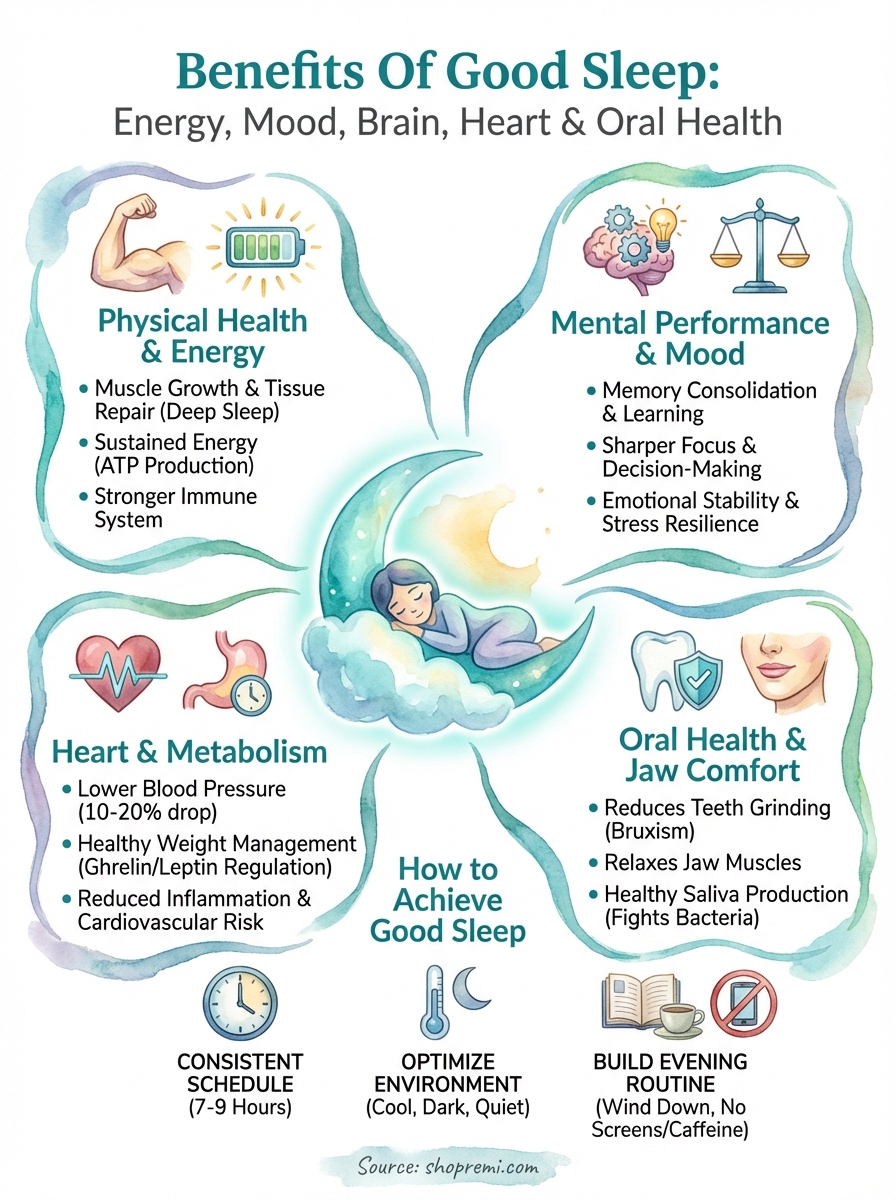
The benefits of good sleep reach far beyond feeling less tired. Quality rest strengthens your immune system, sharpens your focus, stabilizes your mood, and protects your heart health. It helps you maintain a healthy weight, reduces inflammation, and even affects your teeth and jaw muscles. People who sleep well make better decisions, learn faster, and handle stress more effectively than those running on empty.
This article breaks down the specific ways sleep impacts your physical health, mental performance, and daily energy levels. You'll discover why your body needs consistent rest, what happens when you skip it, and practical ways to improve your sleep quality starting tonight.
Why good sleep matters
Your body operates on a biological clock that depends on sleep to function properly. Without consistent, quality rest, every system in your body struggles to maintain balance. Sleep regulates over 50 different hormones, including those that control hunger, stress, and growth. During sleep, your brain clears out toxic waste products that accumulate during waking hours, and your immune system produces proteins that fight infection and inflammation. The benefits of good sleep compound over time, creating a foundation for long-term health that no supplement or medication can replace.
Your body's repair schedule
Sleep triggers specific repair processes that only happen when you're unconscious. Your muscles grow and repair damaged tissue during deep sleep stages, while your liver processes toxins and your digestive system performs essential maintenance. Blood pressure drops by 10 to 20 percent during quality sleep, giving your cardiovascular system a much-needed break. Your brain consolidates memories by strengthening important neural connections and pruning unnecessary ones, which explains why you remember information better after a full night's rest.
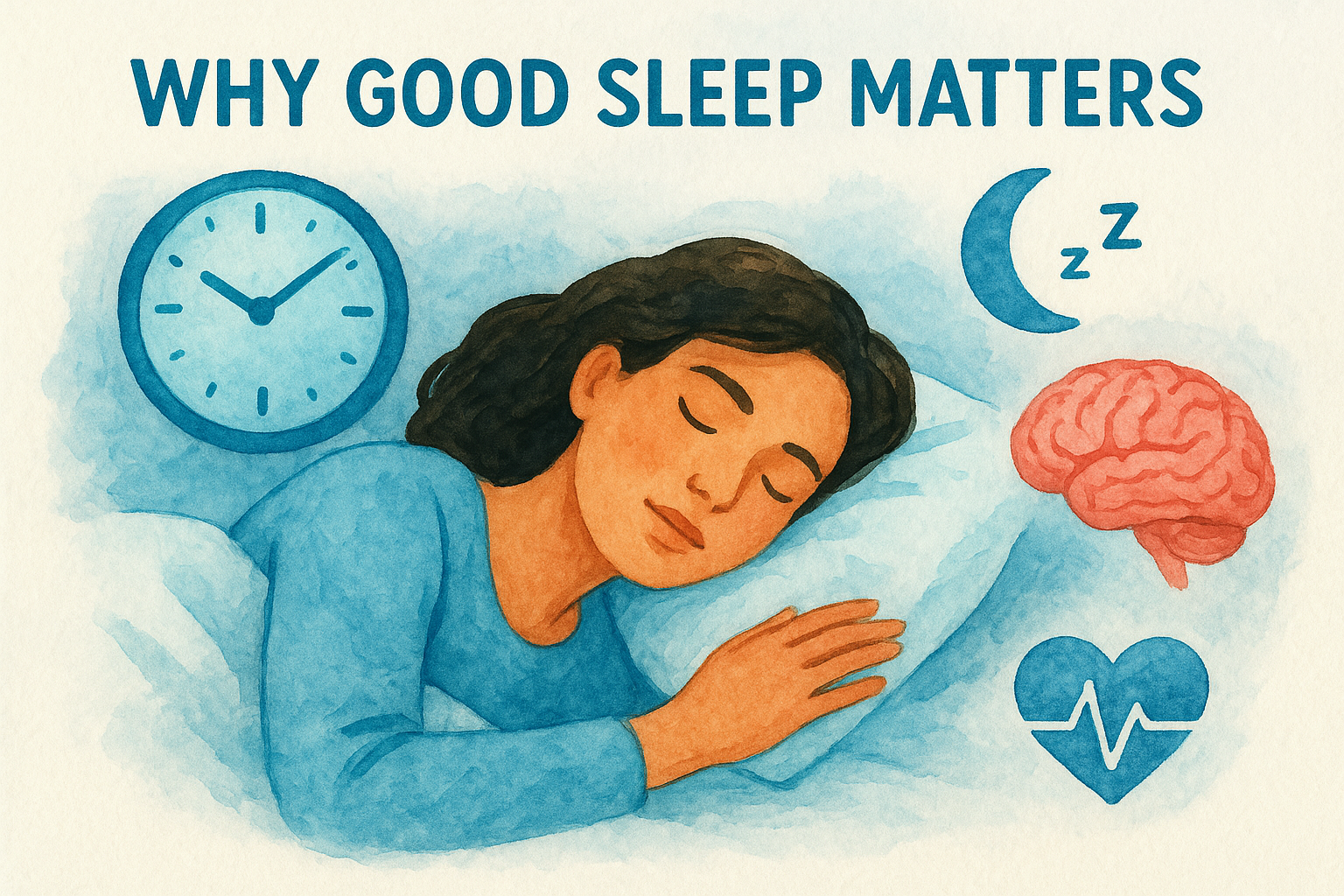
Quality sleep acts as your body's internal reset button, preparing every system for the demands of the next day.
Sleep deprivation costs
Missing sleep creates immediate consequences that extend far beyond feeling tired. Your reaction time slows to match someone legally impaired, increasing your risk of accidents at work and on the road. Chronic sleep loss raises your chances of developing serious conditions like heart disease, diabetes, and obesity by disrupting insulin sensitivity and appetite hormones. Your emotional regulation suffers when you skip sleep, making small frustrations feel overwhelming and damaging your relationships. Research shows that people who consistently sleep fewer than seven hours per night face higher mortality rates than those who prioritize rest, making sleep deprivation a genuine health crisis rather than a badge of productivity.
How to get the benefits of good sleep
You can unlock the benefits of good sleep by building consistent habits that support your natural sleep cycle. Your sleep quality depends more on regular patterns than occasional perfect nights, which means small daily changes create bigger results than sporadic efforts. The strategies that work best address both your environment and your daily routine, giving your body clear signals about when to wind down and when to wake up.
Stick to a consistent schedule
Your internal clock thrives on predictability, so going to bed and waking up at the same time every day programs your body for better sleep. Set your alarm for the same morning time seven days a week, even on weekends when you might want to sleep in. Your body releases sleep hormones based on when you typically fall asleep, which means irregular bedtimes confuse your system and make falling asleep harder each night. Most people need to be in bed by 10:30 PM to get eight hours before a 6:30 AM wake time, but you should adjust these times based on your own schedule and sleep needs.
Consistency trains your body to feel sleepy at the right time, making it easier to fall asleep and wake up naturally.
Optimize your sleep environment
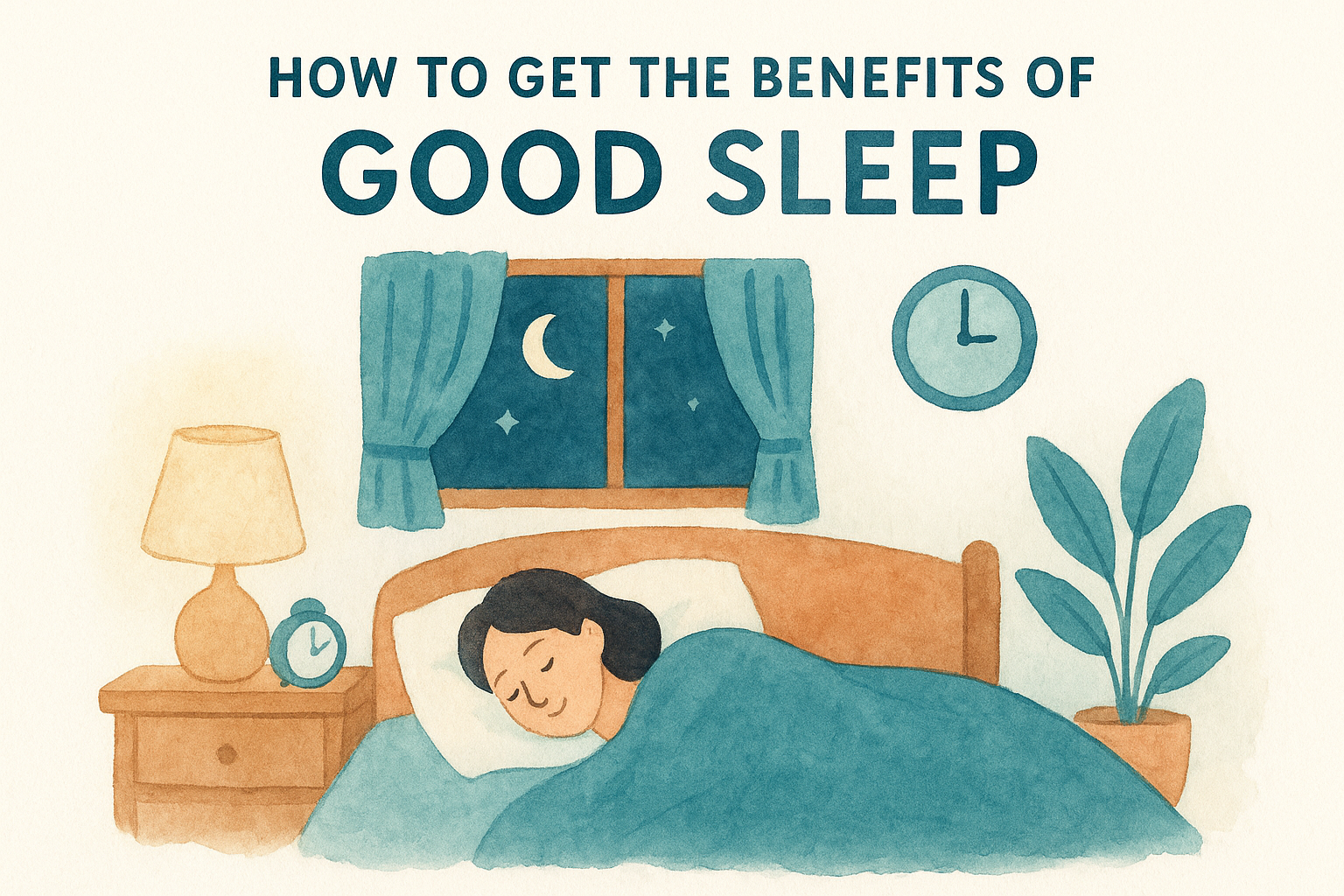
Temperature plays a crucial role in sleep quality, with most people sleeping best in rooms between 60 and 67 degrees Fahrenheit. Your body temperature naturally drops during sleep, and a cool room helps trigger this process. Complete darkness signals your brain to produce melatonin, the hormone that makes you feel sleepy, so install blackout curtains or use an eye mask to block light pollution from streetlights and electronics. Keep your bedroom quiet by using a white noise machine to mask disruptive sounds, or try earplugs if you live in a noisy area. Replace old mattresses every seven to ten years and invest in comfortable pillows that support your neck properly.
Build an evening routine
Your brain needs time to transition from alert to sleepy, so start winding down at least one hour before your target bedtime. Turn off screens during this hour because the blue light from phones, tablets, and computers tricks your brain into thinking it's still daytime. Physical activity helps you sleep better, but exercising within three hours of bedtime can leave you too energized to fall asleep easily. Read a physical book, take a warm bath, or practice gentle stretching to signal your body that sleep is approaching. Avoid caffeine after 2 PM since it stays in your system for up to eight hours, and skip alcohol in the evening because it disrupts your sleep cycles even though it might make you feel drowsy initially.
Physical benefits for energy and heart health
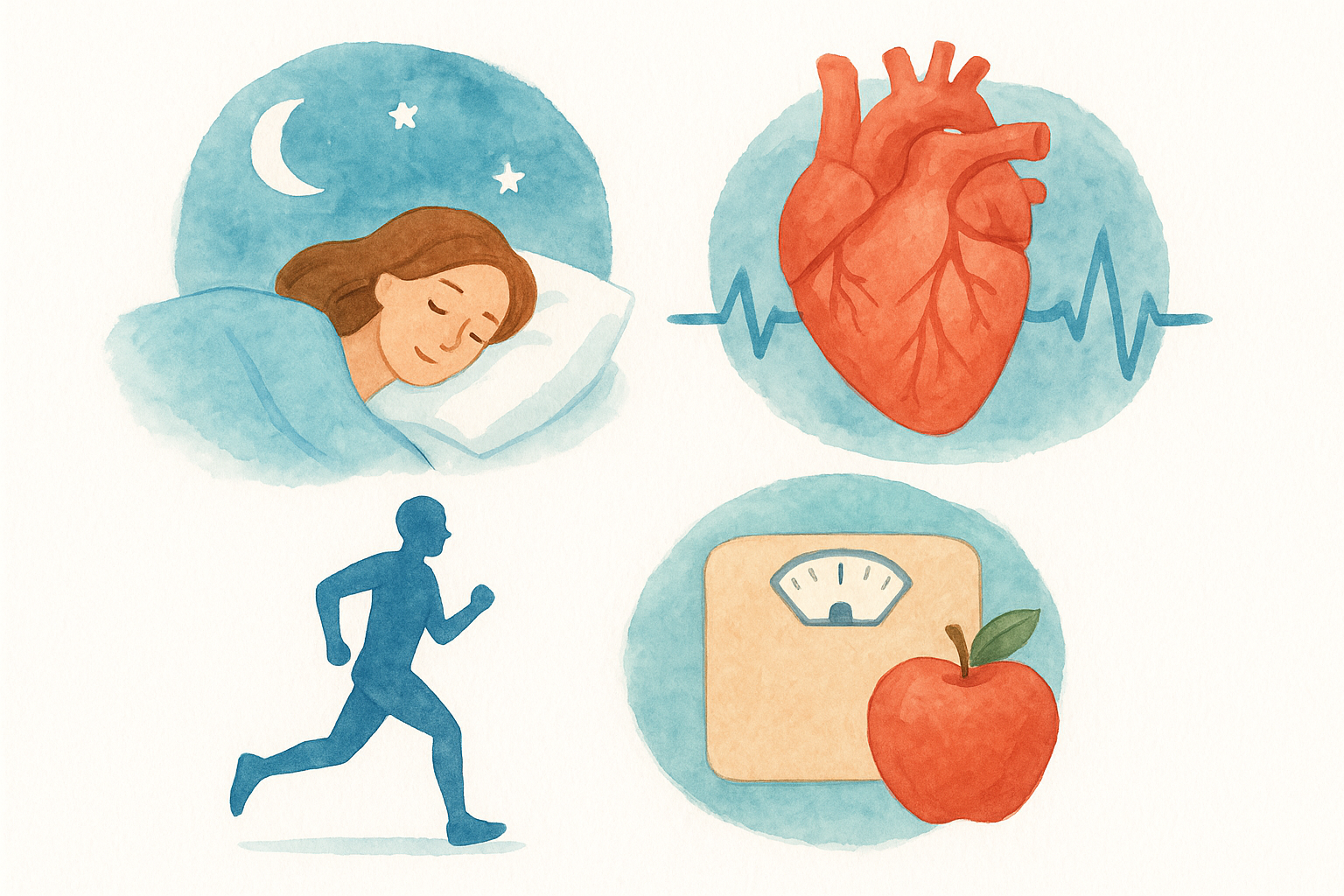
The physical benefits of good sleep affect every cell in your body, from your heart valves to your muscle fibers. Sleep triggers the release of growth hormone, which repairs tissues and builds lean muscle mass throughout the night. Your cardiovascular system gets essential rest during sleep as your heart rate decreases by 10 to 30 beats per minute and your blood pressure drops significantly. People who consistently get seven to nine hours of quality sleep show stronger immune responses to vaccines, faster recovery from illness, and better regulation of blood sugar levels than those who shortchange their rest.
Sustained energy throughout your day
Quality sleep directly determines how much energy you have when you wake up and throughout your entire day. Your body stores and releases energy more efficiently after a full night's rest, giving you the stamina to handle physical and mental tasks without crashing. Adenosine, a chemical that makes you feel tired, accumulates in your brain while you're awake and only clears out during sleep, which explains why you feel foggy and sluggish after a poor night. Studies show that well-rested people maintain consistent energy levels for 14 to 16 hours after waking, while sleep-deprived individuals experience energy crashes every few hours. Your cells produce ATP (the molecule that powers everything your body does) more effectively when you sleep consistently, translating to better physical performance whether you're exercising or just climbing stairs.
Adequate sleep gives your body the fuel it needs to function at full capacity from morning until evening.
Protection for your cardiovascular system
Your heart works nonstop every second of your life, and sleep provides the only break it gets from daytime stress. Blood pressure naturally drops by 10 to 20 percent during sleep, a phenomenon doctors call "nocturnal dipping" that protects against heart disease. People who sleep fewer than six hours per night face a 48 percent higher risk of developing or dying from heart disease compared to those who get seven to eight hours. Sleep helps reduce inflammation in your blood vessels, keeps your arteries flexible, and prevents the buildup of plaque that leads to heart attacks and strokes. Your body repairs damaged heart tissue during deep sleep stages, making consistent rest one of the most effective preventive measures for cardiovascular health.
Balanced metabolism and healthy weight
Sleep regulates the hormones that control your appetite and metabolism, making it nearly impossible to maintain a healthy weight without adequate rest. Ghrelin, the hormone that makes you feel hungry, increases by up to 15 percent when you're sleep-deprived, while leptin, which signals fullness, decreases significantly. Your body processes glucose (blood sugar) 40 percent less effectively after just one night of poor sleep, raising your risk of developing type 2 diabetes over time. Quality sleep also helps your muscles respond better to insulin, keeping your blood sugar stable throughout the day and reducing cravings for high-carb foods that spike your energy temporarily but leave you crashed hours later.
Mental health and brain performance benefits
Your brain depends on sleep to function at its best, processing information, regulating emotions, and preparing you for mental challenges ahead. Sleep strengthens neural connections that store memories and prunes unnecessary information, making room for new learning the next day. The benefits of good sleep for mental performance rival the effects of any cognitive enhancement technique, giving you sharper focus, faster decision-making, and more creative problem-solving abilities. Research shows that people who maintain consistent sleep schedules perform 20 to 30 percent better on cognitive tests than those who sleep irregularly, regardless of total hours slept.
Sharper thinking and better memory
Your brain consolidates memories during specific sleep stages, transferring information from temporary storage to long-term memory throughout the night. Students who sleep after studying retain up to 40 percent more information than those who stay awake, proving that sleep actively strengthens learning rather than just preventing memory loss. Focus and attention span deteriorate rapidly after poor sleep, with studies showing that one night of insufficient rest reduces your ability to concentrate to levels comparable to legal intoxication. Complex problem-solving becomes significantly harder when you're sleep-deprived because your prefrontal cortex (the brain region responsible for executive function) requires adequate rest to analyze situations and make sound judgments.
Quality sleep transforms your brain from a foggy processor into a sharp analytical tool ready to tackle complex challenges.
Emotional stability and mood control
Sleep directly regulates the brain regions that process emotions, particularly the amygdala, which controls your emotional responses to daily events. Well-rested people respond to frustrating situations with 60 percent less emotional reactivity than sleep-deprived individuals, making it easier to maintain composure under stress. Missing just one night of quality sleep increases anxiety symptoms by activating the same brain patterns seen in people with clinical anxiety disorders. Depression and sleep problems create a bidirectional relationship where poor sleep worsens mood disorders, while depression disrupts sleep patterns, creating a cycle that requires intervention to break.
Mental resilience and stress management
Your body produces cortisol (the stress hormone) in response to sleep deprivation, keeping you in a heightened state of alert that exhausts your mental reserves over time. People who consistently get seven to nine hours of sleep show stronger emotional resilience when facing workplace challenges, relationship conflicts, and unexpected setbacks. Sleep resets your stress response system each night, allowing you to approach the next day's problems with a clear perspective rather than carrying accumulated tension from previous days. Mental fatigue from inadequate sleep reduces your ability to regulate reactions, making minor annoyances feel overwhelming and impacting your relationships with family, coworkers, and friends.
How sleep affects teeth, jaw, and oral health
The benefits of good sleep extend to your mouth, teeth, and jaw muscles in ways that directly impact your dental health and comfort. Poor sleep quality increases the likelihood of teeth grinding (bruxism) and jaw clenching, conditions that wear down enamel and cause chronic jaw pain. Your body relaxes muscle tension during deep sleep stages, which prevents your jaw from maintaining the tight clenching position that damages teeth over time. People who experience sleep disruptions or poor sleep architecture spend more time in lighter sleep stages where grinding and clenching occur most frequently, putting their dental health at risk.
Nighttime grinding and jaw clenching
Stress and inadequate sleep create the perfect conditions for bruxism, with studies showing that sleep-deprived individuals grind their teeth up to three times more than well-rested people. Your jaw muscles exert incredible force during grinding episodes, sometimes exceeding 250 pounds of pressure that cracks teeth, wears down enamel, and creates painful jaw disorders. Quality sleep reduces stress hormones that trigger jaw tension, helping your muscles stay relaxed throughout the night instead of unconsciously clenching. Custom night guards protect your teeth from grinding damage while you work on improving your sleep habits, creating a barrier that prevents the costly dental repairs that result from chronic bruxism.
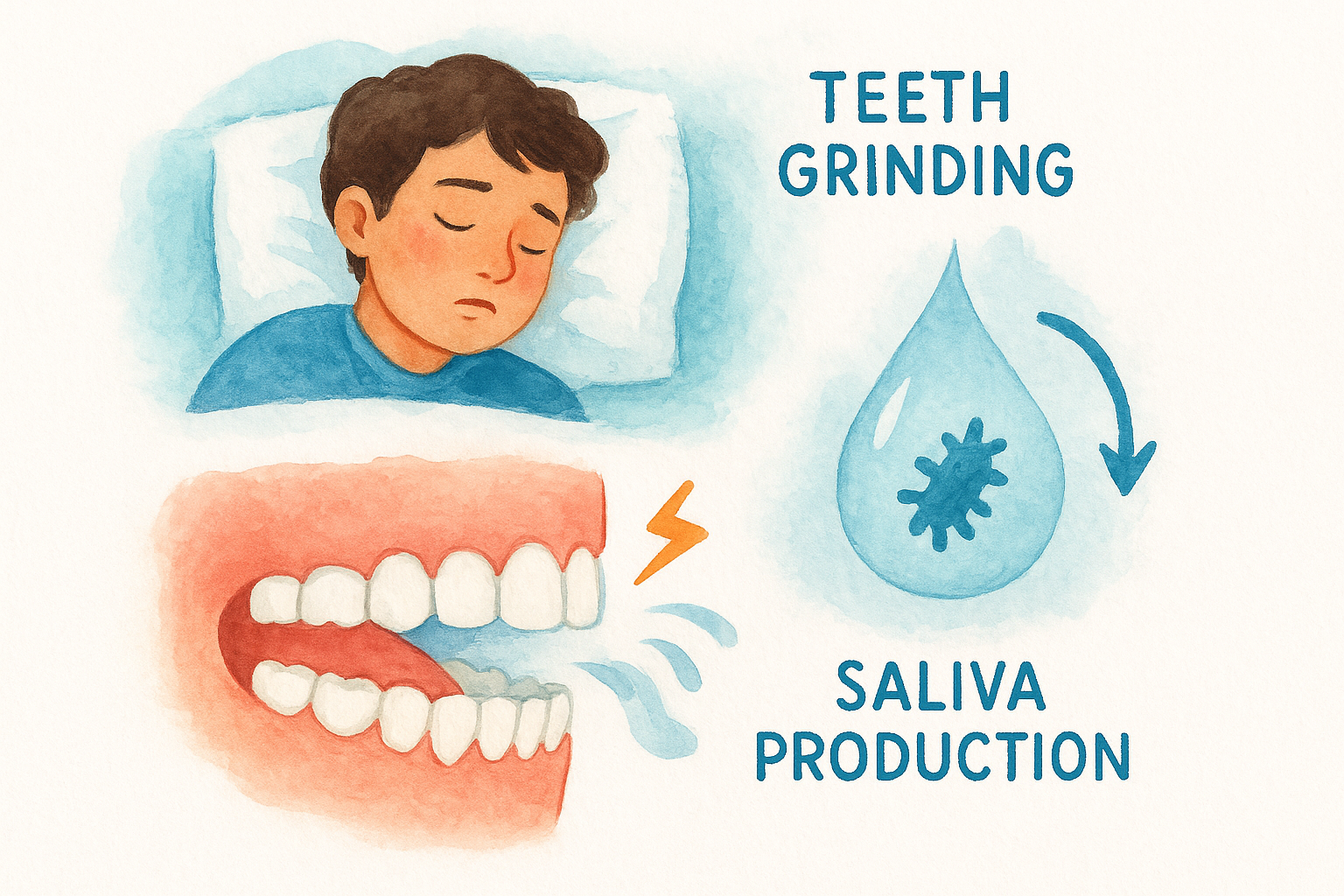
Protecting your teeth while addressing sleep quality gives you the best defense against grinding-related damage.
Saliva production and oral bacteria
Your mouth produces less saliva during sleep, which normally isn't a problem during quality rest but becomes concerning when sleep patterns are disrupted. Saliva neutralizes acids and washes away bacteria that cause cavities and gum disease, making reduced production during extended waking periods or fragmented sleep a risk factor for oral health problems. Well-rested people show healthier oral microbiomes with fewer harmful bacteria compared to those who consistently miss sleep, protecting against inflammation and infection in the gums and teeth.
Signs your sleep is off and when to get help
Your body sends clear signals when sleep quality drops below healthy levels, and recognizing these signs helps you address problems before they escalate into serious health issues. Missing out on the benefits of good sleep shows up in predictable patterns that affect your daily performance, mood, and physical health. Most sleep problems respond well to lifestyle changes, but some situations require professional medical evaluation to identify underlying conditions like sleep apnea, restless leg syndrome, or chronic insomnia that need targeted treatment.
Common warning signs
Daytime fatigue that persists despite spending eight hours in bed indicates poor sleep quality rather than insufficient sleep duration, suggesting your body isn't cycling through sleep stages properly. You might notice difficulty concentrating at work, forgetting simple tasks, or needing multiple cups of coffee just to function. Mood swings, increased irritability, and feeling emotionally fragile all signal that your sleep isn't providing the mental restoration your brain needs. Physical symptoms include frequent headaches upon waking, unexplained weight gain despite consistent diet and exercise, and getting sick more often as your immune system weakens. Waking up multiple times during the night, taking longer than 30 minutes to fall asleep, or feeling unrefreshed after a full night all point to sleep quality issues that deserve attention.
Recognizing early warning signs allows you to correct sleep problems before they impact your long-term health and daily functioning.
When to consult a doctor
Loud snoring accompanied by gasping or choking sounds during sleep suggests sleep apnea, a serious condition where breathing stops repeatedly throughout the night and requires immediate medical evaluation. Schedule an appointment if you experience extreme daytime sleepiness that interferes with work or driving, as this creates safety risks and may indicate an underlying sleep disorder. Chronic insomnia lasting more than three months despite trying lifestyle improvements warrants professional help, since prolonged sleep deprivation increases your risk for heart disease, diabetes, and mental health disorders. Other red flags include leg movements or uncomfortable sensations that prevent sleep, severe nightmares or night terrors, and falling asleep suddenly during daily activities without warning.
Bring sleep back into balance
The benefits of good sleep compound over time, creating measurable improvements in your energy, mood, heart health, and cognitive performance. Start with one or two changes from this article rather than overhauling your entire routine overnight. Set a consistent bedtime, optimize your room temperature, and eliminate screens an hour before sleep. Track your progress by noting how you feel each morning and adjusting your approach based on what works for your body.
If you grind your teeth at night, protect your smile while you improve your sleep habits with a custom night guard that prevents enamel damage and jaw pain. Quality sleep and proper dental protection work together to support your long-term health, helping you wake up refreshed and ready to take on each day with confidence.

