


If you've ever tried scrubbing your night guard or retainer with a toothbrush only to find stubborn buildup still clinging to the surface, you're not alone. Traditional cleaning methods often miss the tiny grooves and hard-to-reach areas where bacteria love to hide. So what is an ultrasonic cleaner, and why are so many people switching to this technology for their dental appliances and valuables?
An ultrasonic cleaner uses high-frequency sound waves to create microscopic bubbles that scrub surfaces at a level no brush can match. It's the same technology used by jewelers, opticians, and dental professionals, now available for home use. At Remi, we designed our Ultrasonic Cleaner Pro specifically to keep custom night guards and retainers hygienically clean without the hassle.
This guide breaks down exactly how ultrasonic cleaners work, what you can (and can't) clean with them, and whether one is right for you.
What an ultrasonic cleaner is
An ultrasonic cleaner is a specialized cleaning device that uses high-frequency sound waves (typically between 20,000 and 40,000 Hz) to remove dirt, bacteria, and buildup from objects submerged in a liquid solution. The device consists of a stainless steel tank, a transducer that generates ultrasonic waves, and a control panel that lets you adjust cleaning time and intensity. When you turn it on, these sound waves create millions of microscopic bubbles that implode against your item's surface, dislodging contaminants from even the tiniest crevices without any manual scrubbing.
The process works on a molecular level, making it far more effective than conventional cleaning methods for items with complex shapes or hard-to-reach areas. You'll find these machines in dental offices, jewelry stores, optical shops, and manufacturing facilities, but compact home versions have become increasingly popular for cleaning everything from eyeglasses to dental appliances. The cleaning action is gentle enough to preserve delicate materials while powerful enough to remove stubborn residue that regular washing misses.
The basic technology behind ultrasonic cleaners
The core principle behind ultrasonic cleaning is cavitation, a physical phenomenon that occurs when sound waves pass through liquid. Your ultrasonic cleaner's transducer converts electrical energy into mechanical vibrations, which then travel through the water or cleaning solution in the tank. These vibrations alternate between high-pressure and low-pressure cycles at thousands of times per second, creating tiny vacuum bubbles throughout the liquid.
When these bubbles collapse near your item's surface, they release energy in the form of micro-jets that blast away contaminants. The implosion temperature can reach several thousand degrees Celsius for a fraction of a second, though the overall liquid temperature remains safe. This intense localized cleaning action reaches into microscopic pits, crevices, and recesses that brushes and cloths simply cannot access.
Ultrasonic cleaning achieves results in minutes that would take hours with manual scrubbing, and it does so without physically touching or abrading your items.
Key components of an ultrasonic cleaner
The tank holds your items and the cleaning solution, typically made from stainless steel to resist corrosion and efficiently transmit ultrasonic waves. Tank sizes vary from small 6-ounce units for single dental appliances to industrial models holding several gallons. Your cleaner's capacity determines what you can fit inside, so consider your most common cleaning needs when choosing a unit.
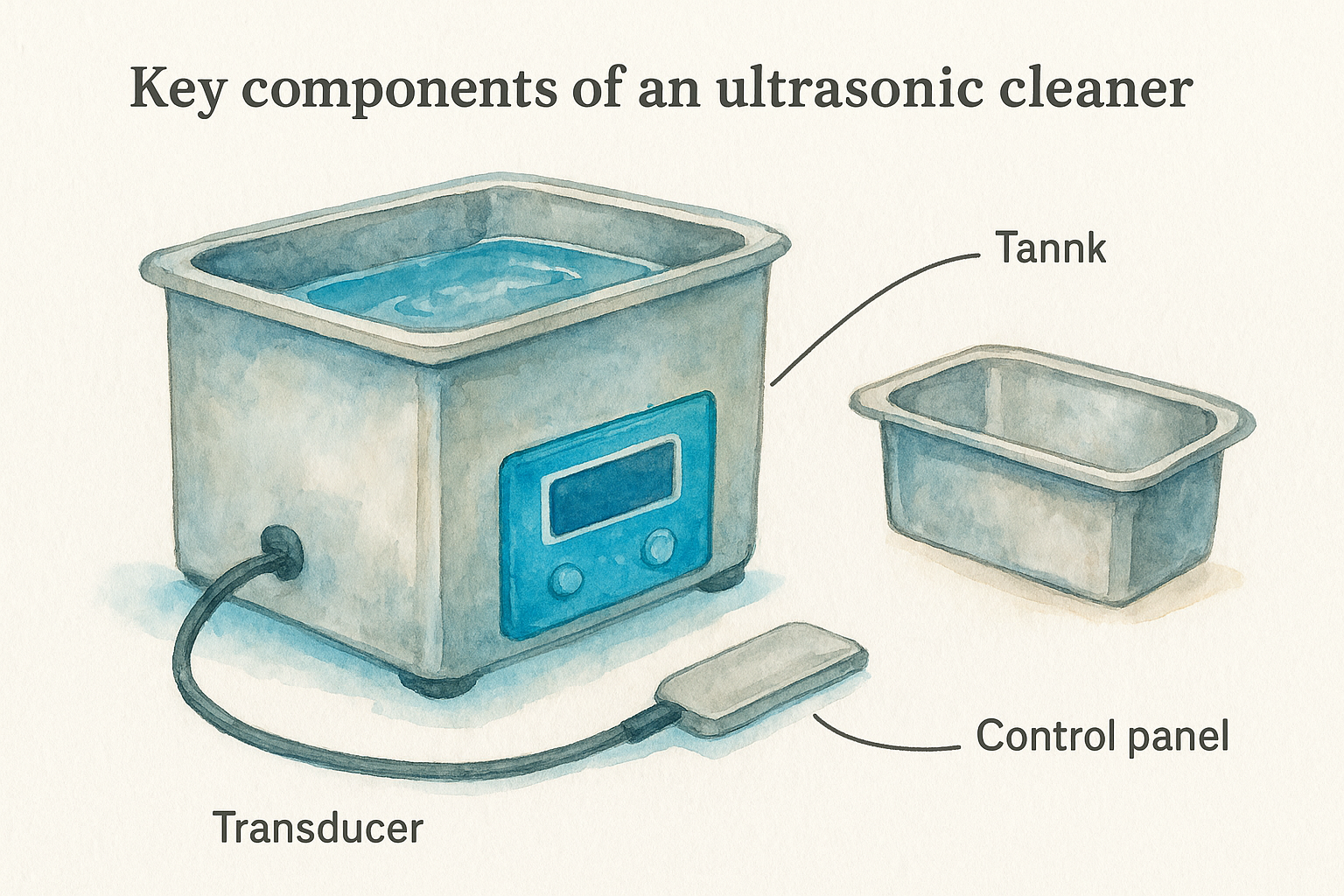
Below the tank, transducers are bonded to the bottom or sides of the container. These piezoelectric or magnetostrictive components generate the ultrasonic frequencies that drive the cleaning process. Higher-quality cleaners use multiple transducers positioned to create uniform cavitation throughout the tank, preventing dead spots where cleaning efficiency drops. The control system lets you set temperature, time, and sometimes frequency, giving you precise control over the cleaning intensity for different materials.
What makes ultrasonic cleaning different from traditional methods
Traditional cleaning relies on mechanical action like scrubbing, wiping, or spraying, which only cleans surfaces you can physically reach. Ultrasonic cleaners eliminate this limitation by attacking contamination from all angles simultaneously. The cavitation bubbles form everywhere the liquid touches, including inside hollow tubes, behind clasps, and within microscopic surface irregularities.
Your night guard or retainer has numerous grooves, ridges, and textured areas that trap plaque and bacteria. A toothbrush misses most of these spots, leaving behind biofilm that causes odors and potential health issues. Ultrasonic cleaning penetrates these hidden areas without requiring you to disassemble, bend, or force anything. The non-contact nature of the process also means no wear and tear from abrasive scrubbing, preserving the integrity and fit of precision items like custom dental appliances.
Why people use ultrasonic cleaners
People turn to ultrasonic cleaners because traditional cleaning methods fall short when dealing with intricate items that harbor bacteria and residue in places you cannot reach manually. Your dental appliances, jewelry, eyeglasses, and other precision items accumulate contaminants in microscopic grooves and tight spaces that brushes simply cannot access. Understanding what is an ultrasonic cleaner reveals why this technology solves problems that soak-and-scrub approaches never will.
Superior cleaning in hard-to-reach places
The primary reason people invest in ultrasonic cleaners is their ability to penetrate every crevice without disassembly or aggressive scrubbing. Your custom night guard has textured surfaces, retention grooves, and adjustment points where plaque and bacteria accumulate daily. A toothbrush glides over these areas without removing the biofilm beneath, while ultrasonic cavitation bubbles collapse inside these microscopic spaces to blast away contamination. This thorough cleaning action prevents odors, maintains transparency, and extends the lifespan of expensive dental appliances.
Jewelry owners use ultrasonic cleaners to restore shine to intricate settings, chains, and engravings that cotton swabs cannot clean. Eyeglass wearers remove skin oils, dust, and debris from nose pads and hinge areas that manual wiping misses. The technology reaches everywhere the cleaning solution touches, eliminating the frustration of visible dirt you cannot remove.
Ultrasonic cleaning delivers professional-grade results at home by accessing the hidden surfaces where 80% of contamination lives.
Time efficiency and convenience
You save significant time compared to manual cleaning methods that require repeated scrubbing and rinsing. Most ultrasonic cleaning cycles complete in three to five minutes, during which you can attend to other tasks rather than standing at a sink with a brush. Your items come out cleaner than you could achieve in thirty minutes of hand scrubbing, and you accomplish this without any physical effort beyond placing them in the tank and pressing start.
Professionals rely on ultrasonic cleaners to process multiple items simultaneously, cleaning an entire batch of instruments or components in one cycle. This efficiency matters when you clean your night guard every morning or maintain several pieces of jewelry regularly. The convenience factor increases compliance with cleaning routines, ensuring your dental appliances and valuables receive consistent care instead of occasional attention when they become visibly dirty.
How ultrasonic cleaning works
Understanding what is an ultrasonic cleaner requires grasping the cavitation process that powers these devices. When you activate your ultrasonic cleaner, the transducer sends high-frequency sound waves through the liquid at speeds far beyond human hearing. These waves create alternating patterns of compression and rarefaction (expansion) in the water, causing microscopic bubbles to form during the low-pressure phases. The bubbles grow rapidly until they reach an unstable size, then violently collapse against your item's surface during the high-pressure cycle.
The cavitation process in detail
Each bubble implosion releases a concentrated burst of energy that dislodges contaminants from your item's surface. The collapse happens in microseconds and generates localized temperatures reaching thousands of degrees, though the surrounding liquid stays at a safe temperature. This extreme but pinpointed force breaks the bonds between dirt, bacteria, and the surface material without damaging the underlying structure. Your dental appliance experiences millions of these micro-explosions per second, attacking buildup from every angle simultaneously.
The effectiveness depends on the frequency your cleaner operates at, typically between 35 kHz and 45 kHz for home dental appliance cleaners. Higher frequencies create smaller bubbles that produce gentler cleaning suitable for delicate items, while lower frequencies generate larger bubbles with more aggressive action for tougher contamination. The transducer positioning determines how evenly these bubbles distribute throughout the tank, which is why quality matters when choosing a unit.
The complete cleaning cycle explained
You begin by filling the tank with water or a specialized cleaning solution to the indicated level, then placing your night guard or other items in a basket that suspends them in the liquid. The basket prevents items from resting directly on the tank bottom, which would block cavitation bubbles from reaching those surfaces. After setting your desired cleaning time (typically three to five minutes for dental appliances), you press start and the transducer begins generating ultrasonic waves.
The cleaning happens automatically while you handle other tasks, making ultrasonic technology the most hands-off method for maintaining dental appliances.
During the cycle, you'll notice the liquid appears to vibrate or shimmer slightly, though the cavitation process itself is invisible. Some cleaners include a heating element to warm the solution, which enhances cleaning power by reducing liquid viscosity and allowing bubbles to form more readily. When the timer completes, you remove your items, rinse them with clean water, and allow them to air dry.
What you can and can't clean
When you understand what is an ultrasonic cleaner, you also need to know which items benefit from this technology and which materials can suffer damage. The cavitation process works brilliantly on certain surfaces while potentially harming others, so choosing appropriate items protects both your cleaner and your valuables. Your success with ultrasonic cleaning depends on matching the right materials with this powerful cleaning method.
Items safe for ultrasonic cleaning
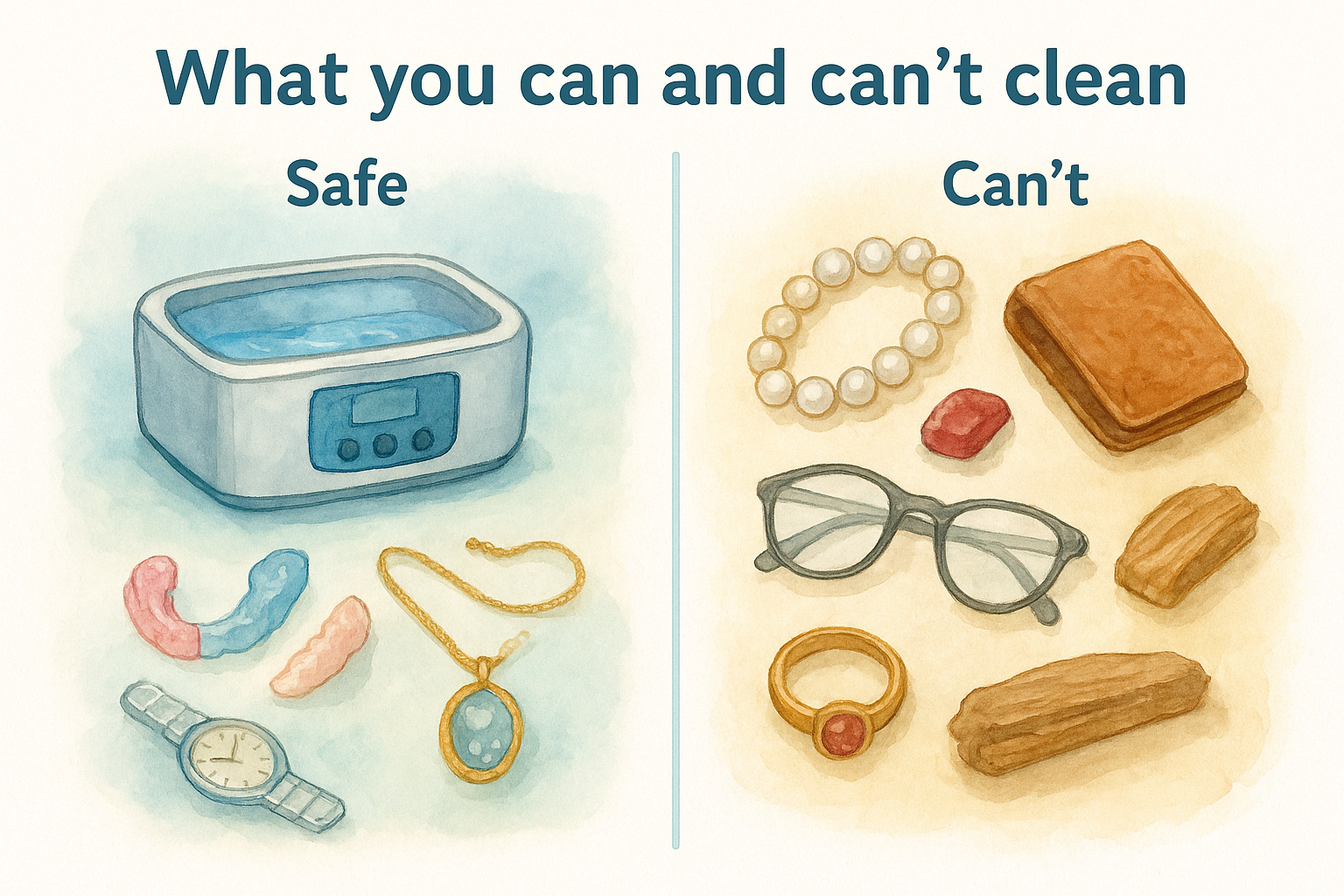
Your dental appliances represent the ideal candidates for ultrasonic cleaning, including night guards, retainers, aligners, dentures, and mouthguards. These items accumulate bacteria and plaque in microscopic grooves that manual brushing cannot reach, making them perfect for cavitation cleaning. The process removes biofilm without degrading the plastic or acrylic materials that dental appliances use.
Jewelry made from hard metals and gemstones responds exceptionally well to ultrasonic cleaning. You can safely clean gold, platinum, silver, stainless steel, and diamonds without concern. Eyeglasses with glass or plastic lenses, metal watch bands, coins, and small metal tools also benefit from the technology. Electronic components, circuit boards, and precision instruments go into ultrasonic cleaners in professional settings, though you should stick to simpler items at home.
Ultrasonic cleaners excel at removing contamination from hard, non-porous surfaces where bacteria and residue hide in microscopic spaces.
Materials to avoid
Certain soft or porous materials suffer damage from the intense cavitation forces your ultrasonic cleaner generates. You should never clean pearls, opals, emeralds, or other soft gemstones, as the vibrations can cause surface cracking or internal damage. Organic materials like leather, wood, and fabric absorb water and break down under ultrasonic action, making them completely unsuitable for this cleaning method.
Plated items pose a specific risk because the cavitation bubbles can strip away thin gold or silver plating, exposing the base metal underneath. Some watches contain seals or gaskets that ultrasonic waves compromise, potentially allowing water damage to internal mechanisms. Painted or coated surfaces may lose their finish, and items with loose stones or fragile settings can come apart during cleaning. Your safest approach involves checking manufacturer recommendations before placing any questionable item in the tank.
How to use an ultrasonic cleaner safely
Operating an ultrasonic cleaner correctly protects both your items and the device itself from damage. While the technology seems straightforward, you need to follow specific safety protocols to prevent problems ranging from ineffective cleaning to potential equipment failure. Understanding what is an ultrasonic cleaner includes knowing how to use it properly, since improper operation can damage delicate items or reduce the machine's lifespan through user error.
Essential safety precautions before cleaning
Always inspect your items for loose parts, cracks, or damage before placing them in the ultrasonic cleaner. The intense vibrations can dislodge already-weakened components, so check that clasps, hinges, and settings remain secure. You must ensure your night guard or retainer has no existing cracks that cavitation could expand into larger breaks. Remove any batteries or electronic components from items like watches before cleaning, as water and ultrasonic waves will destroy these elements.
Fill the tank with appropriate liquid levels according to your unit's specifications, typically between the minimum and maximum fill lines. Using too little water concentrates cavitation energy and overheats the transducer, while overfilling causes spillage and reduces cleaning efficiency. The water temperature should stay below 140°F (60°C) unless your cleaner specifically supports higher temperatures, as excessive heat damages both the machine and sensitive materials like dental appliance plastics.
Proper setup and maintenance procedures
Position your cleaner on a stable, level surface away from edges where vibrations might cause it to move or tip. Never operate the unit without items inside, as running the cleaner empty generates unnecessary heat and stress on the transducer. Place your dental appliances or other items in the basket or holder provided, avoiding direct contact with the tank bottom where they block cavitation bubbles from reaching all surfaces.
Running your ultrasonic cleaner empty or with insufficient water damages the transducer and voids most manufacturer warranties.
After each use, empty the tank and wipe down the interior with a soft cloth to prevent mineral deposits from building up. These deposits reduce cleaning effectiveness over time and require more intensive descaling procedures. Replace cleaning solutions regularly rather than reusing contaminated liquid, as dirty water reduces cavitation efficiency and redeposits debris onto your items.
Mistakes that compromise cleaning results
You damage items by cleaning them for excessive durations, thinking longer cycles produce better results. Most dental appliances only need three to five minutes of cleaning, and extending this time risks material degradation without additional cleaning benefit. Avoid mixing different materials in the same cleaning cycle, as optimal frequencies and solutions vary by item type.
Never use harsh chemicals or solvents unless your cleaner's manual specifically approves them, as certain substances corrode stainless steel tanks or produce dangerous fumes when subjected to ultrasonic agitation. Stick with water or manufacturer-recommended cleaning solutions designed for ultrasonic use to maintain both safety and effectiveness.
Quick recap
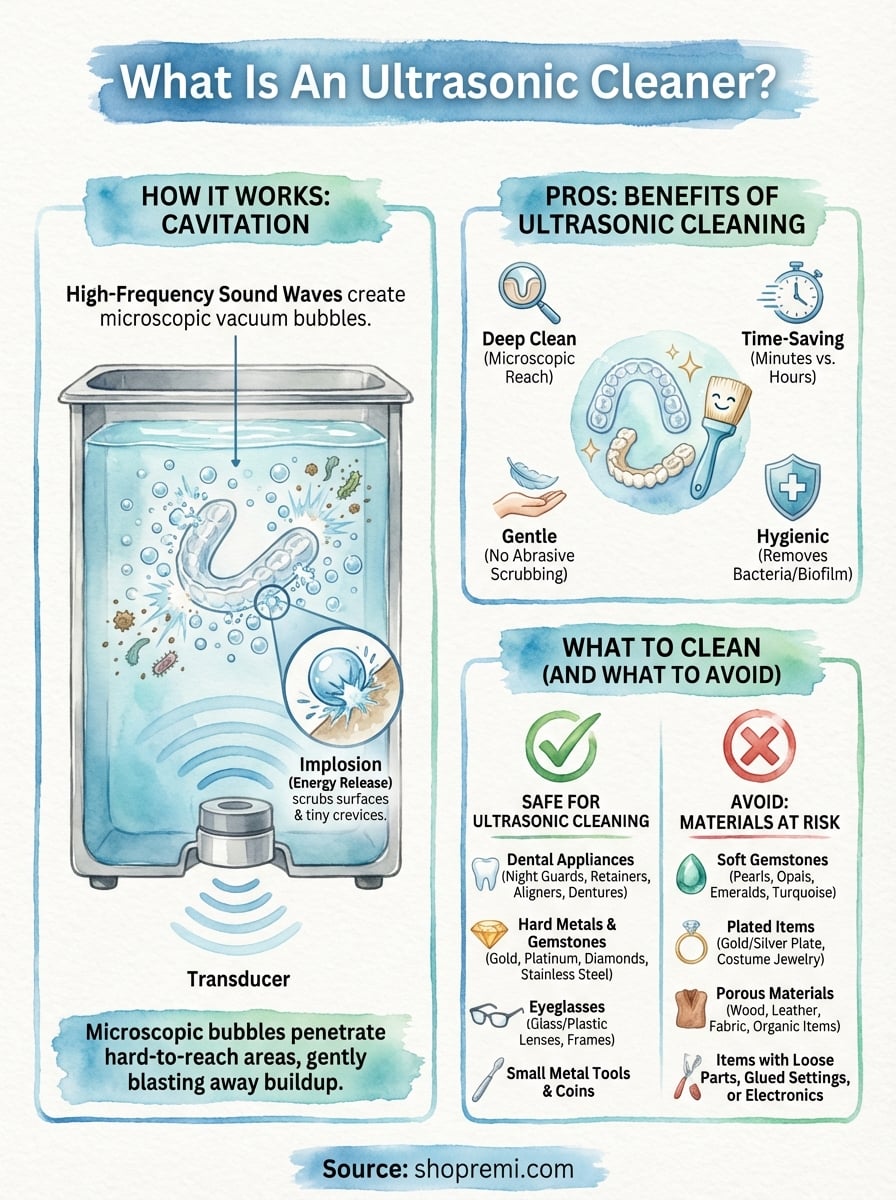
You now know what is an ultrasonic cleaner: a device that uses high-frequency sound waves to create cavitation bubbles that scrub surfaces at a microscopic level. This technology removes bacteria and buildup from hard-to-reach areas that manual cleaning methods miss, making it ideal for dental appliances like night guards and retainers. The process works through millions of microscopic bubble implosions per second, attacking contamination from every angle without physical scrubbing.
Your ultrasonic cleaner delivers professional results in minutes while protecting delicate items from abrasive wear. You can safely clean dental appliances, jewelry, eyeglasses, and metal items, but should avoid soft gemstones, plated surfaces, and porous materials that the intense vibrations might damage. Proper use involves filling the tank to correct levels, placing items in baskets, and running appropriate cycle times without harsh chemicals.
The technology transforms maintenance routines from tedious scrubbing sessions into effortless three-minute cycles. If you want to keep your custom dental appliances hygienically clean, explore professional-grade ultrasonic cleaning devices designed specifically for at-home care.

