


You wake up with a sore jaw, a dull headache, and the lingering tension that tells you your teeth were working overtime again. Jaw clenching disrupts your sleep, affects your daily comfort, and can lead to serious dental problems if left unchecked. The constant pressure creates a cycle of pain and stress that feels impossible to break. You need relief that actually works without making things more complicated. Natural remedies for jaw clenching offer practical solutions you can start using today.
This article walks you through five proven approaches that address both the symptoms and underlying causes of jaw clenching. You'll discover how custom night guards provide immediate protection, which stress reduction techniques actually help, and what simple dietary changes make a real difference. We'll cover targeted jaw exercises that release tension, the right way to use heat and cold therapy, and how to combine these methods for maximum relief. Each solution is actionable and backed by what actually works for people dealing with bruxism every day.
1. Custom night guards
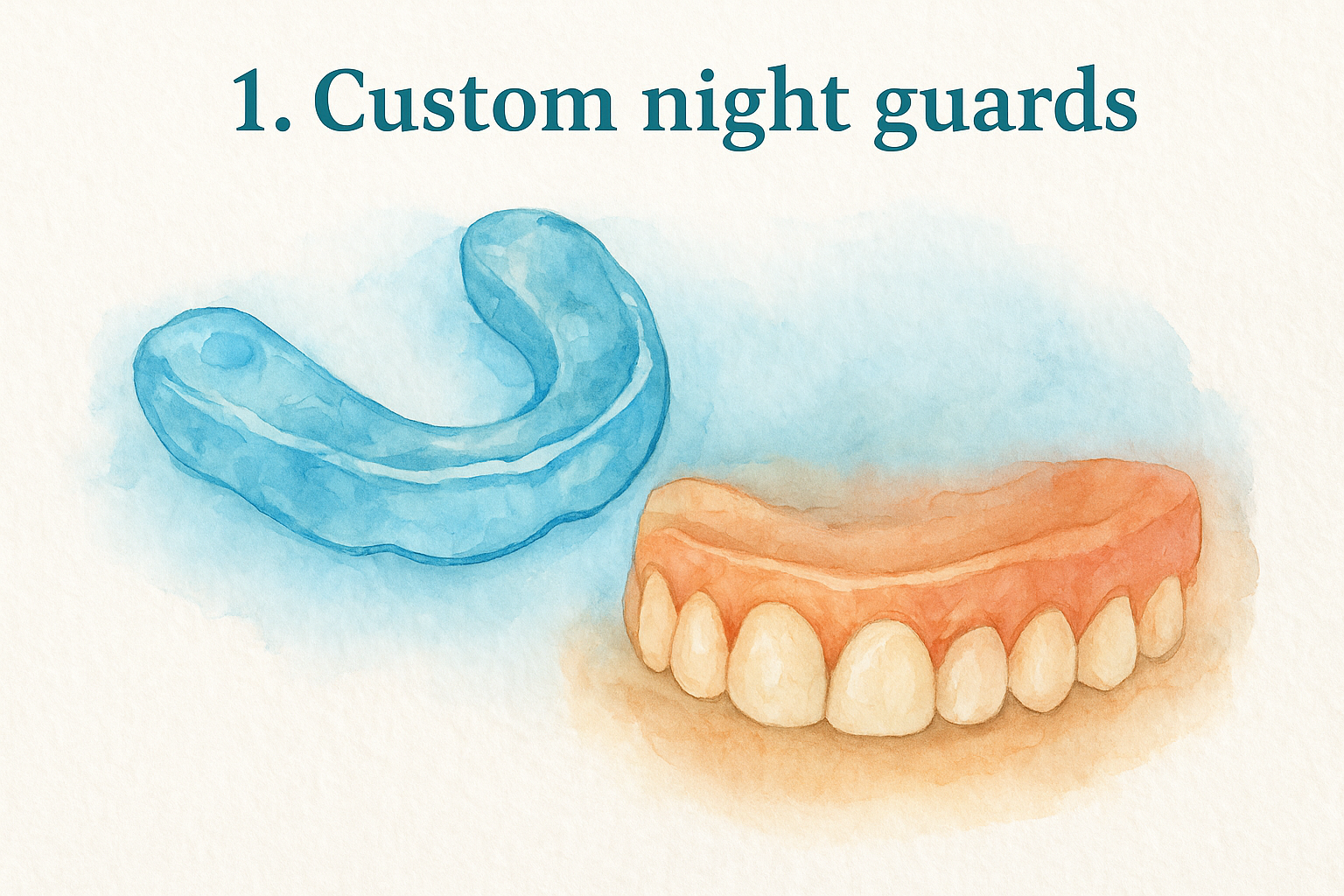
Custom night guards stand out among natural remedies for jaw clenching because they address the physical damage while you work on the root causes. Your teeth need protection right now, not months from now when stress techniques might finally click. A properly fitted night guard creates a cushioned barrier between your upper and lower teeth, preventing the grinding that wears down enamel and causes jaw pain. This immediate protection gives you time to implement other solutions without watching your dental health deteriorate.
Why they are the most effective defense
Your jaw muscles generate tremendous force during sleep, sometimes exceeding 250 pounds of pressure per square inch. No amount of willpower stops this unconscious behavior, which is why physical protection becomes essential. Night guards absorb and redistribute this force across your entire bite, preventing concentrated damage to individual teeth. The reduction in grinding frequency often leads to decreased jaw tension over time, as your muscles learn a new pattern. You get dual benefits: protecting your teeth from immediate damage while potentially reducing the clenching intensity itself.
Protection works 24/7, even when your conscious stress management efforts can't.
How to choose the right night guard
Thickness matters more than most people realize. Soft guards work well for mild clenching but can encourage chewing in heavy grinders, while hard acrylic guards provide maximum durability and discourage grinding behavior. Your specific symptoms determine the best choice. You need a guard that covers all your teeth without triggering your gag reflex, which requires careful attention to sizing and material selection. Consider your sleeping position too, as side sleepers may need different coverage than back sleepers.
Custom-fit vs. over-the-counter options
Custom-fitted guards mold precisely to your dental structure, providing superior comfort and staying in place throughout the night. Over-the-counter options use boil-and-bite technology or generic sizing that often creates pressure points and falls out during sleep. The investment in a custom guard pays off through better compliance, as you'll actually wear something comfortable. Pharmacy guards might seem economical initially, but replacements add up when they don't fit properly or crack under pressure.
2. Stress reduction techniques
Your stress levels directly control how hard your jaw clenches at night. The connection runs deeper than simple correlation, as your nervous system stays activated long after your conscious mind thinks you've relaxed. Implementing targeted stress reduction as one of your natural remedies for jaw clenching addresses the root cause instead of just managing symptoms. These techniques work best when you practice them consistently, creating new neural pathways that replace the stress response.
The link between stress and bruxism
Stress triggers your fight-or-flight response, which increases muscle tension throughout your body, including your jaw. Your brain interprets daily pressures as threats, keeping your masseter muscles primed for action even during sleep. This constant activation creates a feedback loop where jaw tension increases stress, which increases clenching. Breaking this cycle requires conscious intervention through proven relaxation methods.
Your body holds stress in your jaw long after your mind moves on.
Deep breathing and meditation exercises
Box breathing calms your nervous system by balancing your oxygen levels and activating your parasympathetic response. Breathe in for four counts, hold for four, exhale for four, and pause for four. Repeat this cycle for five minutes before bed. Guided meditation apps provide structured approaches, but simple body scanning works equally well when you focus on releasing tension from your jaw specifically.
Creating a relaxing bedtime routine
Start your wind-down process 60 minutes before sleep by dimming lights and avoiding screens. Warm baths, gentle stretching, and reading create consistent signals that tell your body to release tension. Keep your routine identical each night, as your nervous system responds powerfully to predictable patterns that signal safety and relaxation.
3. Jaw exercises and massage
Targeted physical therapy for your jaw muscles ranks among the most accessible natural remedies for jaw clenching because you can perform these techniques anywhere, anytime. Your jaw muscles respond quickly to consistent exercise and manual manipulation, often providing noticeable relief within days. These methods work by releasing built-up tension, improving blood flow, and retraining your muscles to hold a relaxed position. You gain control over muscles that usually operate unconsciously, which breaks the automatic clenching pattern.
Strengthening and stretching the jaw
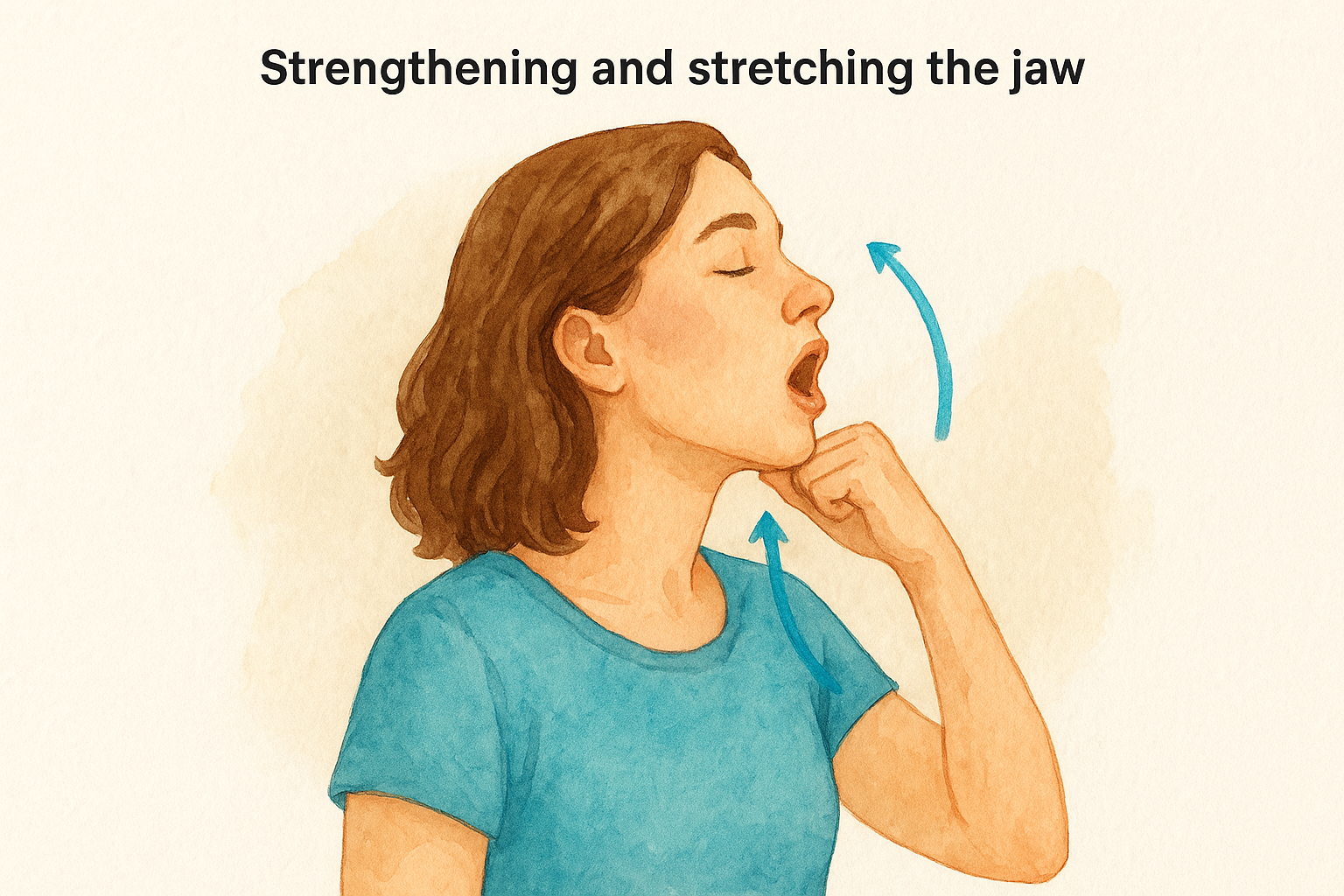
Open your mouth slowly until you feel a gentle stretch, hold for five seconds, then close. Repeat this movement ten times every morning and evening. Place your thumb under your chin and push gently upward while opening your mouth, creating resistance training for your jaw muscles. This combination of stretching and strengthening builds muscle control and reduces the involuntary tension that triggers clenching.
Self-massage techniques for the masseter muscle
Locate your masseter muscle by placing your fingers on your cheeks and clenching your teeth, then feeling the muscle bulge. Apply firm circular pressure to this area for 30 seconds, working from your cheekbone down to your jawline. Move your jaw side to side while massaging to release deeper tension points. Perform this technique twice daily, especially before bed when your muscles prepare for nighttime clenching.
Consistent massage retrains your muscles to recognize and release tension automatically.
Tongue positioning for relaxation
Rest your tongue on the roof of your mouth, just behind your front teeth, which naturally separates your molars and prevents clenching. This position activates your parasympathetic nervous system, signaling your body to relax. Practice maintaining this tongue placement throughout the day until it becomes your default resting position, reducing unconscious jaw tension even during sleep.
4. Dietary adjustments
What you eat directly influences your muscle tension and sleep quality, making dietary changes powerful natural remedies for jaw clenching. Your nutritional choices affect neurotransmitter production, mineral balance, and inflammation levels that all contribute to jaw tension. Simple modifications to your eating patterns can reduce nighttime clenching by calming your nervous system and relaxing your muscles. These adjustments work synergistically with other remedies, creating a comprehensive approach to managing bruxism.
Foods that relax the muscles
Magnesium-rich foods like spinach, almonds, and dark chocolate help your muscles relax by regulating calcium uptake and neuromuscular signals. Your body uses magnesium to prevent involuntary muscle contractions, making it essential for reducing jaw clenching. Foods containing tryptophan such as turkey, eggs, and cheese promote serotonin production, which supports relaxation and better sleep quality. Incorporate these foods into your dinner to maximize their calming effects during sleep hours.
Stimulants to avoid before sleep
Caffeine stays in your system for six to eight hours, keeping your nervous system activated and your jaw muscles tense. Eliminate coffee, tea, and chocolate after 2 PM to allow your body time to process these stimulants before bed. Alcohol might seem relaxing but actually disrupts sleep cycles and increases muscle tension during later sleep stages, worsening clenching patterns.
Your evening food choices set the stage for how tightly your jaw clenches at night.
Importance of hydration
Dehydration causes muscle cramps and increases tension throughout your body, including your jaw muscles. Drink at least eight glasses of water daily, with most consumption happening before evening to avoid nighttime bathroom trips. Proper hydration maintains electrolyte balance and supports muscle function, reducing the likelihood of involuntary clenching during sleep.
5. Heat and cold therapy
Temperature therapy ranks among the most immediate natural remedies for jaw clenching because it provides fast relief you can feel within minutes. Your jaw muscles respond directly to temperature changes, with heat promoting relaxation and blood flow while cold reduces inflammation and numbs pain. These opposing therapies serve different purposes depending on whether you need to release chronic tension or address acute soreness. You can use both methods throughout the day, adjusting your approach based on your specific symptoms and timing.
When to use heat vs. cold
Apply heat when your jaw feels stiff and tight, especially first thing in the morning or before bed when you need muscle relaxation. Cold therapy works best for acute pain or inflammation after particularly intense clenching episodes. Heat increases blood circulation and loosens chronically tense muscles, while cold constricts blood vessels and reduces swelling. Alternate between both methods if you experience both tension and inflammation, waiting at least two hours between applications.
Temperature creates instant physiological changes that break the clenching cycle.
How to apply a warm compress
Soak a clean washcloth in hot water, wring it out, then hold it against your jaw for 15 minutes. The heat should feel comfortable, not burning, maintaining a consistent warm temperature throughout the application. Repeat this process two to three times daily, focusing on the masseter muscles along your jawline where tension concentrates most.
Using ice to reduce inflammation
Wrap ice cubes in a thin towel and apply to your jaw for 10 minutes maximum to prevent tissue damage. Move the ice pack in gentle circular motions rather than holding it stationary, which prevents numbness while reducing inflammation. Use this method after waking with severe jaw pain or following stressful events that trigger intense clenching.
Achieving lasting relief
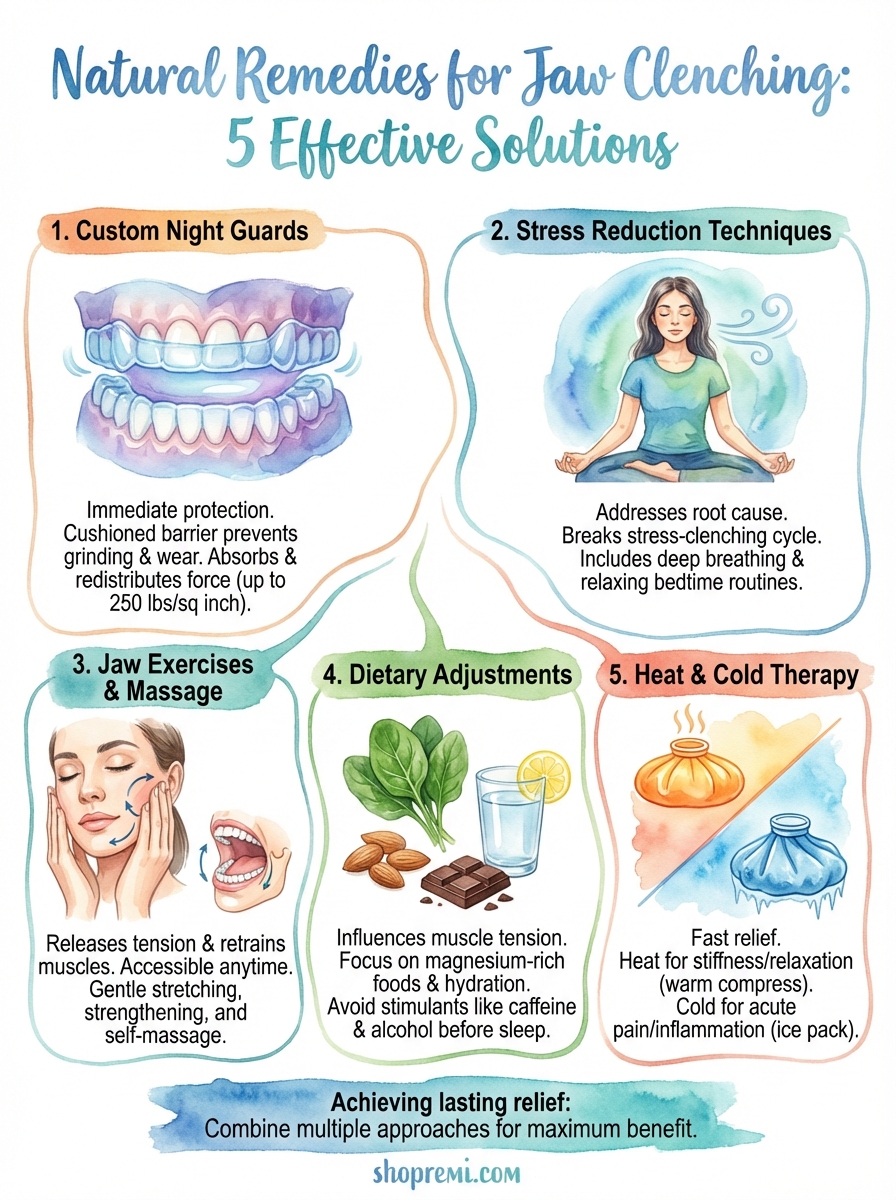
These natural remedies for jaw clenching work best when you combine multiple approaches rather than relying on a single solution. Your stress reduction techniques complement physical protection from a night guard, while dietary adjustments support the muscle relaxation you gain from massage and exercises. Start with the methods that address your most pressing symptoms, then layer in additional strategies as you build consistent habits. Temperature therapy provides immediate relief during flare-ups, while exercises and stress management create long-term changes.
Protection for your teeth needs to happen immediately while you develop these other habits. A custom night guard shields your enamel from grinding damage and often reduces clenching intensity as your jaw muscles adapt to the barrier. Combine this physical protection with your daily relaxation practices, dietary changes, and jaw exercises to address both the symptoms and root causes of bruxism.

