


You've probably seen the glowing blue mouthpiece all over social media and wondered if GLO Science teeth whitening actually delivers on its promises. With claims of professional-level results at home using patented heat and light technology, it's a system that has sparked both curiosity and skepticism among people looking for a brighter smile.
At Remi, we help customers achieve healthier smiles through custom dental products and oral care solutions, including our own teeth whitening foam. So we understand what matters when evaluating whitening options: real results, safety for your enamel, and whether the cost makes sense compared to alternatives.
This guide breaks down exactly how GLO Science works, what kind of results you can realistically expect, and how much you'll actually spend. We'll also compare it to other whitening methods so you can decide if it's the right fit for your teeth and budget, or if a simpler approach might work just as well.
What GLO Science teeth whitening is
GLO Science is a teeth whitening system that combines hydrogen peroxide gel with heat and LED light technology in a patented closed-system mouthpiece. The company launched in 2013 with technology originally developed for dental offices, then adapted their professional treatment into at-home kits you can use without a dentist's supervision. You apply the gel to your teeth, insert the warming mouthpiece, and let the heat and light work together to accelerate the whitening process.
The patented G.L.O. technology explained
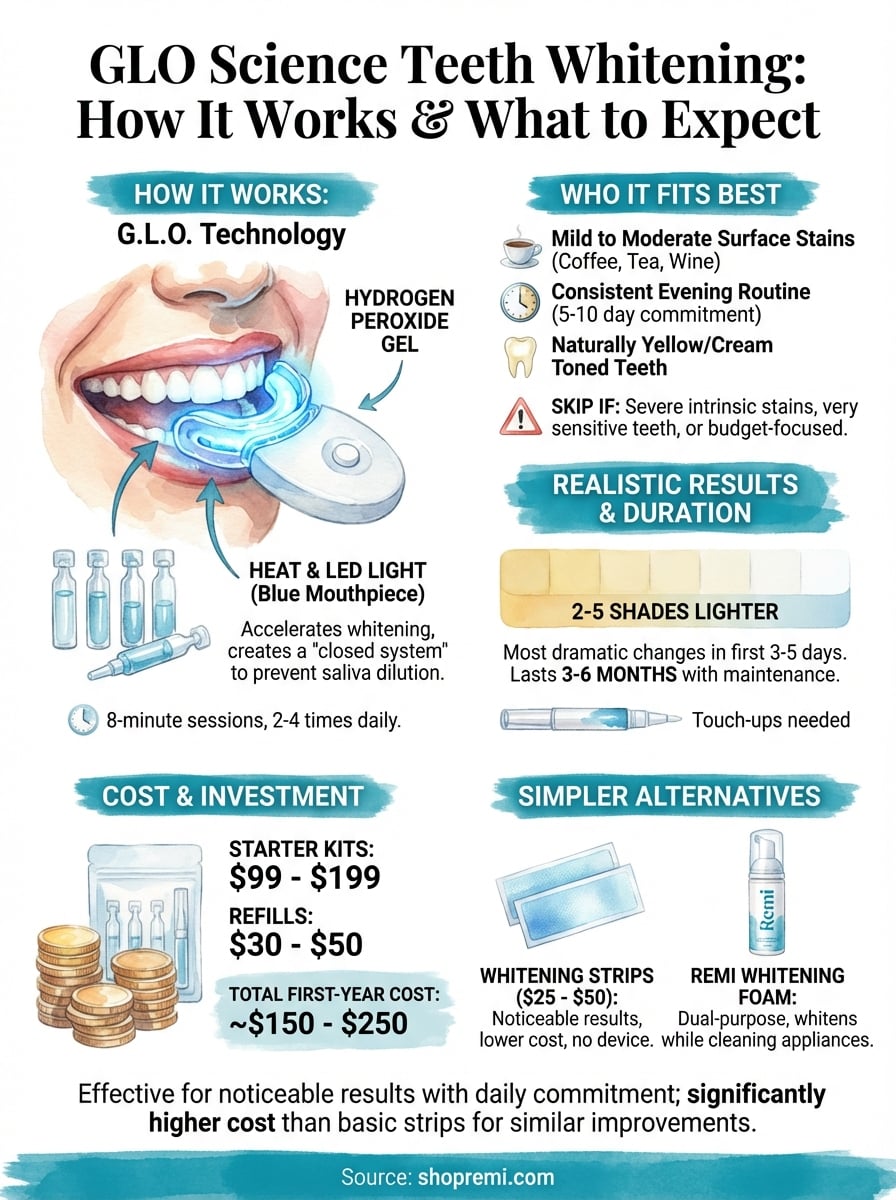
The name GLO stands for Guided Light Optics, which refers to how the system directs light and heat to your teeth while you wear the mouthpiece. The device heats up to a controlled temperature and emits blue LED light, creating what the company calls a closed environment that prevents saliva from diluting the whitening gel. This combination aims to deliver faster results than gel strips or trays that rely on peroxide alone. You control the device with a simple button, and most treatments run for eight minutes before automatically shutting off.
The heat component sets GLO Science apart from basic LED whitening systems that only use light without temperature control.
What comes in the standard kit
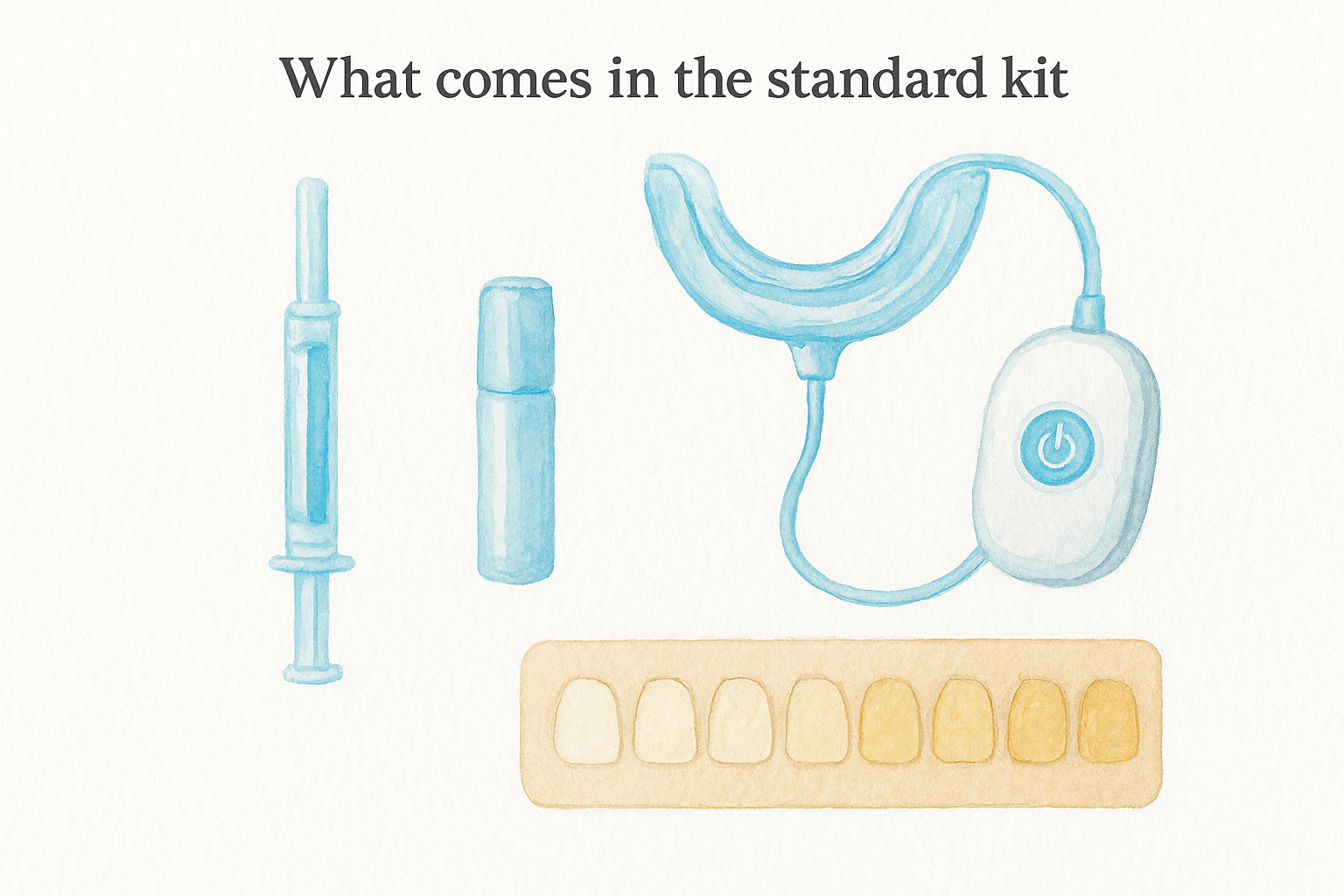
When you purchase glo science teeth whitening, you typically receive a rechargeable control device with the LED mouthpiece attached, whitening gel vials or applicators, and a charging cable. Some kits include lip care to protect your lips during treatment and a shade guide to track your progress. The gel contains hydrogen peroxide in concentrations ranging from 6% to 10% depending on which kit you choose, which falls below the professional-strength formulas dentists use but higher than many drugstore strips. The mouthpiece connects magnetically to the control unit, making it easy to attach and remove between sessions.
Why people choose it and who it fits best
People gravitate toward glo science teeth whitening when they want professional-style results without booking dental appointments or dealing with messy strips that shift around your teeth. The heat and light combination appeals to anyone who has tried basic whitening products with disappointing results, since the closed-system approach theoretically works faster than gel alone. You also get a reusable device that feels more substantial than disposable strips, which makes the higher upfront cost easier to justify if you plan to whiten regularly.
Who gets the best results from this system
This system works best for you if you have mild to moderate surface stains from coffee, tea, wine, or tobacco use. Your teeth need to respond well to hydrogen peroxide, which means naturally yellow or cream-toned teeth typically see more dramatic changes than gray-toned discoloration. You also need to commit to consistent daily sessions for at least five to ten days, so this fits people with predictable evening routines better than those with irregular schedules.
If your teeth are already sensitive or you have existing dental work like crowns or veneers, the heat component might cause discomfort or highlight shade differences.
When other options make more sense
You should skip this system if you need budget-friendly whitening for a one-time event, since strips cost a fraction of the price. People with severe intrinsic staining or tetracycline discoloration usually need professional treatments that penetrate deeper than at-home kits can achieve.
How it works and how to use it safely
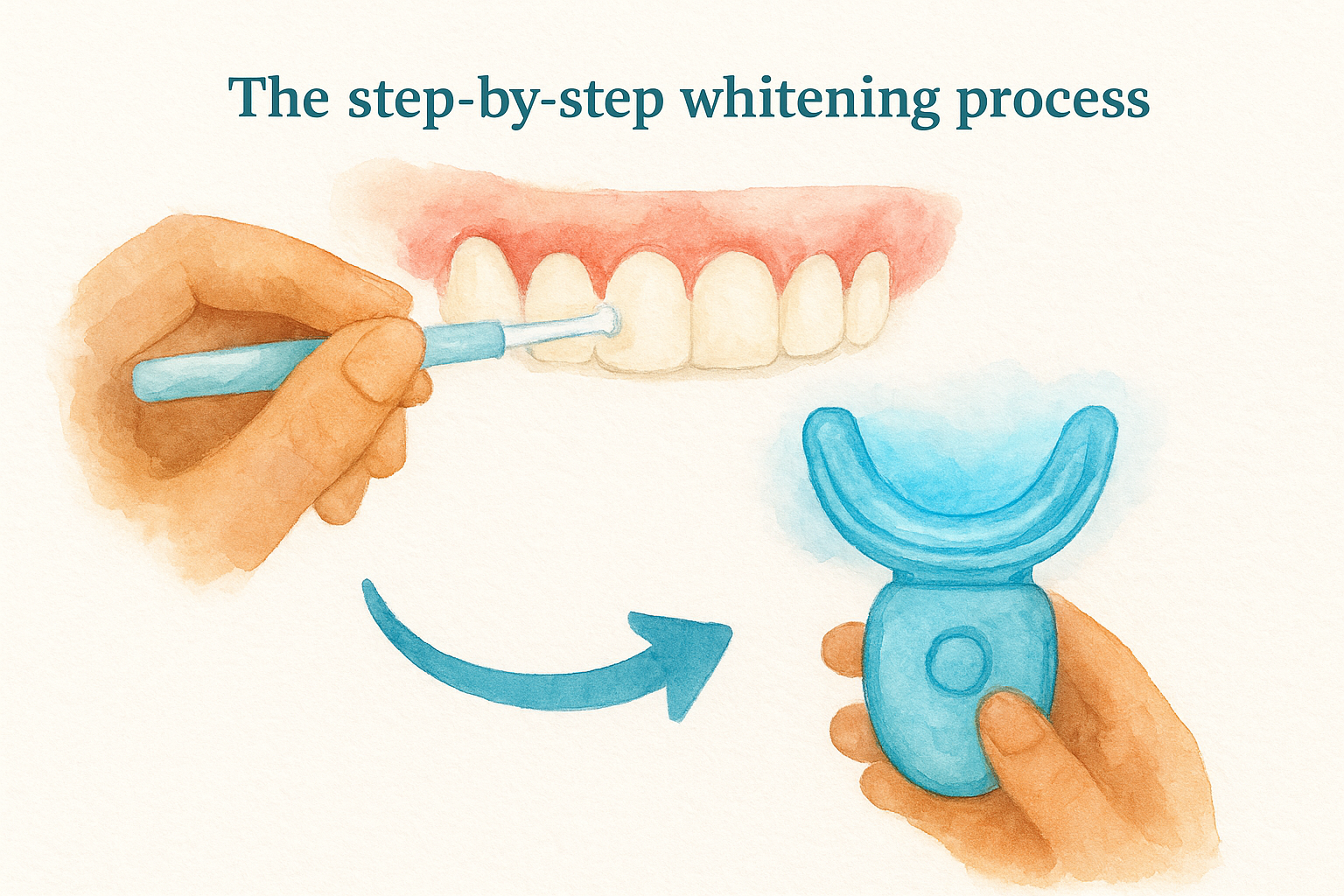
The glo science teeth whitening process starts when you paint the hydrogen peroxide gel onto your dry teeth using the applicator wand or twist-up pen, depending on which kit you purchased. You then insert the warming LED mouthpiece and press the button to activate both the heat and blue light, which work together for an eight-minute cycle. The device automatically shuts off after each session, and most treatment plans call for two to four cycles per day spaced 10 minutes apart. The heat keeps your mouth closed and prevents saliva from washing away the gel before it can penetrate your enamel.
The step-by-step whitening process
You need to brush and dry your teeth thoroughly before applying the gel to ensure it adheres properly to your enamel surface. Apply a thin, even layer across the front of each visible tooth, then immediately insert the mouthpiece and start the timer. After the first eight-minute cycle ends, you can reapply gel and repeat up to three more times in one sitting, wiping away any excess gel between applications with a tissue.
Most people complete their whitening sessions while watching TV or reading, since the mouthpiece stays in place hands-free.
Safety precautions and what to avoid
Skip treatments if you experience sharp tooth pain or gum irritation, and never use the device with damaged enamel or untreated cavities. Avoid getting gel on your gums, and reduce your treatment frequency if you notice increased sensitivity to hot or cold foods.
Results you can expect and how long they last
Most people see their teeth lighten by two to five shades after completing the full treatment cycle, which usually spans five to ten days depending on how stained your teeth were before starting. Your results depend heavily on your starting shade and the type of staining you have, with surface stains from coffee or wine responding better than deep discoloration that has built up over decades. You will notice the most dramatic changes within the first three to five days, then see gradual improvements as you continue daily sessions.
How much whiter your teeth will get
The glo science teeth whitening system produces visible changes for most users, though you should not expect the bright white results that professional in-office treatments with higher peroxide concentrations can achieve. Your teeth will look noticeably brighter in photos and mirrors, but the exact shade change varies based on your natural enamel color and how consistently you follow the treatment schedule. People with yellow-toned teeth typically see more obvious improvements than those with gray undertones.
Results plateau after about ten days of use, so extending treatments beyond two weeks rarely produces additional whitening.
How long results typically last
Your whitened teeth will stay brighter for three to six months if you avoid heavy staining from coffee, red wine, and tobacco. The results fade gradually rather than disappearing suddenly, and you can maintain your shade with touch-up sessions every few weeks using the remaining gel vials from your kit.
Cost, where to buy, and alternatives to consider
The glo science teeth whitening kits range from $99 to $199 depending on which model you choose and how much gel comes included. You can purchase directly from the company's website or through major retailers like Amazon, where prices sometimes drop during sales events. The initial investment covers the reusable mouthpiece device and enough gel for your first treatment cycle, but you will need to buy replacement gel vials separately once you run out, which typically costs $30 to $50 for a pack.
What you'll actually spend
Your total first-year cost lands between $150 and $250 when you factor in the starter kit plus two or three gel refill purchases for maintenance sessions. This pricing sits between drugstore whitening strips at $20 to $60 and professional dental office treatments that charge $300 to $800 per session. You get more control over timing compared to dental appointments, but you pay significantly more than simple strips that deliver similar results for many people.
Professional dental whitening still produces faster, more dramatic results if you can afford the higher cost.
Simpler alternatives that cost less
Whitening strips from major brands deliver noticeable results for $25 to $50 without requiring a separate device. Our Night Guard Cleaning + Teeth Whitening Foam at Remi offers a dual-purpose solution that whitens while cleaning your dental appliances, saving you money if you already wear a night guard or retainer.
Final thoughts
GLO Science teeth whitening delivers noticeable results for most people who complete the full treatment cycle, though you will pay considerably more than basic whitening strips for similar shade improvements. The heat and light technology provides a unique approach that speeds up the whitening process, but whether that justifies the $150 to $250 annual cost depends on your budget and how quickly you need results. The system works best when you have surface stains and can commit to consistent daily sessions over one to two weeks.
Your whitening results will last longer when you maintain proper oral hygiene habits beyond just whitening treatments. Regular deep cleaning reaches areas that whitening products miss, preventing new stains from forming between your teeth and along your gumline. Our cordless water flosser offers an effective way to keep your smile clean and bright between whitening sessions, making it easier to maintain the results you worked to achieve.

