
 Guards + Retainers
 Custom Night Guard
 Retainer
 Emergency Order

 Whitening
 Whitening Kit
 Teeth Whitening Gel
 Dual-Action Foam
 Cleaning + Care
 Ultrasonic Cleaner Pro
 Water Flosser
 UV Toothbrush Sanitizer
 Deep Clean + Freshening Tablets
 Accessories
 Guard Removal Tool
 Replacement Nozzles
 Bundles

The benefits of preventive dentistry are simple but powerful. This approach focuses on stopping dental problems before they start through regular checkups, cleanings, and daily habits that keep your teeth and gums healthy. Instead of waiting until you have a toothache or need an emergency root canal, preventive care catches issues when they're small and easier to fix. Think of it like changing your car's oil regularly instead of waiting for the engine to blow.
This article breaks down how preventive dentistry protects your overall health, not just your teeth. You'll learn practical daily habits that make a real difference, discover why this approach saves you serious money over time, and understand which preventive services you actually need at different stages of life. We'll also clear up common myths that might be keeping you from getting the care you deserve. By the end, you'll see exactly why a little prevention today beats expensive treatment tomorrow.
Why preventive dentistry protects overall health
Your mouth isn't separate from the rest of your body. What happens between your teeth and gums affects your heart, brain, and immune system in ways that might surprise you. When you skip regular dental visits or ignore daily oral care, you're not just risking cavities. You're opening the door to systemic health problems that can shorten your life and drain your bank account far worse than any dental bill.
The mouth-body connection explained
Bacteria from gum disease doesn't stay put in your mouth. These microorganisms enter your bloodstream through inflamed gum tissue and travel throughout your body, triggering inflammation wherever they land. Your immune system kicks into overdrive trying to fight this constant bacterial invasion, which weakens your defenses against other threats. Chronic inflammation from untreated gum disease creates the perfect environment for serious diseases to develop and progress faster than they would in someone with healthy gums.
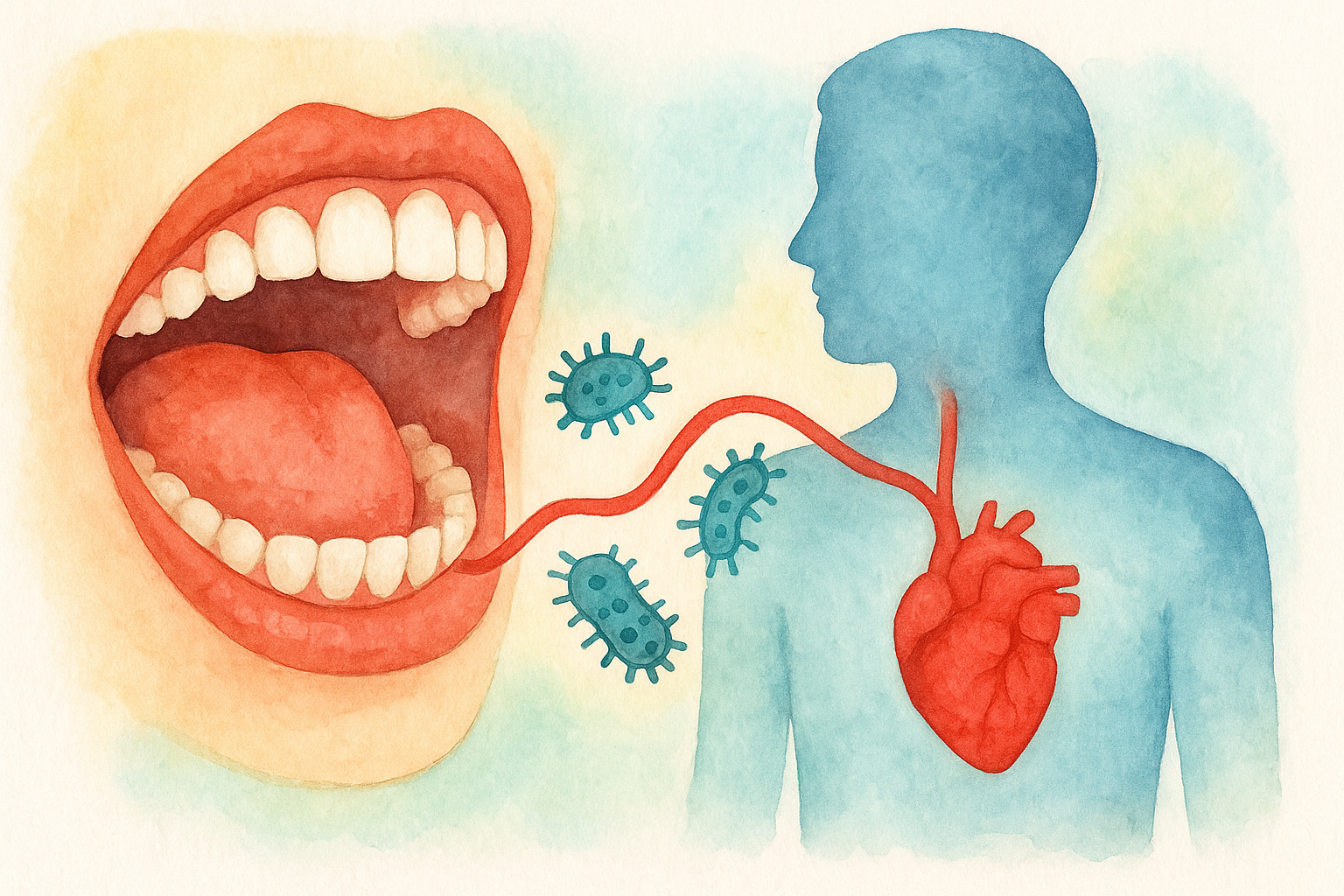
Regular dental cleanings remove the bacterial buildup that fuels this inflammation before it spreads beyond your mouth.
The benefits of preventive dentistry extend far beyond a bright smile. Studies show that people who maintain consistent preventive dental care reduce their risk of heart disease, stroke, diabetes complications, and even certain cancers. Your dentist can spot signs of nutritional deficiencies, autoimmune disorders, and other systemic conditions during routine exams because many diseases show early symptoms in your mouth before you notice problems elsewhere.
Specific diseases linked to poor oral health
Heart disease and oral health share a direct relationship. People with gum disease face twice the risk of developing coronary artery disease compared to those with healthy gums. Bacteria from your mouth contributes to plaque buildup in your arteries, which restricts blood flow and increases your chances of heart attack or stroke. This connection is so strong that cardiologists now ask about your dental health during heart disease assessments.
Diabetes creates a two-way street with gum disease. High blood sugar makes gum infections worse, while severe gum disease makes it harder to control your blood sugar levels. Pregnant women with untreated gum disease face higher risks of premature birth and low birth weight babies because oral bacteria can reach the placenta and trigger early labor. Respiratory infections, including pneumonia, happen more often in people who breathe in bacteria from infected gums.
Early warning signs your dentist catches
Your dentist sees warning signs of serious health problems during routine checkups that you'd never spot yourself. Lesions in your mouth can indicate oral cancer, which has a 90% survival rate when caught early but drops dramatically when found late. Dentists identify signs of osteoporosis through bone loss in your jaw years before you'd experience a fracture. They spot symptoms of acid reflux disease, eating disorders, and vitamin deficiencies by examining your tongue, throat, and tooth enamel.
Preventive dental visits give you a health screening that goes beyond your teeth. Your dentist checks for abnormal tissue growth, suspicious lumps, and unusual color changes that could signal everything from anemia to leukemia. This early detection through routine preventive care saves lives by catching treatable conditions before they become medical emergencies.
How to practice preventive dentistry every day
You don't need expensive procedures or complicated routines to unlock the benefits of preventive dentistry. Simple daily habits protect your teeth more effectively than any emergency treatment can fix them. The key is consistency, not perfection. When you brush properly twice a day, floss once, and make smart choices about what goes in your mouth, you're already doing more for your dental health than most people.
Morning and evening oral hygiene routine
Your toothbrush does the heavy lifting when you use it correctly. Brush for two full minutes using gentle circular motions, not aggressive back-and-forth scrubbing that damages your enamel and irritates your gums. Hold your brush at a 45-degree angle where your teeth meet your gums, and replace your brush every three months or sooner if the bristles fray. Electric toothbrushes make this easier because they do the circular motion for you and often include built-in timers.
Flossing removes the 40% of tooth surface your brush can't reach. You need to floss between every tooth, every day, preferably before you brush at night so fluoride from your toothpaste can reach those clean spaces. Use about 18 inches of floss, wrap it around your fingers, and curve it into a C-shape against each tooth as you slide it up and down below the gum line.
Consistent daily care prevents more problems than occasional deep cleanings ever could.
What you eat affects your teeth
Sugary and acidic foods create the perfect environment for bacteria to thrive and attack your enamel. Every time you snack on candy or sip soda, you feed harmful bacteria that produce acid for the next 20 minutes. Limit these foods to mealtimes rather than constant grazing throughout the day, and rinse your mouth with water immediately after consuming anything acidic like citrus, wine, or sports drinks.
Calcium-rich foods, crunchy vegetables, and sugar-free gum strengthen your teeth naturally. Cheese, milk, and yogurt neutralize acid in your mouth while delivering minerals your teeth need. Apples, carrots, and celery act like natural toothbrushes that scrub your teeth and stimulate saliva production, which washes away food particles and bacteria.
Protective habits that preserve your smile
A custom night guard protects your teeth from grinding damage while you sleep. Bruxism wears down your enamel and can crack teeth, leading to expensive crowns or root canals down the road. You can get a professionally fitted night guard through at-home impression kits that cost a fraction of what dentists charge, making prevention accessible without the traditional dental office markup.
Financial benefits of proactive oral care
Your wallet feels the benefits of preventive dentistry just as much as your mouth does. Regular cleanings and checkups cost a fraction of what you'll pay when neglect turns into cavities, root canals, or gum surgery. Most people spend $200 to $350 annually on preventive care, while a single root canal and crown typically runs $2,000 to $3,500. That math speaks for itself.
Cost comparison: prevention vs. treatment
A routine dental cleaning costs between $75 and $200 without insurance. Compare that to $1,500 for a deep cleaning when gum disease sets in, or $3,000 to $4,500 for dental implants to replace teeth you lost from neglect. Fillings run $150 to $400 per tooth for simple cavities, but wait too long and you're looking at $800 to $1,500 for a root canal plus another $1,000 to $2,500 for a crown to protect that treated tooth.
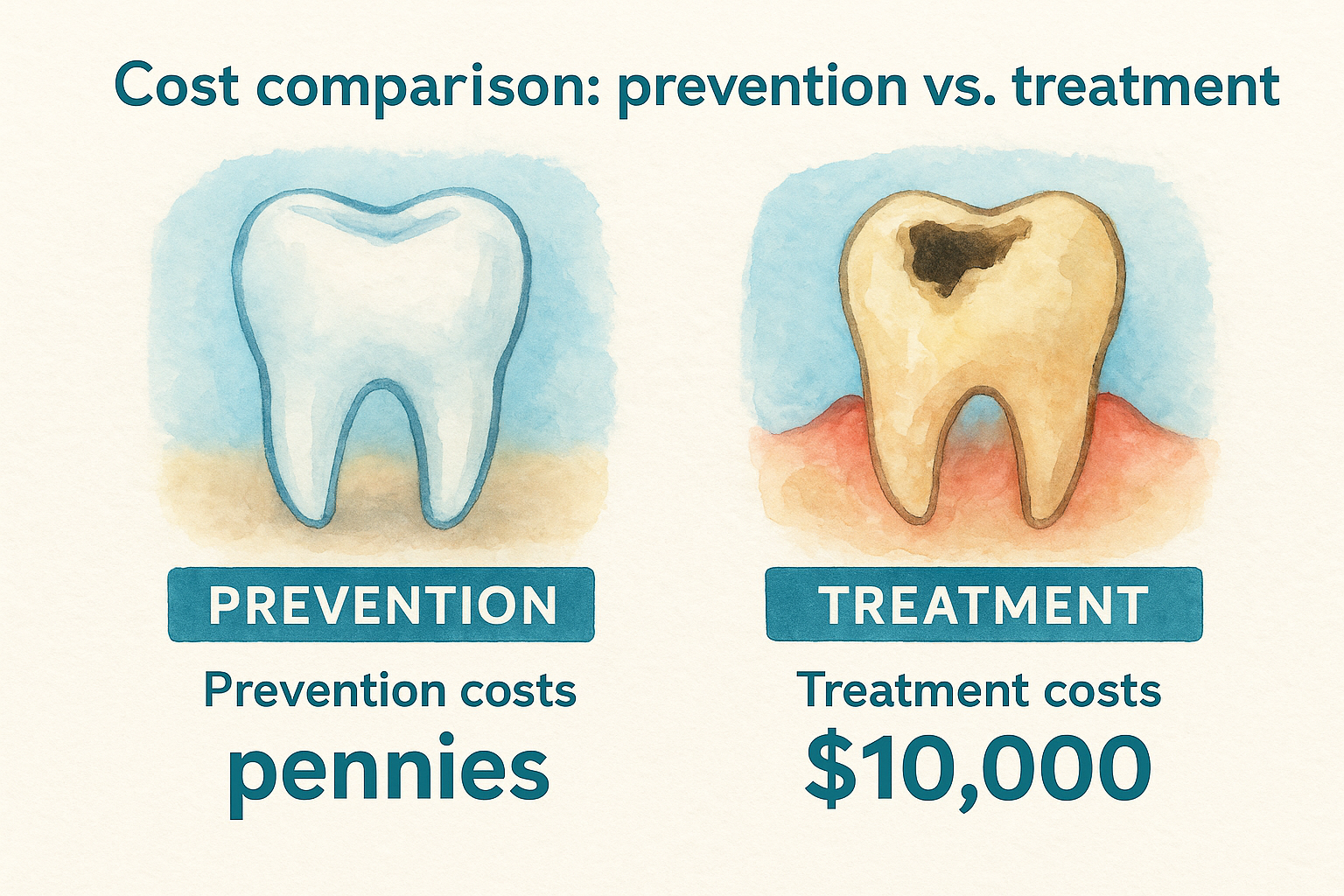
Prevention costs pennies compared to the thousands you'll spend fixing problems you could have avoided.
These numbers add up fast when you need multiple procedures. One year of skipped cleanings can cascade into $10,000 worth of necessary treatments within just a few years as small problems multiply and worsen.
How preventive care reduces insurance premiums
Many dental insurance plans cover preventive services at 100% because insurers know prevention saves them money too. You pay nothing out of pocket for your two annual cleanings and exams when you use in-network providers. Some health insurance companies now offer premium discounts or wellness credits when you maintain regular dental visits, recognizing the connection between oral health and overall medical costs.
Long-term savings from avoiding major procedures
The real financial benefits of preventive dentistry show up over decades. Someone who maintains consistent preventive care from age 25 to 65 typically spends $14,000 to $21,000 total on their dental health. That same person who skips regular care often faces $50,000 to $100,000 in restorative work, including crowns, bridges, implants, and treatment for advanced gum disease. You're also protecting your earning potential since dental emergencies mean missed work, lost productivity, and unexpected expenses that derail your budget. Prevention keeps you out of the emergency dentist's chair and keeps more money in your bank account where it belongs.
Common types of preventive dental services
Understanding which preventive services you actually need helps you take full advantage of the benefits of preventive dentistry. Your dentist offers several key services designed to catch problems early and keep your teeth healthy for life. Some happen during every visit, while others depend on your age, risk factors, and dental history. Knowing what each service does helps you make informed decisions about your oral health care.
Professional cleanings and examinations
Dental cleanings remove hardened plaque (tartar) that your toothbrush can't touch. Your hygienist uses specialized instruments to scrape away buildup from above and below your gum line, then polishes your teeth to remove surface stains and make it harder for bacteria to stick. These cleanings happen every six months for most people, though some need them more frequently if they're prone to gum disease or cavities.
Comprehensive examinations go beyond just looking at your teeth. Your dentist checks your gums, tongue, throat, jaw joints, and lymph nodes during each visit. They measure gum pocket depths, assess your bite alignment, and look for signs of grinding or clenching. This thorough examination catches potential problems months or years before they cause pain or require expensive treatment.
X-rays and diagnostic screenings
Dental X-rays reveal what your dentist can't see with the naked eye. Bitewing X-rays show cavities between teeth, while panoramic images reveal impacted wisdom teeth, bone loss, and jaw problems. Most people need bitewings once a year and full mouth X-rays every three to five years, though your dentist adjusts this schedule based on your individual risk factors.
Regular X-rays detect problems early when treatment is simplest and least expensive.
Oral cancer screenings happen during routine exams through visual inspection and palpation. Your dentist feels for lumps and checks for unusual tissue changes that could indicate cancer or precancerous conditions.
Protective treatments and sealants
Fluoride treatments strengthen your enamel and reverse early decay spots. Your dentist applies concentrated fluoride gel or varnish that penetrates your teeth more effectively than toothpaste alone. Adults with a history of cavities benefit from these quick treatments that take just minutes but provide months of protection.
Dental sealants coat the chewing surfaces of molars with a thin plastic barrier. This shields the deep grooves where bacteria hide and cavities typically form, especially in children and teenagers who might miss these spots while brushing.
Preventive oral care needs by age group
Your preventive dental needs shift dramatically as you age. What protects a child's developing teeth differs completely from what keeps an adult's smile healthy or what preserves a senior's remaining teeth. Understanding these differences helps you target your preventive efforts where they matter most. Each stage of life brings unique risks and requires specific protective measures to maintain optimal oral health and maximize the benefits of preventive dentistry.
Children and teens (birth to 18)
Young mouths need aggressive cavity prevention because baby teeth and newly erupted permanent teeth have softer enamel. Fluoride treatments every six months strengthen developing teeth, while dental sealants protect the deep grooves in molars where 80% of childhood cavities form. Parents should schedule first dental visits by age one and establish twice-yearly cleaning appointments that continue through the teen years.
Early preventive care sets the foundation for a lifetime of healthy teeth and lower dental costs.
Orthodontic evaluations around age seven catch bite problems when they're easiest to correct. Teens need monitoring for wisdom teeth development and education about the damage caused by oral piercings, sports without mouthguards, and energy drinks that erode enamel.
Adults (19 to 64)
Adult teeth face different threats than growing smiles. Gum disease becomes your primary concern because it affects 70% of adults over age 30. Professional cleanings every six months remove bacterial buildup that causes gum inflammation, while annual X-rays detect cavities between teeth before they require root canals. You need regular oral cancer screenings since risk increases with age, especially if you use tobacco or alcohol.
Stress-related grinding requires protective night guards to prevent cracked teeth and jaw pain. Many adults also need more frequent cleanings if they have diabetes, are pregnant, or take medications that cause dry mouth.
Seniors (65 and older)
Aging brings increased cavity risk as gums recede and expose vulnerable root surfaces. Seniors need fluoride treatments and possibly more frequent cleanings to combat decay in these newly exposed areas. Your dentist should check for oral cancer at every visit since your risk peaks after age 60. Medications often cause dry mouth, which accelerates tooth decay and gum disease, making saliva substitutes and prescription-strength fluoride toothpaste essential protective tools.
Debunking common myths about dental prevention
Misinformation about oral care stops people from experiencing the full benefits of preventive dentistry. These myths cost you money and health by keeping you from taking proper care of your teeth. Understanding the truth behind common dental misconceptions helps you make smarter decisions about your oral health routine and avoid unnecessary damage or expensive procedures down the road.
Myth: You only need dental visits when something hurts
Pain signals that damage already exists, not that problems are starting. Your teeth don't hurt during the early stages of cavities or gum disease because decay begins in the outer enamel layer, which contains no nerve endings. By the time you feel pain, decay has reached the inner tooth layers where treatment becomes more invasive and costly. Regular checkups catch these issues while they're still painless and fixable with simple fillings instead of root canals.
Waiting for pain means waiting until minor problems become major expenses.
Gum disease progresses silently for years before you notice symptoms like bleeding or loose teeth. Your dentist measures gum pocket depths and identifies inflammation that you can't see or feel, allowing treatment before you lose bone support around your teeth.
Myth: Brushing harder removes more plaque
Aggressive brushing destroys your enamel and irritates your gums instead of cleaning better. You need gentle pressure and proper technique, not force, to remove plaque effectively. Hard scrubbing wears down enamel permanently, exposes sensitive root surfaces, and causes gum recession that creates pockets where bacteria hide. Your toothbrush bristles should bend slightly against your teeth, not flatten completely from excessive pressure.
Electric toothbrushes solve this problem by doing the work for you with consistent, gentle motion that cleans thoroughly without the damage caused by overzealous manual brushing.
Myth: Baby teeth don't need professional care
Primary teeth hold space for permanent teeth and guide them into proper positions. Losing baby teeth too early causes crowding problems that require expensive orthodontic treatment later. Cavities in baby teeth spread to developing permanent teeth underneath the gums, and untreated infections affect overall health and nutrition when children can't chew properly. Establishing dental care habits early also teaches children that prevention matters, setting them up for better oral health throughout their lives.
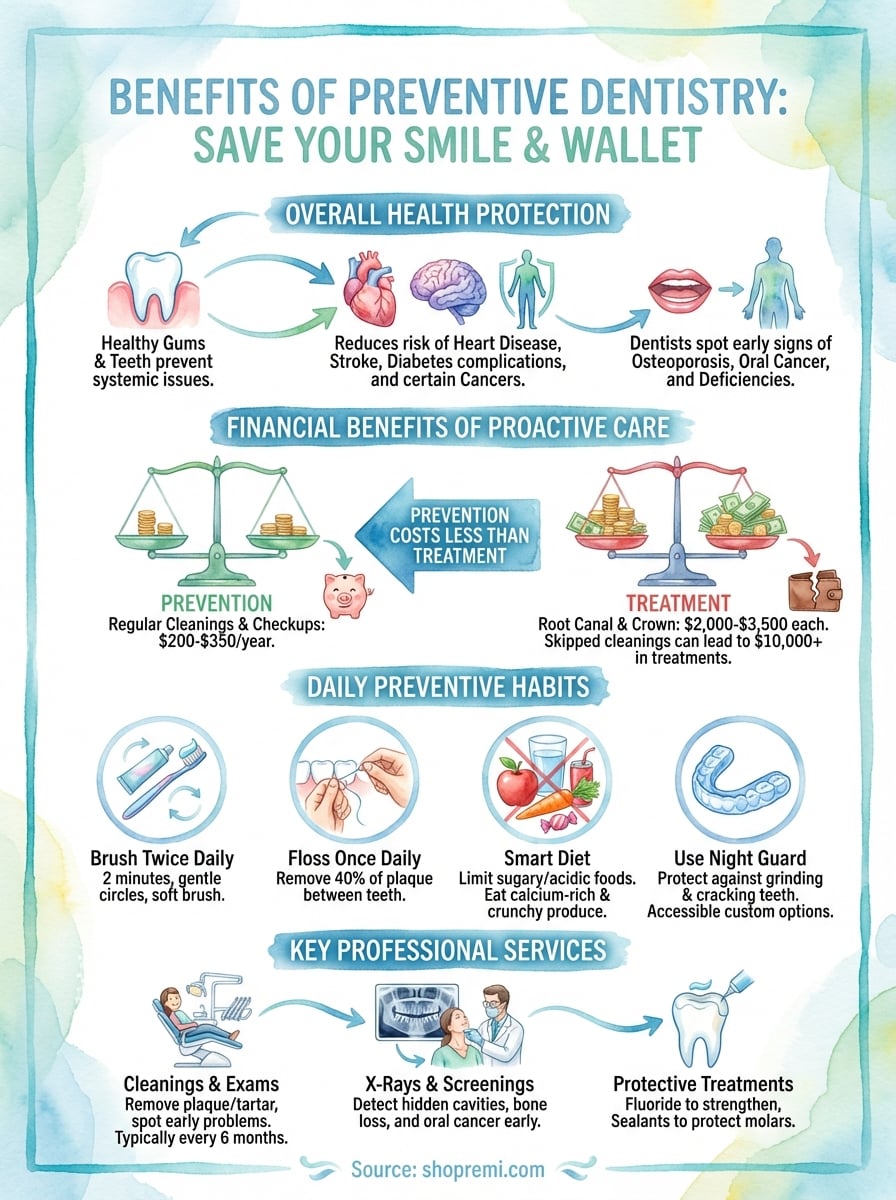
Take charge of your oral health
The benefits of preventive dentistry extend far beyond avoiding cavities. You control your long-term dental costs and overall health through simple daily habits and regular professional care. Small investments in prevention today save you from painful emergencies and expensive treatments tomorrow. Your mouth affects your entire body, so protecting your teeth means protecting your heart, immune system, and quality of life.
Start with the basics you can do right now. Brush properly twice daily, floss every night, and schedule those twice-yearly cleanings you've been postponing. If you grind your teeth at night, protect them with a custom night guard before grinding wears down your enamel and cracks your teeth. You don't need to spend thousands at a dental office to get professional-grade protection.
Take the first step toward better oral health with affordable custom night guards delivered straight to your door. Prevention costs less than treatment, and your future self will thank you.

