
 Guards + Retainers
 Custom Night Guard
 Retainer
 Emergency Order

 Whitening
 Whitening Kit
 Teeth Whitening Gel
 Dual-Action Foam
 Cleaning + Care
 Ultrasonic Cleaner Pro
 Water Flosser
 UV Toothbrush Sanitizer
 Deep Clean + Freshening Tablets
 Accessories
 Guard Removal Tool
 Replacement Nozzles
 Bundles

You spent years in braces or maybe you were born with naturally straight teeth. Either way, you notice something unsettling. Your teeth are starting to shift. That slight gap between your front teeth wasn't there before, or your bottom row doesn't line up quite right anymore. The truth is, teeth naturally want to move throughout your life. Understanding how to keep teeth straight becomes critical once you realize that achieving alignment is only half the battle.
This guide walks you through five proven methods to maintain your smile's alignment. You'll learn about retainer options (both removable and fixed), the role of night guards in preventing movement, and daily habits that either protect or sabotage your teeth position. Whether you finished orthodontic treatment last month or decades ago, these strategies help you lock in your results and avoid the frustration of watching your investment slowly unravel.
1. Custom removable retainers
Removable retainers represent your first line of defense against tooth movement. Your orthodontist typically hands you a retainer the day your braces come off, and this custom-fitted device becomes the primary tool in maintaining your results. The plastic and wire apparatus holds your teeth in their newly corrected positions while the surrounding bone and gum tissue adapt to the change. Most dental professionals recommend wearing your retainer full-time for the first three to six months, then transitioning to nighttime-only use for an indefinite period.
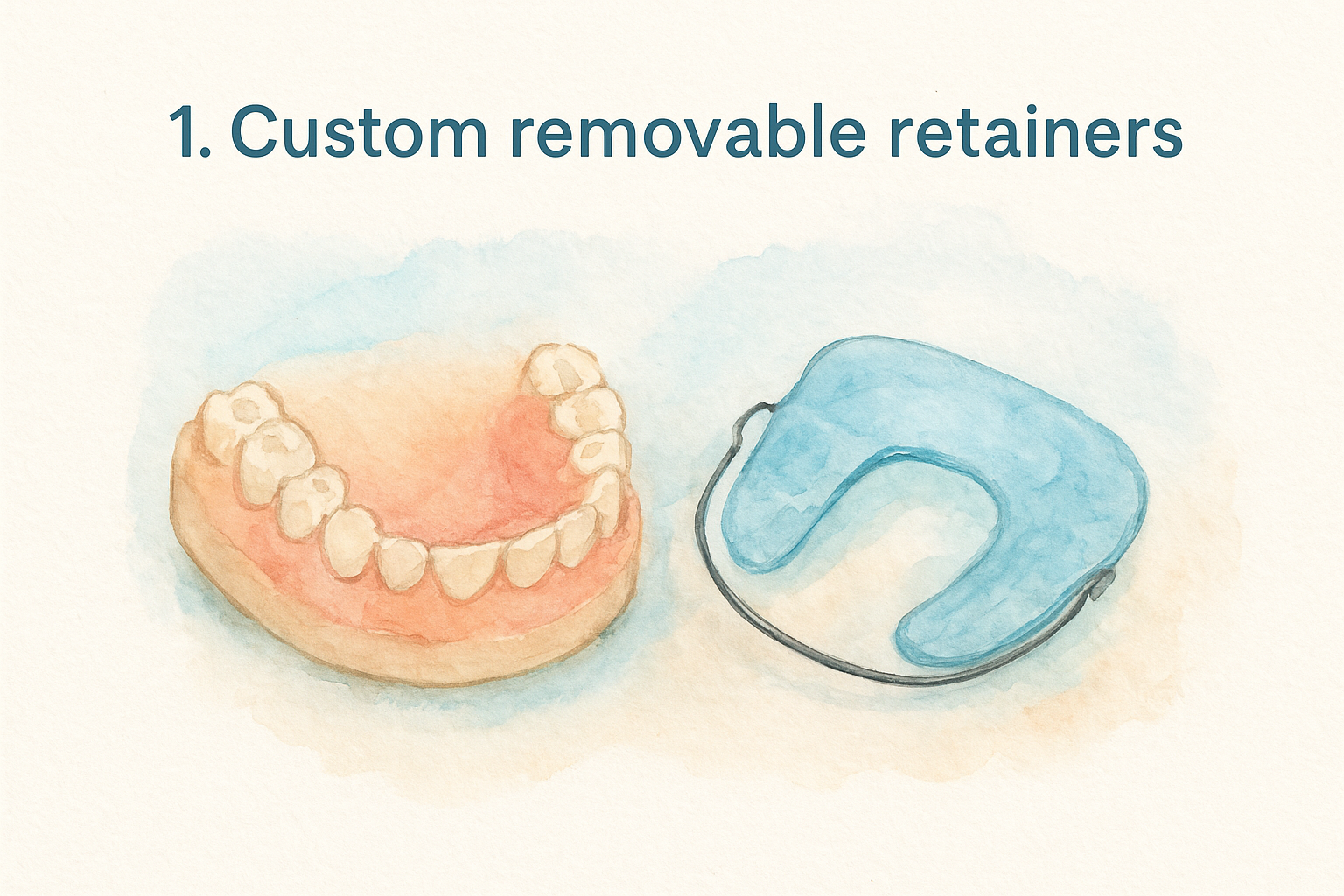
How removable retainers maintain alignment
Custom retainers work by applying gentle, consistent pressure that prevents your teeth from drifting back toward their original positions. Your teeth sit in sockets surrounded by periodontal ligaments, which are elastic fibers that naturally want to pull teeth back to where they started. The retainer counteracts this biological memory by keeping your teeth locked in place while new bone forms around the roots. You create a stable environment that allows your jaw to fully accept the new tooth positions through consistent wear.
Direct-to-consumer vs. dentist office options
Traditional dental offices charge between $200 and $600 per retainer, requiring multiple appointments for impressions and fittings. Direct-to-consumer companies now offer the same custom-fitted retainers for $80 to $150, shipping impression kits directly to your home. You take your own dental impressions, mail them back, and receive professionally-made retainers within two weeks. The quality matches what dentists provide because the same dental labs often manufacture both options.
Direct-to-consumer retainers cut out the middleman without sacrificing professional quality or custom fit.
Cost and replacement frequency
You need to replace your retainer every six to twelve months depending on wear patterns and how well you maintain it. Retainers yellow, crack, or lose their shape over time, especially if you grind your teeth at night. Budgeting for two retainers per year keeps you prepared when one breaks or becomes too worn to function properly. Some providers offer subscription services that automatically send replacements at set intervals, which helps you stay consistent with how to keep teeth straight over the long term.
2. Permanent bonded retainers
Permanent bonded retainers offer a hands-off solution to keeping teeth aligned without the daily responsibility of inserting and removing a device. Your dentist cements a thin metal wire to the back surface of your front teeth, typically on the lower arch where teeth shift most aggressively. This fixed appliance works continuously without requiring any action on your part, making it attractive if you struggle with compliance or simply want to eliminate the risk of forgetting your removable retainer.
How fixed wires stabilize teeth
The bonded wire creates a physical barrier that prevents your front teeth from rotating or drifting out of position. Your orthodontist custom-shapes the wire to match your arch and bonds it to each tooth using dental composite material, the same substance used for fillings. This creates constant, passive retention that works every minute of every day, giving you one reliable answer for how to keep teeth straight without depending on your memory or discipline.
Cleaning and flossing challenges
You face significant obstacles when trying to clean around a permanent retainer. Regular flossing becomes impossible without threading the floss under the wire for each tooth, a process that adds several minutes to your nightly routine. Floss threaders or water flossers help navigate around the bonded wire, but plaque still accumulates more easily in these hard-to-reach areas.
Fixed retainers demand extra diligence during your oral hygiene routine to prevent decay and gum disease.
Long-term durability and repair costs
Bonded retainers typically last five to ten years before requiring replacement or repair. The wire can break or detach from individual teeth, especially if you bite into hard foods or experience trauma to your mouth. Each repair visit costs $75 to $250 depending on how many attachment points need rebonding, and you risk tooth movement during the gap between noticing damage and getting it fixed.
3. Night guards for grinding
Night guards serve a dual purpose when you grind or clench your teeth while sleeping. These protective devices shield your enamel from destructive friction and simultaneously prevent the tooth movement that bruxism causes. You might think grinding only damages the surface of your teeth, but the constant pressure actually pushes teeth out of alignment over months and years. If you wake up with jaw soreness or notice worn-down tooth edges, a night guard becomes essential for how to keep teeth straight.
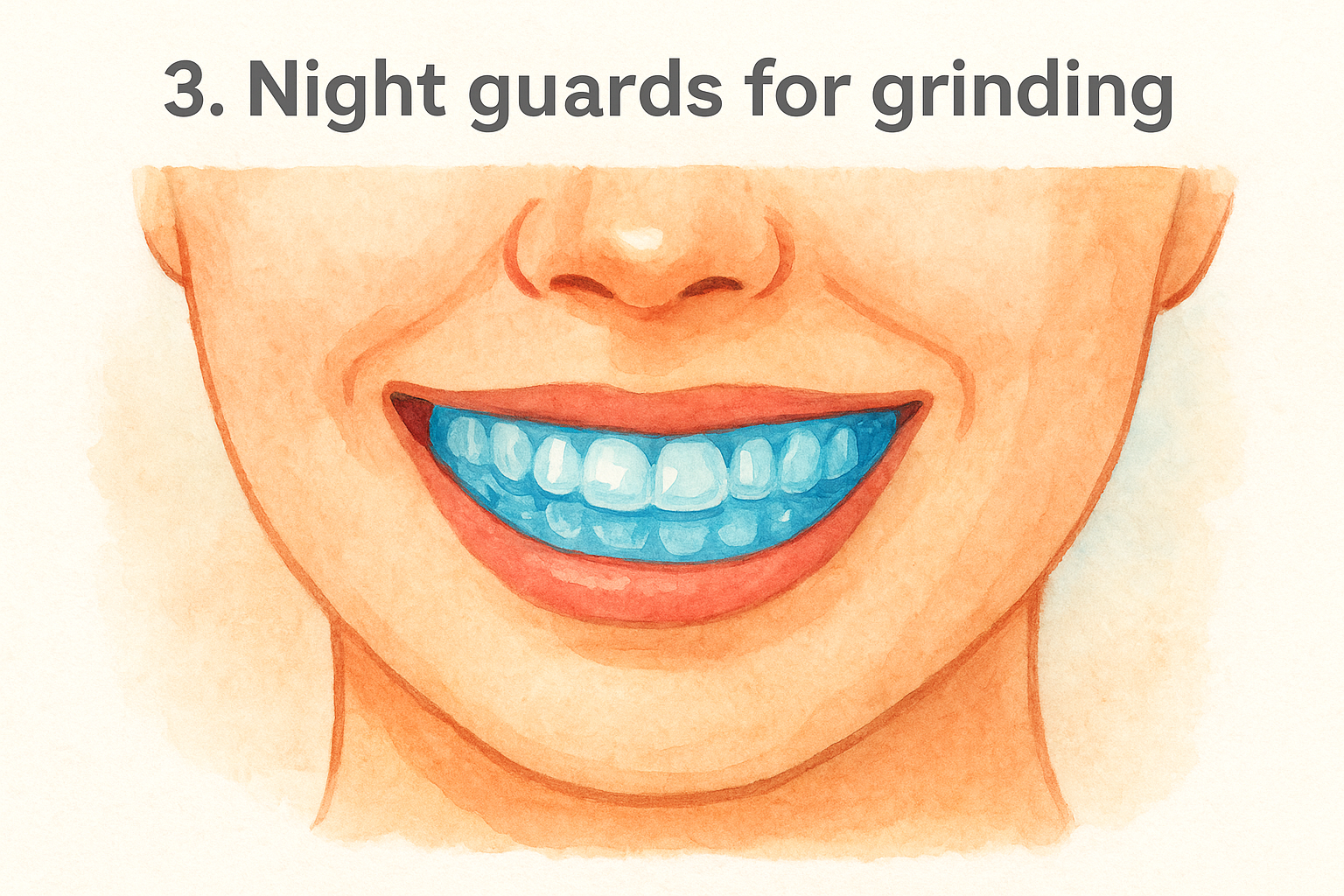
Connection between bruxism and teeth shifting
Teeth grinding applies hundreds of pounds of force to your jaw throughout the night, creating pressure that slowly nudges teeth into new positions. Your teeth respond to this repetitive stress by migrating away from the impact zones, leading to gaps, crowding, or rotation that undoes orthodontic work. The grinding motion also weakens the bone supporting your teeth, making them more susceptible to movement in any direction.
Custom-fit guards vs. pharmacy options
Custom night guards mold precisely to your teeth and distribute grinding forces evenly across your entire arch. Over-the-counter options from pharmacies cost $20 to $40 but offer a loose, bulky fit that often falls out during sleep or creates pressure points that accelerate shifting.
Professional custom guards protect your investment in straight teeth by preventing the forces that cause relapse.
When to use a night guard over a retainer
You need a night guard instead of a retainer when grinding poses a greater threat than natural tooth movement. Retainers crack under grinding pressure, while night guards feature thicker, more durable material designed to withstand heavy forces. Some people wear both by using a night guard nightly and a retainer on non-grinding nights.
4. Strict oral hygiene routine
Daily oral hygiene protects your teeth from drifting just as effectively as any retainer when you maintain healthy gums and bone structure. Many people focus solely on mechanical retention devices while overlooking the biological foundation that keeps teeth anchored in place. Your gums, jawbone, and supporting tissues determine whether your teeth stay put or gradually shift out of alignment, regardless of how faithfully you wear your retainer.
How gum health impacts tooth position
Gum disease attacks the bone and connective tissue that hold your teeth in their sockets, creating looseness that allows teeth to migrate in any direction. When plaque accumulates along your gumline, bacteria trigger inflammation that gradually destroys the attachment between your teeth and supporting structures. You lose the stability needed for how to keep teeth straight once this foundation weakens, even if you never miss a night with your retainer.
Healthy gums provide the stable foundation your teeth need to resist natural shifting forces.
Importance of flossing for stability
Flossing removes bacteria from between teeth where your toothbrush cannot reach, preventing the bone loss that leads to movement. You create pockets of infection when you skip flossing, which destabilizes individual teeth and allows them to tip or rotate out of position.
Scheduling regular professional exams
Professional cleanings every six months remove hardened tartar that your home routine misses, protecting the bone structure that anchors your teeth. Your dentist also catches early signs of gum disease or shifting before they become visible to you.
5. Elimination of bad oral habits
Unconscious habits destroy your alignment just as effectively as skipping your retainer, yet most people never consider how their daily behaviors impact tooth position. You push, press, and apply pressure to your teeth throughout the day without realizing the cumulative effect these actions have on your smile. Breaking these patterns represents a critical component of how to keep teeth straight because constant forces from bad habits overpower even the best retention strategies.
Impact of tongue thrusting and chewing objects
Tongue thrusting places repetitive pressure against your front teeth hundreds of times per day, gradually pushing them forward and creating gaps. This habit often develops during childhood but persists into adulthood, where it continues to move teeth outward despite orthodontic treatment. Chewing on pens, fingernails, or ice applies similar directional forces that tip individual teeth out of alignment over months of repetition.
Your unconscious oral habits apply constant pressure that slowly but inevitably shifts teeth out of position.
Dangers of sleeping on your stomach
Stomach sleeping presses your face into the pillow with enough force to shift your teeth over time. Your jaw experiences uneven pressure throughout the night that pushes teeth inward or rotates them depending on your head position. Switching to back or side sleeping eliminates this nightly source of misalignment.
Monitoring wisdom teeth eruption
Wisdom teeth erupt with enough force to crowd your other teeth forward, undoing years of orthodontic work. Your dentist tracks these third molars through regular X-rays and recommends extraction before they push your front teeth out of alignment.
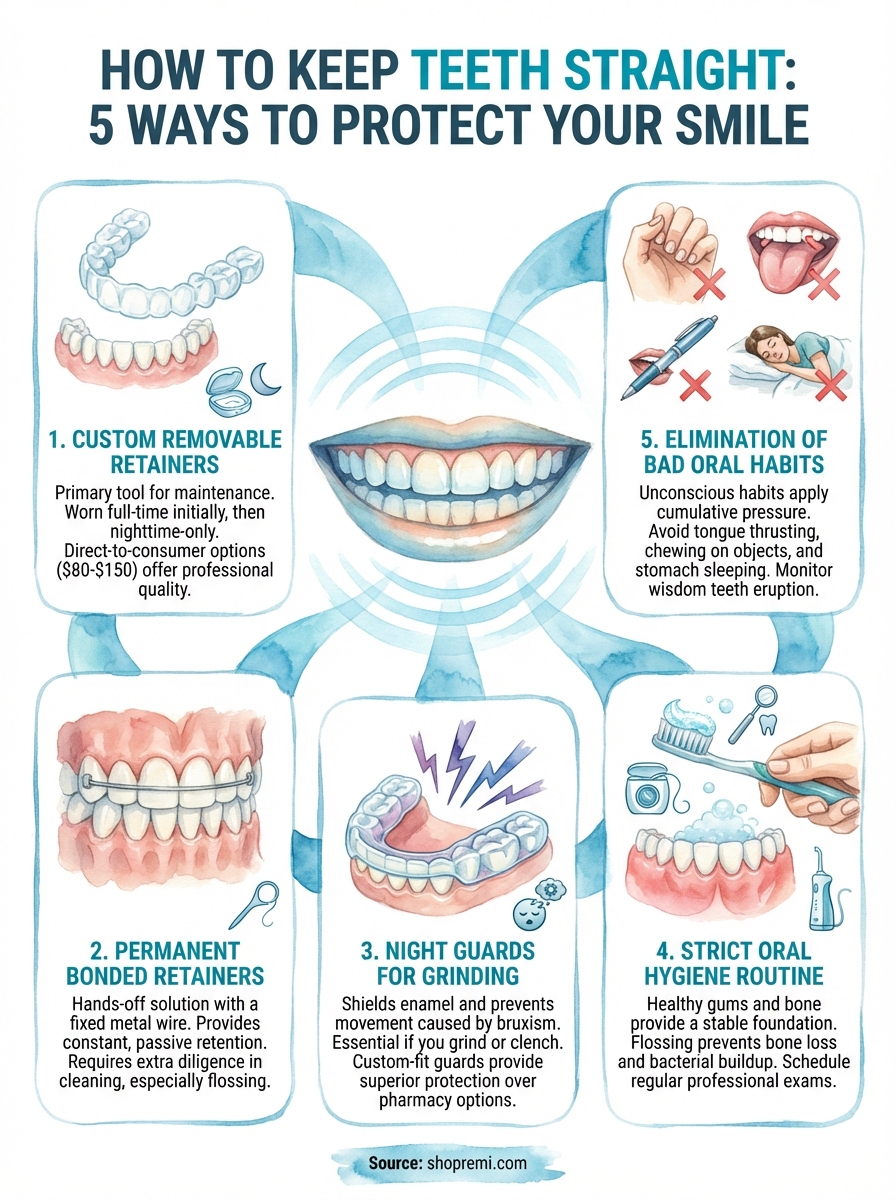
Protecting your smile investment
Your straight teeth represent years of effort and potentially thousands of dollars in orthodontic treatment. Maintaining that alignment requires consistent action across multiple fronts. You need the right retention device, whether that's a custom clear retainer or bonded wire, combined with protection against grinding and strict oral hygiene practices. Breaking bad habits that apply pressure to your teeth completes the comprehensive approach to how to keep teeth straight over your lifetime.
The cost of replacement retainers or night guards seems minimal compared to repeating orthodontic treatment. You invest $150 annually in retention devices versus $3,000 to $7,000 for a second round of braces or aligners. Most importantly, you maintain the confidence and health benefits that come with properly aligned teeth. Your smile stays exactly where you worked so hard to position it.

